The World of the Free
| Story |
|---|
| The letter arrived with a seal of gold wax and the crest of House Atherane. |
| Liora turned it over twice before opening it. Her fingers shook, though she did not know why. The paper was heavy, perfumed faintly with amber and something like dust. The words were written in fine, curling script. |
| “Your contract has been renewed.” |
| She read it again. Then again. The words did not change. She had been told the contract would end this year. That she would be free. |
| She had served seven years as a house companion, learning to play the harp, to pour wine, to smile at the right moments. Her mistress, Lady Sorell, often said she was not a servant but family. “No one here is owned,” she would say, reclining on silk cushions, while Liora stood in silence beside her. “We are a household of free souls bound by affection.” |
| And yet, when the guests arrived, Liora stood behind her mistress’s chair. When Sorell traveled, Liora’s name was written on the same ledger as the luggage. When the house changed owners, Liora’s contract passed hands with the property. |
| Once, she had dared to ask. “Am I free to leave?” |
| Sorell had laughed. “Of course. Freedom is the law. But you owe me your training costs, your clothing, your room and board, and the fines from the weeks you were ill. When that is paid, you may go wherever you wish.” |
| Liora had thanked her, as was proper. |
| Now, holding the letter, she wondered how many years it would take to buy back what had never truly been hers. She wondered if anyone ever had. |
| She went to the window. Outside, the banners of the Republic fluttered in the square, embroidered with the sigil of the open hand, the symbol of freedom. A crowd below was listening to a magistrate proclaim a new law: no citizen may own another, on pain of exile. |
| The people cheered. |
| In the crowd, she saw the other companions from the great houses, veiled and silent, their masters’ carriages waiting nearby. |
| She folded the letter carefully and placed it beside the others. She would sign it tonight, as always. |
| From the parlor, Lady Sorell called softly, “Liora, bring wine. The governor is here. We must toast the new age of liberty.” |
| Liora bowed her head, took the decanter, and stepped into the light, her smile perfectly measured, her voice gentle as she spoke the words she was paid to say: |
| “Yes, my lady. To freedom.” |
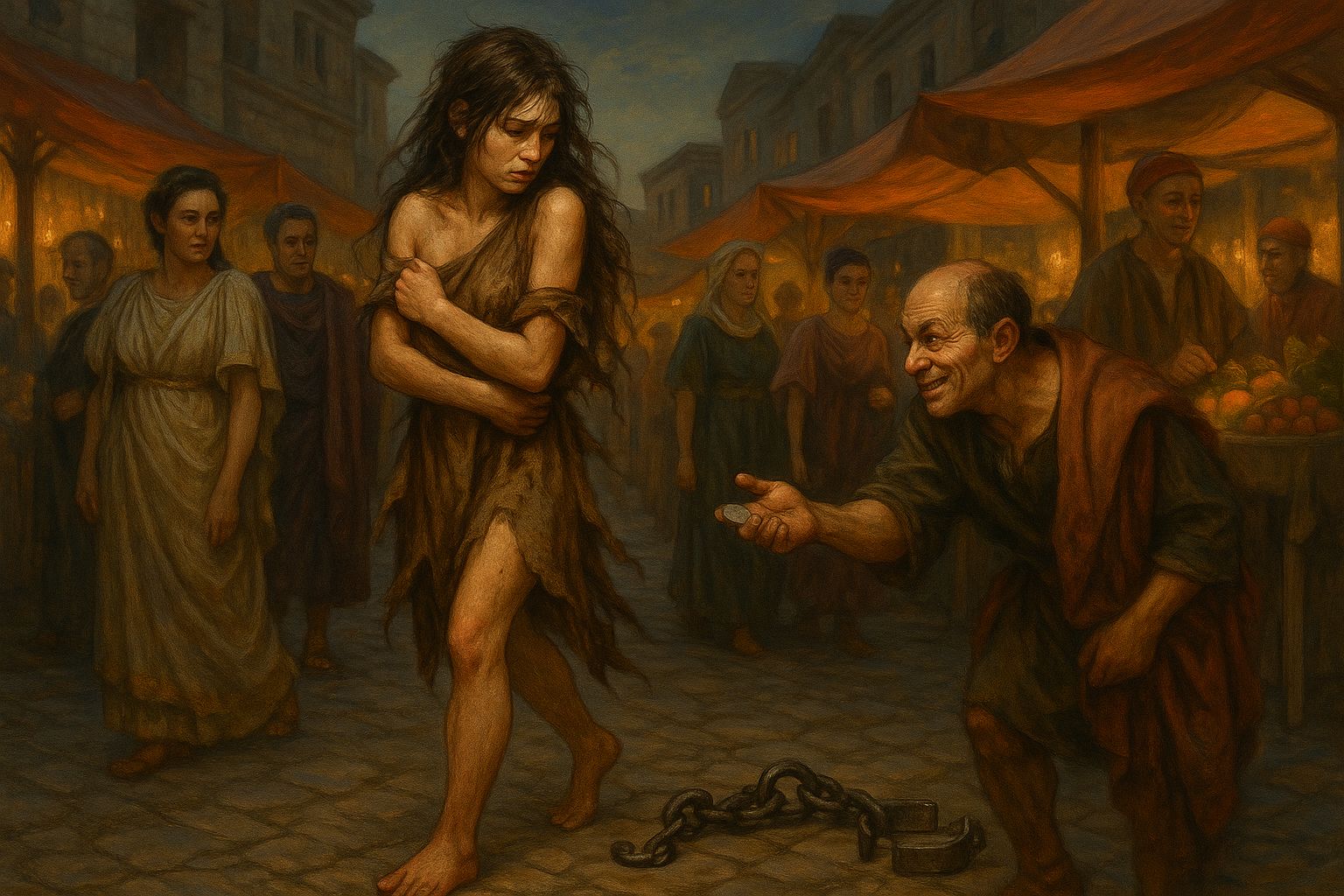
Description
In this version of Heroica, freedom is the greatest virtue, and the newest lie.
Slavery has not vanished, but it has been driven into the shadows. In most lands, the chains are gone; in the Empire, the Twin Cities, Zarhalem, and the Desert Rim, they only shine brighter in defiance. The rest of the world calls itself enlightened, but its hands are not clean.
To be free is to be civilized. To own a slave is to confess barbarism. That belief shapes nations, faiths, and wars, even as new kinds of bondage rise to take the old ones’ place.
The Age of Liberty
The abolition of slavery reshaped the world. Caravans carry goods, not captives. The great plantations that once fed empires now lie in ruin, replaced by smaller farms and paid labor. Trade has slowed but stabilized; wealth grows slower, yet broader. Cities pride themselves on calling their people freeborn.
Every nation justifies freedom differently. Some proclaim it moral truth. Others, pragmatic necessity. A few, pure vanity, for nothing flatters the powerful more than appearing just. Yet whatever the motive, the result is the same: slavery has become a mark of shame.
True slavery is outlawed, except, of course, for criminals and war captives, where punishment conveniently resembles ownership.
The old slave empires stand apart, their embassies received in silence, their merchants watched and distrusted. To walk the streets of a free city bearing the marks of ownership is to invite open hatred.
The Roads of Mercy
Escaped slaves find refuge across borders through secret routes known as the roads of mercy. Hidden by monks, smugglers, and farmers, these paths lead to sanctuary in nations that promise asylum.
Freevalor fund them quietly. The Empire condemns them loudly. Every successful rescue is a diplomatic spark, and every captured fugitive a pretext for war.
In the free nations, former slaves are celebrated as symbols of virtue, paraded, quoted, mythologized. Their suffering is paraded as virtue by those who never bore it.
Faith and Freedom
Religion follows the wind. Old faiths that once defended bondage lose power; new ones rise preaching liberty as divine law. Temples display broken chains beside their altars, and sermons declare that the gods themselves willed mankind to stand upright and unowned.
But not all faiths agree. The Empire’s priests insist that hierarchy is sacred order. In the south, cults of the freed dead, spirits who died in chains, spread among peasants and soldiers, whispering that true liberty exists only after death.
The Chains of Paper
Freedom did not end control, it refined it.
Without whips, there are contracts. Without markets, there are debts. Peasants bind themselves for life to the fields that feed them. Mercenaries swear loyalty to causes they despise. Courtiers sell their hearts for protection or privilege.
The nobles speak of liberty while their servants live by obligation and favor. The word slave has vanished, but the truth remains: most people still belong to someone.
The Veiled Harems
Among the powerful, luxury disguises ownership. The harems of the elite are no longer filled with captives but with companions and retainers, their bondage signed in ink, not iron. Some enter for wealth or safety; others because there is no choice; some because of the status of being close to power.
Poets praise them as households of art and beauty. Cynics call them what they are, slavery with better taste.
The Hypocrisy of Nations
Even the free nations profit from the chains they condemn. Their merchants buy goods from Zarhalem’s markets, their nobles trade with the Empire’s ports. They speak of morality at home while feeding on the labor of the enslaved abroad.
Freedom, in this age, is as much a brand as a belief, exported in words, imported in silence.
The Spirit of Rebellion
Still, freedom inspires. It burns in taverns and temples, on stages and in whispers. Heroes rise not to claim thrones, but to break bonds. Tyrants justify conquest in the name of liberation. Revolution and hypocrisy walk hand in hand, and both call themselves righteous.
The world of the free is brighter than the world of chains, but no less cruel. The fight for freedom never ends; it only changes shape.
Tone and Themes
The World of the Free is a world of proud ideals and quiet corruption. It is hopeful on the surface, cynical beneath, a place where liberty is worshiped, sold, and betrayed in equal measure.
Themes
- Freedom as Currency: Liberty is both a virtue and a weapon, traded and exploited by the powerful.
- The Evolution of Chains: Slavery dies in name, not in nature. Debt, contract, and favor replace the whip.
- Moral Hypocrisy: The free world feeds on the labor of the enslaved while condemning slavery as sin.
- Faith and Ideology: Religion bends to the will of nations, turning freedom into dogma.
- The Unending Struggle: Every generation must fight again for the freedom it claims to have won.
The World of the Free asks not whether slavery has ended, only whether freedom ever truly began.