The Last Dawn
| Story |
|---|
| The third year was nearly over, and the world had gone strange. |
| In the markets of Ventusa, merchants sold everything for a single coin. Fine silks, weapons, perfumes, even the keys to their own homes. What use was wealth when the sun had an end? A man bought a crown and wore it to sweep the streets. Children played with jewels as if they were stones. |
| On the riverbanks, the Revelers built rafts of flowers and wine jars, lighting them as night fell. They called it “the Feast of Fading.” When the flames drifted out to sea, they cheered. Some waded in after them and did not return. |
| In the hills outside the city, the Penitents had raised their altars of bone and salt. You could hear their chanting for miles, a slow, rhythmic plea to whatever god might still be listening. Every night, more joined them, crawling on hands and knees until their skin turned to ash. |
| The Doubters lived behind barred doors, arguing by candlelight. They wrote long treatises proving the world could not end, even as more prophecies came true. They said belief was the only real contagion, and yet they trembled when the wind carried her name. |
| In the lower districts, brothels never closed. They called them “houses of mercy,” and for the right price, one could buy an hour of comfort or forgetfulness. The priests called it sin. The priests came anyway. |
| The cities changed with the calendar. The guards stopped patrolling, the judges stopped judging. Thieves became collectors, stealing relics of a dying world. Artists painted endlessly, desperate to leave something that would outlast them, though none knew who would see it. |
| Yet not all was madness. Some spent their days in gardens, tending what would not live to bloom. Some read to their children, teaching words they would never use. Some built great fires on the hills, to keep the dark from feeling final. |
| When asked what they waited for, they gave different answers. Forgiveness. Truth. Silence. |
| No one spoke of hope. |
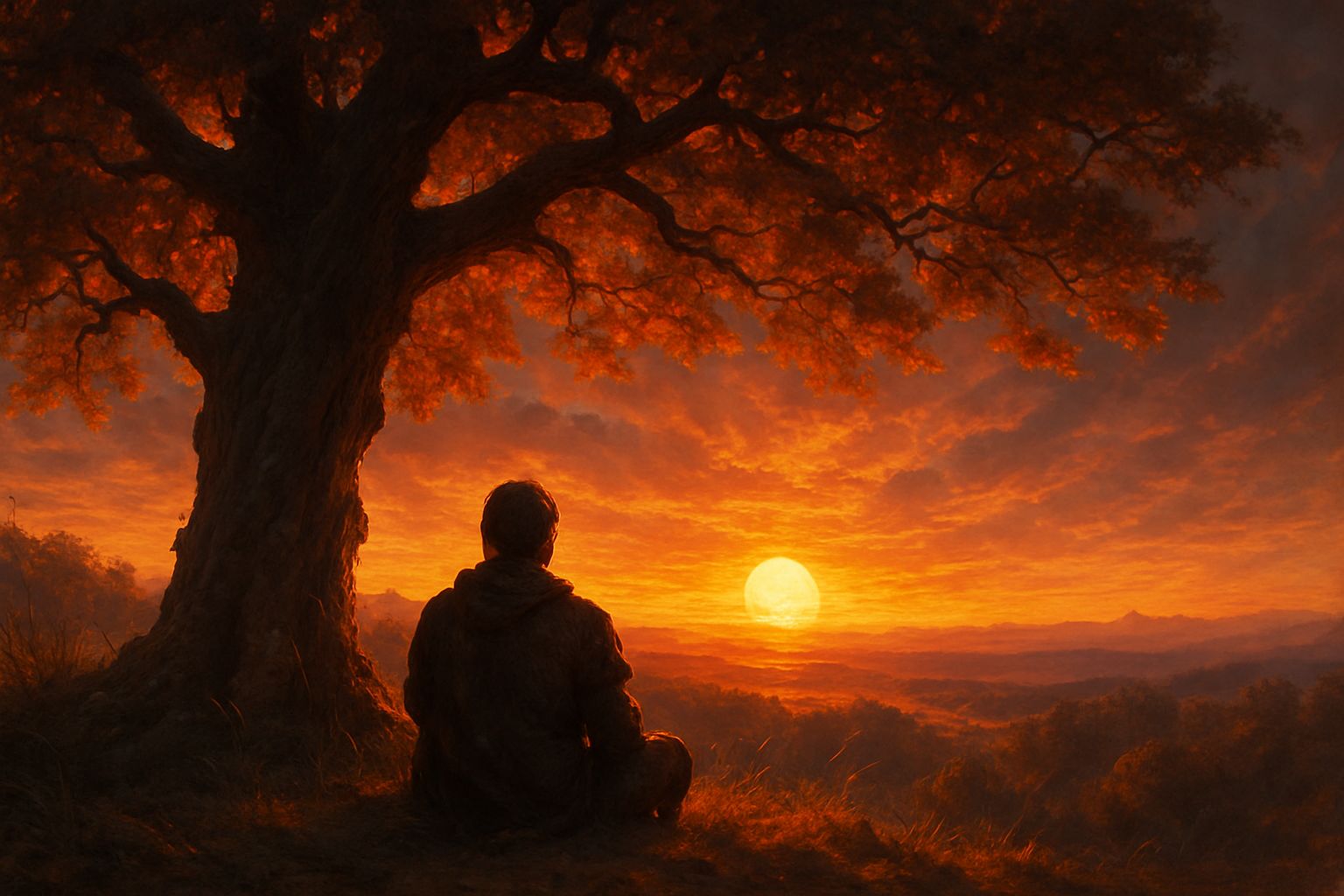
| And every dawn, thin and pale, came exactly as it always had - beautiful, inevitable, a countdown to the end. |
Description
It began with a whisper, then a miracle, then a certainty.
A woman, Vespera, appeared in the city of Ventusa, a wanderer, pale, calm, and nameless. She spoke simply, her words unrecorded until it was too late. Yet every word she spoke came true. Storms she foresaw struck on the exact hour she promised. Crops failed or flourished as she foretold. She spoke the death of kings, the fall of cities, the return of lost ships from the sea, and all happened exactly as her predictions.
Within months, her name was known across the world. Within a year, she was a prophet. Within two, she was the only voice anyone listened to.
Then Vespera gave her final prophecy: “At dawn, three years from now, the world will end.”
She did not say how. She did not say why. Only when.
And when every other prophecy proved true, the world believed her.
The Prophet
No one knew her origin. Some said she was a saint of the old gods, others a messenger of something that lived beyond them. Scholars claimed she spoke in lost dialects, languages older than nations.
Her followers, the Vesperati, called her The Dawnmother, for she promised not damnation, but release, that the end would be a mercy, a “return to stillness.”
She never accepted temples or offerings. She never took a throne. She walked the world barefoot, speaking only truth, and that was what terrified people most.
Her predictions grew smaller and more personal toward the end, names, dates, secrets whispered by her by strangers, all of which came true. Even her skeptics began to tremble when she said the sun would rise only three more years.
The Shattering of Faith
The effect was instant and absolute.
Priests declared her either divine or demonic. Rival churches split overnight. Old gods, silent for generations, found their temples full again as people begged for salvation. New faiths formed in her name, some seeking redemption, others celebrating annihilation.
The world divided into three great movements:
- The Penitents, who sought forgiveness through sacrifice and prayer, believing that purity might spare them from the end.
- The Revelers, who saw her prophecy as freedom from consequence and lived as if already dead.
- The Doubters, who clung to reason, calling her a fraud or a heretic, even as events kept proving her right.
Conflict broke out between all three, though no one claimed victory.
The Fall of Order
With faith fractured, nations followed.
Governments collapsed under apathy and despair. Armies deserted. Economies died as coin lost meaning. Who needs silver when the sun itself has an expiration date?
Some leaders declared martial law, enforcing calm with terror. Others tried to suppress all mention of the prophecy, burning her words, killing her disciples, and executing anyone who spoke of “the Dawnmother.”
But fear does not die in silence. It spreads like fire beneath the skin.
The roads filled with pilgrims and refugees, all moving toward nowhere, as if distance itself could delay the inevitable.
The Assassination
Three months after her prophecy, the inevitable happened.
In the city of Velkhara, where she had come to speak one final time. She stepped onto the balcony to address the crowd; thousands stood silent, waiting for her voice. She smiled once, and then the shot came, struck down, shot through the heart by an unknown assassin.
The world did not end that day, but something in it broke.
Her death splintered her followers. Some believed she would return at the final dawn. Others claimed she had ascended already, and the countdown had begun in truth. The Doubters rejoiced briefly, until the next hundred prophecies, all recorded by her disciples, continued to come true.
Now, no one knows if the end was delayed, or if the clock simply ticks unseen.
The Long Countdown
As the date approaches, madness grows.
Cities are half-empty, half-riot. Entire families vanish into the wilderness to await the end in solitude. Others fill the brothels and taverns, drowning themselves in pleasure and poison. Some walk naked in the streets, because nothing will soon matter.
Criminals walk free; judges no longer hold trials. The last universities turn to debating whether truth itself can still matter. Merchants burn their ledgers, kings abdicate their thrones, and slaves walk away from the fields, unchained by apathy.
The sky seems darker each week, though no one can prove it. Some say the stars have shifted. Some swear the tides have stopped.
In the ruins of temples and palaces, candles burn without cause, not in prayer, but in defiance.
The Final Year
The calendar bleeds away month by month.
Messiahs rise, claiming to be her reborn. Some promise salvation, others vengeance. The Penitents march in chains across the desert. The Revelers hold feasts that end in fire.
The world no longer builds, it waits.
As the last year dawns, people have stopped asking if she was right. They only ask what form the end will take: fire, storm, silence, or something beyond even those.
And still, every dawn comes. Every dawn feels thinner.
Tone and Themes
Apocalyptic dread mixed with tragic beauty. A slow, inevitable unraveling, not of the world itself, but of meaning. Calm terror beneath fatal certainty.
Themes
- Faith and Despair: When prophecy replaces choice, belief becomes madness.
- The Death of Order: Society collapses when time itself has an end.
- The Seduction of Certainty: Even the truth can destroy if it removes hope.
- The Beauty of the End: In its final days, humanity is honest. No masks, no lies, only the desire to be remembered.
The world does not fear the end itself.
It fears that, when dawn finally comes, it will rise to nothing at all.