The Hungry Sea
| Story |
|---|
| They found the ship three days after the storm. |
| It drifted just beyond the shoals, pale sails torn and hanging limp, its hull groaning softly with the rhythm of the tide. The fishermen approached with caution, rowing in slow circles. The vessel bore no flag, no lights, no sign of life. |
| The youngest among them called out. No answer. Only the creak of wood and the faint, hollow sound of breathing; though there was no wind. |
| When they climbed aboard, they found the deck washed clean, too clean, as though scoured by more than rain. The ropes were gone. The masts glistened wet even under the sun, and the planks beneath their boots gave slightly, like skin. |
| The captain’s log lay open on the table below deck. The ink had run, but the last entry could still be read, written in a cramped, hurried hand: “Still following. No wake. No wind. It watches.” |
| The men did not stay long. One lifted a lantern to peer into the hold, then froze. The walls were slick with a thin red film, and the air hummed, faintly, like a throat clearing somewhere deep below. |
| They left everything, the log, the cargo, the bodies they could not find, and rowed back to shore. |
| The next morning, the ship was gone. |
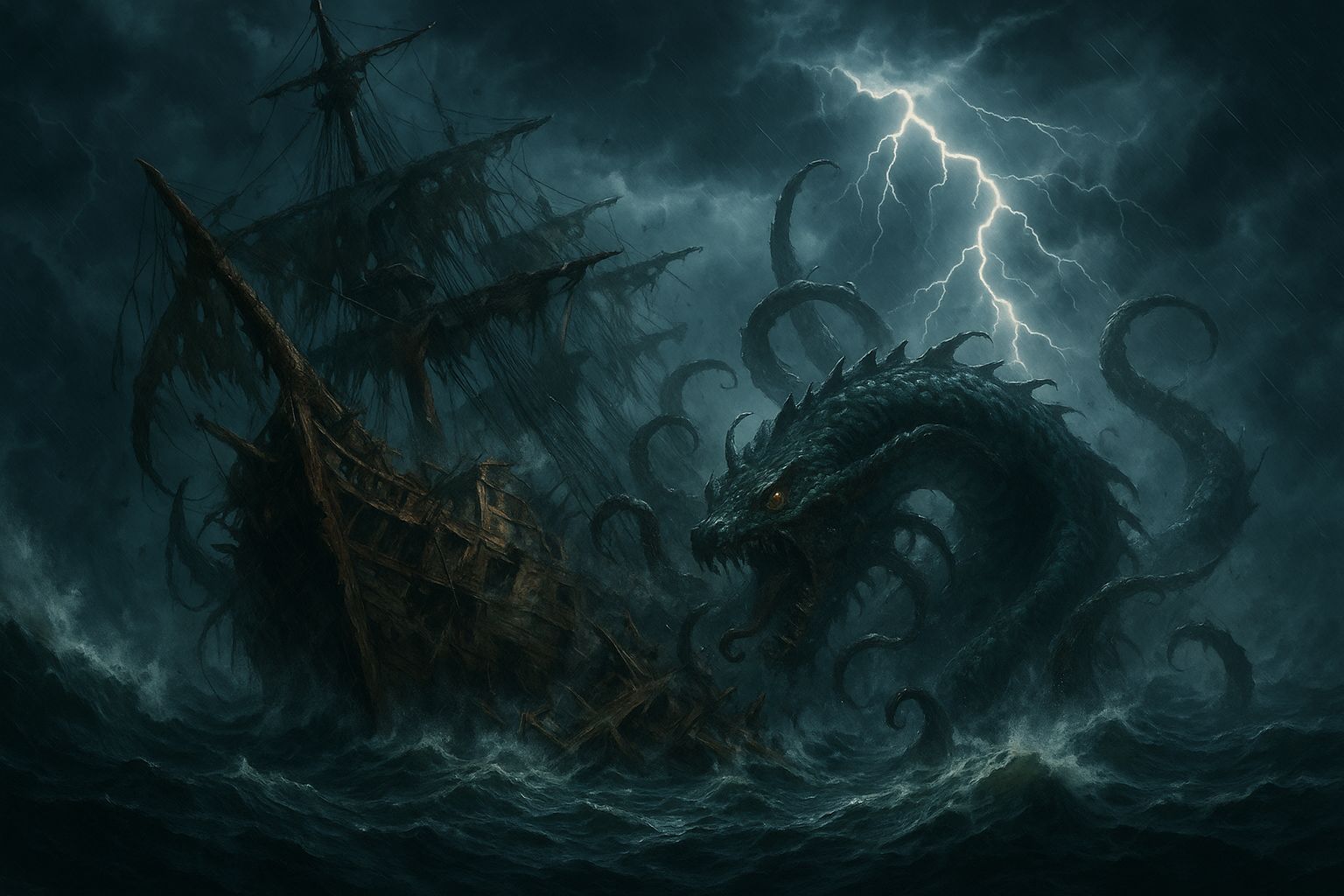
Description
The oceans of Heroica are not lifeless depths, but a living hunger. Beneath the waves move vast beasts older than gods, patient, silent, and cruel. The deep is a mouth that never closes, swallowing all who trespass. Sailors speak of shadows that follow ships for days, of eyes like lanterns in the abyss, of ships found adrift with not a soul aboard, only the sound of water breathing.
The sea is not a road. It is a wall.
The Shape of Fear
Because of the sea’s hunger, the world has turned inward. Trade travels by land, across guarded roads and desert caravans. Nations are distant and distrustful, their cultures divided by water no one dares cross.
Fishing villages cling to cliffs and estuaries, casting nets from long piers and bridges but never venturing far from shore. No one sleeps near the beach. No one sings at night. Parents warn children not to stare too long at the horizon, the sea notices those who look back.
They say it remembers every face that has drowned.
The Island Chains
The island nations, Olydrian Isles, Chalan, and the scattered archipelagos of the western sea, live in fragile defiance. They survive through quick crossings in light, narrow ships, leaping from one island to the next before the deep things wake.
Every voyage begins with an offering: wine, blood, or song. Sailors carry knives of silver coral to cut themselves if the waves rise, a gift of blood to distract the sea’s attention. They do not pray to gods. They pray to the water.
Their languages are full of silences, and their songs are never sung twice. To repeat a melody is to call it back.
The Drowned Gods
The merfolk alone still dwell in open water, protected by labyrinthine reefs and sacred trenches. They tell of the ocean as one vast being, neither god nor beast, but something beyond both. It feeds, it dreams, it listens.
Their temples are built of coral and bone, facing always downward. Outsiders cannot tell whether they worship the deep or beg it to forget them.
The Cultures of the Shore
Coastal peoples shape their lives around avoidance. Their ships are light, their harbors shallow, their homes built on stilts far above the tide. They never build piers too far out, and no one sails after dusk. Even their languages carry the fear, the word for “safe” is the same as the word for “land.”
Inland, the sea is myth. Maps end where the coast begins, marked not with harbors, but with warnings: “Here begins the edge of hunger.” The wealthy buy pearls and salt but will not touch seawater. Priests bless travelers who journey within sight of the tide.
The Lost Voyages
Every generation, someone tries again. A prophet claims to hear the sea’s voice. A king funds a ship built with consecrated iron. An explorer promises to find the world’s edge. None return.
Sometimes, months later, driftwood washes ashore, carved with shapes like letters, or teeth. The villagers burn it before the tide can rise to take it back.
Tone and Themes
The Hungry Sea is one of awe and dread, a slow, tidal horror. The sea is not evil, only vast, indifferent, and hungry. Humanity clings to its shores like insects on a drowning stone. The tone blends reverence with terror: beauty in enormity, fear in silence.
Themes
- The Indifference of Nature: The sea is not malicious; it simply consumes, because that is its nature.
- Isolation and Division: With oceans impassable, nations turn inward, growing strange and distant.
- Faith Without Gods: Sailors worship what cannot be reasoned with, the hunger beneath.
- Curiosity as Doom: Those who seek to master the sea are devoured by it, as every explorer becomes a sacrifice to mystery.
- The Smallness of Man: The sea endures. Only the land forgets.
The Hungry Sea is Heroica at its most primal, a world where the ocean breathes, remembers, and waits. The shore is not safety, only the pause before the next tide.