Supernatural is a Belief
| Story |
|---|
| The miracle drew a crowd before dawn. |
| A shepherd had claimed his daughter spoke with angels. By sunrise, the square was full: merchants, beggars, soldiers, priests. They came not to worship but to witness. |
| The girl stood on the temple steps, pale and trembling, her hands clasped to her chest. She said she had heard the voice of a god in the night, that it had promised rain after years of drought. The crowd listened, hungry for hope. The priests watched, hungry for control. |
| At the edge of the square, the skeptics from the university set up their instruments: mirrors, water lenses, and ink. They whispered measurements to one another, noting the tremor in her voice, the faint bruises at her throat, the way her eyes darted toward her father after every word. |
| When she raised her hands to the sky, a light flared above her, golden, soft, almost holy. The crowd gasped. Some fell to their knees. A merchant shouted, “It’s true! The gods have returned!” |
| But one of the scholars stepped forward and tossed a handful of powder into the air. The light vanished. Only smoke remained, smelling of oil and sulfur. |
| The girl burst into tears. Her father tried to run. The guards caught him, dragged him down the steps, and struck him until the stones were red. The priest declared it heresy, false miracles meant to deceive the faithful. The scholars nodded, satisfied, and packed their instruments. |
| By evening, the square was empty again. The sun sank behind the towers, and the air turned cold. |
| The skeptics returned to their lodgings, writing in their ledgers that another fraud had been exposed. The priests led a prayer for the purity of faith. The guards carried away the bodies. |
| And in a narrow alley nearby, a child whispered the story to her brother, swearing she had seen the light with her own eyes. |
| By nightfall, the rumor had grown wings. The god had spoken, they said. The miracle was real, and the fire that proved it would burn again tomorrow. |
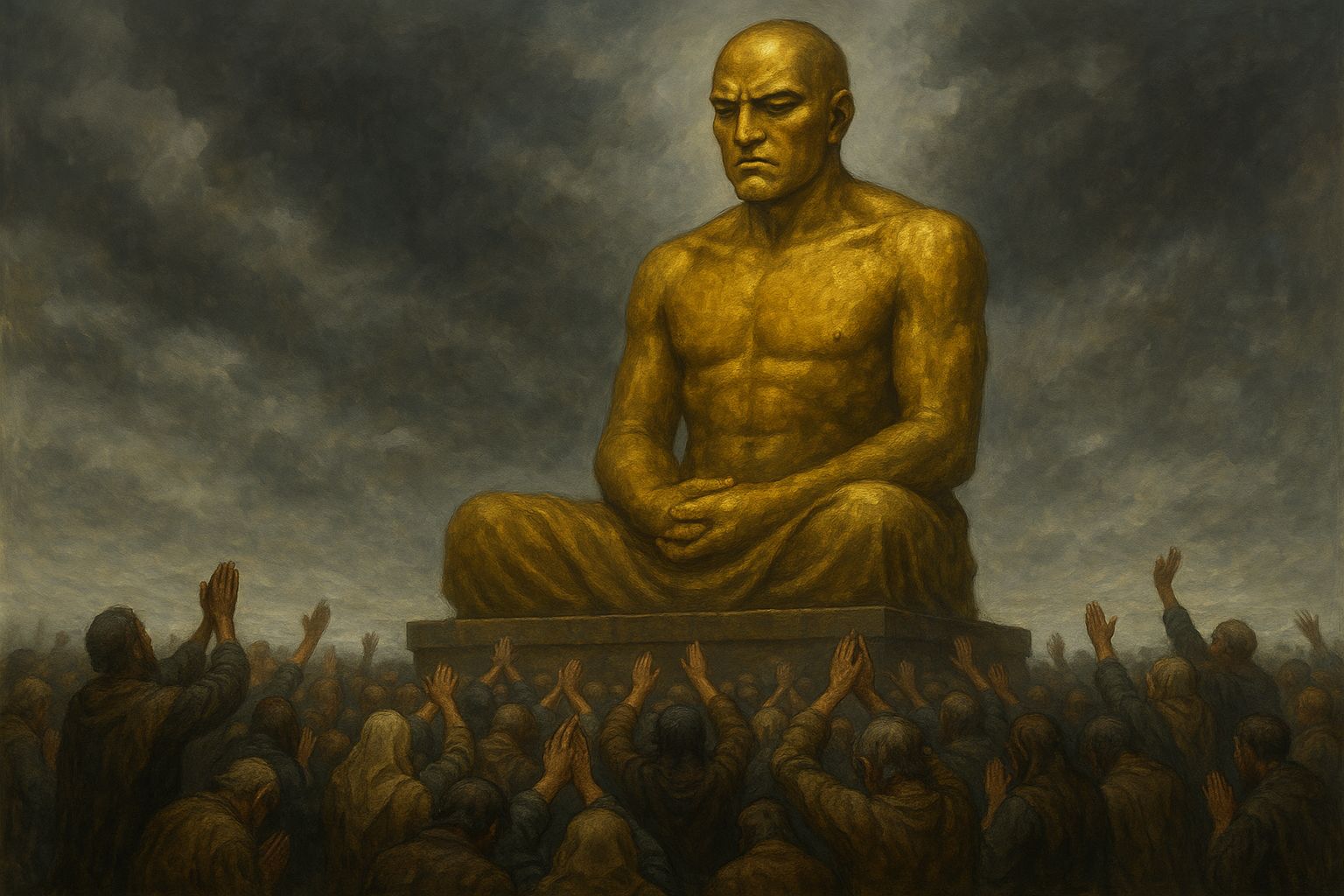
Description
In this version of Heroica, there are no gods, no demons, no magic, and no spirits.
Only people, frightened, ambitious, cruel, and clever, shaping a world that refuses to answer back.
The supernatural exists only as faith, rumor, and lie. Every miracle has a trick behind it. Every curse is coincidence. The world runs on muscle, metal, and intrigue. Blood, not prayer, oils its gears.
And yet, belief persists. Because people need to believe, even when nothing listens.
The Hollow World
Heroica feels the absence of the divine. The skies are mute. The sea has no soul. The stars do not watch. Temples still rise in every city, their bells ringing into a silence that never answers.
But faith endures. The priest still preaches. The witch still mutters. The emperor still claims divine right. The poor still leave offerings in the gutters. Because belief, once born, cannot die, even when proven false.
The silence itself becomes sacred, and from that silence, superstition blooms.
This is not an age of reason; it is an age of superstition without miracles. People explain the inexplicable through habit and fear. The wind that carries a whisper is called a ghost. A lucky harvest is proof of the gods’ favor. A strange illness is witchcraft. None of it is real, but belief makes it matter.
The divine may be absent, but its shadow rules everything.
The Age of Skeptics
Philosophers and naturalists thrive in the cities. They dismantle old miracles and write their truths in ledgers instead of scripture. They dissect relics, trace ley lines that lead nowhere, and expose saints as frauds.
To them, truth is power, and power, profit. Faith is a tool of control, and the wise learn to wield it instead of obeying it.
Where others pray for rain, skeptics build canals. Where others seek divine protection, they hire swords. And where others burn witches, skeptics quietly fund both the fire and the witness, for the sake of public order.
To the educated elite, the world’s emptiness is liberation. To everyone else, it is the sound of their gods never coming back.
Faith Without Fire
Religion still thrives, because disbelief is a luxury.
Most people cling to their gods out of habit, fear, or hope. Entire priesthoods function as governments and bureaucracies, their rituals unchanged even though they know they do nothing. They bless fields, heal the sick, sanctify wars, because without faith, society would collapse.
The gods are not dead, because they were never there to begin with. But the idea of them holds the world together.
Whispers pass among the clergy: that the rituals used to work. That once, long ago, miracles were real, and mankind somehow lost the right to them. But no proof remains. Only stories.
And yet, once in a generation, a false miracle stirs hope again, a trick of nature, a fraudster’s show, a strange coincidence, a charismatic prophet. The people flock to it, desperate for wonder. The authorities crush it quickly, for belief is volatile.
The End of Magic
There are no magicians, only charlatans.
The few who claim the title of sorcerer are actors and swindlers, wandering between towns to sell illusions. They burn powders that change color, bend light with hidden lenses, speak from ventriloquist dolls. Some even believe their own tricks.
But true magic does not exist. The world’s laws are immutable, its limits unyielding.
Witch hunts still happen, not because witches are real, but because fear is. Every unexplained death, every misfortune, every failed crop still demands a scapegoat. And so, the pyres burn.
Magic has become the favorite ghost: unseen, unreal, yet blamed for everything.
The tragedy of this world is not that it lacks magic, but that it cannot stop inventing reasons to kill for it.
Power in the Absence
Without gods or sorcery, only politics remains.
The throne replaces the altar. The general replaces the prophet. The merchant replaces the mage.
Nations are ruled by conspiracy and coin instead of miracles. Assassins, spies, and schemers are the real priests now, reshaping kingdoms with ink and whispers.
The Empire justifies conquest through “divine will,” though all know its gods are tools of propaganda. Zarhalem sells relics made of bronze and wax to the desperate poor. Mataraaj’s priests bless their armies before every campaign, then count the corpses afterward and call it proof of faith.
Power no longer hides behind divinity, it wears it like armor and calls it faith.
The Persistence of Shadows
And yet, doubt lingers.
Every culture has its mysteries: the haunted ruin, the cursed well, the relic that glows. The scholars always find an explanation, but explanations do not comfort. People need to believe the world means something.
That need becomes dangerous. Entire cults rise around lies they know are false. False prophets rule cities through charisma and terror. Monarchs claim divine bloodlines to keep the masses obedient.
Even the skeptics, in private, whisper their own quiet superstitions.
Because no matter how rational the world becomes, it remains terrifyingly empty.
The Tone of the World
This is Heroica stripped bare. A world without gods, where horror and wonder are mortal inventions.
Its power lies not in what is supernatural, but in what is believed. Every miracle is political. Every curse is psychological. Every act of faith is either manipulation or madness.
It is not a world of light versus dark, but of truth versus comfort, and most would rather be comforted.
Themes
- Faith as Control: Religion is an institution, not a revelation. The belief in gods is a weapon, not a truth.
- The Death of Wonder: Without the supernatural, the world is rational, and unbearably lonely.
- Man as Monster: With no demons to blame, only people remains responsible for evil.
- Belief as Power: Lies and symbols rule where magic once did. Conviction is the last sorcery.
Closing Line
The supernatural was never real.
The world’s horrors, its miracles, its wars and wonders, all made by mortal hands.
The only magic left in Heroica is belief, and it’s the most dangerous kind.