The Bleeding Gods
| Story |
|---|
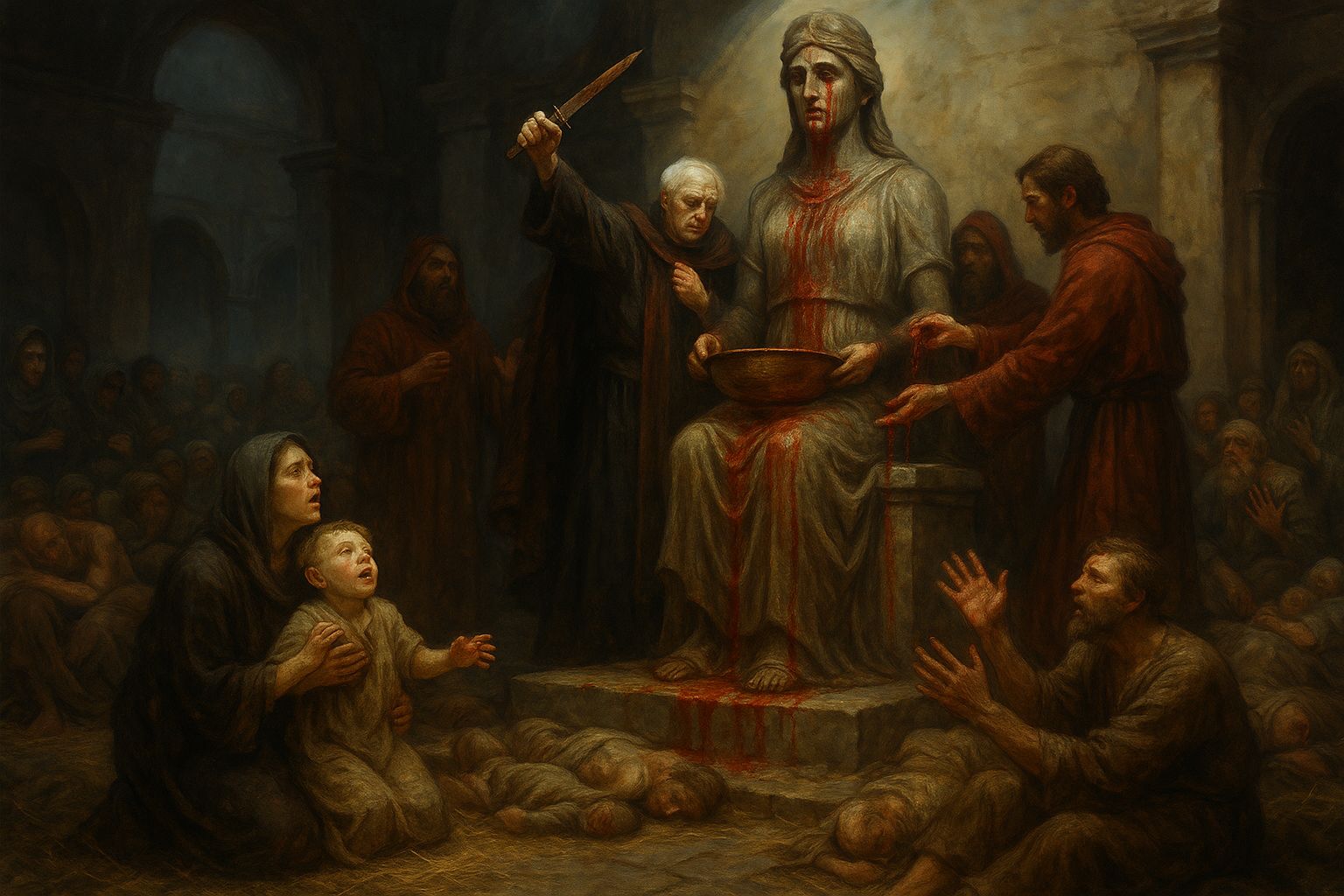
| They built the bowl of bronze before dawn, hammered from old shields and polished until it sang when struck. The courtyard filled with the sick, their breaths sour with fever, their bodies piled on straw. Mothers held children close. Men who had lost wives stood with hands that would not still. Everyone watched the priests at the altar as if the world depended on them, because in that hour it did. |
| High Priest Marek climbed the steps, his face white with age and something like resolve. He spoke no speech. He held the knife up so the crowd could see the runes carved along the blade, runes that once were written in hope and later in fear. His attendants cut their palms and let the blood fall into the bronze bowl. Marek touched his own forehead, then his chest, then the blade, and the red that came was slow and steady like a promise. |
| When the bowl was full, he tipped it over the statue. The liquid splashed along marble knees and pooled at stone feet. For a heartbeat nothing happened. Then the idol wept, not tear but blood, dark and bright at once, streaming down the cheeks into the carved eyes. The air tasted of iron. The sick began to cough and sit and look around as if waking from a long dream. A child who had not taken a full breath in days gasped, then laughed, then cried for hunger. |
| Marek smiled as the first healing moved through the rows. He called the names of the dead tribesmen, of the lost mothers, and the crowd answered with a chant that swallowed the courtyard. He lifted his hands to bless them, but his voice faltered. The runes on his skin flared like coals. His attendants staggered, and then fell, their mouths open as if to speak, their faces already pale. |
| By noon the square was full of life. The fever broke in men who had not risen in weeks. Women who had been sheathing their grief found themselves singing. The healed kissed the hands that had bled for them. They carried food and blankets. They danced like people given back to a small merciful world. |
| At the edges of the celebration the priests lay still, the skin along their veins blackened and split where the offering had been given. Marek’s lips smiled and did not move again. The attendants were stone under cloaks. A few hands tried to close their eyes. No one knew whether to grieve or to give thanks. |
| That night the city burned torches from two fires at once, one for the living one for the dead. Pilgrims came the next morning with knives of their own, asking what the price had been. The elders said the gods had taken their due. The healed said only that they had been touched. Some of them woke with marks along their wrists, faint red lines like the runes on the blade. They slept more thinly after that, and sometimes at dusk they would look toward the temple and feel a hunger they could not name. |
| The bowl was set in the temple and never used again. People still left offerings, and sometimes, very seldom, someone would whisper that miracles do not come cheap. They were right. The gods had been given blood, and the city had been given life. The two were not the same thing. |
Description
The world is sick, and the sickness runs through heaven. The gods, once distant and silent, have drawn too near. Temples echo with the sounds of weeping stone and rusted bells. Idols bleed from their eyes, their altars slick with offerings that no longer bring comfort. Prayers are still answered, but the answers wound as much as they heal.
Miracles have grown costly. Every act of divine power demands blood, not symbolic, but real. Priests whisper of a hidden hunger in their gods, as if divinity itself has turned parasitic. A healing touch leaves the healer’s flesh cracked and bleeding. A blessing on a harvest drains the priest’s strength to the bone. Those who call upon the divine too often burn from within, their veins glowing with sacred fire before they collapse. Faith has become a gamble between salvation and ruin.
The change runs deeper than religion. Wounds fester no matter the salve. Fever passes from one village to the next, and even the most gifted alchemists find their mixtures turning sour. The land seems to breathe less deeply. Forests grow pale, animals bear strange sores, and the sea carries the taste of iron. It is as though the pulse of the world itself is faltering.
Prophets and Despair
Fear becomes doctrine. Prophets rise and fall like sparks in a storm, each claiming to know the reason. Some say the gods are dying, feeding on mortals to sustain themselves. Others claim mankind has grown too faithless, and the gods now demand proof of devotion through suffering. Cults thrive on despair, promising deliverance through sacrifice, and entire towns vanish overnight in smoke and silence.
Blood and Magic
Magic still works, but it is different, erratic, ravenous, red. Spells call for blood where once they required will alone. Magicians slice their palms before speaking a word, their power paid for in flesh. Even the smallest enchantment leaves the taste of copper in the air. The lines between priest and mage blur, for both now draw from the same source: a dying divinity that demands to be fed.
The Scholars’ Fears
The scholars of the old orders speak in fearful metaphors. They say the divine veins of the world are bleeding out, that heaven is hemorrhaging into the mortal realm. Perhaps the gods are not dying but being born anew, shedding their former shapes in agony. Or perhaps something older and hungrier is devouring them.
Faith in Peril
Whatever the cause, faith itself has become perilous. To pray is to risk being heard. To perform a miracle is to invite the gaze of something that remembers your name. And somewhere, in the hollow silence between heartbeats, the world waits to see if the bleeding will ever stop.
Tone and Themes
The Bleeding Gods is a story of sacred decay, a world where faith festers and holiness has turned to rot. The divine is not gone but too close, pressing down upon creation like fever. Miracles still happen, but they burn, bleed, and consume. It is a tone of reverence twisted into dread, where devotion and despair have become the same act.
Themes
- Faith as Disease: Worship spreads the gods’ sickness; devotion is both cure and contagion.
- The Cost of Miracles: Every blessing demands blood. Holiness feeds on pain.
- Divinity in Decline: The gods are dying or devouring each other, and the faithful share their decay.
- The Blurring of Sacred and Profane: Magic and prayer draw from the same red source; both parasitic, both desperate.
- Hope as Heresy: To seek healing is to defy the divine. Yet silence means death for the world itself.
The Bleeding Gods is a setting of divine horror, where prayer is peril, miracles wound, and the sacred will not stop bleeding.