Humans
| Story |
|---|
| The square was alive with shouting when I arrived, banners snapping in the wind above the crowd. Farmers in mud-stained boots pressed shoulder to shoulder with merchants in bright cloaks, and every face was turned toward the steps of the council hall. |
| At the top stood Lady Alira, her voice ringing out across the square. "The Empire has bled us dry for too long. No more tribute, no more soldiers marched away to die in foreign wars. From this day, we stand on our own." |
| The cheer that followed shook the cobblestones. A baker's boy threw his cap in the air, and even an old beggar beside me wept openly. But not all were smiling. I saw merchants glance at one another with tight lips, counting what trade they might lose. I saw a captain of the watch pale as he thought of imperial reprisal. |
| And then I saw young Joric, no more than sixteen, clamber onto a cart with a broken spear in his hand. "For freedom!" he cried, his voice cracking, yet the crowd roared back as if he were already a hero. |
| That is humankind in a single moment: divided and uncertain, yet swept forward by ambition and fire. Whether they rise or burn, no one can say-but they will always reach higher. |
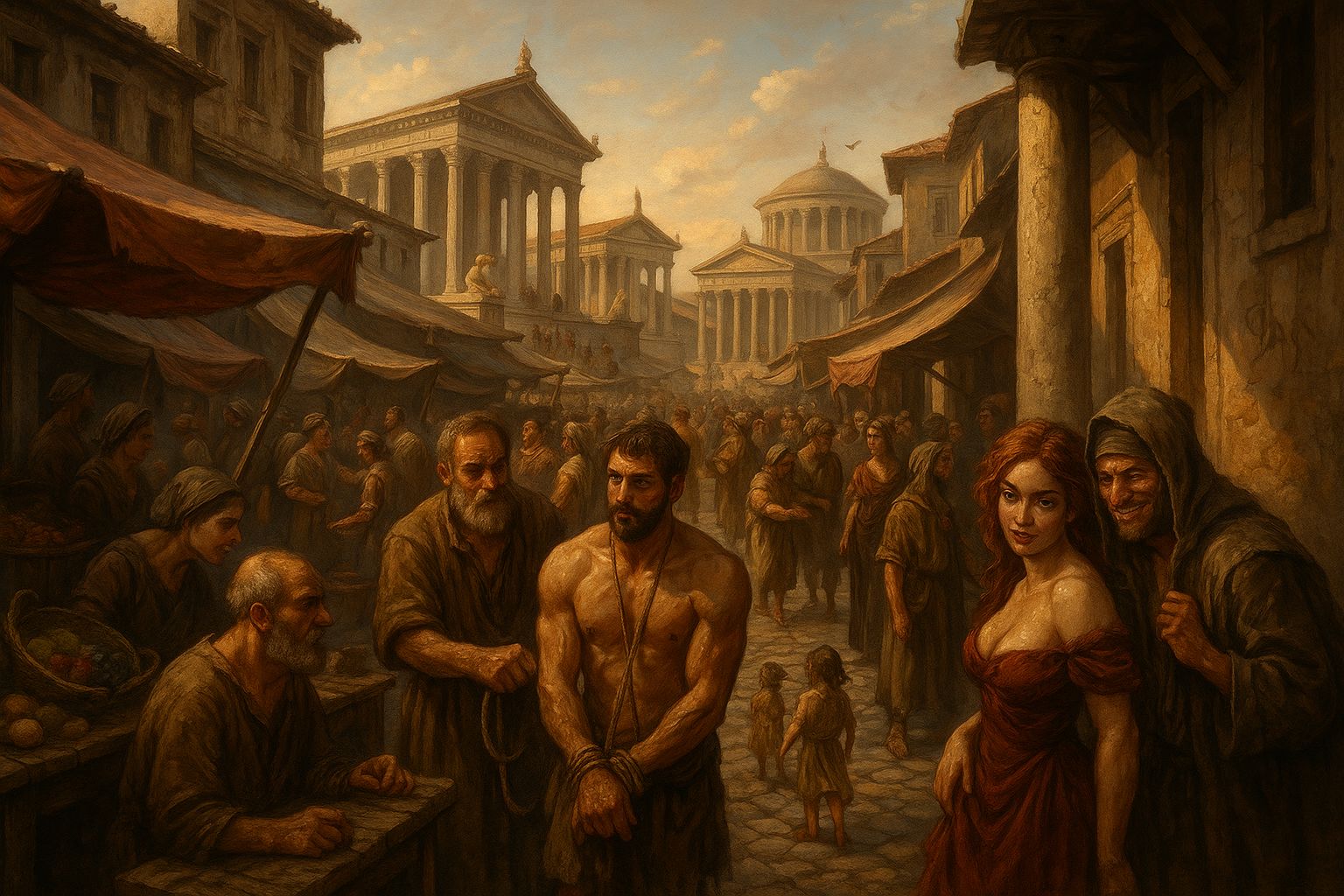
No people are as widespread, diverse, and unpredictable as humankind. They are called many things across the world: the restless folk, the short-lived dreamers, the weed that grows in any soil. Humans are found on every coast and plain, from the frozen north to the sweltering jungles, from desert caravans to mountain fortresses. Their strength lies not in unity but in adaptability. While dwarves shuffle from city to city begging beer and favors, and elves cling to the beauty of their groves, humans bend and change with circumstance.
Where dwarves endure, elves preserve, and orcs hold to law and blood, humans chase novelty. They hunger for more, more land, more wealth, more knowledge, more gods, more power. This drive has made them builders of empires, founders of cities, and conquerors of frontiers. Yet it has also made them destroyers, sowers of chaos, and masters of civil strife.
Cycles of Rise and Ruin
Human history is a tale of constant upheaval. Kingdoms rise swiftly, fueled by ambition and vision, but they crumble just as quickly under greed, corruption, and rebellion. What the grandfather builds, the grandson may squander, and the great-granddaughter may rebuild anew. To long-lived peoples, this appears reckless and tragic. To humans themselves, it is simply the rhythm of life.
Unlike elves who dream of eternity, humans think in lifetimes. One reign, one generation, one gamble at glory, that is enough to shape a world. Their short span does not restrain them, but rather presses them onward with fierce urgency.
Diversity of Form and Culture
Humans differ more from one another than perhaps all the elder peoples combined. Their bodies adapt quickly to land and climate. Pale-skinned northerners endure frozen fjords and snowbound forests. Dark-skinned tribes cross burning deserts and scale red cliffs. In the jungles, lean hunters with quick hands move silent through the trees. On the steppe, riders grow long-limbed like their horses, hardened by wind and endless horizon.
Their cultures are no less varied. Some live by the plow, shaping ordered fields and stone towns. Others wander with their herds, raising tents that vanish with the season. Some bow before emperors and kings, others kneel only to clan elders or no one at all.
Faiths and Gods
No people hold so many gods as humans. They worship the sun, the moon, the sea, the storm, and the spirits of their dead. They forge cults around new idols, follow prophets through deserts, or take up foreign gods if the promise of power or salvation is great enough. Unlike elves, who revere the same timeless deities, or dwarves, who mumble any prayer that will earn them a free drink, humans abandon old faiths when they no longer serve. This makes them seem fickle, even faithless, yet it also makes them open to visions and revelations denied to more rigid peoples.
Priests, prophets, and heretics rise among them in every age, and human faiths often burn bright with zealotry. The same fervor that leads them to crusade and holy war can also inspire works of compassion, reform, and art.
Strengths and Flaws
Ambition burns at the heart of humanity, the flame that drives them to rise above their station and reach for what others would never dare. It is ambition that has built their empires, opened seas to their ships, and turned barren fields into fertile heartlands. Yet that same hunger never rests, and what is won is seldom enough. Ambition drives kings to overreach, nobles to plot, and neighbors to war. The same fire that lifts them to glory can consume them from within, for humans rarely know contentment. In this way, their greatest asset and their deepest flaw are one and the same, the restless desire to grasp at more than they already hold.
To outsiders, humans embody contradiction. They are courageous, yet reckless. Loyal, yet treacherous. Imaginative, yet forgetful. Their great gift is not strength of arm or clarity of wisdom, but sheer will to change. They are the folk who seize the moment, for they cannot afford to wait.
A halfling saying runs: "Plant men in stone or in sand, and they will grow." Elves call them short-lived dreamers, but sometimes envy the intensity of a human life. Orcs respect their ferocity in war, though they laugh at their endless squabbling.
The Shadow of Empire
Nowhere is the ambition of humankind clearer than in the Great Empire, the vast realm that has dominated much of the world. Built on conquest and colonies, it has spread human influence farther than any other people. But the empire too falters, crumbling from within as rebellions, secessions, and corruption strain its hold. Some say this proves the fate of all human endeavor: greatness achieved, greatness lost, and then sought again by another hand.
Even beyond the empire, humans shape the course of history. Their merchants weave trade networks across seas. Their explorers push into jungles and wastelands. Their mercenaries sell their swords to every cause. Wherever there is change, one is likely to find human hands upon it.
The Measure of a Life
Perhaps the truest mark of humankind is possibility. A human child can grow into anything, king or beggar, hero or tyrant, prophet or outlaw. No other people is so uncertain in destiny, nor so capable of reaching beyond what seems possible.
Their short lives do not limit them. They burn all the brighter for it, and in a single lifetime can leave marks on the world that even elves must acknowledge. Among all peoples, humans are both the greatest hope and the deepest fear. They are the fire that warms, and the fire that burns.
Possible Secrets
Origin
Some claim humans are not a first-born race at all, but a failed attempt by the gods to fashion elves. Cast aside as imperfect, they multiplied in secret until their numbers surpassed all others.
Sunken Continent
In Lumekhet, scholars whisper that humans first came from across the Worlddeep, carried on black ships out of a drowned continent. Their spread across the world was less a natural growth than a slow conquest that never ended.
The Price of Power
Human rulers who achieve great success often die young, struck by illness or misfortune. Some claim this is the world itself resisting their ambition, ensuring no human realm can endure unchanged.
Soul Hunger
Certain priests claim humans have "hungry souls," larger and brighter than those of other folks, which is why they burn out so quickly. Elves live long but never burn as hot, dwarves are dull and flickering, and orcs blaze only in battle.
Sometimes, They Come Back
Necromancers tell a darker tale: that human souls are the easiest to call back, the easiest to bind, and the hardest to let go. That is why so many restless dead are human.
Chameleons
Some of scholars believe the reason humans adapt so easily is because their blood is not fixed. It shifts over generations, stealing traits from the lands and peoples around them.
Adventure Hooks
Skimming the Cream
A frontier town has grown fat on trade, but its mayor is corrupt, skimming off everything and leaving the farmers starving. The townsfolk are too afraid to resist-outsiders may need to help.
Hitting It Big
In the alleys of a great human city, gangs made up of desperate youths fight over scraps. One of them stumbles on a treasure too great for them to keep hidden.
Guild War
A human guild demands higher taxes from foreign traders, sparking riots in the marketplace. The guild leader insists on fairness, but rivals are already plotting to overthrow him.
Alcohol Fuelled Genius?
A notorious drunkard in the city claims he can build a wondrous invention, if only he can keep sober long enough. Someone is willing to pay for him to succeed, or to make sure he fails.
Power Games
A noble's children plot against each other for inheritance. Outsiders are drawn into their intrigue, either by accident or because someone thinks they can be useful pawns.
The Prophet
A charismatic preacher whips a mob into frenzy, calling for holy war. The ruling council is terrified, yet dares not silence him openly.
Gold Rush
A local farmer claims to have struck gold in his field. Fortune-seekers flood the area, sparking chaos, greed, and bloodshed.
Conquistadors
A would-be explorer gathers a crew to push into uncharted jungle or wasteland. The promise of riches is strong, but so are the risks.
Silence is Golden
A human bard composes songs mocking a powerful noble. When the noble seeks revenge, the bard vanishes-did they flee, or were they silenced?
The World is a Stage
A troupe of human actors arrives in town. Their plays are bawdy, scandalous, and strangely prophetic-too prophetic for coincidence.