Waverider Story - Campaign - Author's Notes
Ozukari
Japan style power, finesse, hierarchy and brutality.
| Story |
|---|
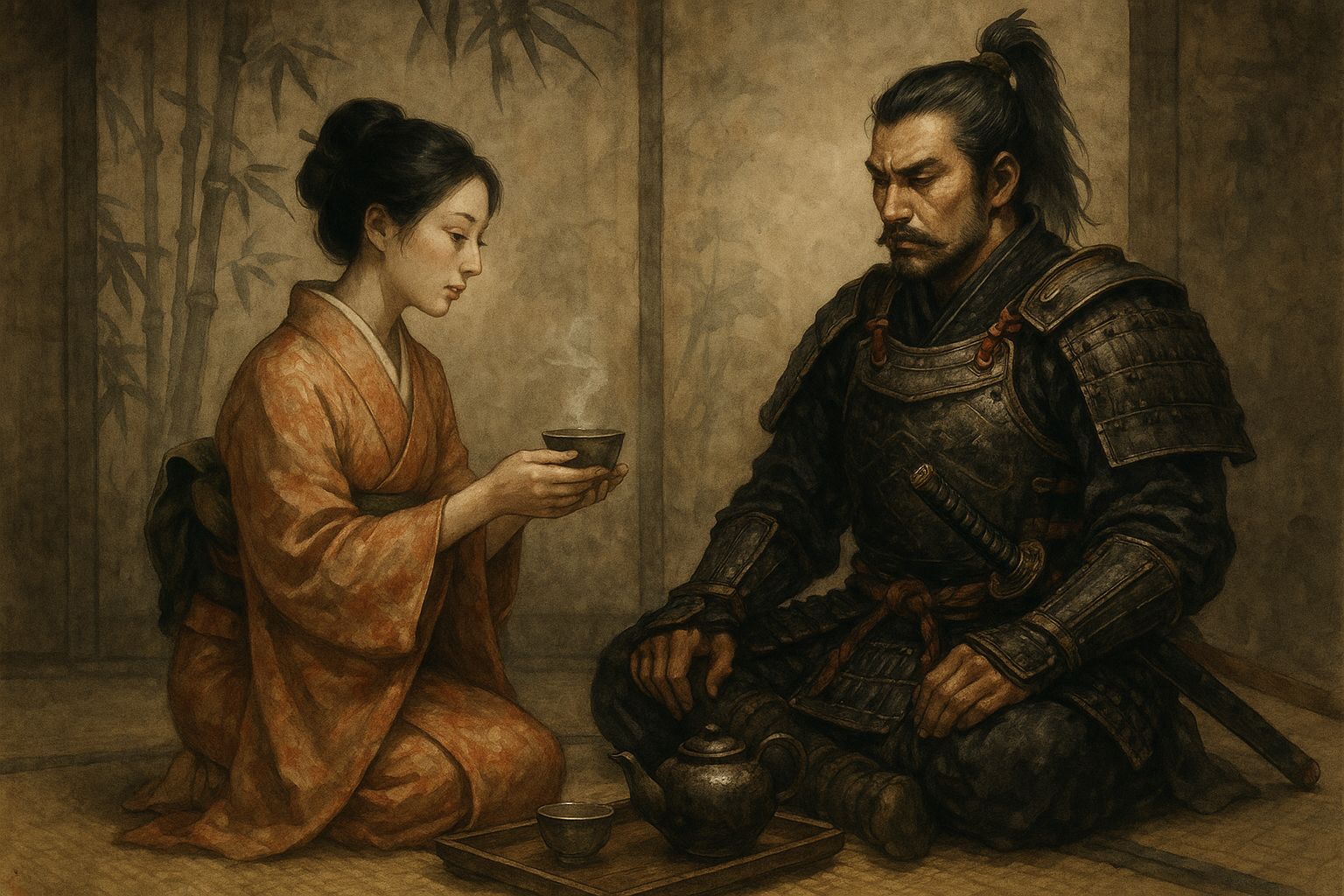
| The courtyard of Lord Minobe's manor was filled with the scent of pine and wet earth. Torches flickered against the walls, throwing long shadows. Hideo, a minor retainer with little more than a patch of land and a single concubine, knelt as his lord passed through the gate. |
| Lady Aiko stood beside him, her eyes lowered, her hands folded in silence. She had been his solace, his joy in the cold nights, the only warmth in a life of duty. |
| Lord Minobe's gaze lingered on her for a moment. He smiled faintly. "She is wasted here," he said. "I will take her into my household." |
| Hideo bowed until his forehead touched the stone. "It is... an honor, my lord." His voice held steady, though his chest felt hollow. |
| Minobe's retainers led Lady Aiko away. She did not look back. She could not. |
| When the torches dimmed and the courtyard emptied, Hideo remained kneeling. His hands shook as he pressed them into the cold stone. The mask of honor cracked, and tears fell, hidden in the night. |
| He did not curse his lord. He did not cry her name aloud. Such things would bring demons. So he wept in silence, knowing none would ever see him, and that his loss was order's demand. |
| Story |
|---|
| The manor was quiet after the feast. The lord had taken Lady Aiko away, his retainers trailing in a procession of silk and steel. Hideo, the minor retainer left behind, knelt alone in the garden, the lanterns swaying in the night breeze. |
| For hours he sat unmoving, hands folded, head bowed. His duty was done. His lord had spoken. He had given up his only concubine with the words of honor expected of him. |
| But the silence pressed like a weight upon his chest. His lips trembled, and at last, the words slipped free. |
| "Thief," he whispered into the night. "You took her, as if I were nothing. As if my loyalty means nothing." |
| The garden seemed to grow colder. The pines groaned in the wind, though no wind stirred. Shadows lengthened along the stone path, curling like claws. |
| He clamped a hand over his mouth, heart pounding. To speak such thoughts was to fracture the order. And fracture invited them. |
| From the corner of his eye, he thought he saw something stir by the lantern, a glimmer of eyes in the dark. The flame sputtered, guttered, then flared again. |
| Hideo fell prostrate on the ground, forehead pressed to stone, begging forgiveness to the night, to the order, to the Emperor himself. But the words could not be unsaid. |
| When the dawn came, they found him there, his body stiff, his eyes wide open. None spoke of what they saw in those dead eyes. None dared. |
| It was said that demons claimed him, as they always do when order breaks. |
Description
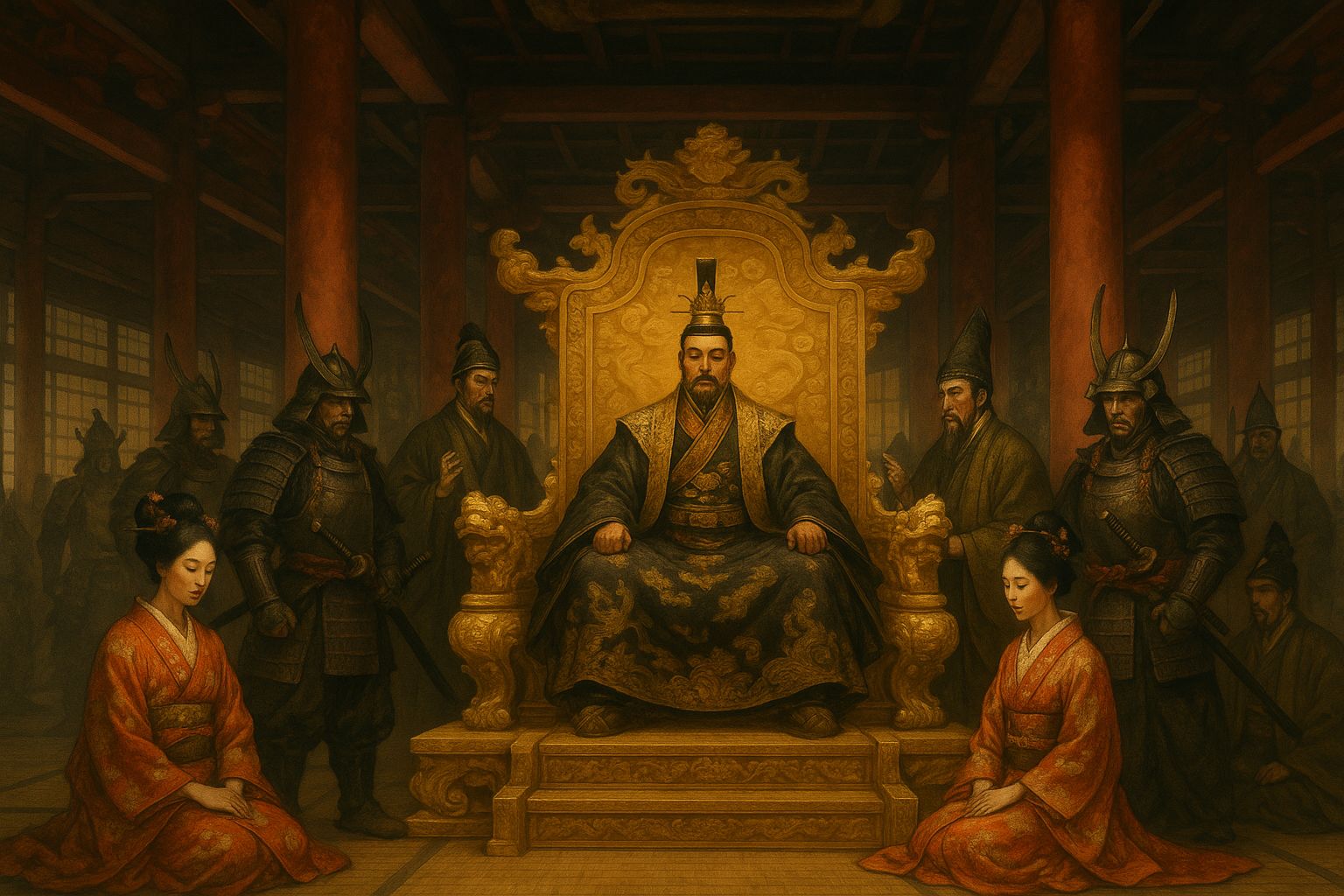
Ozukari is a proud island kingdom, lying between the Dragon Sea and the Sunhome Sea. It is a realm of misty mountains, pine forests, and rocky coastlines, made up of the great island of Honshuzen and the lesser islands of Karuyama, Ishikari, and Tazumi. From the palace-fortress of the Chrysanthemum Throne in Kaoriyo, the Emperor Seiryoku IX rules with unquestioned authority. His word is law, and his presence is believed to be the shield that keeps the demons of chaos at bay.
Society and Structure
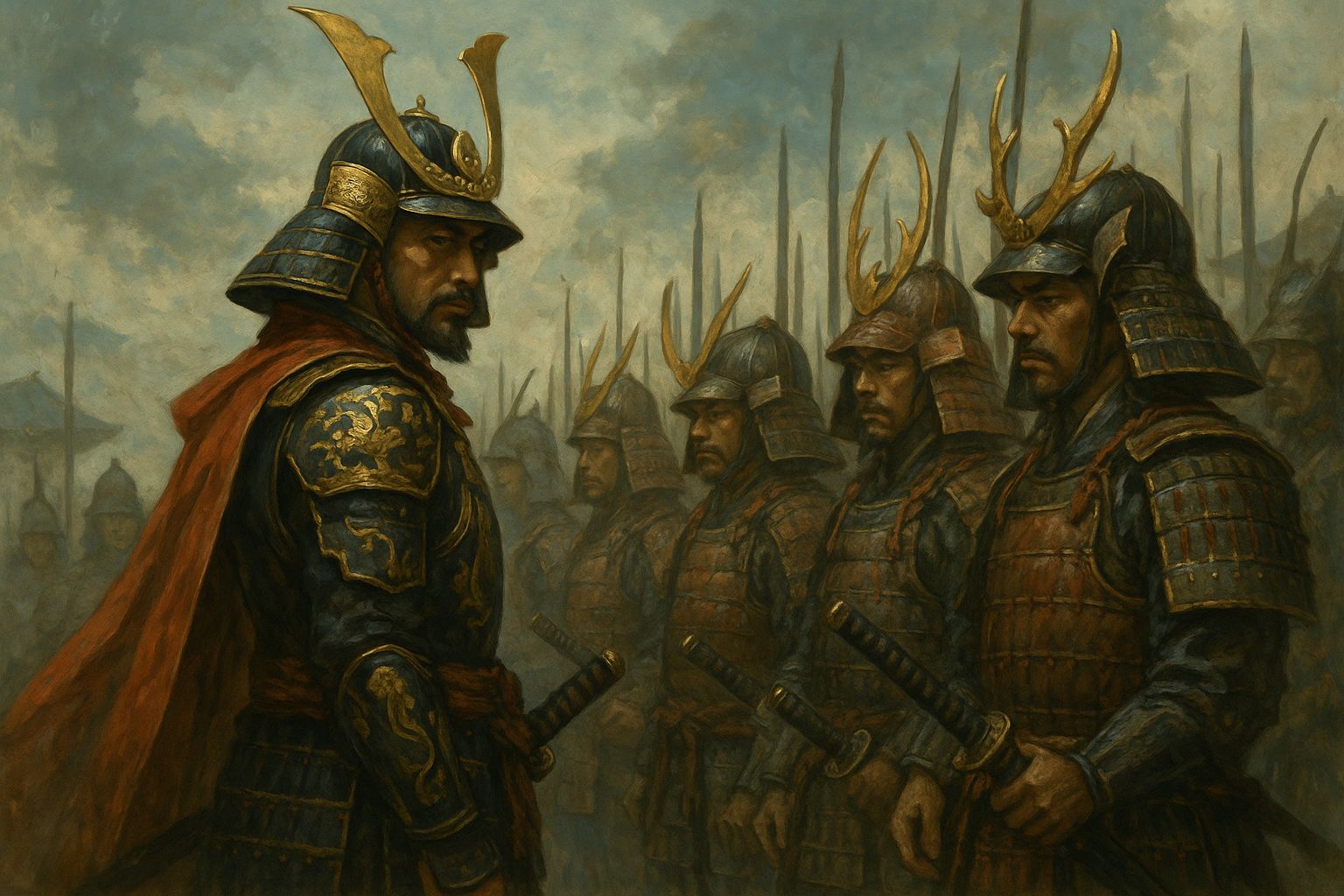
The nation is built upon order. Every village, from the rice terraces of Shimosawa to the fishing ports of Hakumoro, is woven into the strict hierarchy of lord and vassal. The greatest clans, such as the Tsukahara, Minatoya, and Kazanami, hold vast fiefs under imperial mandate. Beneath them are the lesser lords, each with their sworn retainers, soldiers, scholars, poets, and artisans.
The bureaucracy is labyrinthine. The Ministry of Records in Kaoriyo alone employs thousands of scribes, led by the Lord of Quills, Takemori Aritaka, whose ink-stained hands have signed the fates of merchants, diplomats, and peasants alike. Foreigners entering Ozukari without the guidance lawyer-guide often find themselves swiftly entangled in these laws, and just as swiftly punished.
Religion and Beliefs
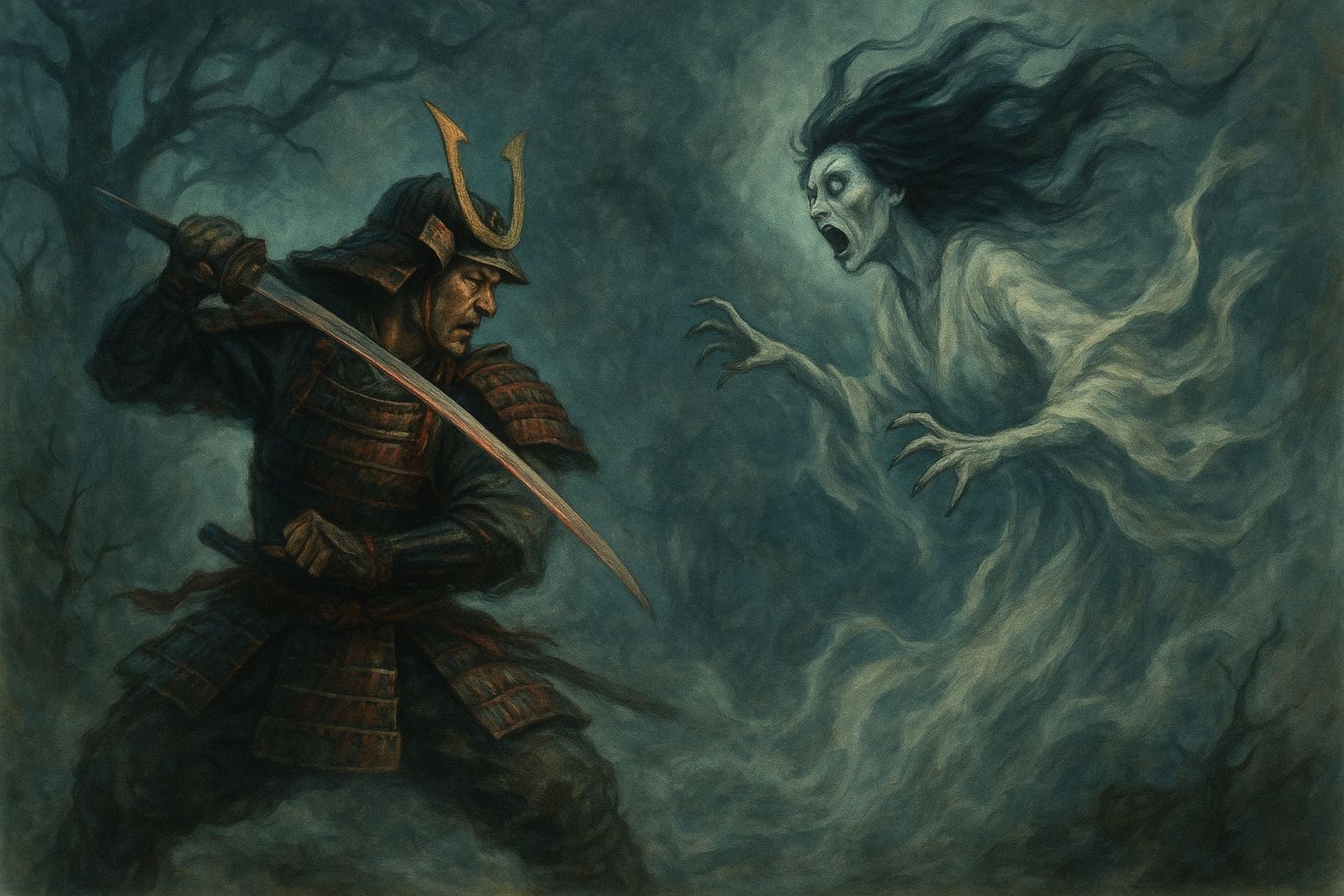
Uniquely, Ozukari has no gods. Instead, its people believe in the endless hunger of demons. Every forest is thought to be haunted, every shadow a potential maw of chaos. As beings of chaos, they can not stand the order, structure and loyalty mandated by Emperor himself. The Grand Shrine of Kurokami in Kaoriyo is less a temple of worship than a monument to structure, its black-tiled halls lined with oaths of loyalty carved in stone by generations of lords. Priests, known as Jikei, do not pray to higher powers, but perform purification rites, recite laws, and ensure that order is never broken.
The people say that a man who betrays his lord is already possessed, for only a demon would drive one to break the sacred chain of loyalty. Breaking the order is to invite demons.
Gender and Family
Ozukari is rigidly patriarchal. Power belongs to men, and women exist as ornament and vessel. Lords boast of their concubines as a man boasts of his swords. A noble with few concubines is considered weak, lacking both wealth and vigor. Marriages do not exist, only possession. Lady Hoshino, once famed as the most beautiful courtesan in the islands, passed from three different lords' households in a single year, each transaction celebrated not as scandal but as honor.
In rare cases where lords cannot produce heirs, they take the pregnant concubines of their vassals and declare the children their own. To protest is unthinkable.
Honor and Punishment
Loyalty is more sacred than blood. A man without a lord is already dead, and so entire households have been erased when their masters perished without heirs. The infamous Fall of House Arakusa is still whispered of: when Lord Arakusa fell in battle, the Emperor decreed his vassals struck from life, for their loyalty had no master left to bind it. Not just his household was erased, every man, woman and child in his feifdom was killed.
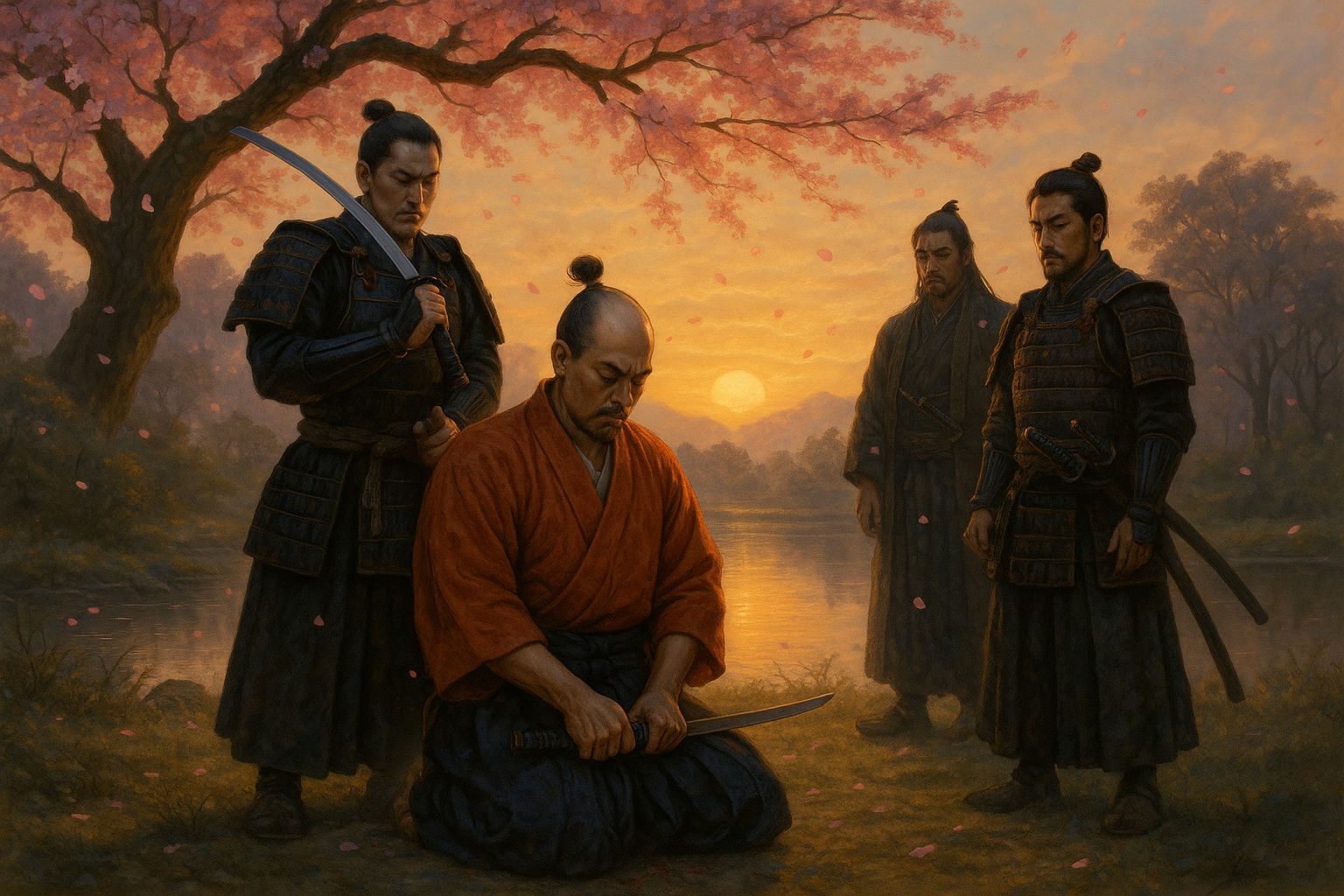
Punishments are swift and merciless. The breaking of law is not seen as a crime against men, but as an opening for demons. Those guilty of disorder are executed publicly, their blood considered a seal against chaos.
Culture and Sophistication
Despite its strictness, Ozukari is not a land of dullness. Its courts resound with poetry, music, and art. Lords commission lacquered armor painted with night skies, or gardens of stone and water designed to mirror the heavens. In Kaoriyo, the philosopher Matsunaga Keijirou teaches that every act, from pouring tea to wielding a sword, must reflect perfect balance, for disorder invites ruin.
Yet brilliance can be dangerous. A gifted craftsman in a vassal's house may be seized by a greater lord. A courtesan of unmatched beauty may be claimed at any time. Talent is seen as belonging not to the individual, but to the hierarchy that shelters it.
There is no slavery as such, but this is a technical distinction only, as everybody is completely under the power of their lord. There are no limit to what a lord can do to an underling, although the higher up you get, the less likely they are to enforce that power too hard on the people directly below them, as they aren't without power of their own, and the lord relies on their power to be added to his if need be.
Relations and the Red Fleet
Foreigners are few. To foster trade, the Emperor has founded three colonies on the Surakeli Isles: Shinkawa, Aojin, and Kuroto. Each holds a walled foreign quarter, where merchants from Samvara may live and bargain under watchful guards without disturbing the order.
Ozukari's ships are unmistakable. Painted in crimson from hull to mast, the Red Fleet sails across the Dragon Sea, carrying silks, lacquerware, swords, and rice wine. Their presence alone often deters piracy, for it is said that those who dare attack the Emperor's ships do not die by steel but by the slow torment of demons unleashed.
The Red Fleet is also among the few ships who are comfortable navigating the open sea.
Ozukari also tried to established colonies on the jungle coast, close to Zverilov, but these all failed and disappeared.
Notable Cities and Towns
- Kaoriyo: Imperial capital, seat of the Chrysanthemum Throne
- Hoshimura: City of starlight poets and philosophers, famed for its night festivals
- Tsugashiro: A coastal trade city where the Red Fleet docks before sailing to the Surakeli Isles
- Minatoya: A bustling port with rows of crimson warehouses and fish-markets, ruled by the Minatoya clan
- Shimosawa: An inland rice city, surrounded by terraced paddies and mist-shrouded hills
- Kurohama: Black-sand harbor, where ships are built and painted crimson for the Emperor
- Tazumura: A town of lacquerware artisans, where entire streets shine with polished wood and gold
- Akitsune: Mountain city surrounded by shrines, known for its strictest priests and harsh punishments
Possible Secrets
The Emperor's Bloodline
The Emperor is said to be the shield against demons, but whispers claim the imperial bloodline is cursed, tainted by a pact with a demon centuries ago. The throne may repel demons not because it embodies order, but because it carries their favor.
The Vanished Island
Old maps show an island called Hoshikai between Tazumi and Ishikari, but today no one acknowledges its existence. Sailors speak of lights in the fog where the island once was, and those who try to find it never return.
The Red Fleet's Purpose
The ships of the Red Fleet are painted crimson to honor the Emperor, but rumors among foreign sailors say the paint is mixed with human blood, offered to demons of the sea to keep the fleet safe.
The Lost Clan
A destroyed clan, erased from history after their lord died heirless, may still exist in hiding. If true, their mere survival would be the ultimate act of rebellion against Ozukari's order.
Demons in Disguise
The strict hierarchy may not be keeping demons out at all-it may be keeping them in. Some nobles or concubines could be demons wearing human flesh, perpetuating the illusion of order while feeding slowly on society.
The Secret of Kaoriyo's Foundations
Beneath the Chrysanthemum Throne in Kaoriyo lies a vast underground structure older than Ozukari itself. Few know of it, and fewer still dare descend, for it is said to be the true prison of chaos, sealed long before the first Emperor rose.
The Emperor's Mortality
It is believed that without the Emperor, demons would consume the land. Yet some claim there is no "Emperor's power" at all-merely the belief in him. If the people realized this, the entire structure of Ozukari would collapse overnight.
Adventure Hooks
The Stolen Heir
A lord has taken the unborn child of a vassal's concubine, declaring it his heir. The vassal secretly hires the party to spirit away the mother before the child is born. If caught, the party will be condemned as agents of chaos.
Whispers in the Garden
Strange phenomena are occurring in the Imperial gardens-voices in the ponds, shadows in the lantern light. Priests insist demons are trying to breach the palace. The adventurers must discover whether this is true or if someone within is staging a ruse to destabilize the Emperor's rule.
The Red Fleet Vanishes
One of the crimson ships of the Red Fleet disappears between the Surakeli Isles and Ozukari. The Emperor declares it a sign of demons, but a guild of foreign merchants secretly hires the party to investigate. Was it pirates, sabotage, or something darker in the sea?
The Unclaimed House
A great clan's lord dies without heirs. By law, every vassal must be executed. However, one young retainer begs the adventurers to smuggle him and his family to freedom before the decree falls. To aid him is treason against the Emperor, but to refuse is to watch innocents slaughtered.
Demon Beneath the Shrine
A mountain shrine in Ishikari reports visions of monstrous figures rising from the earth. The priests call adventurers to investigate, but their rituals forbid them from touching weapons inside. Can the party navigate a mix of superstition, paranoia, and perhaps a very real threat?
Concubine of Two Lords
A renowned concubine has been taken by a powerful lord from one of his vassals. Now, she secretly sends a message to outsiders, begging for rescue, claiming that her unborn child carries a secret that could topple the clan. Is she telling the truth, or weaving lies to escape her gilded cage?
The Forbidden Scrolls
Scholars in Kaoriyo whisper of scrolls describing how to summon and bind demons, not repel them. The Emperor's agents want them destroyed. A rival lord wants them for power. A foreign merchant wants to smuggle them out. The adventurers find themselves caught between all sides.
The False Purification
In a remote province, executions for "summoning demons" have skyrocketed. Locals whisper that the lord is using the accusations to erase rivals. The adventurers are hired to uncover the truth, but even investigating risks being branded as agents of chaos themselves.