Waverider Story - Campaign - Author's Notes
Kai’ono
Pacific islanders, who go all out Maori warriors if needed
| Story |
|---|
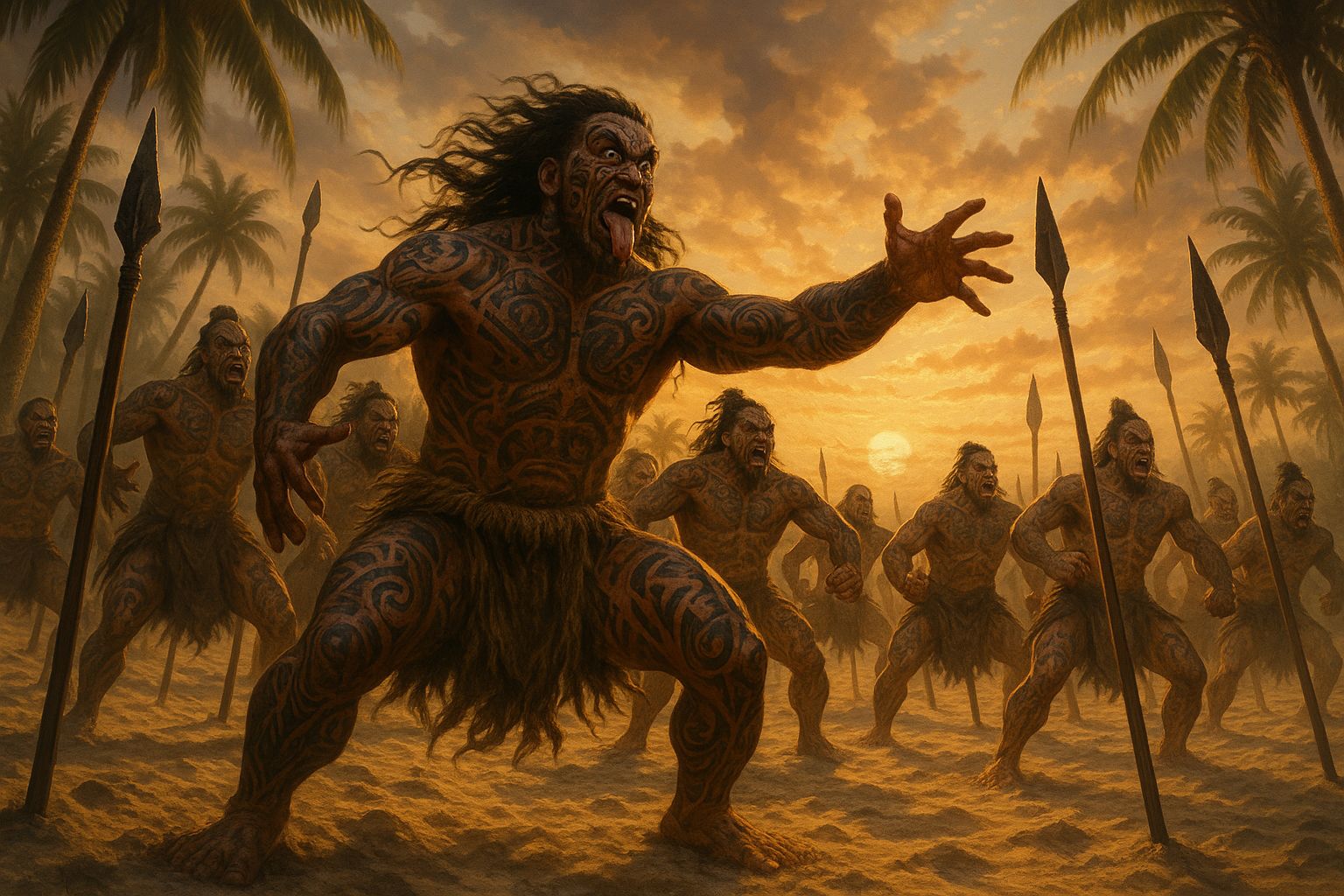
| The drums began at dusk, low and steady, like the heartbeat of the island itself. Warriors gathered on the white sands of Hano’kai, their bodies marked with dark spirals and jagged lines, their mokoa glistening in the firelight. At first they stood silent, spears thrust into the earth, eyes fixed on the horizon where sails crept closer. Then one let out a cry, sharp as a gull’s scream, and the rest answered in unison. |
| They stamped their feet into the sand, sending up clouds that glowed in the torchlight, and their bodies moved as one, arms sweeping, knees pounding, spears rattling against the ground. Their chants rose and fell, guttural and fierce, each word a challenge hurled across the water. Faces twisted into snarls, tongues jutted, eyes widened, as if they were already tearing their foes apart. |
| On the waves, the enemy ships faltered. The oars slowed, their crews watching in silence as the war dance thundered on. The Islanders leapt and shouted, their voices carrying over the surf, their movements wild and terrifying, the rhythm of the drums like the pulse of some vast beast. To the invaders, it was as if the whole island had risen to fight them. |
| When the dance ended, the warriors stood in silence once more, breathing hard, staring into the sea, watching the enemy. Their message was clear. Come ashore, and be broken. |
| Story |
|---|
| The morning was quiet, the sea calm as glass, when the people of Temoa’roa gathered before the hut of their chief. Mana’oro had led them for twenty years, his mokoa telling the story of a life of hunts, voyages, and battles won. Now he lay still, wrapped in mats of woven pandanus, his spear placed across his chest. Women sang low songs to guide his spirit, while the men beat a slow rhythm on hollowed logs, the sound carrying over the waves. |
| When the sun reached its height, the elders lifted him and carried him down to the beach. There, by the surf, they set him upon a pyre of driftwood, and the flames rose high, sending smoke spiraling into the sky. The villagers watched in silence as the fire consumed both body and spear, believing his spirit was carried to the realm of the ancestors, where the gods themselves would hear his voice. |
| When the last embers cooled, the people turned to the task of choosing a new alaka. One by one, men and women stepped forward, not boasting, but recalling deeds: who had led the fishing boats in storms, who had fed the hungry when nets came back empty, who had fought without fear when raiders struck. Murmurs rose and fell, names spoken and weighed. Finally, all voices settled upon Kea’hiro, Mana’oro’s niece, whose wisdom had calmed disputes and whose hands had pulled more than one drowning child from the surf. |
| The conch shell was blown, and she stepped forward, tattoos of swirling waves running down her arms, eyes steady in the firelight. The people struck their spears against the sand in thunderous approval. Kea’hiro lifted her hands to the sky and promised not to rule, but to serve, as her uncle had. The sea answered with a breaking wave, and the Kai’ono knew the gods had heard. |

Description
The people collectively known as the Islanders call themselves the Kai’ono, though outsiders usually use the broader name. They are a loosely connected network of coastal clans and seafaring families, spread across the western shore of Montosho and scattered through the many islets of the Sapphire Sea. Their lives are defined by the ocean, which they see as both a provider and a trial. Most make their living as fishermen and pearl divers, while others tend small fields of taro, yams, and sweet fruits where the soil allows. They are excellent sailors, but seldom go beyond visual range of land.
The Kai’ono mark the passages of life upon their skin with ritual tattoos called mokoa. Each design tells a story of the wearer’s deeds, lineage, and place within the clan. A fisherman might bear stylized waves across his arms, a pearl diver swirling spirals upon her shoulders, while a warrior’s face may carry jagged lines like shark teeth. These tattoos are not taken lightly, for each is earned through trial, bravery, or service. The process is painful, done with sharpened bone and ink from soot and plant dye, but the Islanders endure it proudly, believing that the mokoa bind their spirit to the sea and will carry their stories into the afterlife.
Villages and Settlements
There are no great cities among them, only countless villages, each numbering a few dozen to a few hundred souls. Names such as Hano’kai, Lua’piri, and Temoa’roa can be found dotted across maps, though most settlements are too small and transient to be recorded. The Islanders do not build for eternity. Their homes are light and quick to raise from palm, reed, and driftwood, meant to last a season or a few years, for storms may sweep them away as easily as a child topples a toy. Yet this does not trouble them. When a storm passes, the people gather, dance, and rebuild before the next sunrise.
Trade and Outsiders
The Islanders do not work metal themselves, but have long been skilled traders. Coral, pearls, shells, and salt are their main goods, but sometimes their value lies more in what they know. Few outsiders can navigate the reefs and currents of the Sapphire Sea without their guidance, and even pirates prefer to treat them as allies. A village may offer a hidden cove or a fresh-water spring to a passing crew, gaining iron or cloth in return. The Kai’ono are pragmatic and do not hold grudges against such dealings, so long as no harm is brought to them.
In earlier days, the Islanders suffered greatly from the slave-hunts of the Empire. It was common for entire villages to vanish in a single raid, their people carried away in chains. Now, with Freevalor standing between them and the Empire’s ports, such raids have nearly ceased. It is a memory still spoken of in hushed voices, though, and part of why the Islanders watch the horizon with wary eyes.
Chiefs and Leadership
They are a free people, bound together not by kings or written laws, but by the respect given to their chiefs. A chief, or alaka, is not chosen by bloodline, but by the acclaim of the people. Deeds of bravery, skill in fishing, or wisdom in judgment may raise a man or woman to this role. Chiefs like Mana’oro of Temoa’roa and Kahe’iri of Lua’piri are remembered not for what they commanded, but for what they gave to their people.
Warriors and Warfare
While their lives are mostly peaceful, the Islanders are not defenseless. A life of paddling canoes, diving reefs, and hauling nets shapes them into strong and tireless folk. When war comes, they wield short spears and war-tomahawks carved from hard wood, tipped with sharp stone. In battle they show no fear. To them, defeat is worse than death, for they believe that an enemy must be destroyed completely. Those they slay are cut apart, their bodies scattered into different waters, so that the sea itself denies them rest. The terror of this practice is so absolute that even among themselves, disputes rarely escalate to bloodshed.
Way of Life
To outsiders, the Kai’ono seem carefree, living from one sunrise to the next, unburdened by seasons, hoarded wealth, or the weight of cities. Yet beneath their laughter and songs lies a quiet resilience. The ocean has shaped them into a people who bend but do not break, who lose much yet rise again, who live in the present yet never forget the storms of the past.
Religion
The Dual Nature of the Gods
The Kai’ono believe that all gods walk in two aspects, never fully good nor evil, but balanced between creation and destruction, gift and curse. Each is to be respected in both faces, for to honor only the bright side invites the wrath of the dark. The Islanders make no grand temples. Instead, shrines of stone, coral, and driftwood stand by the sea, in the jungle, and atop cliffs, where offerings of shells, food, or flowers are left. The gods are woven into every part of life, for each day the Islanders see their hands in storm and sunshine, feast and famine, life and death.
Tama’aro, the Volcano Father
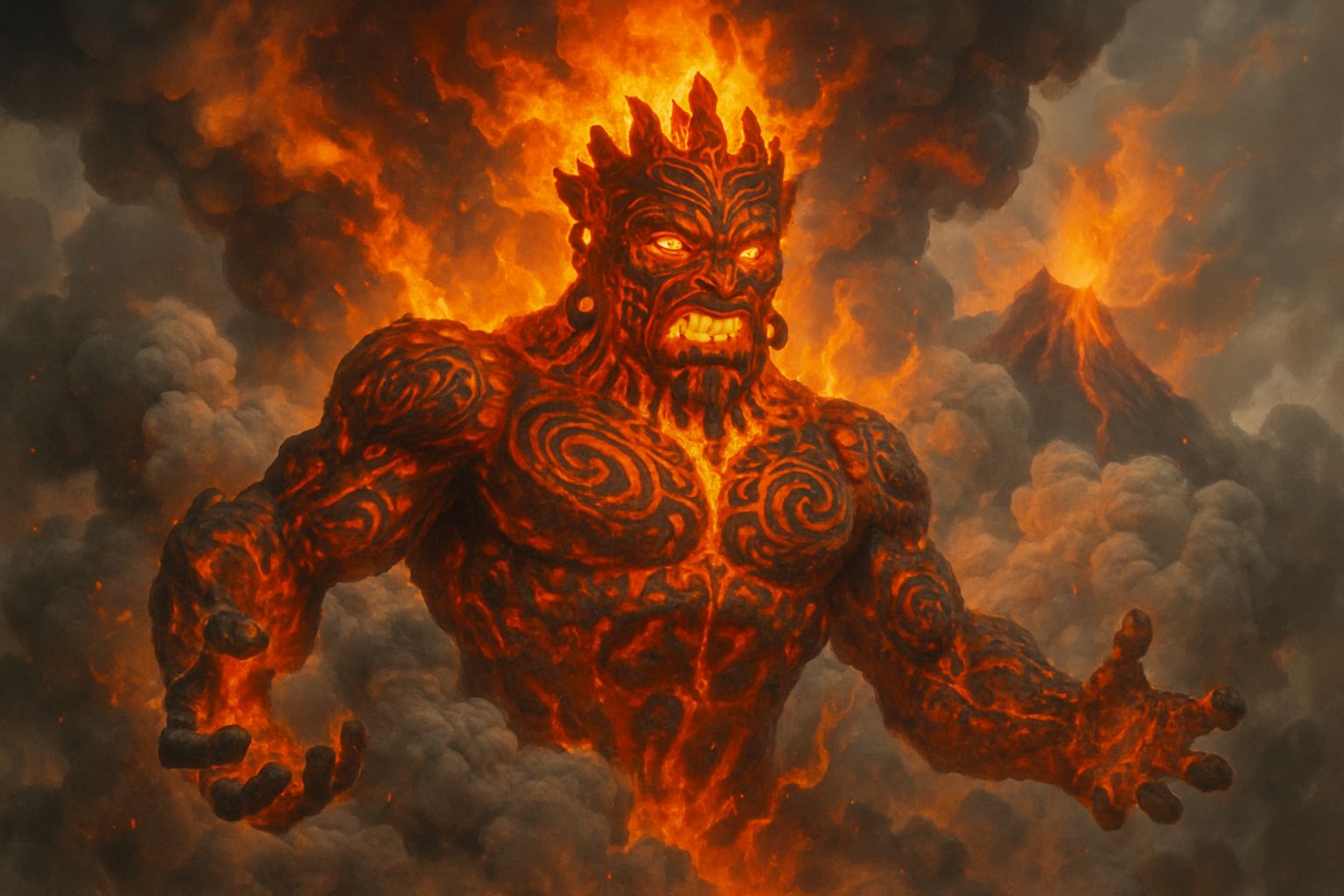
The only male among the gods, Tama’aro is the Father of Fire, said to have raised the islands from the sea. He is destruction when the mountain roars, yet also protection, for he shields the Kai’ono from enemies with his fire. Warriors paint his sigil before battle, asking him to turn their rage into flame. He is called both the Breaker and the Shield, and his children are the goddesses who rule the world’s other realms.
Vea’lani, the Jungle Queen
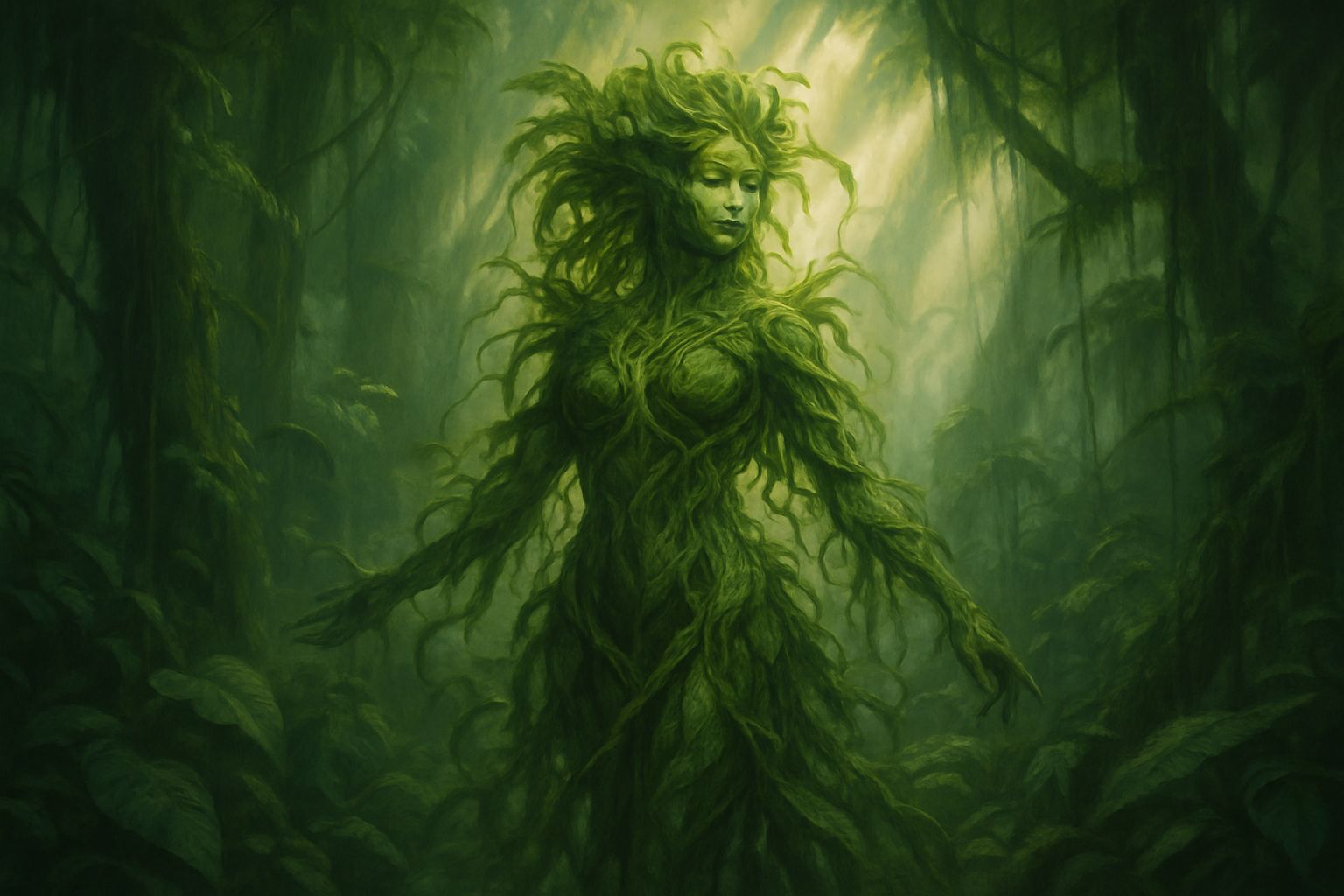
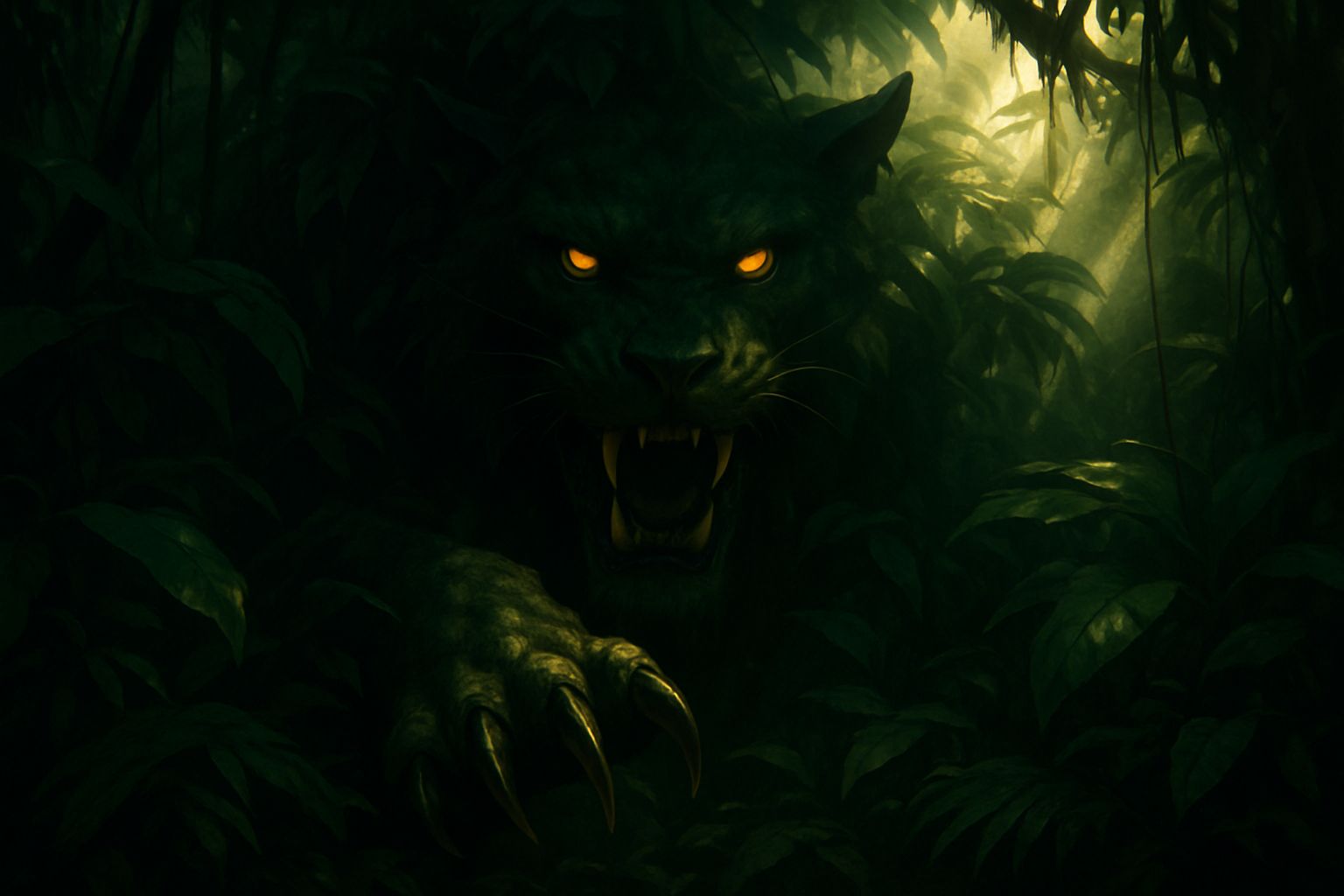
Seen as a woman made of twisting vines, Vea’lani is the living jungle itself. She feeds her children with fruit, wood, and game, but she is also the predator, the snakes, jaguars, and poisons. To venture into her realm is to seek her favor, for she may embrace or devour. Her dances are said to be the rustling of leaves at dusk, and her laughter the call of monkeys overhead. Hunters leave offerings before entering the forest, lest she claim them as prey.
Moa’iri, the Dream Weaver
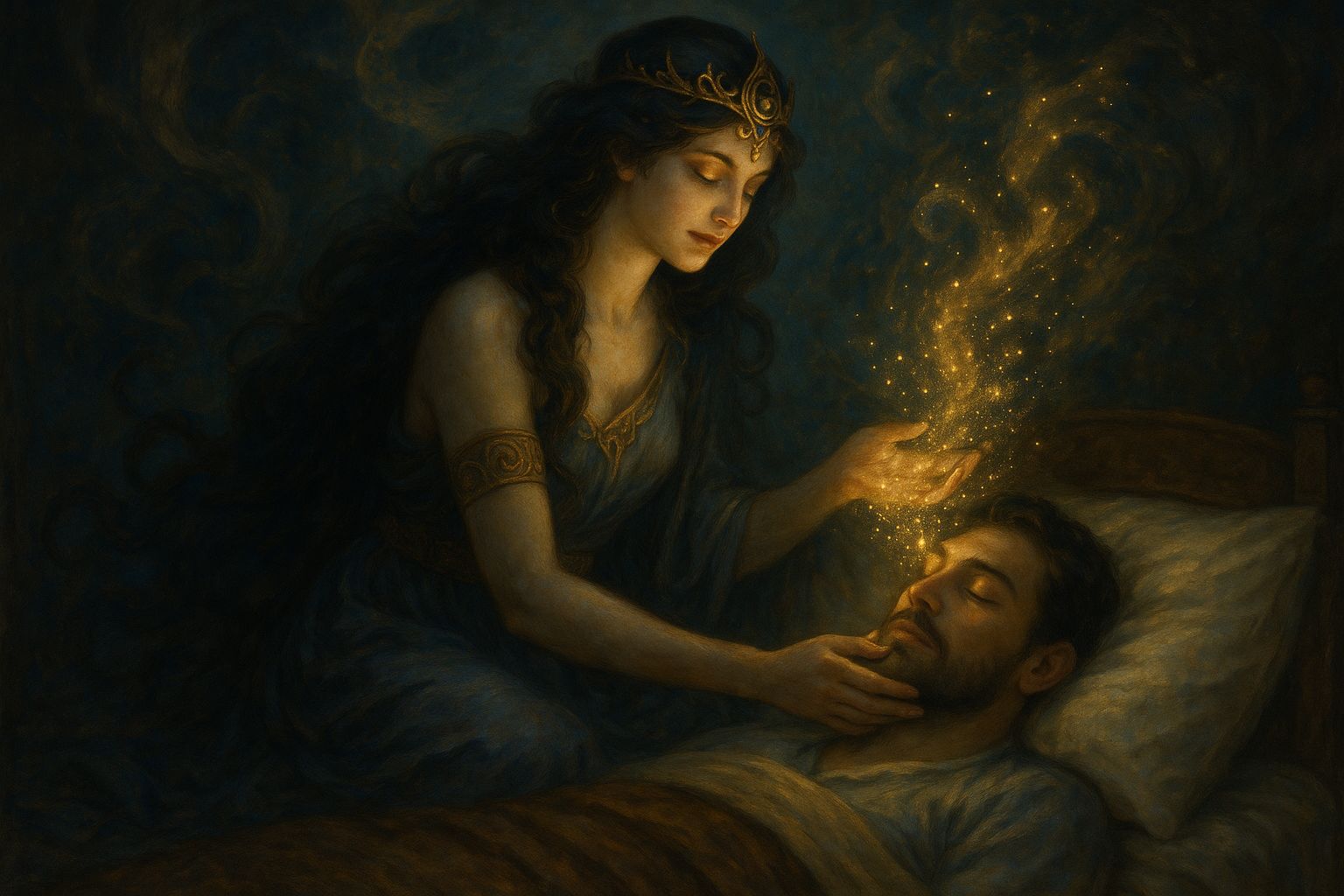
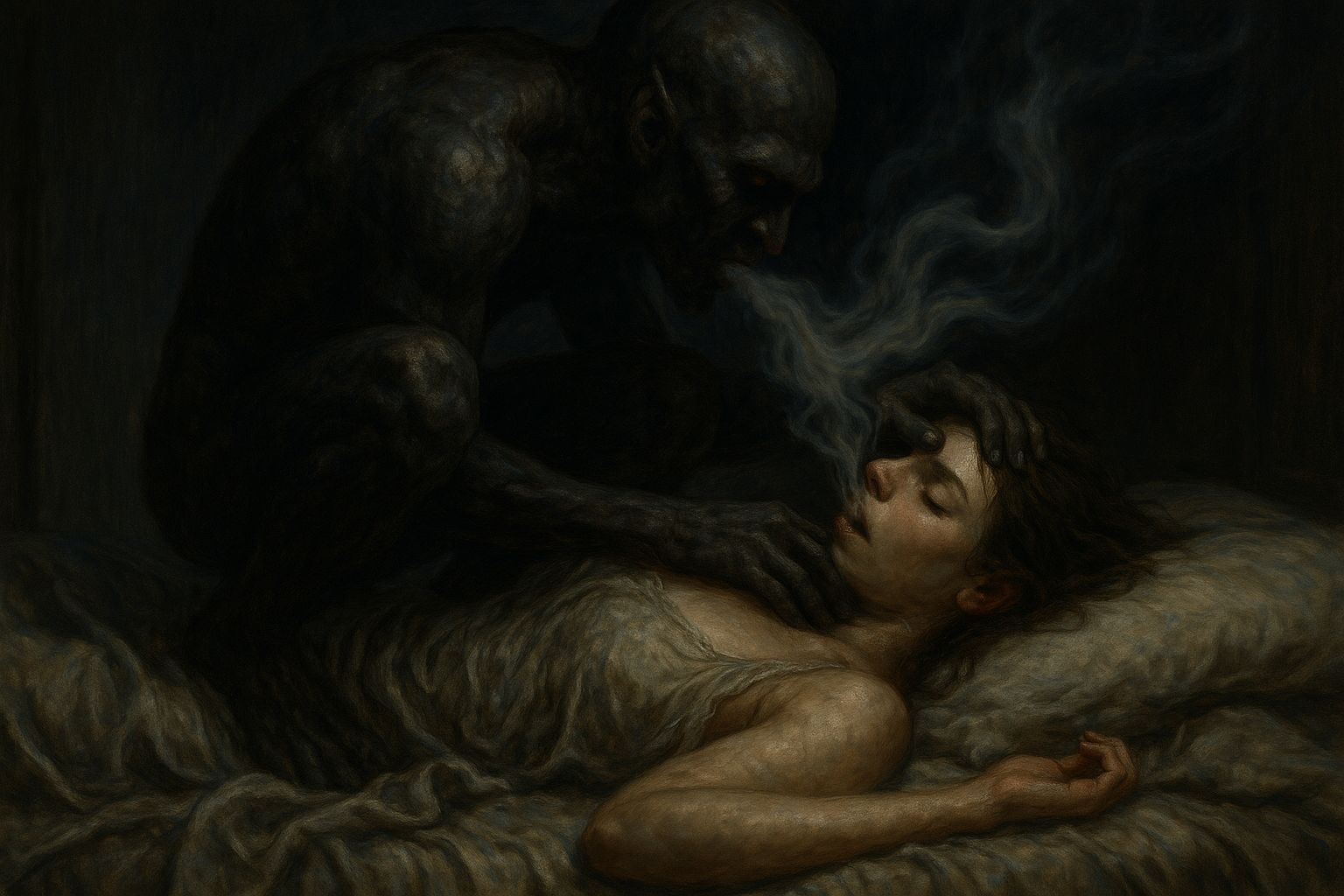
Moa’iri is the goddess of the sleeping mind. In her gentler form, she brings visions of calm waters and guiding stars, soothing those who rest. In her darker aspect, she rides the night terrors, twisting dreams into horrors that can drive a person to madness. Shamans often call upon her, for dreams are seen as windows into hidden truths, but they do so with caution, knowing that her whispers can bless or curse.
Kala’noa, the Sea Mother
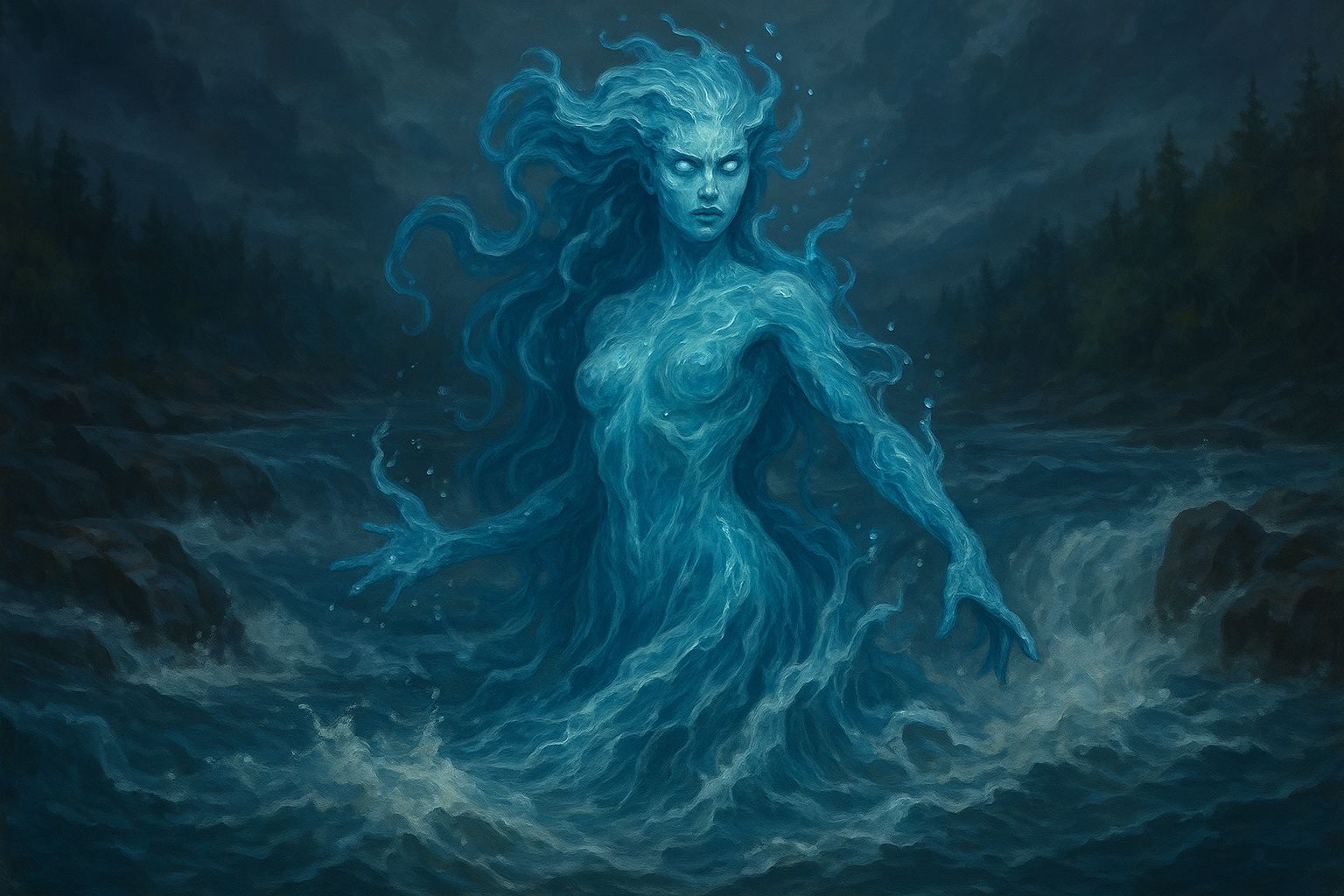
The Islanders’ most beloved goddess is Kala’noa, the sea itself. She is a mother of bounty, filling nets with fish, guiding canoes across calm waters, and gifting pearls from her depths. Yet she is fickle, and when she turns, she becomes the Stormbringer, smashing canoes against the reefs and dragging sailors to her cold embrace. Every voyage begins with a prayer to Kala’noa, and every pearl given to trade is first kissed and offered to her, for it is said the pearls are her tears.
Hina’are, the Keeper of Health
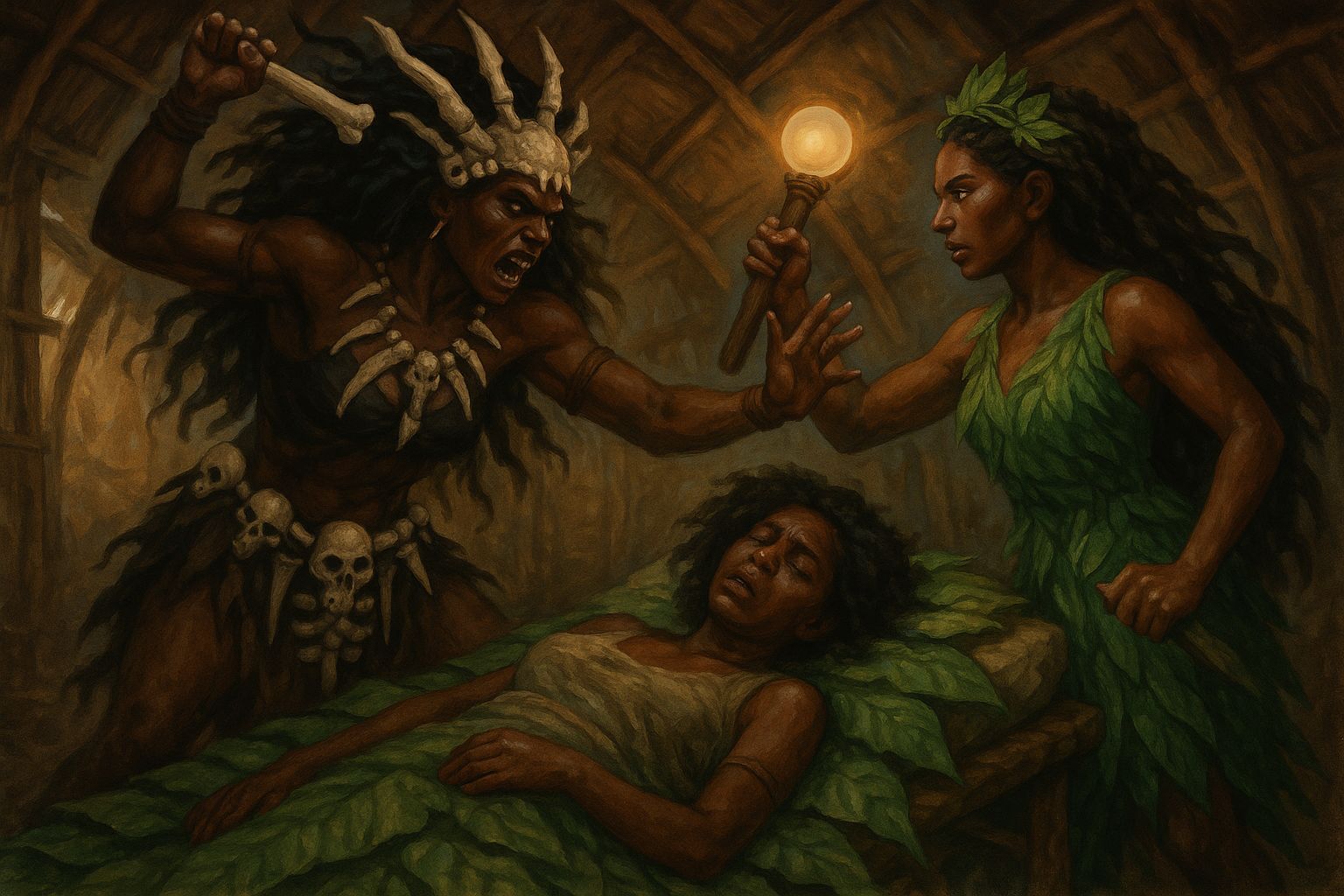
Hina’are is both healer and harbinger of death. She is called when a child is born, her gentle hand blessing it with strength, but when sickness strikes, her two sides struggle. Islanders say that when fever rises, Hina’are’s bright form and dark form battle within the body, and whichever wins decides if the soul remains or departs. Medicine is often given alongside prayers, for healing herbs are seen as her gifts of mercy.
Nalu’oro, Lady of Luck
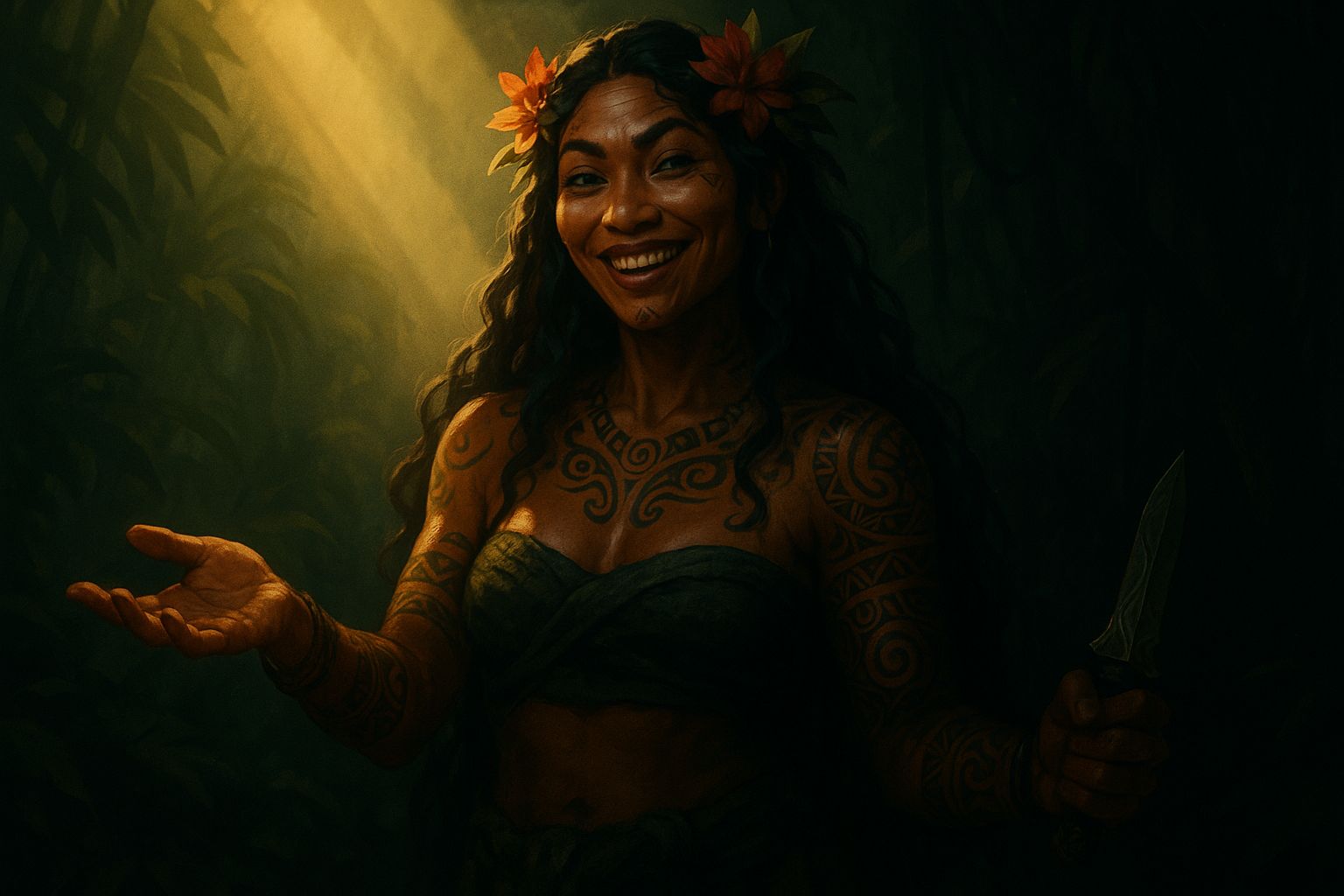
A trickster deity, Nalu’oro is the bringer of luck and wit, but also of disaster. She is fickle, laughing in shifting gusts. Children often blame her for mischief, while warriors pray to her for cunning plans.
Tane’moru, the Ancestor Flame
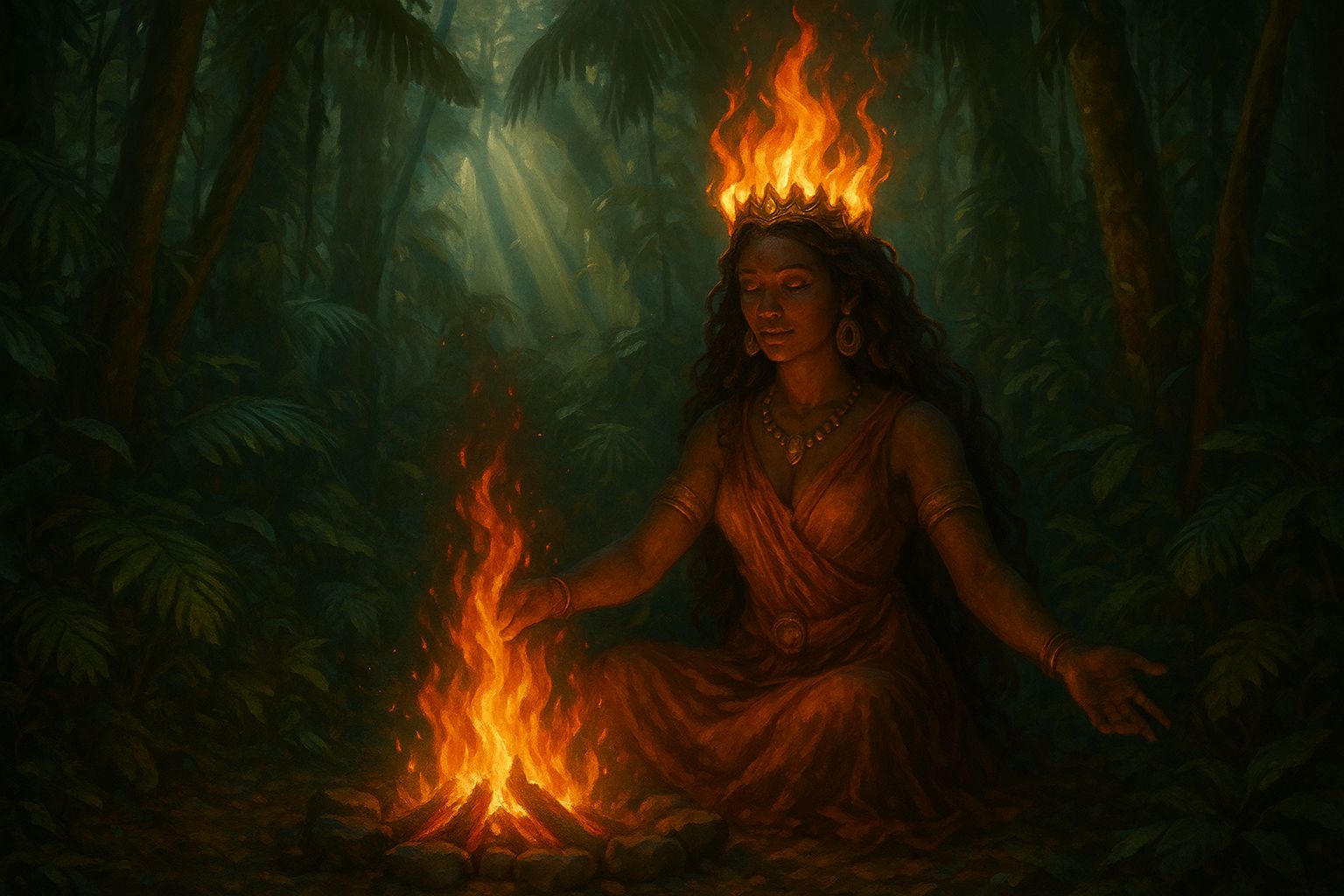
Said to be a spirit born from Tama’aro’s fire, Tane’moru is the keeper of memory and the hearth. Families honor her by keeping their fires burning, for to let a flame die without respect is to dishonor the ancestors. She is gentle, but her wrath shows when fire consumes a careless village.
Lina’moa, the Tide Singer
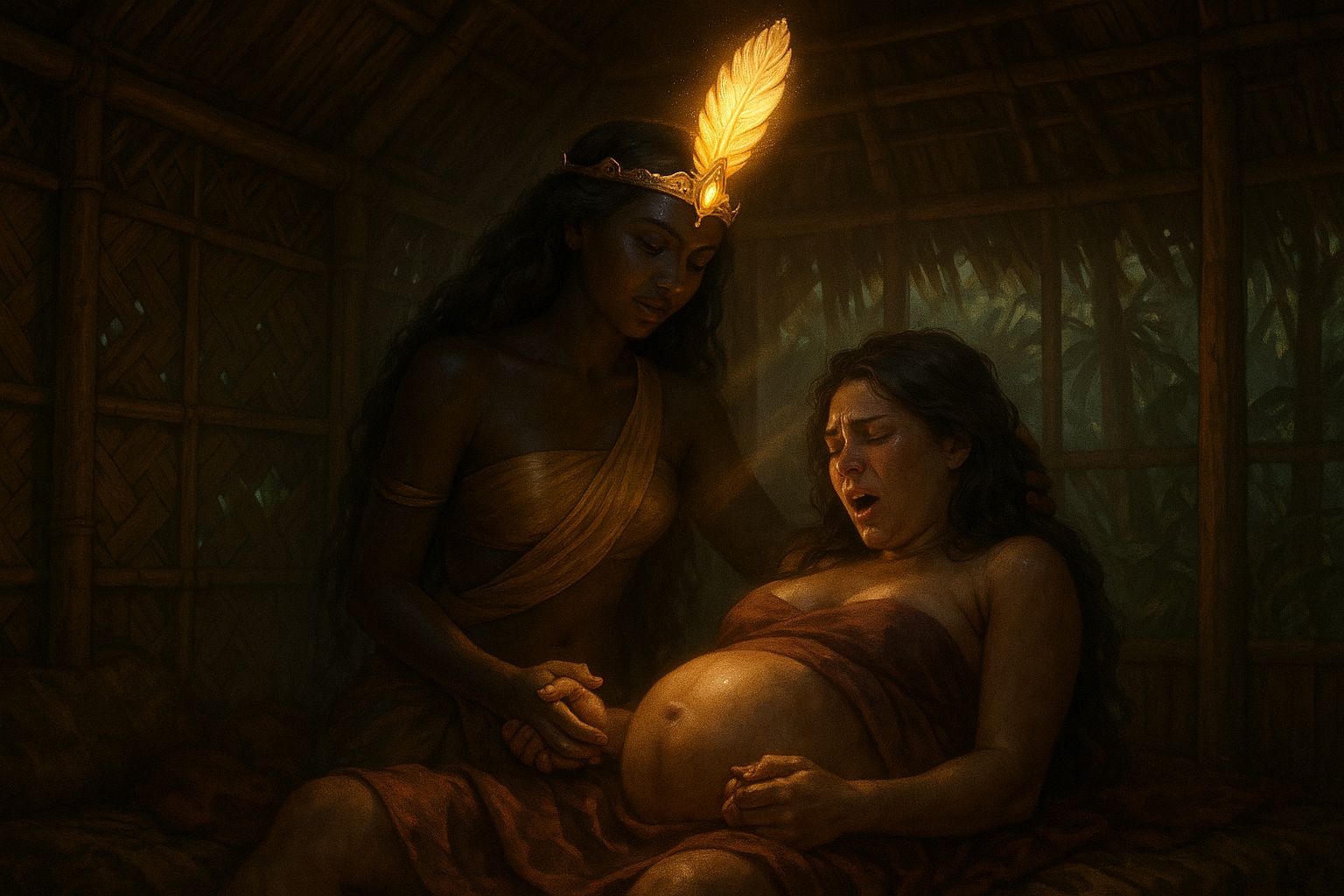
A goddess of time and cycles, Lina’moa controls the tides. She is seen as a dancer who moves with the moon, her songs the rhythm of waves. Women often call to her during childbirth, for she is tied to life’s cycles, and the turning of tide is believed to mirror the turning of fate.
Relations
The Kai’ono maintain a web of shifting relations across the Sapphire Sea. They are on friendly terms with the merfolk and sea elves, trading freely and often sharing fishing grounds without conflict, and with the sylvaranith, whose reverence for nature resonates with their own ways. Their enmity toward the Empire runs deep, for too many of their kin were taken as slaves in years past, and they show the same hostility toward the Sreli, who raid their coasts and seize their people. With the fibians of the tideforest, relations are neutral, marked by wary respect and occasional barter, but seldom trust. For the Islanders, alliances and enmities are not abstract, but lived realities, shaping every voyage and every watch kept on the horizon.
Recently, they have also build a cautious friendship with Freevalor, due to shared enemies and Freevalor's need for supplies. They do have a bad history from before Freevalor rebelled, though, and memory runs deep.
Sirens, of course, are hated with a glowing intensity, and both sides kill at sight.
Possible Secrets
The Silent Reef
There is a stretch of coral reef near Lua’piri where no fish swim and no birds dive. The Islanders say it was cursed when Moa’iri, the Dream Weaver, drowned a man who betrayed her love. Shamans claim those who sleep on the reef hear his endless screams in their dreams.
Pearls of the Dead
Most pearls are Kala’noa’s tears, but some rare black pearls are said to grow inside the bodies of drowned men. These pearls are considered cursed, yet sorcerers and outsiders prize them for their supposed power. Some Islanders secretly dive for them, risking both their souls and exile.
The Drowned Shrine
Beneath the Sapphire Sea lies a sunken temple of Tama’aro, guarded by sharks that Islanders claim are his fiery children turned to flesh. Few have seen it, but stories tell of carvings that speak of another god erased from memory.
The Jungle’s Hunger
Hunters whisper that some vines in the deepest jungles are alive with Vea’lani’s will. These creeping plants drink not water, but blood. Shamans say that if fed properly, the Jungle Queen will answer any prayer asked within their grasp.
Pirate Kinships
Though Islanders publicly deny siding with pirates, some clans have blood ties to certain pirate captains. A few villages secretly serve as pirate waystations, hiding goods and even captives for later ransom, in exchange for steel and coin.
Shadows of the Empire
While the Empire no longer raids the islands openly, a few Imperial agents still move quietly through the Sapphire Sea, seeking to rekindle old slave routes. Some Islanders secretly work with them, trading information or captives from rival clans in exchange for wealth and steel.
The Vanished Village
One island stands abandoned, its huts still intact, canoes drawn on the sand, and food rotting in the baskets. The people vanished without a trace. Islanders avoid it, saying Moa’iri claimed them all in a single dream. Outsiders whisper it was slavers or pirates who struck.
Adventure Hooks
Storm-Stranded
A sudden storm wrecks the adventurers’ vessel, leaving them washed up on the shore of a Kai’ono village. The Islanders are friendly, but their hospitality comes with expectation: the adventurers must help rebuild the huts and canoes before another storm strikes.
Pearl of the Chiefs
A great pearl, symbol of authority, is stolen from the chief of Hano’kai. The adventurers are asked to track down the thief, who may be hiding on a neighboring island, or worse, have fled across the sea.
Festival of Canoes
The Islanders invite outsiders to join a grand canoe race across the reefs during their seasonal festival. It is both competition and ceremony, but dangerous reefs and jealous rivals make the race a true test of cunning, endurance, and luck.
The Vanishing Nets
For weeks, the fish have disappeared from the waters around Lua’piri. The village fears famine, and they ask outsiders to investigate. Is it simply a shift in the sea’s currents, or is something darker lurking in the reefs?
The Outrigger Duel
The adventurers arrive as two young warriors prepare for a ritual duel fought from canoes. One side secretly asks for the outsiders’ help, seeking clever ways to tilt the odds in their favor without being caught.
The Stranger’s Trade
A merchant vessel from far-off lands anchors offshore, offering strange goods in exchange for pearls. The Islanders are tempted, but wary. The adventurers must help judge whether the merchant is an honest trader, a trickster, or something more sinister.
The Missing Chief
Kahe’iri, a respected chief, sails to a gathering of villages and never arrives. The adventurers are tasked with finding him, but clues point to treacherous waters, rival clans, or perhaps an accident at sea.