Waverider Story - Campaign - Author's Notes
Caerduin
Celts fighting invading empire and each other. Repeatedly.
| Story |
|---|
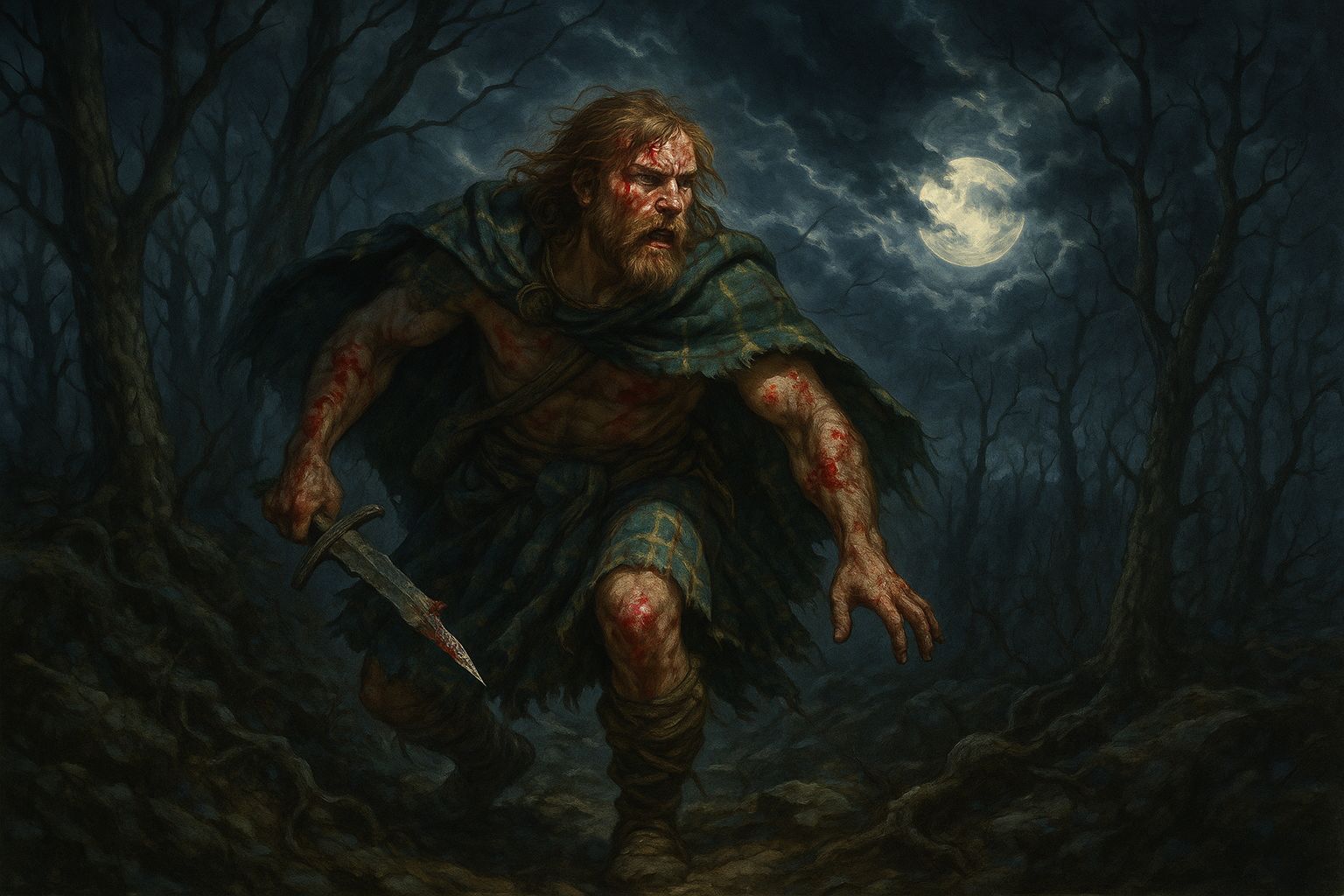
| Ciaran mac Braigh staggered through the heather, his cloak torn, his sword chipped and dull. The Brannoc valley stretched below him, dotted with campfires-imperial camps on the southern bank, clan villages smoldering on the north. He had led them once, banners rising together, a thousand voices roaring in unison. Now he fled alone, with only the moon to witness his shame. |
| His time was not yet spent. Ten months remained before the Cliff of Severance would claim him, before his bones would be dashed on the rocks like all High Chieftains before him. But the Empire would not wait for ritual. Their agents hunted him, offering gold to any clan willing to betray his hiding place. And some would take it. Hunger loosened loyalties faster than steel. |
| He crossed a shallow stream, pausing to drink. The water tasted of ash. On the far bank, a figure emerged, a woman cloaked in raven feathers, a druidess of Clan Morveth. Her eyes glimmered in the starlight. |
| "They are close," she said. Her voice was soft as the wind, yet sharp as a knife. "The Empire bleeds the clans with gold and grain. Already Ardwych speaks with them. Odran takes their bread. Even Beollan whispers of surrender." |
| Ciaran clenched his fist. "I swore to unite Caerduin, to drive the legions back into the sea. Now my people starve while I hide like a fox." |
| The druidess stepped closer, placing a hand on his chest. "Brennos demands courage, yes. But Morrinya demands cunning. A fox lives longer than a bull." |
| He looked at her, torn between pride and despair. "And what of honor? What of my oath?" |
| "Honor feeds no children," she replied. "If you wish to save Caerduin, you must live. Let them hunt you. Let them think you broken. And when the spring fires burn, strike where they do not watch." |
| Ciaran turned his gaze to the south, where the lights of Fort Brannovar glowed like a chain of stars. Ten months. Ten months to outwit the Empire, to hold the clans together, to stave off famine and betrayal. Ten months before he would climb the Cliff of Severance and leap into the sea. |
| He tightened his grip on his battered sword. "Then so be it. Let the wolves circle. I will make them bleed before I fall." |
| And with that, the High Chieftain vanished into the night, a hunted man, yet still a spark of defiance in the dark. |
Description
Caerduin is a land of jagged coasts and deep mists, where the Glass Fjords gleam like broken mirrors under the pale sun, and the Dunmorrig mountains rise like guardians above the western sea. The people are divided into dozens of clans, each fiercely proud of its bloodline, banners, and legends. These clans feud endlessly, over cattle, borders, insults remembered for generations, and alliances are common but fleeting. Yet when the threat of the south grows too great, they sometimes set aside hatred and unite. Such unity is always short-lived, for their law demands it.
When a High Chieftain rises, chosen by acclaim and the signs of the druids, he or she is granted power for three years. No matter how great their victories, at the end of that span, they jump or are cast from the Cliff of Severance at Dunmorrig. Their broken body is left among the tide-washed rocks, a warning against tyranny and a reminder that Caerduin belongs to all clans, not to one.
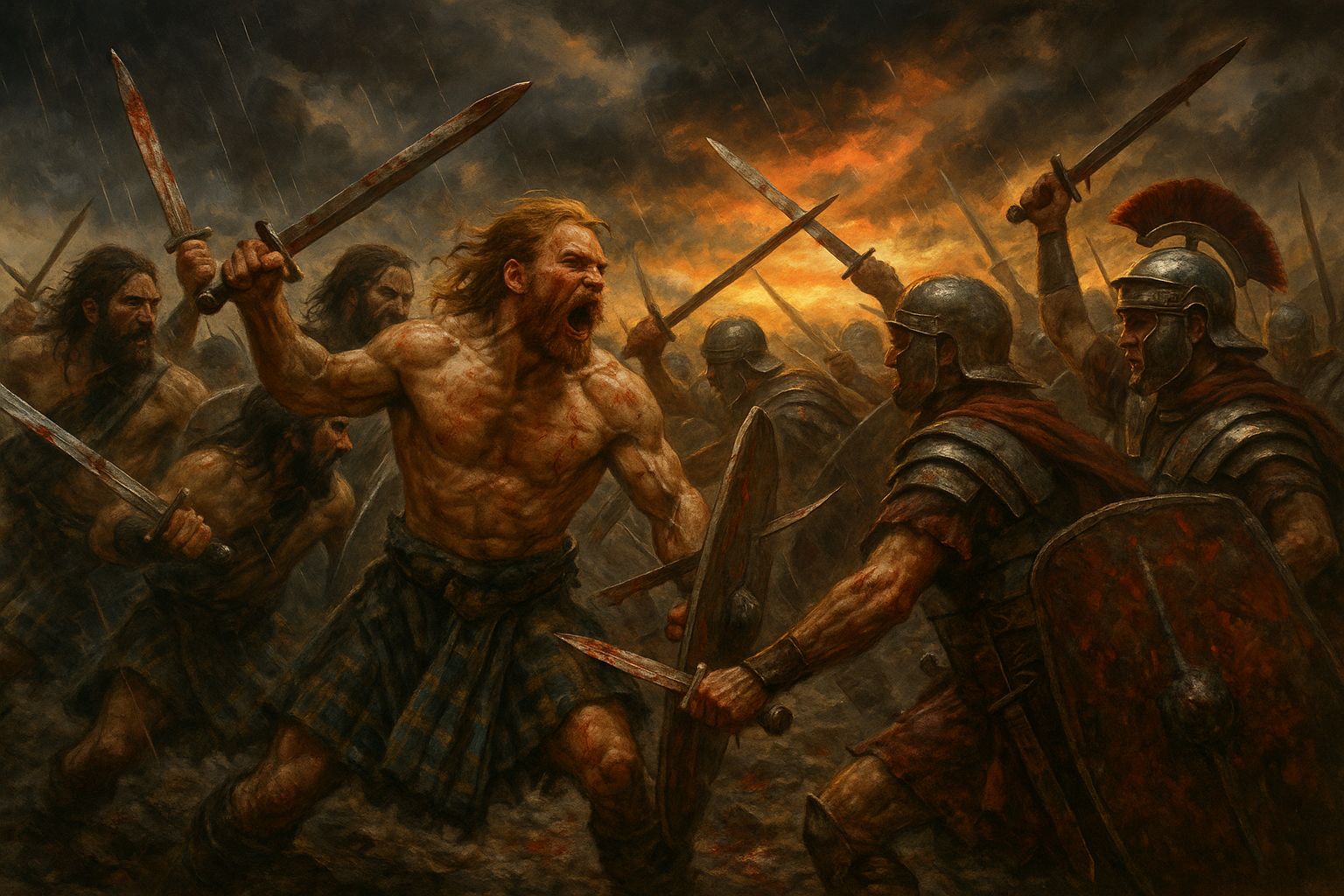
Sixty years ago, the Great Empire invaded, establishing a colony on southeastern Tir Albireth, the Albirica Colony. The southern clans were crushed, and mostly enslaved of forced to ally with the invaders. The invasion was brought to a stop at the Brannoc river, where both side fortified on each side. The land between the two arms of Brannoc river, Brannoc forks, is a no man's land which has seen countless battles which has achieved nothing but death.
The current High Chieftain, Ciaran mac Braigh, was chosen after the clans rose against the Great Empire's colony, Albirica Colony. He led them with fire and steel but was defeated at the Brannoc forks, and now hides among the highland valleys, still hunted by imperial agents. Ten months remain before his appointed death, and every day he lives is a thorn in the Empire's side.
The Empire itself has fortified the southern shore of the Brannoc. From there, its legions patrol the riverlands, building stone forts and cutting Caerduin's trade routes. Imperial saboteurs burn grain, poison cattle, and bribe rival clans with gold, hoping to keep the northern tribes too divided and starving to rise again. Their strategy is working, this winter, famine spreads. Many clans whisper of abandoning their high valleys and trying to break the imperial lines blocking the route to Ardenvale to the southeast, but so far, the Empire is to strongly fortified for it to be feasible. Hunger gnaws at every hearth.
The situation is made worse by their remote location. Ardenvale, living under the thumb of the Great Empire will not fight for them. The only other nation nearby is Omros, and they will not help anyone, as they see them as heretics.
Religion
Religion shapes much of Caerduin life. The clans worship two gods, never apart, always circling each other, sometimes like lovers, sometimes like duellists.
- Brennos, red-handed god of courage, fury, sacrifice, the love of the fight, reckless devotion and fanatical loyalty. In his name warriors drink blood from the skulls of their foes, in his name cattle are slaughtered before battle, in his name lovers are taken without restraint. He is the spear that strikes first, the fire that burns too long.
- Morrinya, goddess of hearth, love, protection, cunning, and betrayal. She is the mother who comforts, the wife who poisons, the sister who plots in silence, the breaker of treaties.
Where Brennos is predictable in his singlemindedness, Morrinya is fickle and might love in one moment and betray in the next.
Men and women alike call upon both. To pray only to Brennos is to risk madness, to pray only to Morrinya is to risk losing oneself and one's direction. The druids teach that both gods dwell within each person, and both must be appeased.
At the winter solstice, each clan builds the Twin Fires: two towering effigies of wood, one crowned with antlers, one cloaked in raven feathers. Into them are locked a man and a woman, sacrifices chosen from war captives or slaves. When the fires rise into the night sky, the screams of the dying mingle with the chanting of the druids, and the people believe that Brennos and Morrinya, appeased, will turn the wheel of the seasons and bring back the spring. Without the sacrifices, it is said, winter would never end.
The clans hold no belief in an afterlife. The dead are burned or buried beneath standing stones, but all know the truth: when the breath is gone, it is gone forever. No rewards, no punishment, death is the end. This makes them fierce in life, for only deeds remembered matter. To fall nameless and forgotten is the greatest terror.
The clans
These are the major clans, but there are many, many minor clans as well, most of them allied with the major clans. Many from the southern clans fled north as the war was lost, and are now either being absorbed as blood brothers into other clans after fighting along them, or trying to re-establish their own clans, or simply joining forces with anyone fighting the Empire.
Clan Braigh
The current High Chieftain, Ciaran mac Braigh, comes from this clan. They are mountain folk, hard as stone and equally stubborn. Their holds lie high in the Dunmorriq peaks, where sheep and goats graze. Known for their iron will and endless blood feuds, they are respected but not well liked. They are famous for forging crude but strong iron blades, hammered without beauty but made for killing.
Clan Durnach
Durnach dwell in the Glass Fjords. They are seafarers and raiders, sailing swift hide-curved boats to strike the Empire's ships or raid neighboring clans. Their druids claim descent from sea-spirits, and the Durnach often decorate themselves with shells and shark teeth. They are said to be quick to laugh and quicker to cut a throat. Their loyalty lasts only until the next tide.
Clan Cailoch
Fierce cattle-raiders of the low valleys. Their wealth is measured in herds, and their feasts are the most extravagant in Caerduin. They are proud, arrogant, and easily insulted, but they provide meat and hides for many clans. The Empire has targeted them heavily, burning their pastures. Now their warriors ride hungry and desperate, stealing even from allies.
Clan Morveth
Druids and shadow-weavers. The Morveth live in the deep glens and thick forests of the east. They are feared for their cunning, for their priests are said to speak directly with Morrinya the Raven. Poison, whispers, and sudden knives are their tools, and no chieftain truly trusts them. Yet in times of crisis, their secret wisdom has saved the clans more than once.
Clan Drust
Called the Bloodhounds. They are mercenaries by nature, selling their swords to whoever pays. Sometimes they fight for the clans, sometimes for the Empire. Their loyalty shifts with coin, but once in battle, they are relentless. Many despise them as faithless, yet none deny their skill.
Clan Ardwych
The richest clan, controlling the river entrance of Struinvale. They have grown fat taxing merchants and travelers. Some whisper that they have begun secret dealings with the Empire, trading food and safe passage in exchange for imperial protection. If true, their betrayal could shatter what unity remains.
Clan Erevann
A small but proud clan, descended from supposed heroes of old. They guard ancient standing stones and sacred groves, claiming to be chosen of Brennos. Their warriors fight like madmen, painting their faces red with blood before battle. Though small in number, their ferocity makes them feared.
Clan Uisnach
Known as the wolf-brothers, they live in the northern forests where game is plenty. They are hunters, trappers, and scouts, feared for their ability to vanish into the trees. They revere Brennos in his wolf aspect, daubing their faces with ash before stalking their prey.
Clan Donnach
The iron miners of the Brannoc foothills. They are grim and soot-stained, spending most of their lives underground. They provide much of Caerduin's raw metal, but their warriors are few, and they often pay tribute in iron rather than blood.
Clan Maelduin
Once mighty, now diminished. They were great lords of the fjords, but lost much of their land to Clan Durnach in endless sea-raids. Now they hold only a few scattered villages. They nurse deep grudges and are said to plot in silence, waiting for their chance to rise again.
Clan Beollan
Dwellers of the storm isles just off the west coast. They live half on the sea and half on the land, known for their longboats and their feasts. They are said to be closest to Brennos, claiming descent from his mortal sons. Their feuds with Clan Durnach are endless, both competing for dominance of the sea.
Clan Odran
Known as oath-breakers in many songs, though they call themselves pragmatists. They have switched sides between the clans and the Empire more than once. Their island is fertile and well-defended, and their survival is proof of their cunning.
Clan Rhiannach
They hold the fertile farmlands just north of the Brannoc forks. Once prosperous, they are now half-ruined, their fields burned by imperial fire and their grain stores pillaged. Starvation has driven them to desperation. Some whisper that their chieftain has begun secret negotiations with the Empire for food and survival, even if it means betraying the High Chieftain.
Clan Caithrenn
Known as the Wall-keepers. Their main fortress, Caer Caithrenn, sits atop a ridge directly across from Fort Brannovar, the Empire's great bastion. For fourty years, the two fortresses have glared at one another, and their skirmishes are constant. The clan has grown hard, disciplined, and wary. They distrust other Caerduin clans, believing only they carry the true burden of holding back the south.
Clan Luirach
River traders turned raiders. Before the Empire's arrival, they prospered by ferrying goods up and down the Brannoc. Now the trade routes are cut, and they have become pirates of the river, ambushing imperial supply boats. Their wealth has shriveled, and they live on plunder and theft. Neighboring clans distrust them, but none can deny they are the masters of the Brannoc's currents.
Clan Ybarrag
Fishers and whalers. The sea is their home and their livelihood, far north where good farmland is scarce. They are hardy and tough, though mostly keep to themselves.
Current Situation
Now, famine and war weigh heavy upon Caerduin. The clans are restless, the old feuds sharpen under hunger, and the druids whisper that the gods are displeased. Some say the time is coming when Brennos will demand all out war with the invaders, others think Morrinya will slip her knife into the heart of the invaders with false promises and alliances.
Possible Secrets
The Weeping Stones
In the Glass Fjords stand standing stones that drip water even on dry days. They are said to mark where the gods themselves once wept for mortals. The water is holy, but if carried away from Caerduin it turns black.
The Black Lake
In the highlands lies a lake that no one dares fish. Its surface is calm as glass, but nothing reflects in it. It's said to be the gateway where the two gods, war and home, first met, and where they will meet again at the end of the world.
The Third God
Though they worship the twin deities, war and home, some old texts speak of a third, nameless god. A god of endings, who appears when the two grow too close or too far apart. His name was erased because every time it was spoken, someone died.
The Bone Priests
Certain holy men do not serve the gods at all. They serve the dead. They wear masks made from skulls and claim to hear the voices of every fallen warrior. In times of war, they gather near battlefields, feeding on the cries of the dying to foretell who will live.
The Betrayer's Pact
The Great Empire's first landing was not met with battle, but with guidance. One of the great clans - now erased from all songs - helped them find their way through the fjords in exchange for land and silver. That clan's descendants live among the colonists, cursed but comfortable.
The Widow's Watch
Each time a High Chieftain dies, his widow is said to climb the cliffs to throw herself after him. Yet some do not fall. They vanish into the sea caves below, where they wait, whispering to one another in voices like the tide.
The Mark of the Gods
Some warriors are born with strange marks on their bodies, spirals, branching lines, whorls of red or black. It is believed to be divine favor, but old seers say those marked ones are not chosen, but replacements, vessels prepared to house the gods when they return.
The Lost Year
There is one year missing from Caerduin's histories. The bards know it, the elders deny it, and the druids refuse to speak of it. A year in which the sun did not rise, when every hearth-fire burned blue. All records of that time were destroyed by decree.
The Year Without Sacrifice
Once, a High Chieftain refused to die. His name was struck from every stone, but the stories say that year the sun shone too long, rivers ran dry, and the harvest burned in the fields. When he finally leapt, rain returned the next day.
Adventure Hooks
The Runaway Chieftain
The clans have united and failed again, and their doomed High Chieftain is on the run. Imperial agents want his head, but so do rival clans seeking favor. The adventurers are drawn into the chase. Will they kill, protect, or ransom him?
The Challenge at Caer Morrach
A warrior of the western fjords has declared that he will duel every champion in Caerduin until he finds one worthy to wed his sister. He has already beaten seven men and one woman to death. The next name on his list is the adventurers' employer.
The Oath of the Hillfires
Each year, clans gather to light their hilltop fires in unity. This time, one clan's fire never rose. The others fear a curse or betrayal, and old feuds flare before the truth can be found.
The Beast of Brennach Moor
Something is stalking the moors, a shadow that kills livestock and leaves no tracks. Some claim it's a Caerduin spirit, others a remnant war-beast left by the Empire. The clan wants proof, not superstition.
The Famine Road
With imperial blockades cutting trade, clans send armed escorts to protect their food wagons. One convoy has gone missing. Finding it could mean saving a hundred mouths, or feeding a hundred graves.
The Solstice Sacrifices
A clan's chosen man and woman for the winter burning have fled before the ritual. Without them, the ceremony cannot proceed, and the clan fears disaster. The adventurers are hired to find them before sunset.
The Blood Bard
A wandering bard sings forbidden verses that insult both gods. Some call him a prophet, others a curse. The adventurers are asked to silence him before his words stir rebellion, or to protect him so he can finish his song.
The Border Fire
An imperial patrol has been found dead on the north bank of the Brannoc river. The Empire blames Caerduin raiders, but the local clan swears innocence. The adventurers are caught between war and diplomacy.
The Prisoner Exchange
The Empire has agreed to trade a captured Caerduin war-leader for one of their own. The exchange is to happen at dusk on the river, but the Empire is not known for keeping its word.
The Last Harvest
A clan's crops are failing, and they've begged a neighboring tribe for aid. The neighbors agree, for a price that might be worse than starvation.