Seers
| Story |
|---|
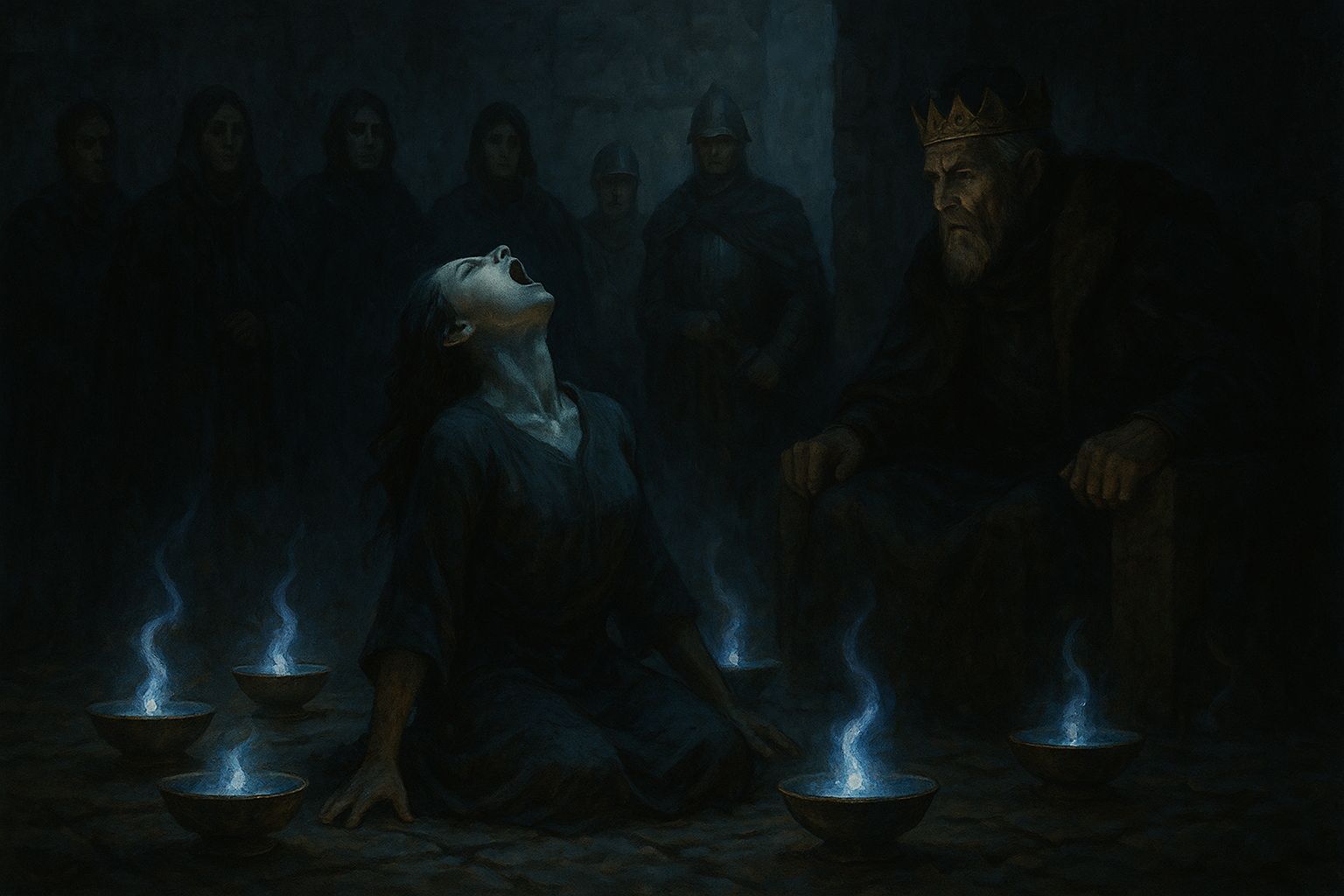
| The chamber was dim, lit by a dozen small flames trembling in shallow bowls. The seer sat cross-legged before them, eyes glazed and unblinking. The air smelled of copper and smoke. Around her, the court stood silent, afraid to breathe. |
| Her voice came low at first, then stronger, carrying words that did not belong to her. |
| "They will ride beneath a sun of ash. The river will run backward. The king’s blood will drown the crown." |
| The guards shifted uneasily. The king’s hand tightened on the armrest. |
| The flames flared blue. The seer’s body arched, her mouth opening in a sound that was not a scream but something older, a single note that trembled through the stone. Then, as suddenly, she fell still. |
| When the last flame died, she spoke again, her voice small, hollow. "I saw more, Majesty, but it was not meant for your ears." |
| She rose unsteadily and left the hall. In her chamber, she vomited black water into a bowl, trembling, whispering to no one, "Why do they always show me the end?" |
| Story |
|---|
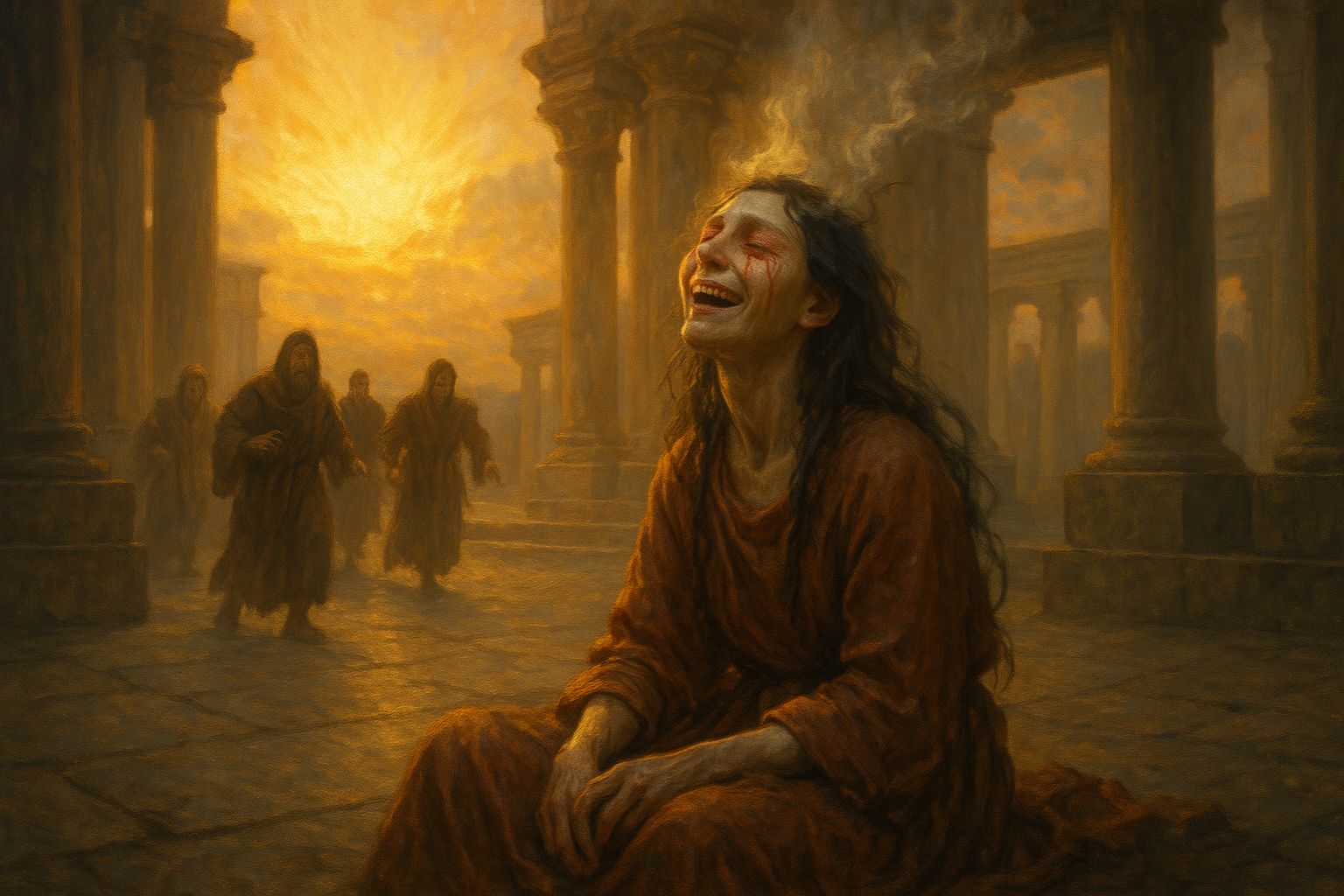
| The prophet sat alone in the temple court as dawn broke. The first ray of sunlight touched her face, and she screamed. |
| The world vanished. Light swallowed everything. Cities burned like candles in a gale, mountains split, oceans boiled to steam. Faces turned upward, countless and pale, and in each she saw her own eyes staring back. |
| Her scream became a wordless wail that shook the air. The priests rushed toward her, but before they reached her, the light was gone. |
| She sat motionless, smoke curling from her hair, tears of blood tracing down her cheeks. |
| “It’s not coming,” she whispered. “It’s already here.” |
| Then she began to laugh, softly, like a child who had finally understood the joke of the gods. |
The Sight Beyond
Seers are those cursed or blessed with sight beyond the mortal veil. They glimpse what others cannot, fragments of the past, futures that may come, and truths hidden in shadow. Their gift is not uniform. Some see through dreams, others through smoke, fire, or reflected light. A few hear the future whispered in the wind or the beating of their own hearts.
Each culture shapes the practice differently: the oracle who breathes hallucinogenic fumes in a temple cave, the tribal dream-reader tracing symbols in sand, the blood seer who drips crimson into still water. The ritual may differ, but the essence is the same, seeing without asking, knowing without wanting.
The Unbidden Vision
A seer cannot choose what they see. Their rituals open the way, but what comes through is its own will. The visions arrive without warning or mercy, and they rarely show peace. What seers witness are endings, deaths, disasters, betrayals, the ruin of cities or the fall of kings.
Sometimes, they see their own fates as well. A few spend their lives trying to prevent what they saw. Others wait in resignation, knowing all paths lead toward the same image burned into their minds.
Though most seers perform rituals to open their sight, the visions do not always wait for permission. They strike without warning, mid-sentence, mid-dream, or mid-prayer, tearing through the mind like lightning through still air. Witnesses speak of sudden heat filling the room, of a faint hum beneath the skin, of candles flaring blue though no wind stirs.
Some seers bleed from the eyes or nose when the visions seize them. Others freeze, staring into nothing, their voices speaking in tones not their own. A few emit light from their skin, faint as moon-glow, enough to leave shadows of themselves on nearby walls. When the vision passes, they collapse as though emptied of strength, unaware of what they said or did. Those who survive such moments describe them not as revelation, but intrusion, something using their body to look at the world.
For prophets, the most tormented of their kind, the visions never stop. They come like storms, wrenching the body, burning the mind. To resist is agony, to accept is worse. Their words are the voice of something else, god, fate, or madness, and no mortal can tell which.
The Weight of Knowing
While seers risk no explosions, curses, or demonic bargains, their burden is far heavier. The mind is not meant to hold too much truth. Many go blind, deaf, or mute after years of sight. Others drift into madness, their minds trapped between what is and what might be.
Some turn their visions into symbols, painting them on walls, weaving them into tapestries, or burying them in riddles no one can solve. But the images never fade. The gift of sight cannot be unlearned.
Those who live long enough to see their final vision rarely speak again. There is nothing left to learn.
The Place of the Seer
Despite their torment, seers are revered. Kings, chieftains, and generals seek their counsel. Cities build temples for them, and their words are written into law. In a world of uncertainty, their foresight is priceless. Then again, an unpopular vision might turn the respect into hate.
Yet even as they are honored, they are feared. None can lie to a seer, and none can predict what they will reveal. Those who listen too closely to their prophecies often shape the very doom they hoped to avoid. Every seer knows this, and carries the guilt of truths spoken too soon.
Theories and Doubts
Scholars debate the source of their sight. Some say it is a divine gift, the voice of higher powers speaking through mortal vessels. Others claim seers perceive ripples in the fabric of time, reading echoes of what will be as easily as others read shadows.
There are darker suggestions too, that seers see not the future, but possible futures, and that every vision creates what it reveals. To see something is to make it real. If this is true, then prophecy is not warning but cause, and the seer’s curse is that every revelation is also an act of creation.