Dragons
| Story |
|---|
| The shepherd swore it was no ordinary storm that came down from the mountains that night. He had driven his flock into the hollow when the sky split open with thunder, and through the flashing clouds he saw it. A shape vast as a fortress, wings cutting against the lightning. For a heartbeat the creature’s body gleamed silver, scales bright as molten steel, then it vanished into the blackness. |
| In the village below, shutters rattled and dogs howled. Come morning, there was no trace but the scorched ring of grass where lightning had struck and the memory of a roar that had rolled down the valley like the sky itself breaking. |
| Some called it a dream, others a lie. But the shepherd’s eyes still wandered upward whenever clouds gathered, searching for wings in the storm. |
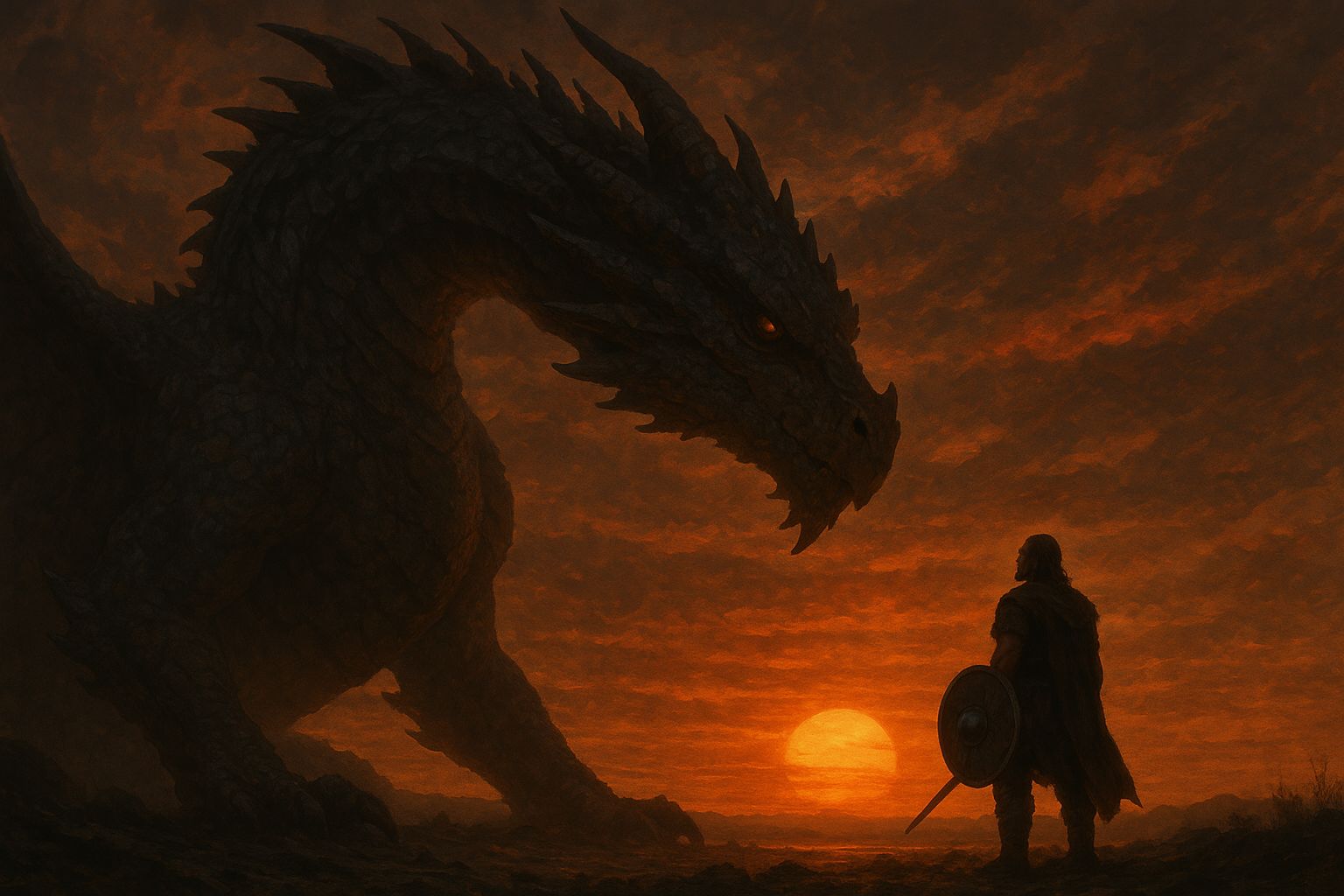
Dragons are not counted among the mortal races, nor even among the common gods. They are something older, something apart.
Ascension and Choice
Most of their kind have already ascended to godhood. To them, such a step was no more than a door opening. Yet not all chose that path. Some dragons remained behind, and see themselves as custodians of Kaelthir, guardians set to watch the balance of its beings and its lands. Even those who have not taken the step into divinity still wield powers so close to godhood that the difference is all but meaningless to mortals. They remained by choice, not due to lack of power.
Presence in the World
Few have glimpsed a dragon in the flesh. The dragon gods themselves sometimes manifest, striding openly where other deities act through agents and disguises. Such appearances are rare, yet when they occur they alter the course of empires. Mortals tell of thrones broken, cities spared, and storms calmed by a single sweep of draconic will. To see a dragon is to stand in the presence of a force beyond reckoning.
Most folk believe dragons are long gone from the world, their kind having either ascended to godhood or vanished into myth. Tales speak of their thunderous wings and fire-breath, but no living man or woman can claim to have seen one in the flesh. Scholars argue whether any remain at all, or if the last of them departed ages ago. Yet now and then, when storms break without cause or mountains shudder as if in pain, whispers spread that a dragon stirs still. Whether such beings truly endure or are only memories clothed in fear is a question no one can answer.
Form and Might
A dragon’s body is a terror to behold. Larger than the greatest ships, armored in scales harder than steel, crowned with horns and ridges, their every movement shakes the earth. Their breath is flame that can reduce armies to ash. Yet fire is the least of their weapons. Dragons are beings of pure magic, shaping it as easily as mortals speak, and behind their spells lies an ancient wisdom that no strategy can outwit. To pit oneself against a dragon is folly. Even kings and heroes know that to raise arms against such a creature is to court annihilation.
Fighting a dragon can end in many ways. The one thing these ways have in common is that the hopeful dragon-slayer dies.
The Language of Dragons
Dragons speak with voices like thunder, their own tongue deep and resonant, older than any mortal speech. They also speak the Word, the primal language of creation which all people speak. Scholars whisper that their own language proves they existed before the first dawn, before the Word and thus before the world, before the shaping of the seas and the mountains. But these are only whispers, for dragons do not share their beginnings, and all attempts to wrest such truths from them have failed.
Nature Beyond Need
Unlike mortals, dragons are unbound by hunger, thirst, or the craving for wealth. They care little for gold or power, though many kings have mistaken their indifference for greed. They have no need of treasure, no lust for dominion. What they guard, they guard because they will it. What they destroy, they destroy because they deem it necessary. Their gaze is fixed on the cause they champion, and they weigh it with a scale no mortal can fathom.
Wardens
In all things, dragons see themselves as wardens. Whether ascended to godhood or still walking unbound through the world, they claim the duty of stewardship. Some protect lands sacred to them, others intervene when the balance of nations falters. Their judgments are often beyond the understanding of mortals. A dragon may allow a city to fall to plague yet save a single child from the ashes, and none can explain why. They are not merciful, nor cruel. They are custodians, and their will shapes the world as much as storms or mountains.
Awe and Terror
To speak of dragons is to speak of awe, for even their absence is felt. The shadow of their power stretches across myth, faith, and fear. Mortals offer prayers to dragon gods, yet even those who believe them gone glance skyward at thunder, wondering if one still lingers. For if a dragon still watches, the fate of kingdoms may turn in a single heartbeat.