Zarhalem
Arabian nights in a very rich, very poor country.
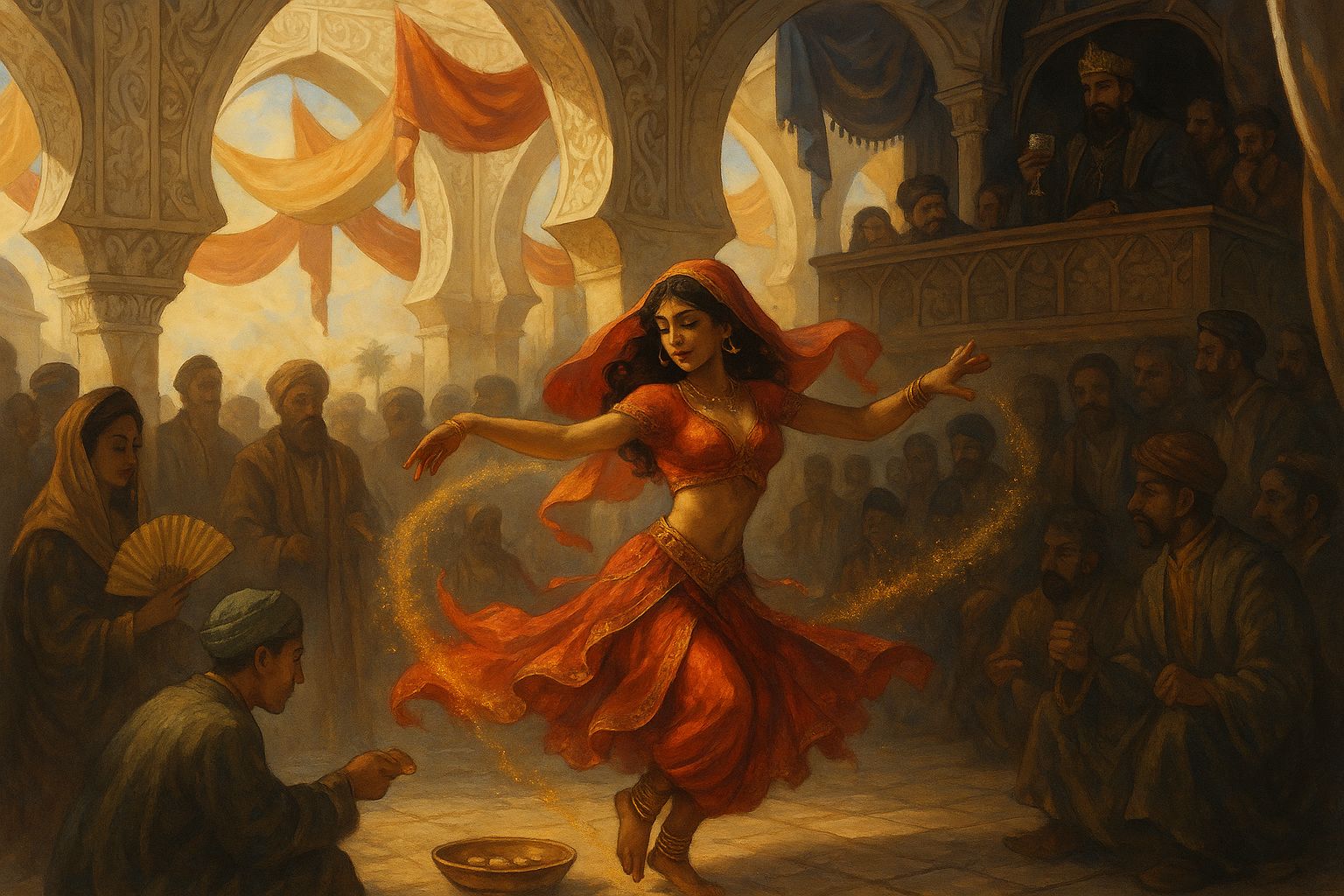
In the shaded arcade of the Incense Quarter, beneath arches of carved ivory and silken banners swaying in the warm wind, a girl named Sadiya danced.
She moved like a flame, barefoot on polished stone, her fingers trailing sparks of crushed amber dust. The crowd gathered close, nobles fanning themselves with gold-leaf fans, merchants weighing her beauty with shrewd eyes. A vizier’s son tossed a coin into the bowl at her feet. It rang like a bell.
They did not know she was a slave.
Her perfume, sweet and rare, was made from flowers that grew only in the high valleys of a distant, conquered land. Her anklets, silver and jingling, had been gifted by her master so she might dance with better rhythm. The coins in her bowl would not be hers. They would be counted, recorded, and used to buy more perfume. More anklets. More dust.
Above her, in a shaded balcony, the Khalif himself watched. He sat beneath a canopy of phoenix-feathers, sipping wine the color of dusk. Around him lounged courtiers and poets, fawning for his favor. When he raised a finger, even the city’s breeze seemed to pause.
And when he lowered it, Sadiya’s master appeared to kneel.
“Send her to the harem,” the Khalif said, voice smooth as firelight. “She dances with the grace of Qilara.”
The master bowed. “As you command, Nehakar.”
And so, before the last coin had cooled in the bowl, Sadiya was taken. Behind a curtain of pearls and velvet, she vanished from the Incense Quarter and the street songs fell quiet.
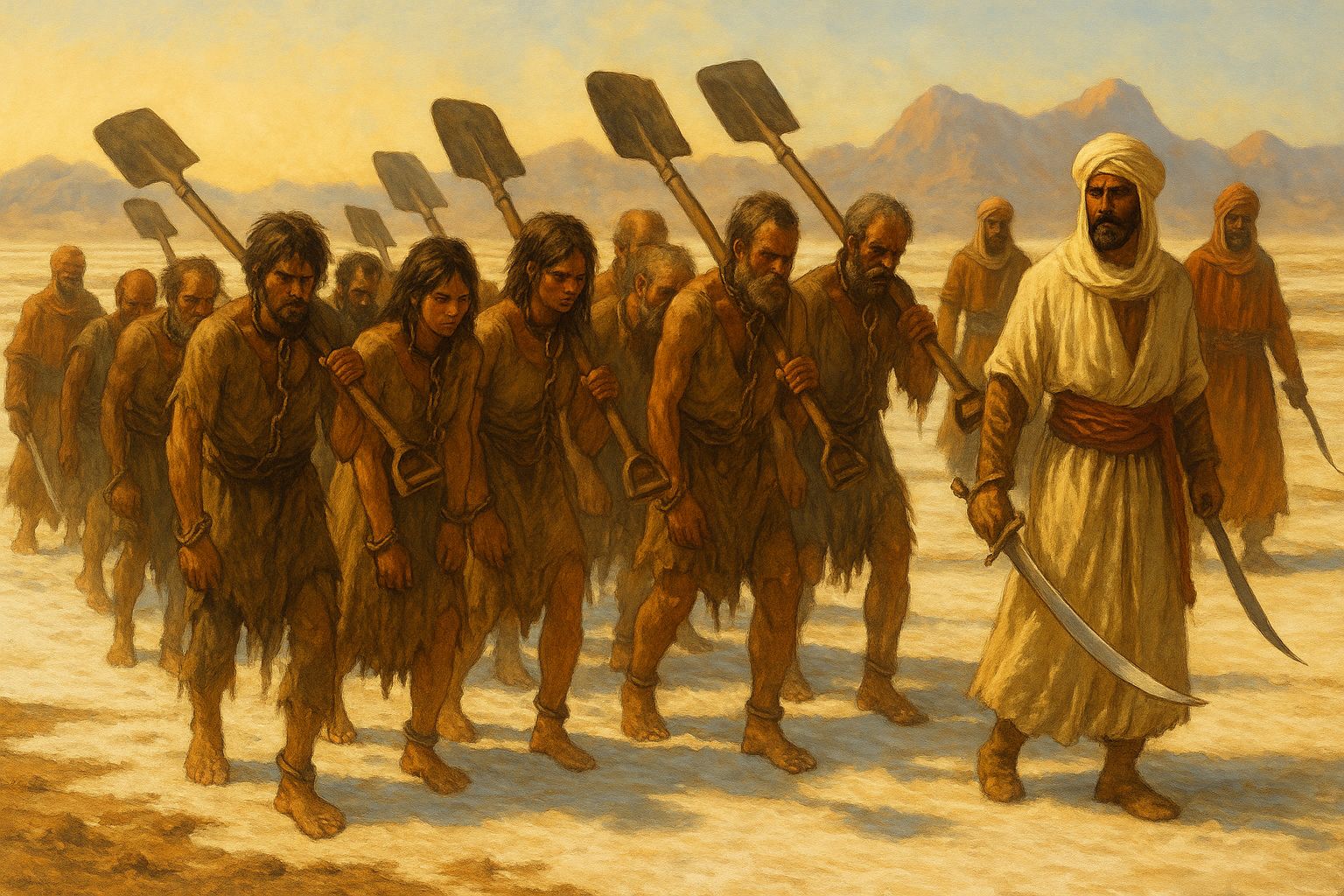
That same evening, in the Salt Flats two leagues from the city walls, another girl collapsed. Her name was also Sadiya. She was no dancer. She was no beauty. She was bent, sunburned, and starving. Her hands bled from days of scraping salt from the crusted earth with a dull iron blade.
When she collapsed, the overseer kicked her until she rose again. She had no perfume, only the scent of sweat and blistered skin. No anklets, only shackles that chafed her ankles raw.
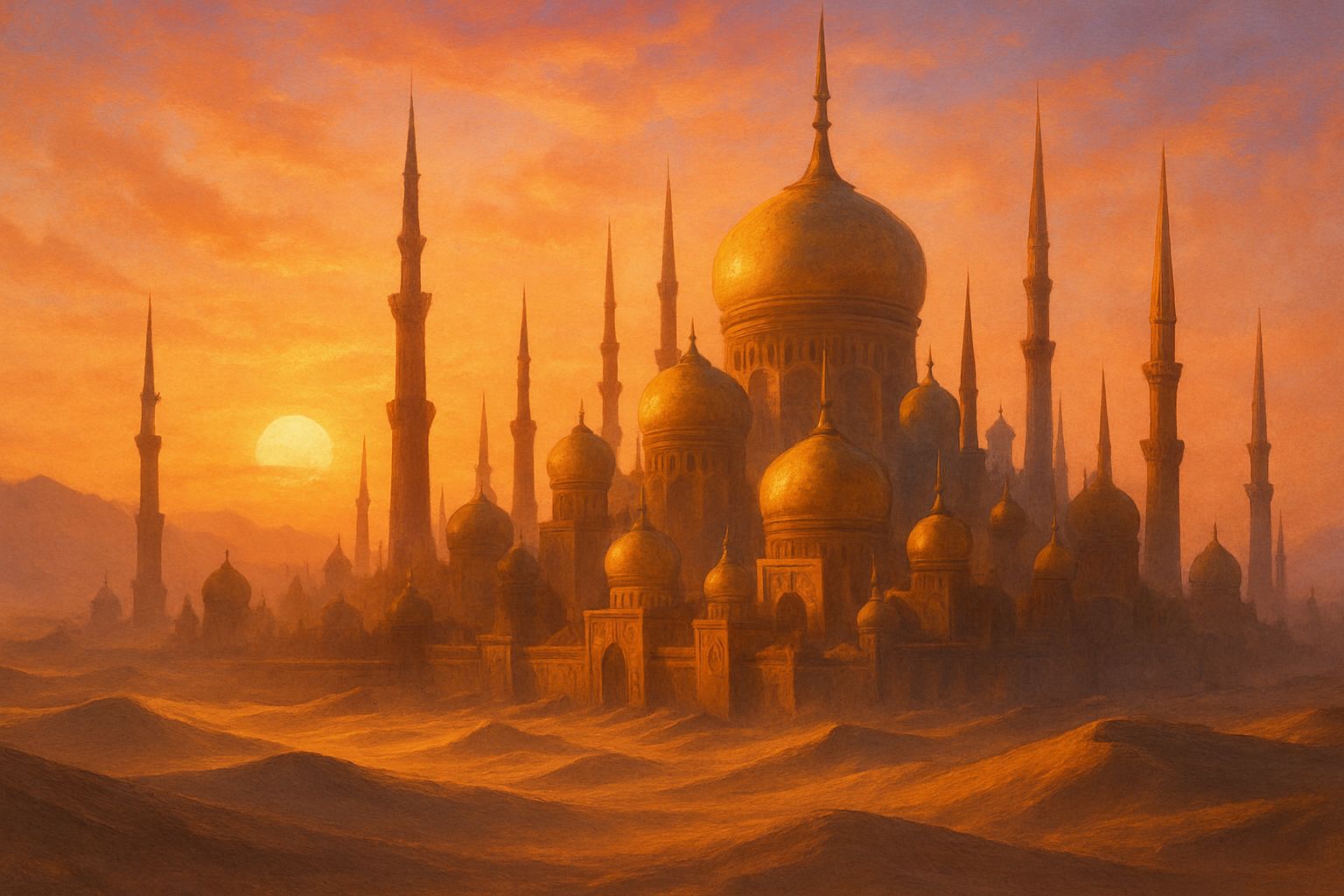
The sun above burned with the heat of Tahrun’s breath. The city of Zarhalem shimmered in the distance, spires rising like blades against the orange sky. It looked like a paradise of gold.
She knew it was a lie.
And yet, when she was allowed a few drops of brackish water at night, she prayed. To Ashama. To Zirhal. To any god who might see her.
Because in Zarhalem, even in the shadow of chains, the flame still whispered.
Description
Zarhalem is less a nation and more a gleaming jewel of contradiction. The entire realm is centered around a single city, Zarhalem, a vast and opulent oasis of white domes, golden spires, and alabaster walls that rise from the desert like a mirage. Its riches are unmatched in the region, but they flow from the hands of the desperate into the coffers of the few.
They believe in The Divine Court of Flame, and it shapes their entire society.
Geography and Resources
Zarhalem sits on the northern edge of the Great Desert. Beneath its mountains lie deep veins of gold and caverns filled with gemstones, rubies, sapphires, emeralds, and more. It's also near vast salt flats, once part of a dried ancient sea, glittering under the sun like mirrors. These flats are harsh and unforgiving, yet critical to the city’s wealth.
Work camps dot the outskirts, especially near the mines and salt flats. Life here is brutal. The camps are run by overseers who keep the slave labor in line through fear and cruelty. Deaths are frequent, replacements are common, and life is short.
Society and Politics
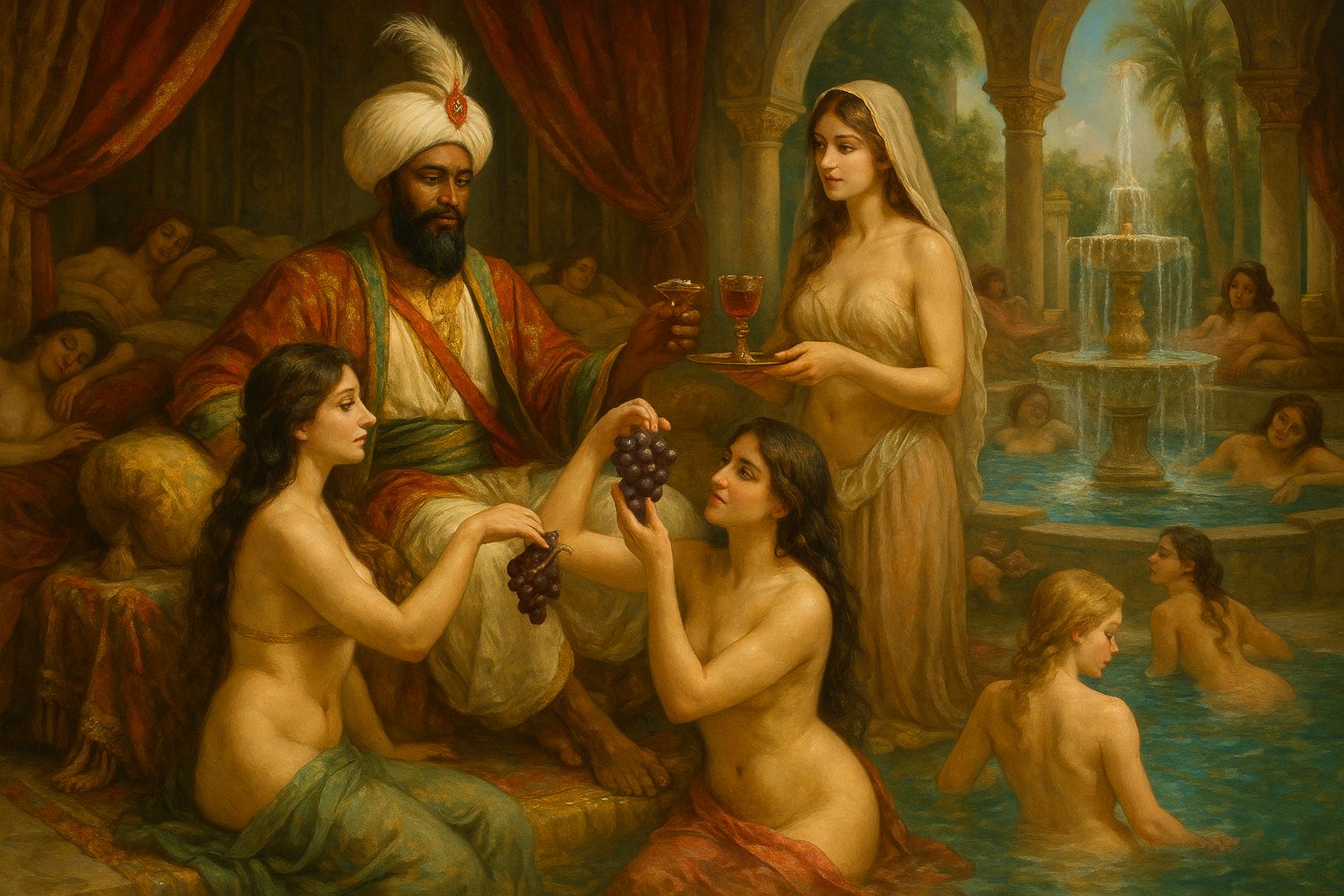
Zarhalem is ruled by the Khalif, Al-Rasid ibn Jahlil, a man of extraordinary opulence. He lives in the High Palace, a complex that includes lush hanging gardens, fountains fed by magical aquifers, and the famed Mirror Hall. His harem is whispered about across the world, said to include nobles, exotics from distant continents, and even magical beings bound in gilded chains.
Beneath the Khalif, the Grand Vizier and a council of lesser viziers administer the city. They plot constantly, engaging in elaborate games of influence, poison, marriage, and betrayal to gain the Khalif’s favor. Some rise. Most fall. Corruption is not hidden. It is the structure.
Craftsmen, merchants, and tradespeople form a thin layer of stability in the city proper. They have a hard life but can earn a measure of comfort. Beneath them are slave drivers and camp masters, feared even by the guards. And at the bottom lie the slaves, captured from foreign lands, born into bondage, convicted criminals, or sold by desperate families.
The constant need for slaves means that regardless of crime, the punishment is always the same: enslavement. Whenever the mines run low on slaves, the Khalif's guard crack down on crime.
The Economy of Paradox
Despite its gold-laden coffers, Zarhalem cannot feed itself. No fertile land surrounds it. Every grain of wheat, every bolt of cloth, every drop of wine must be imported. Some years, even water is imported. Many merchant ships bring goods from the Empire, Mataraaj, the Desert Rim, and the Olydrian Isles. In return, they receive gold, gems and salt.
Pirates lurk in the straits that all ships must pass to reach Zarhalem. These waters, known as the Golden Path and the Shark Isles, are filled with excellent ambush spots. The Khalif pays for elite naval mercenaries to ward off threats, but losses are frequent. Some say the Khalif quietly pays off certain pirate lords to attack his enemies and spare his own ships.
Military and Security
Zarhalem has no standing army of its own. The Khalif fears an armed force not under his direct control. Instead, he relies on gold to buy loyalty. Bands of mercenaries from across the world serve as palace guards, convoy escorts, and city enforcers. These include hardened warriors from the cold north, desert raiders, elven archers, and even ogre bodyguards. They are well paid, fiercely loyal to coin, and deadly ruthless when unleashed.
Culture and Splendor
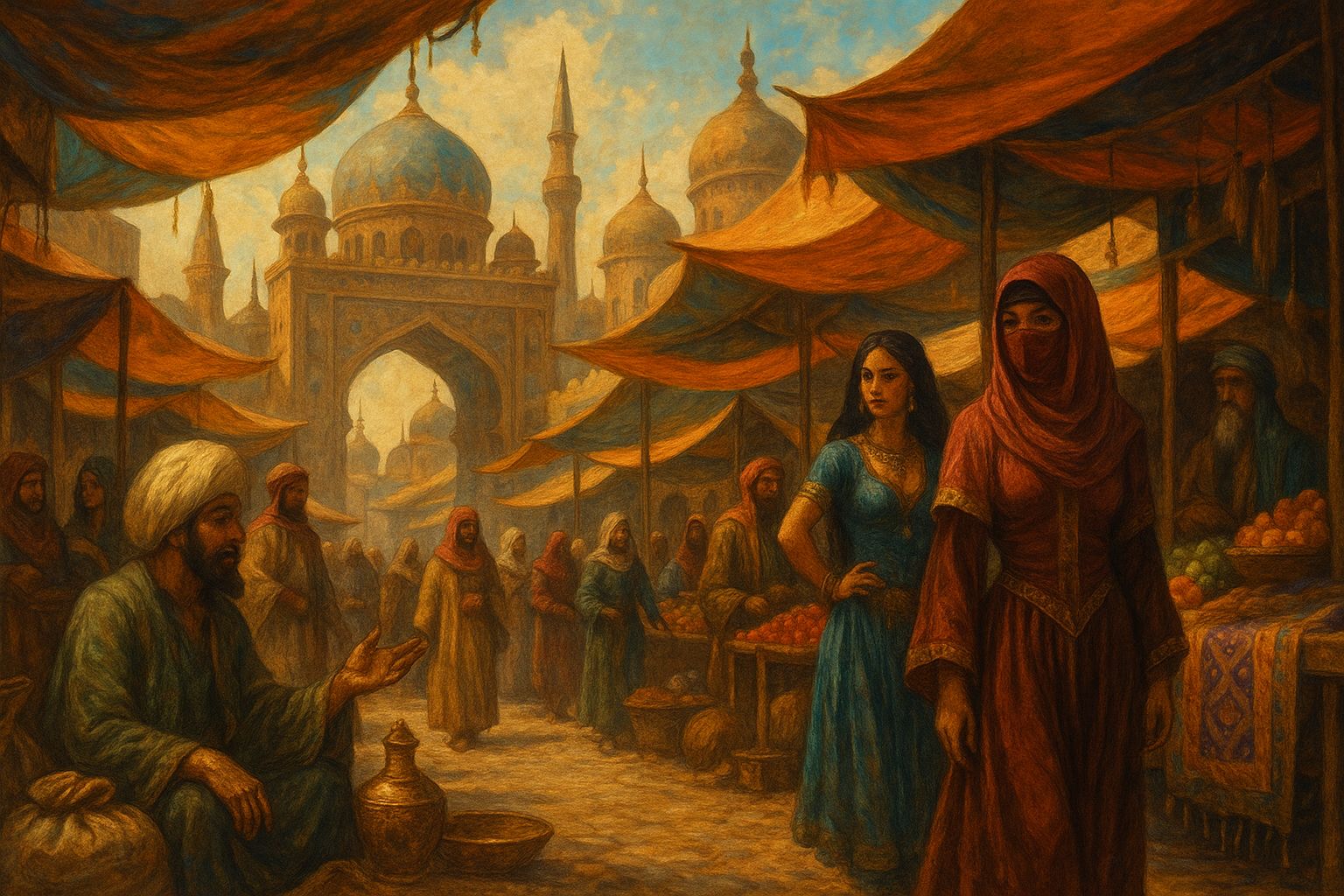
Despite the cruelty and decay beneath the surface, Zarhalem is a place of unmatched beauty. Its markets are legendary. Perfumes, silks, enchanted trinkets, forbidden tomes, and exotic animals can be found in its bazaar. Art, poetry, and music flourish under the Khalif’s patronage. Slave singers perform tragic ballads in marble amphitheaters. Dancers whirl like wind through smoke. Scholars debate over tea and silver hookahs.
But it is a beauty paid for in blood. Behind every jewel is a life broken. Behind every feast is a hundred days of starvation. The people smile in the city’s heart, but they look over their shoulders when the sun sets.
Foreign Relations
The Empire sees Zarhalem as both a trading partner and a moral compatriot. The slavery and the excesses echo their own. Most importantly, it buys the salt and gems in bulk. Diplomats tread carefully, aware that gold flows freely, and so do daggers. The Khalif hosts foreign ambassadors with honeyed words and hidden threats. Those who offend him vanish into the sands.
Zarhalem is not at war, but never at peace. It survives by gold, thrives on spectacle, and endures through fear.