Waverider Story - Campaign - Author's Notes
The Desert Rim
Mad Max , but fantasy
| Story |
|---|
| The wind came first, brushing sand across the stone like a whisper. Then came the riders. |
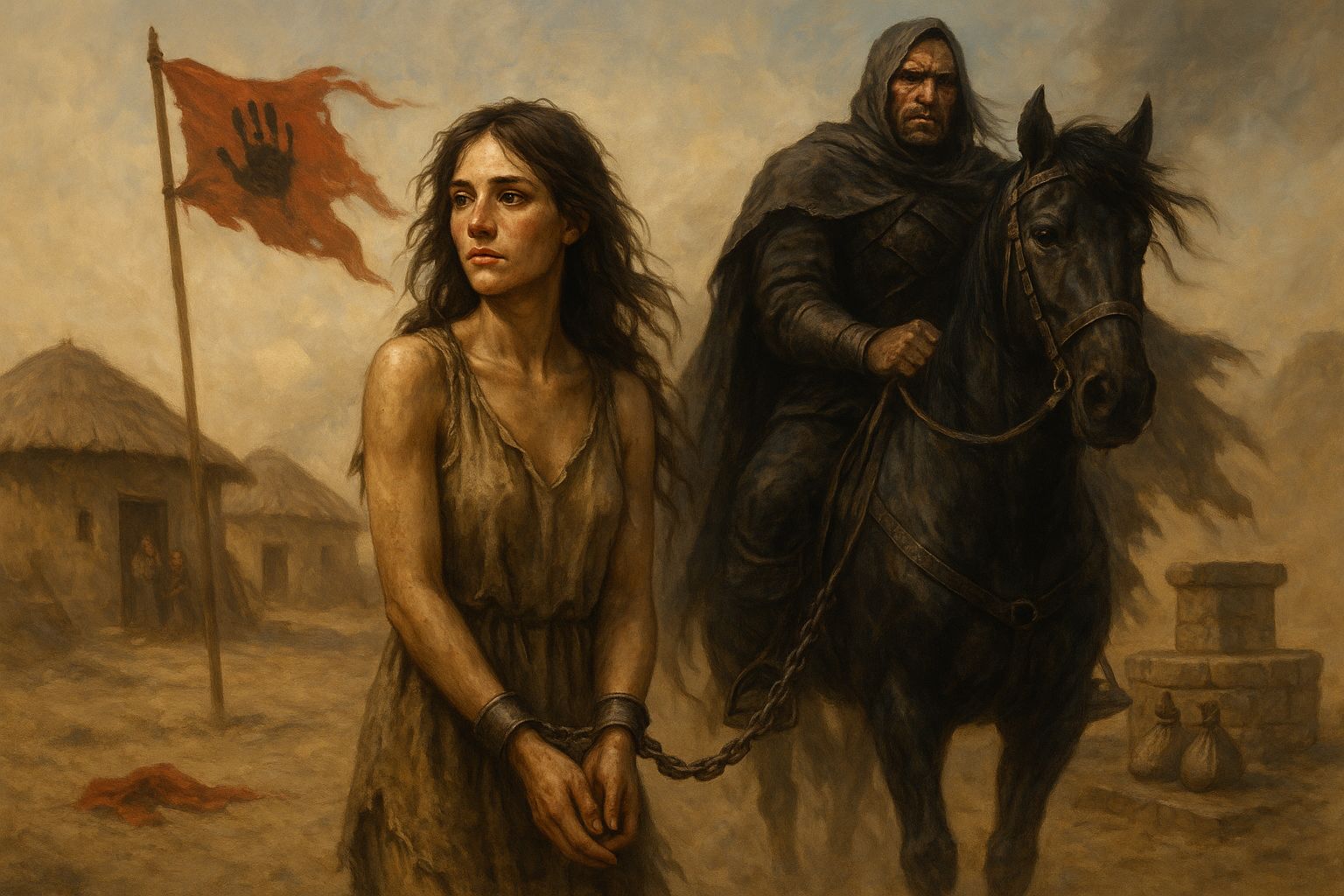
| Kara was mending the goat pen when she saw the dust bloom on the horizon. At first, she thought it was a storm. Then she saw the red cloth flapping above it, a torn banner marked with a black handprint. Varkhul's mark. |
| She stood for a long moment, staring, then went to the well. She filled two water skins, laid them on the offering stone by the gate, and waited. Her hands were steady. She'd known this day would come. |
| When the riders entered the village, the only sound was the creak of leather and the hiss of sand under hooves. Varkhul did not dismount. His horse was black and restless, the man upon it broad-shouldered, his face carrying a fresh scar. The mark her sister had left on him hadn't faded. |
| He looked at her a long time. The wind tugged at the burned edges of his cloak. |
| "You're her blood," he said. "I remember the eyes." |
| Kara nodded once. |
| "She's useless," he continued. "So I'll take what's left." |
| Behind her, someone sobbed. A child. She didn't turn. She only said, "If I go, the others stay." |
| Varkhul smiled. It wasn't cruel. Just tired. "If you go quiet." |
| She looked at the four huts, the well, the worn stone she'd stood on since she could walk. Then she untied her scarf, let it fall into the dust, and stepped forward. |
| No one tried to stop her. |
| She reached out her hands, and Varkhul reached down and she accepted his shackles. She followed him on foot, roped to his horse. She never looked back. |
| The raiders turned, their banner snapping in the wind. When the dust settled, only the scarf remained on the ground beside the offering stone. |
| By sunset, the village was silent again, except for the goats bleating in the pens, waiting for someone who would not return. |
Description
The Desert Rim is not a country. It is a broken, sun-blasted frontier where civilization thins and the gods seem absent. Here, no borders are drawn, no laws are upheld, and no king commands. Instead, the Rim is ruled by might, where warlords lead brutal bands of raiders and slavers across a land scarred by violence, greed, and thirst.
The Desert Rim stretches into a harsh expanse of cracked stone, endless dunes, sun-choked valleys, and dead riverbeds. Few enter willingly. Fewer leave unchanged.
Rule by Warlords
There is no central authority in the Desert Rim. Power belongs to those who seize it.
Dozens of warlords dominate sections of the desert, each commanding raiding parties, slaver caravans, and fortified camps. They go by many names, Khan, Lord, Master, Flamefather, but all rule through fear. Their thrones are built on bones, their banners soaked in blood. None are trusted. Most are hated. Some are respected.
The warlords rarely wage open war. Instead, they compete for raiding rights, tribute villages, and slave routes. Agreements are made over shared meals and broken by morning. Alliances last as long as the next betrayal. Honor is a word used by fools and corpses.
Notable Practices:
- Tribute: Villages often pay grain, goats, or children to avoid being burned.
- Marks of Ownership: Some warlords tattoo or brand their symbol onto captured slaves or conquered villages.
- Raider Codes: Most warbands follow rough traditions, never raiding the same village twice in a season, sparing water-bearers, or dueling rival warlords under agreed terms. These codes are as often broken as kept.
Some Noteable Warlords
There are many warlords, as many men have tried their luck, but a few has earned a larger reputation.
Varkhul the Flayer
- Stronghold: Bloodrise Hold
- Symbol: A skinned hand nailed to a post
- Notoriety: Brutality, torture, spectacle
Varkhul rose from the slave pits of the Empire and carved his place in the Rim with knives and nightmares. He believes fear is the only true coin of rule and leaves survivors after raids solely to tell the tale. Varkhul flays prisoners alive during his war feasts, nailing their skins to his banners. His warband, the Flayed Sons, are all marked with ritual scars and wear red-dyed leathers.
He trades heavily in slaves and pain, rumored to have ties to sadistic cults in the Empire's undercities. Even other warlords keep their distance, fearing his madness might be contagious.
Ashira of the Black Horn
- Stronghold: Chainrock
- Symbol: A black horn with a blood-red ribbon
- Notoriety: Strategy, survival, growing influence
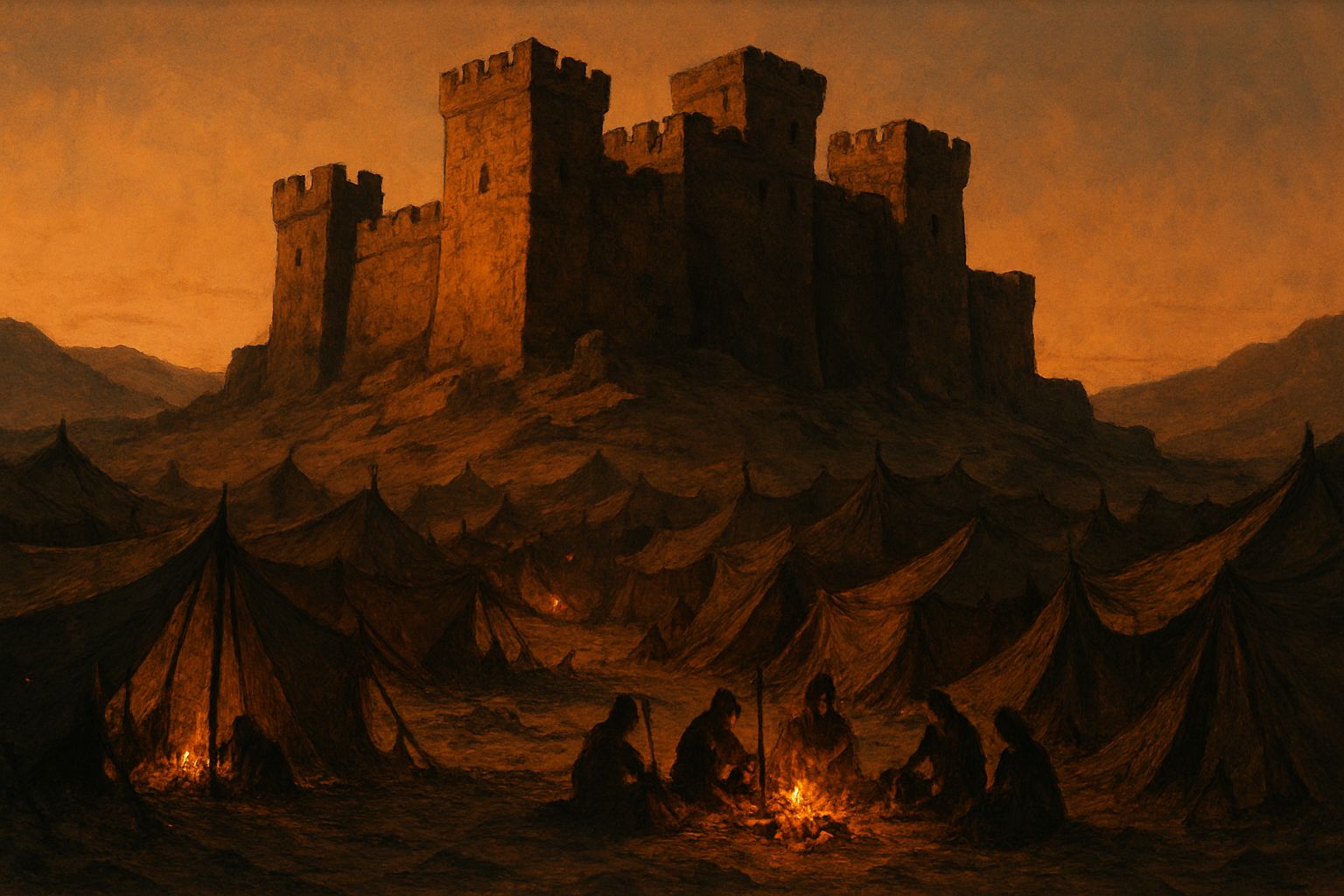
Ashira is one of the few warlords to command real loyalty from her people. Once a caravan guard turned mercenary, she united several scattered bands after slaying her former employer and taking his horned helm as her sigil. Her fortress, Chainrock, is built atop a wind-ravaged mesa, nearly impossible to assault.
Ashira is not kind, but she is clever. She keeps her raiders fed and paid, runs a tight chain of tribute villages, and openly punishes looters who disobey orders. Some whisper she is building something more than a warband. Some whisper of peace-though none dare say it aloud.
Tharvok One-Eye
- Stronghold: Ironspire
- Symbol: A cracked helm above crossed blades
- Notoriety: Excess, pride, cruelty
A bloated tyrant who thinks himself a king, Tharvok rules from his crumbling fortress with wine in one hand and a whip in the other. Once a rising captain in the Empire's southern legions, he deserted after killing a superior and fled into the desert, where his knowledge of imperial tactics helped him establish a bloody hold on the land.
Tharvok surrounds himself with entertainers, slaves, and sycophants, holding grotesque feasts where loyalty is tested with blood. He bears a scar from a slave who escaped him years ago-and has never stopped searching for her or her kin.
Hadan Sul
- Stronghold: Bloodrise Hold
- Symbol: A silver ring broken by a sword
- Reputation: Stoic, practical, dangerous to cross
Once a caravan master and diplomat, Hadan Sul turned warlord after imperial officials betrayed his contract and raiders destroyed his convoy. He built his stronghold at Zharak on the bones of a waystation, using the same trade routes he once protected to fund a growing militia.
Hadan avoids needless cruelty but maintains order with cold efficiency. He demands tribute from nearby settlements and ensures they are protected-from others. His word is iron, but his punishments are final. He is respected even by rivals, not for his power, but for his discipline.
Zaruk the Red Wind
- Symbol: A burning spear in motion
- Notoriety: Speed, raids, terror
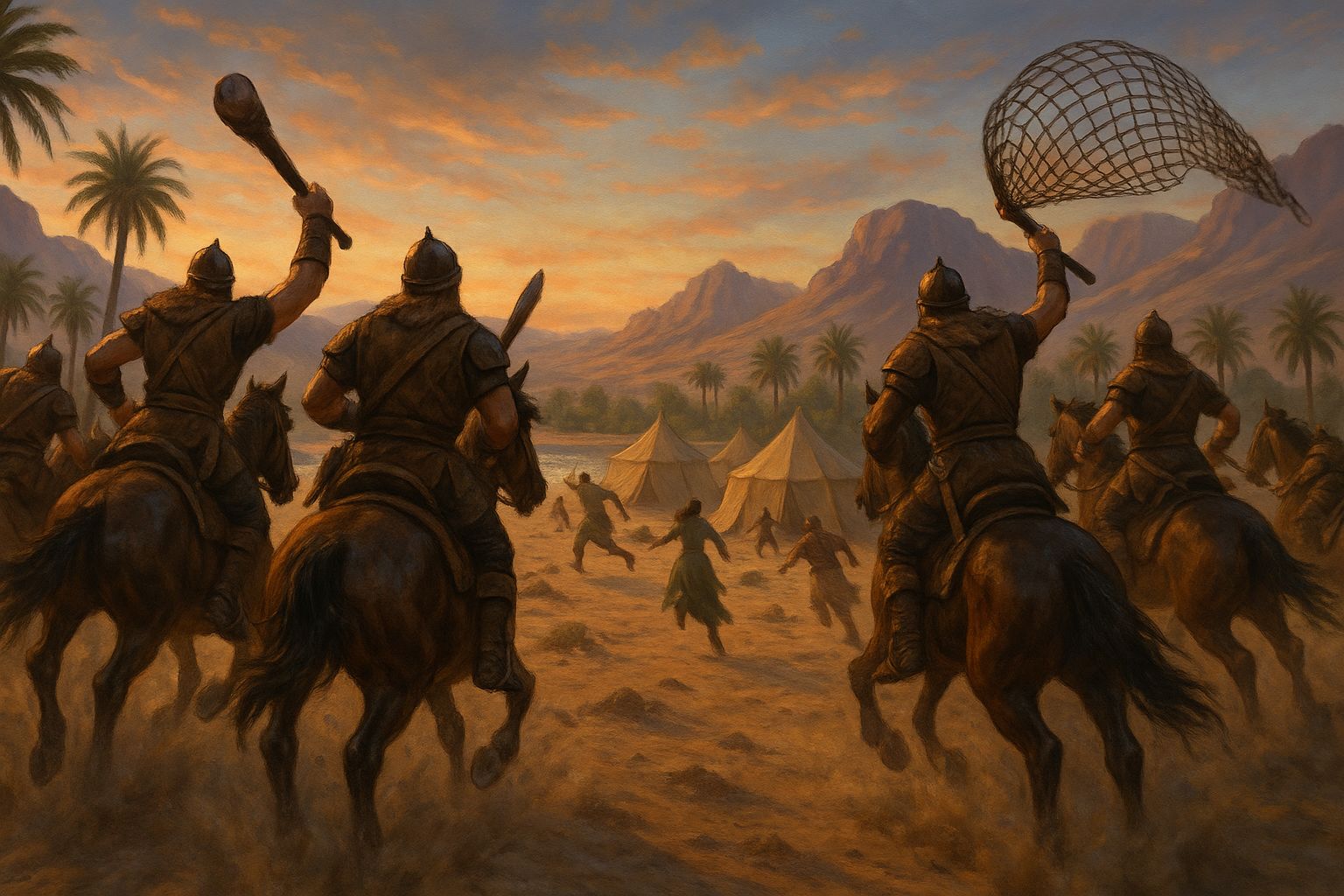
Zaruk commands no fortress worth naming. His army never stays still long enough to build one. Known as the Red Wind, his riders strike like sandstorms-swift, disorienting, and gone before defenses can form. Villages often surrender at the first sight of his crimson banners.
Zaruk recruits only the fastest riders, the deadliest bowmen, and the most daring scouts. His warband is notorious for its precision. Slaves taken by Zaruk are selected like livestock-young, healthy, no waste. He is said to have standing contracts with three different imperial buyers.
While other warlords fight each other for dominance, Zaruk raids them all with equal disdain. No one has ever seen him sleep.
Arem Vos
- Stronghold: Shardfort
- Symbol: A tower split by a lightning bolt
- Reputation: Suspicious, clever, ruthless when cornered
Arem Vos is a survivalist first and a leader second. Once the right hand to a better-known warlord, he slit his master's throat during a siege and took command of the battered survivors. From there, he rebuilt.
Shardfort is more fortress than town, built on a narrow promontory, defended by narrow paths. Arem runs his warband like a smuggler's den-layers of secrets, spies, and double-blind messages. He is paranoid, sure. But he's also still alive.
He does not dream of empires. He dreams of surviving one more year. So far, he's been very good at it.
Kol Marr
- Stronghold: Red Dune Bastion
- Symbol: A cracked mask
- Reputation: Brutal in war, unexpectedly just in peace
Kol Marr is a former pit fighter who won his freedom, then a warband, then a fortress. He's seen death too many times to romanticize it. In battle, he gives no quarter. Outside of it, he enforces law with a steady hand.
His men are forbidden to take slaves without his word. Raiders who go rogue are executed publicly. Yet he makes no apologies for bloodshed. He simply insists it have a point.
Kol Marr respects warriors, values order, and despises liars. He does not seek alliances, but he honors them when made. His rule is harsh but strangely predictable-rare in the Rim.
The Slave Trade
Slavery is the desert's most valuable currency.
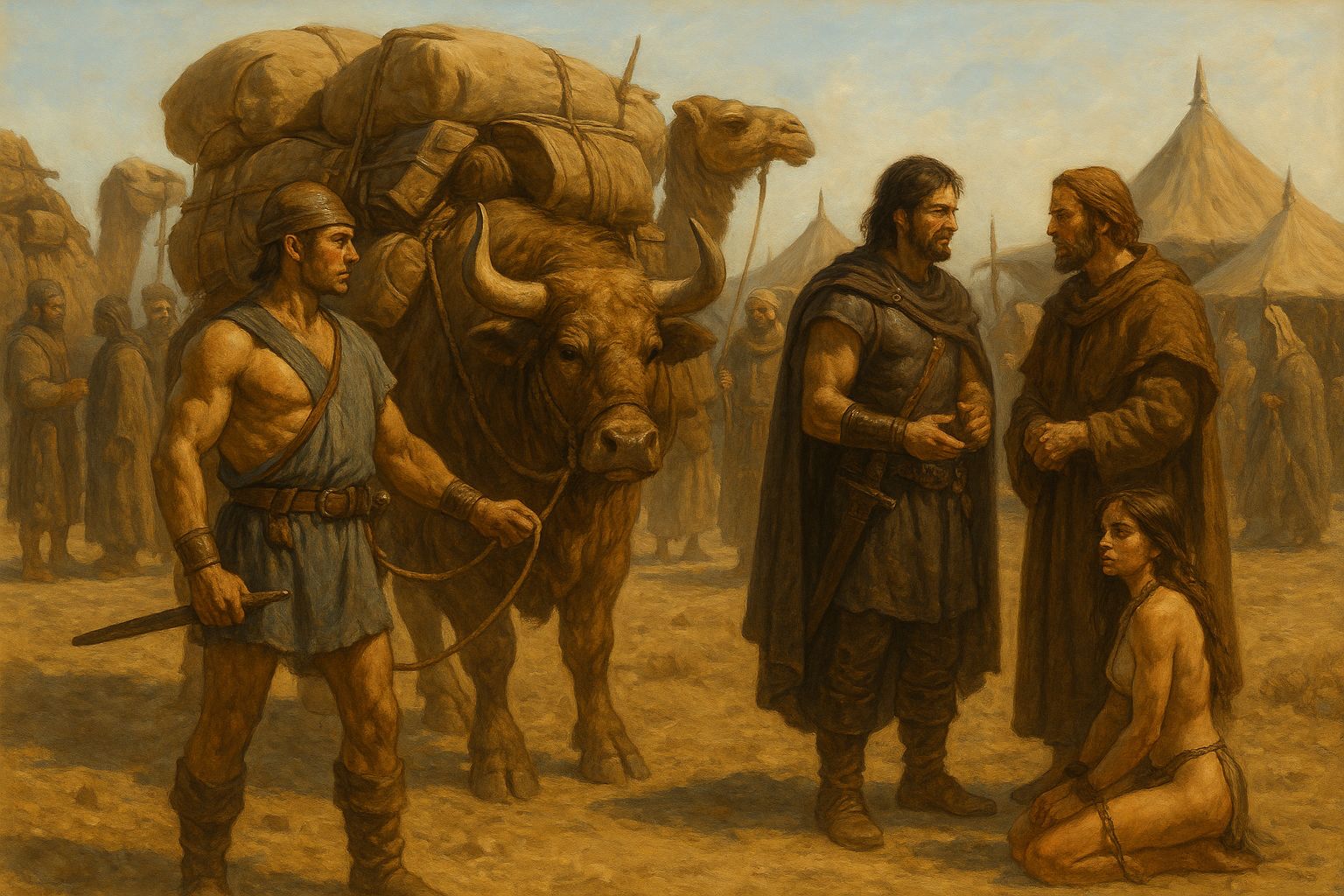
Captured villagers, debtors, and travelers are sold in brutal open-air markets or hidden desert pits, traded like cattle. Once sold, most are marched northward to the Empire, where labor is always in demand.
Warlords grow rich off this flow of flesh. Slavers act as diplomats between factions. Even the weakest camp might become powerful if it controls a well-traveled slave route.
Some desert rumors speak of entire villages captured and vanished overnight, their people never seen again, sold deeper, to darker markets where even the Empire's coins are not accepted.
Settlements of the Rim
Permanent settlements are rare. Those that exist do so under the constant threat of violence, and survival shapes every aspect of life.
Types of Settlements:
- Tributary Villages: Farming or herding communities that pay protection to a local warlord. Often marked with that warlord's sigil carved into their gate. This provides protection, but if they fail to pay the tribute, the debt will be paid in flesh.
- Raider Camps: Temporary or seasonal, built around watering holes, narrow passes, or ruins. Brutal, mobile, and rarely the same from month to month.
- Trade Crossings: Places where desert paths meet. Here, traders gather in rough bazaars under ragged canopies to exchange food, weapons, slaves, or information.
- Hidden Enclaves: Secret camps of escaped slaves, rebels, or mystics. Their locations are whispered, never written.
Common Features:
- Walls made of dry mud, bones, or scrap wood
- Shrines to harsh desert gods or forgotten spirits
- Underground cisterns guarded as sacred sites
- Pit-fighting rings and execution poles
- Watchtowers manned by archers or rusted ballistae
Landscape and Climate
The Desert Rim is as deadly as its warlords.
The terrain shifts from cracked badlands and wind-worn canyons to vast dune seas and rocky dried mud flats. Scorching days turn to frigid nights. Sandstorms can strip flesh from bone, and rain, when it comes- floods dry gullies with sudden violence.
Culture of the Rim
The Rim has no unified culture, but certain traits echo across its settlements and factions:
- Fear is law. Authority is maintained through violence, not
tradition.
- Loyalty is earned daily. Raiders and guards switch sides as easily as cloaks.
- Names carry weight. A name remembered in the Rim is a name feared.
- Scars are stories. Many wear their past carved into their skin-voluntarily or otherwise.
The Desert Rim isn't a very religious place, but they do practice the belief of Vestris & Elystra. It probably started as a way to justify their use of power and to subjugate their slaves, but now, it is a very real religion. Others pray only to their blades. Most worship survival.
Imperial Involvement
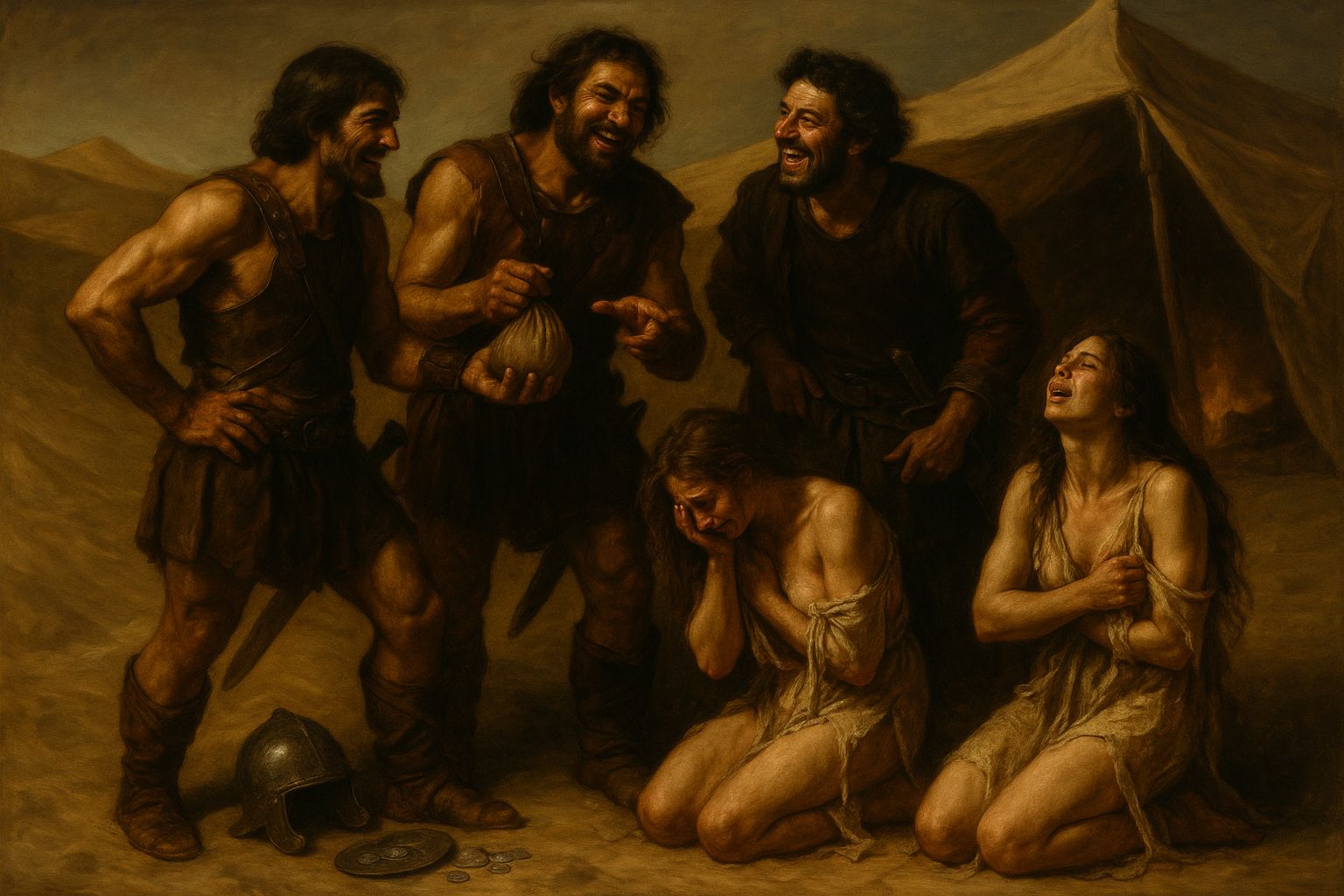
The Empire trades intensively with the Rim. Every port has some imperial ships anchored at all times.
Imperial merchants are the largest buyers of desert slaves. Imperial smiths sell armor and blades to Rim warlords. Imperial governors look away so long as the slave flow remains steady and rebel activity stays far from their gates.
There are whispers of deeper arrangements, imperial coin funding Rim warbands to destabilize border regions, to prevent one warlord getting too powerful, or exiled officers taking up the title of Warlord themselves.
Possible Secrets
The Scar Seer
A slave girl with no tongue who can speak the future in dreams, passed between warbands like a cursed relic.
The Tower of Glass
A ruin said to vanish under the sun, filled with ancient mirrors that burn the soul.
The Black March
A caravan of chained dead, walking through the desert each night, seeking their masters.
A Warlord King
One warlord has begun uniting others by force. If true, it could change everything.
Rebels in the Caves of Surnek
Said to be ex-slaves and deserters, armed and growing bolder.
Adventure Hooks
Caravan in the Crossfire
The party is hired to guard a desert caravan carrying grain and water barrels. Halfway through the journey, two rival warbands converge to claim it. The party must choose: protect the goods, negotiate with the warlords, or cut a deal to save their own skins.
Tribute or Blood
A desperate village begs the party to deliver their yearly tribute to Warlord Hadan Sul's outpost. The tribute is meager, and the warlord's new quartermaster is not satisfied. The situation threatens to explode unless someone finds a way to balance honor, fear, and survival.
The Dancer's Escape
A famed desert dancer bound to Warlord Tharvok's court has escaped during a raid and seeks the party's help. She knows the route to a hidden oasis untouched by war, but Tharvok is hunting her personally, and he's close.
A Broken Sword
The players find the shattered remains of a warband scattered in a narrow canyon. Only one survivor remains: a young soldier who claims his leader betrayed them to another warlord. He begs the party to help him take revenge, or at least uncover the truth.
The Auction Goes Wrong
While infiltrating a desert slave market to rescue a prisoner, the party witnesses a sudden uprising by the slaves themselves. Chaos erupts. Weapons are drawn. Loyalties shift. The players must navigate the chaos and choose who to help, if anyone.
Water for the Dead
A village well has gone dry. Locals claim it was cursed after they refused a warlord's demand. Others say the water was diverted by a nearby bandit camp. The party is asked to find the source of the problem, but time is running out, and thirst is turning people violent.
The Duel That Shouldn't Happen
Two warlords have agreed to a rare formal duel to end a bloody feud. The party is hired as neutral witnesses or guards. But one side is planning to cheat. Will the party interfere, stay neutral, or profit from the fallout?
Ride of the Ash Road
Makren of the Ash Road sends a secret message asking for help transporting a group of freed slaves through hostile territory. The party must ride with his band across open desert, stalked by slavers who want their "property" back.
A Child for the Sand
A child is being offered to Keshan the Bone Prophet by terrified villagers hoping to appease the spirits. The party arrives just before the handover. The child is calm. Keshan claims the child wants this. Is he lying, or is something stranger at work?