Waverider Story - Campaign - Author's Notes
Mataraaj
Everchanging civil war in India.
| Story |
|---|
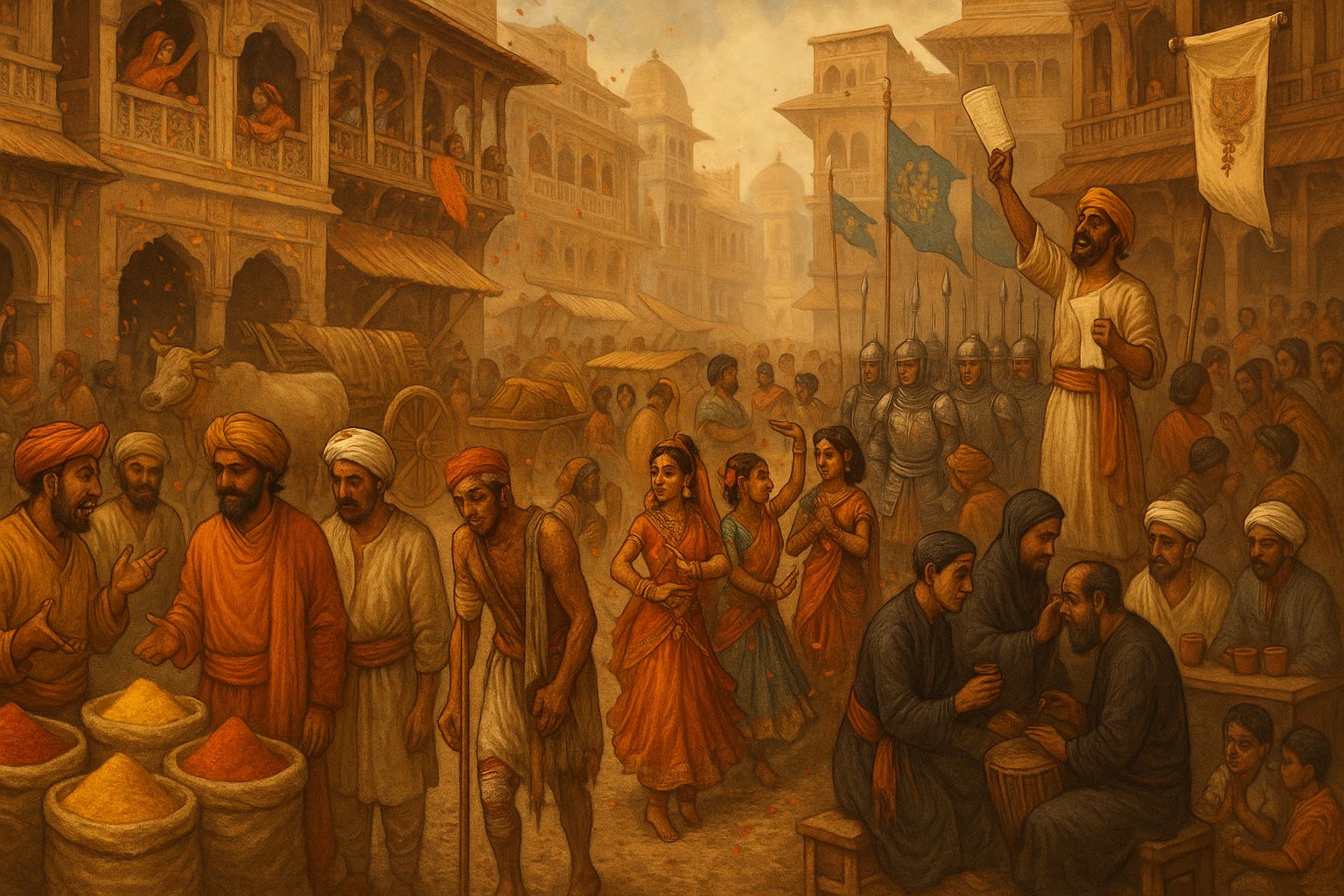
| The bazaar of Vardhana roared like a river at flood. Spice merchants shouted over one another, thrusting open sacks of saffron and turmeric beneath the noses of passing nobles. A jeweler held up a necklace of pearls to the sunlight, swearing it was fit for the neck of a goddess. Drums beat in rhythm as a troupe of dancers twirled through the dust, their anklets ringing. |
| Children darted between the legs of oxen pulling carts heavy with sugarcane. The air was thick with the scent of roasting lamb, fried chickpeas, incense, and sweat. Rickety balconies leaned over the street, women tossing flower petals into the crowd in hopes of catching a lover's eye. |
| Yet beneath the colors and noise, the war whispered. On one corner a soldier limped past, his leg bandaged in a strip of blood-stained cloth, begging for coins to pay for herbs. A group of men in plain white cotton whispered over cups of spiced tea, speaking of which raja had betrayed which side this week. |
| By the temple gate, a priest of Kalini painted black ash across the foreheads of mourners, his chant a soft dirge that cut strangely against the laughter of the street. |
| At the far end of the bazaar, a crier stood on a crate, waving a scroll high. "Hear this! Maharaja Samyra has promised grain from the royal granaries, no matter what the traitor Durjan may seize! The gods themselves guard the Peacock Throne!" His voice was swallowed by the crowd, some cheering, some jeering. |
| A hush fell only when a column of soldiers marched through, bronze armor clinking, spears gleaming. Their banners bore the peacock crest of the Maharaja, but in the crowd more than one pair of eyes looked away, fearful, calculating. |
| When the soldiers passed, the noise returned-louder than before, as though to bury the silence. Yet under the clamor, every trader, dancer, and beggar knew the truth: war lived even here, in the heart of the marketplace, just waiting for its moment to strike. |
Description
For five centuries the jeweled throne of Mataraaj has been held by the illustrious Rajputra dynasty, its banners flying over temple-spires and palace domes. Now, however, the land is torn apart, for the old order has broken.
The Rulers
The late Maharaja Ranjit Dev Rajputra left behind no son, only many daughters. His eldest daughter, Maharaja Samyra Devi, against all precedent, was crowned in the Peacock Palace of Vardhana, capital of Mataraaj. Samyra is strong-willed, clever, and well-loved by the common folk. She has built canals, repaired temples, and kept the armies supplied even in the worst years of war. Her marriage-bed, however, has been a matter of gossip, as she has no heir. The critics say that the harem of male consorts will not produce as many heirs as a male maharadja with a female harem. Only now do rumors fly that she is with child, and the land holds its breath.
Her rival is Raja Durjan of Kalithar, a man of ruthless ambition. Where Samyra speaks of virtue and duty, Durjan speaks of destiny and strength. He is feared rather than loved, but many rajas back him out of fear of his armies, hatred of their neighbors, or simply because they want to be on the side they think will win.
The War of the Peacock Throne
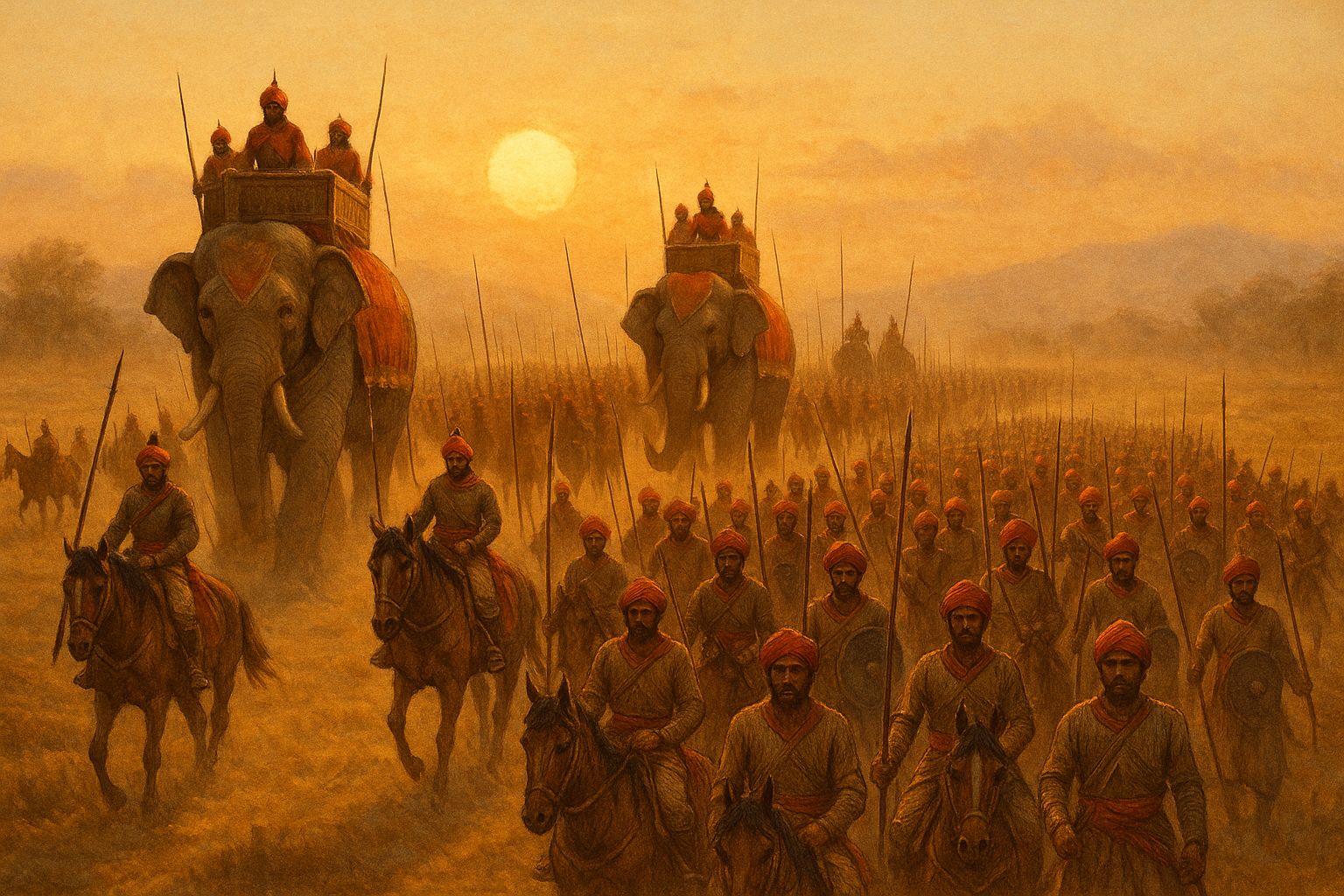
This civil war, known as the War of the Peacock Throne, has lasted seven long years. Loyalties shift like the monsoon winds. The Raja of Bhimora was once Samyra's most loyal ally, until Durjan promised him the fertile province of Kandral, only to switch back again as Durjan retreated out of the province. The Raja of Suravara, an old man, shocked all by breaking his sworn oath to Durjan and placing his armies behind Samyra after Durjan's men desecrated his family's shrine.
Villages burn, trade caravans are plundered, and temples levy their own militias. Mercenaries fight for anyone who can pay, and there are entire mercenary armies for hire. The countryside has become a chessboard of intrigue, where betrayal is as common as the rains.
Religion
The people of Mataraaj worship countless gods, from mighty deities to personal household protectors. They believe the gods dwell together in Svarnagiri, the Golden Palace on the Clouds, its gardens rich with sweet fruit, peacocks, lotus ponds, and divine musicians.
Some of the major gods are:
Rishary, The Dreamer
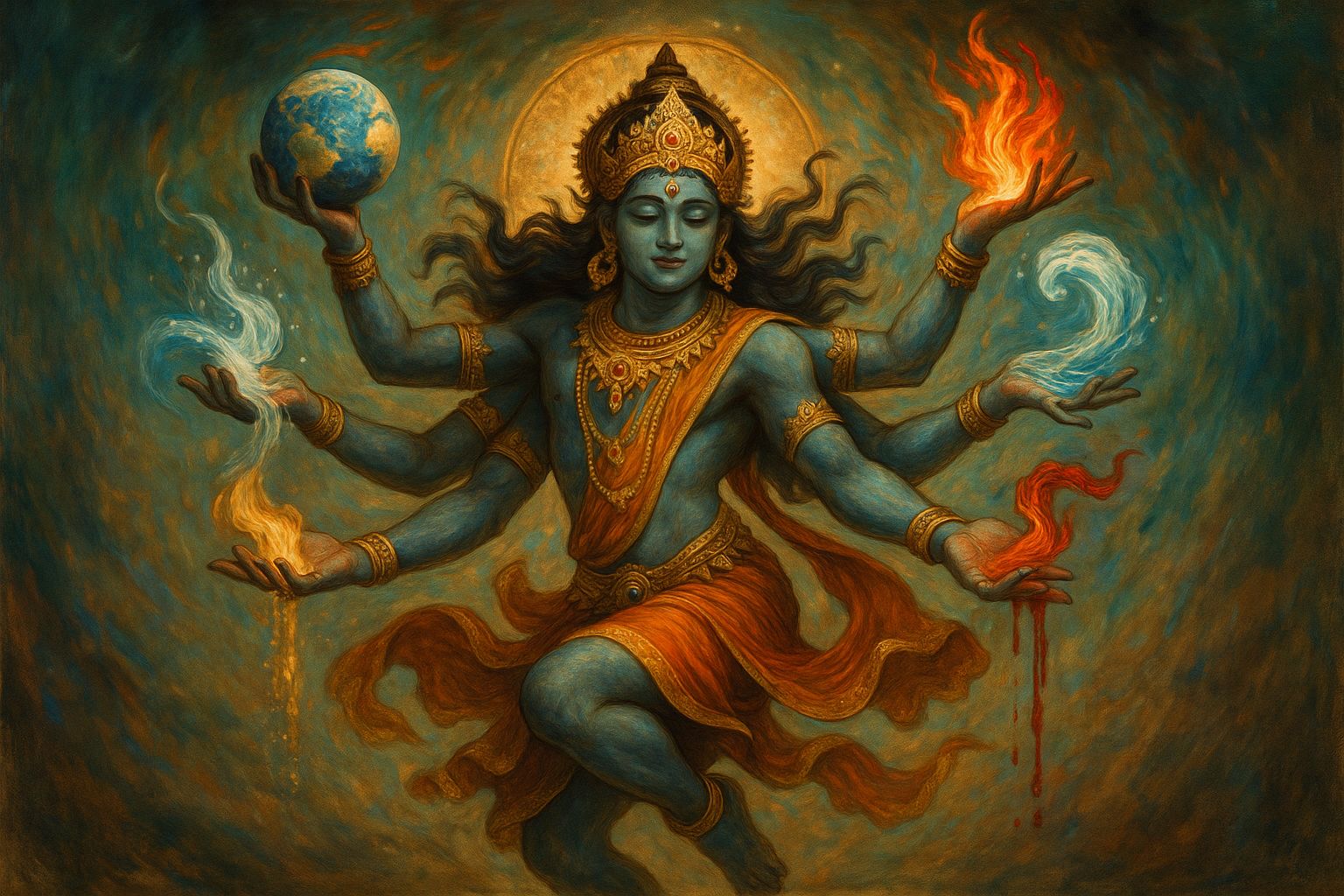
Created the world and all life in a dream. One day, he will wake up, and the world will end. God of dreamers, peace, and the cycle of life.
Vayandra, Lord of Thunder and War
A fearsom god, often invoked before battle.
Kalini, Mistress of Fate and Death
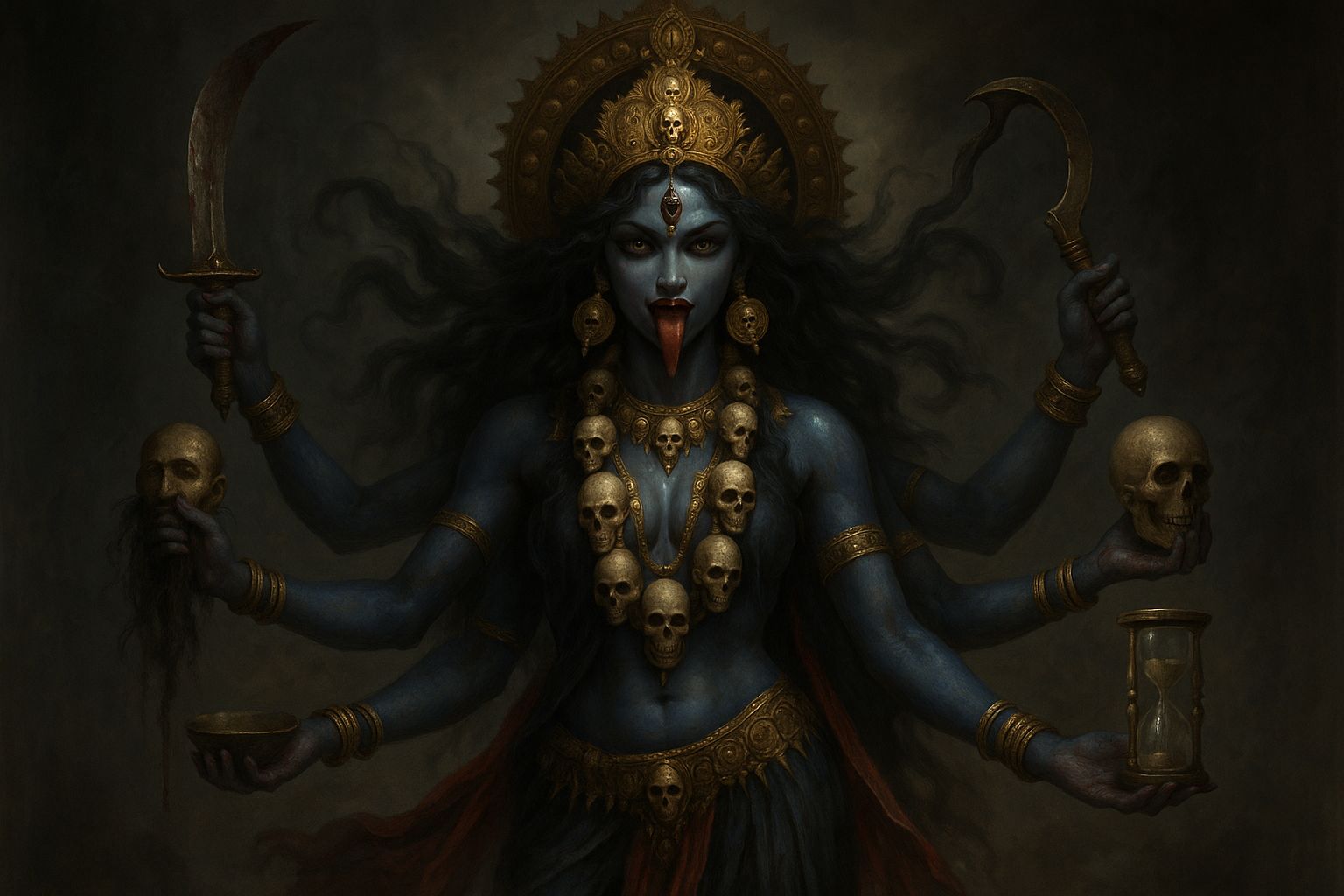
She is both feared and seen as a liberator from pain and old age, and her black-clad priestesses are given offerings at every funeral pyre.
Amaran, Giver of Harvests
She is beloved in villages, where his shrines stand beside the fields.
Suranyan, Lord of the Sun and Justice
Radiant and stern, even unchanging, he rides a golden chariot across the skies. Judges and rulers invoke his name, for he sees all things done under the sun. His temples are open-roofed, bathed in light.
Narayela, Lady of Rivers and Mercy
Her hair is said to flow like the Sarashti river itself. Fisherfolk, washerwomen, and travelers pray to her for safe passage. She has two sides, though, as she is also the god of river predators like crocodiles. Offerings of lotus and milk are cast into rivers in her honor.
Varukan, God of War and Storms
Brother to Vayandra, but far more savage. His priests whip themselves before battle, and his favor is sought by Durjan's warriors. His image is carved with tusks and fangs, lightning in hand.
Padmira, Goddess of Love and Desire
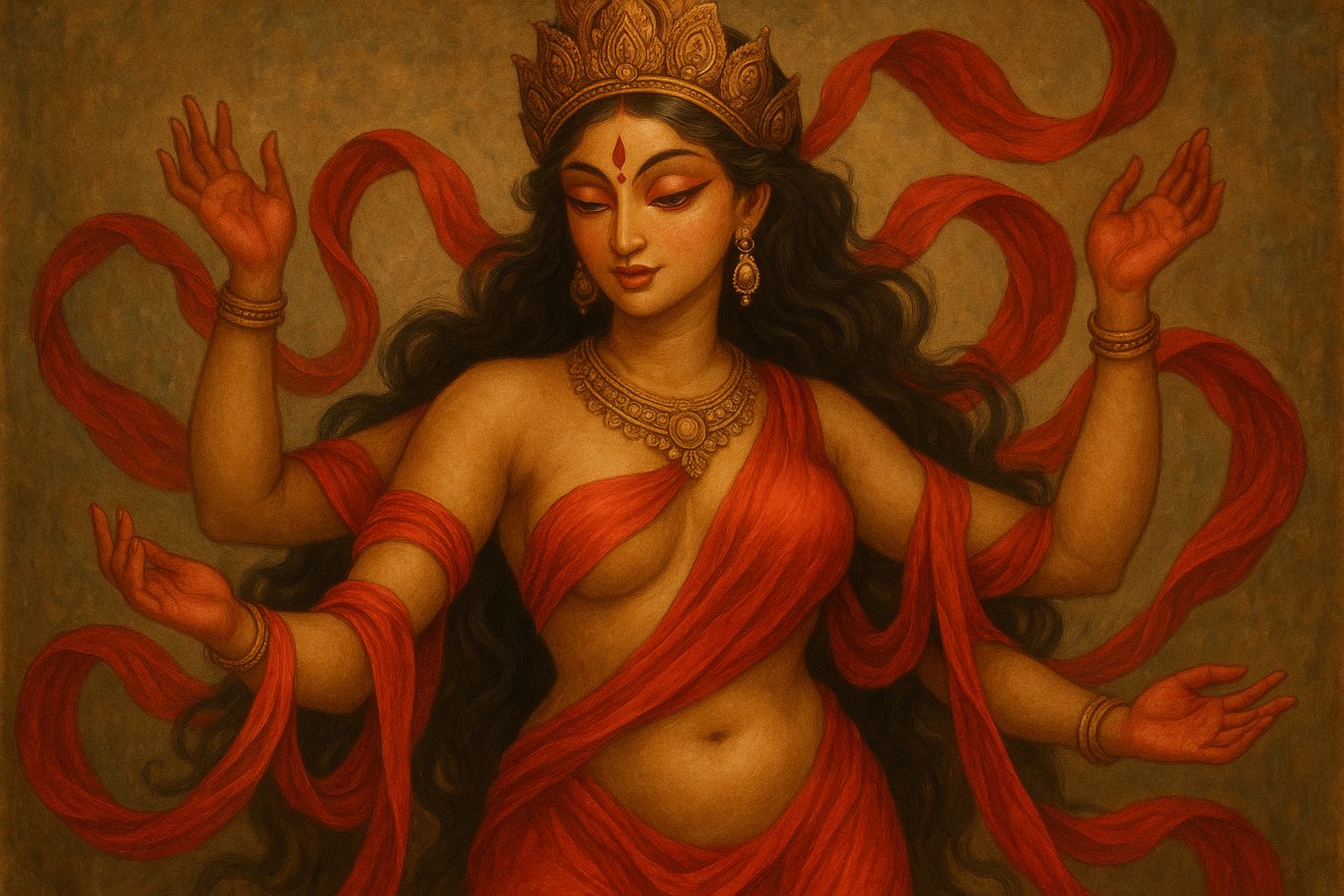
She is depicted with eyes like lotus petals, draped in silk ribbons. Courtesans, poets, and lovers keep her shrines in their chambers. She is adored, but also feared, for desire often leads to ruin.
Kethara, Guardian of Thresholds and Oaths
Patron of gates, bridges, and contracts. Merchants and travelers pray to him when passing borders. Breaking an oath sworn before Kethara is said to bring lifelong misfortune.
Chandri, Goddess of the Moon and Secrets
Worshiped quietly, by women at night. Thieves and lovers alike make offerings in her pale shrines.
Thanis, the Oxen God of Roads
Sculpted in stone at crossroads and caravan stops, he blesses safe travel and heavy loads. Offerings of fruit are left in his horn-shaped altars.
Mokti, Child God of Laughter
Depicted as a mischievous boy with a flute. Families keep tiny statues of him to guard children, though he is said to play tricks if not fed sweet cakes.
Vyras, God of Shadows and Forgotten Names
Rarely invoked, feared by all. His priests wear veils and walk only at dusk. He is said to collect the names of the dead so that their souls can pass into the next life.
Jivara, Lady of Healing Herbs
Worshiped by midwives and apothecaries. Her shrines are simple, marked by bundles of dried plants.
Even the smallest homes have niches for Kutra Devs, little family gods who bless hearth and children.
Maharaja Samyra has strengthened her claim by presenting herself as Chosen by the Gods of Svarnagiri, while Raja Durjan insists the gods favor only the strong who seize their fate.
The Mataraaji believe in reincarnation, but the next life is not governed by how good a life you have live, but by how true to your path you have been, and which gods you have pleased.
Foreign Relations
Zanakwe: Once a strong trade partner, sending ivory, exotic beasts, and gems in exchange for fine silks and spices. But when both Samyra and Durjan sent envoys demanding allegiance, Zanakwe sealed its ports until one ruler remains.
Ozukari: Known for their prickly pride, they trade in small amounts-textiles for incense and precious woods-but nothing decisive.
Twin Cities: Care nothing for dynastic wars, happily exchanging their iron for Mataraaj's gold and pearls. Yet the sea routes are treacherous, preyed upon by pirates based in the archipelago coast of Kalyanpur, where pirates can launch swift strikes and disappear as swiftly again.
Society and Architecture
Mataraaj is a land of layered splendor. White marble palaces rise above narrow bazaars teeming with spice-sellers and cloth merchants. Temple complexes tower with gilded spires, each dedicated to a host of gods. The roads are lined with peach trees, the rivers spanned by ornate stone bridges carved with elephants, tigers, and peacocks.
The people live by caste and guild, yet the turmoil of war has shaken the old order. The caste system remains, but anyone, regardless of caste, can become a soldier on at least somewhat equal terms.
Slavery exist, but is a privilege for the very rich. Owning slaves is as much a status symbol as a utility.
Major Rajas
Here are some of the major rajas of Mataraaj, their lands, and families. Each one has their own motives, ambitions, and tangled loyalties in the War of the Peacock Throne.
Raja Durjan of Kalithar (the Pretender)
Seat: Kalithar, a red-stone fortress-city by the Mandira river. Territory: Dry scrublands, but rich in warhorses and iron mines. Family: His eldest son, Pratap Singh, is as cruel as his father but less disciplined. His daughter Veyra is rumored to secretly admire Maharaja Samyra, which has led to whispers of betrayal. Character: Brutal, ruthless, but charismatic in his own harsh way. He believes strength alone gives legitimacy, and his bannermen follow him out of fear or ambition.
Raja Devayan of Suravara
Seat: Suravara, holy city of shrines and pilgrimage routes. Territory: Fertile valleys surrounding the sacred River Sarashti. Family: A widower who outlived his wife and three sons, all slain in the early years of the war. Only his granddaughter Anika remains, whom he fiercely protects. Character: Stern and devout, once a supporter of Durjan until his men desecrated his temples. Now one of Samyra's most devoted allies, leading his armies despite his age.
Raja Bhaskar of Bhimora
Seat: Bhimora, a city of granaries and canals, known as the "rice bowl of Mataraaj." Territory: Endless rice paddies and fruit orchards. Family: Married to Rani Kalindi, a sharp-tongued woman who is said to whisper every choice into his ear. Their son Ajay has been married to a cousin of Durjan, which complicates loyalties. Character: Greedy and opportunistic, Bhaskar has switched sides multiple times, always angling for better promises of land. His soldiers are disciplined, but his reputation for treachery makes him mistrusted.
Raja Chandravir of Kandral
Seat: Kandral, a jewel-like city on the riverbanks, surrounded by lotus ponds. Territory: Fertile river valley producing rice, sugarcane, and rare woods. Family: A sprawling family of rival brothers and cousins, constantly scheming for inheritance. His wife, Rani Devika, is rumored to secretly correspond with Samyra's court. Character: A cultured man, fond of poetry and music, but indecisive in war. His court is paralyzed by family feuds, leaving Kandral a rich but vulnerable prize.
Raja Haridra of Kalyanpur
Seat: Kalyanpur, a coastal city half-drowned in mangrove swamps. Territory: Pirate-infested shores and marshes. Family: His half-brothers command the pirate fleets, though loyalty between them is thin. His daughter, Jeyna, captains her own galley and is infamous for burning enemy ships. Character: A cunning schemer who plays both Samyra and Durjan against each other, supplying pirates with protection while profiting from smuggling. Seen as dishonorable, but too dangerous to ignore.
Raja Virendra of Dharmakhet
Seat: Dharmakhet, a mountain fortress ringed by monasteries. Territory: Between the river and the mountains, a bit outside the main conflict. Family: A celibate ascetic, without heirs, advised by a council of monks. His nephew, Surya, is a fiery young commander who often disobeys his uncle. Character: Quiet and philosophical, devoted to the gods. Though sworn to neutrality at first, Durjan's raiders violated his monasteries, pushing Virendra to side with Samyra.
Raja Malvek of Aranjaya
Seat: Aranjaya, a city deep in the jungle, surrounded by elephants and teakwood forests. Territory: Dense jungles and lucrative ivory trade. Family: Known for his immense harem and dozens of children, none of whom are favored clearly. His eldest son, Rohan, openly despises him. Character: Decadent, cruel, and paranoid, Malvek surrounds himself with mercenaries and fortune tellers. His loyalty is uncertain, and he has been courted by both sides with lavish bribes.
Raja Devraj of Manpur
Seat: Manpur, a stone-walled city in the northern hills. Territory: Copper mines and goat-grazing lands. Family: Father of six sons, all hot-blooded and eager for command. His eldest, Ravindar, constantly pushes to betray allies for quicker gain. Character: Practical and miserly, obsessed with wealth. He often plays both sides, offering supplies to whichever army pays most.
Raja Somesh of Jalandra
Seat: Jalandra, a small city built north of the Sarashti River. Territory: Controls vital routes between the sea and the Sarashti River. Family: Has one frail son, Ishan, whom he keeps hidden, and three daughters married into rival raja families. Character: Stern and secretive. His loyalty cannot be bought with gold, but with the promise of safeguarding his dynasty.
Raja Himmat of Dvaraka
Seat: Dvaraka, a coastal citadel battered by sea winds. Territory: Fishing fleets, salt pans, and a small but fierce navy. Family: Widowed, with only one bastard son, Nalin, raised as a warrior. Character: Boastful, given to drink, but unmatched in naval warfare. He has allied with Durjan, but his pride makes him unstable.
Raja Rajnath of Varnapura
Seat: Varnapura, famed for its marble quarries and artisans. Territory: Rich quarries supplying temples and palaces across Samvara. Family: An aging man with no surviving heirs. His nephews scheme against each other, eager to inherit. Character: Tired and weary of war. More interested in patronizing poets and architects than fighting. His lands are ripe for the taking if he dies.
Raja Dharan of Kusmara
Seat: Kusmara, a jungle stronghold. Territory: Dense forests yielding teak and elephants. Family: Has three sons who all command bands of elephant riders, competing constantly for his favor. Character: Fierce and warlike, quick to anger. Known for unleashing elephants in battle, but also for their devastating destruction of villages.
Raja Vimal of Ranjura
Seat: Ranjura, a riverine city of canals and gardens. Territory: Fertile floodplains growing rice, fruit, and spices. Family: A devoted father, with four sons and two daughters, all married into powerful families to strengthen alliances. Character: Smooth-tongued, diplomatic, always presenting himself as loyal. But secretly funding mercenaries to keep his options open.
Raja Kalyan of Navrath
Seat: Navrath, a hilltop fortress overlooking three trade roads. Territory: Key crossroads between east and west Samvara. Family: Father of two sons. The elder, Samrat, has a cruel streak and delights in executions. The younger, Devansh, is quiet and scholarly. Character: Cunning and calculating, sees himself as a future kingmaker. Will side with whoever seems most likely to win in the end.
Raja Govind of Tivar
Seat: Tivar, a holy town with dozens of ancient shrines. Territory: Pilgrimage routes and sacred groves, which bring both wealth and prestige. Family: Has one son, Harendra, raised as both warrior and priest. Character: Deeply religious, more priest than king. He declares his loyalty in terms of which side he believes the gods favor. Known to change allegiance when omens shift.
Raja Pratap of Dholvara
Seat: Dholvara, a hill fortress built in concentric stone rings. Territory: Rocky uplands with iron and copper mines. Family: Father of three grown sons, all brutal warriors. His eldest, Vikram, is infamous for flaying captives. Character: A hard, cruel man, admired for his ferocity. He supports Durjan out of respect for raw power.
Raja Anand of Jiraspur
Seat: Jiraspur, a river-port city famous for boat-builders. Territory: Wide wetlands and fertile deltas. Family: His only son drowned as a child. His brothers plot against him, hoping to claim the throne. Character: Quiet, melancholy ruler. He leans toward Samyra, seeking peace, but his nobles are restless for war.
Raja Varunesh of Dharapura
Seat: Dharapura, a jewel-like city famed for its glassmakers. Territory: Craftsmen towns and coastal trade posts. Family: Married into Durjan's kin, though his younger brother serves Samyra. Character: Calculating and diplomatic, forever balancing between family ties and political opportunity.
Raja Krishnadas of Torvara
Seat: Torvara, a river city of endless ghats and shrines. Territory: Fertile rice country and holy pilgrimage routes. Family: Two sons, both priests rather than warriors, causing discontent among his nobles. Character: Pious, but indecisive. Believes the gods themselves must reveal the rightful ruler.
Possible Secrets
Bastard Heir
The Maharani's unborn child might not be of royal blood, but the result of a secret love affair with one of her guards.
Poison Politics
The late Maharaja was poisoned by his own advisors to hasten the succession crisis.
Another Candidate
A prophecy locked in the temple of Kalini names neither Samyra nor Durjan as the rightful ruler, but an unknown third heir.
Star Metal
The Peacock Throne itself is said to be forged with metal taken from a fallen star, and whoever possesses it gains divine favor.
Keep Your Enemies Close
Raja Malvek of Aranjaya keeps his enemies' skulls gilded and displayed-but one belongs to his own brother, slain in secret.
War Funds
Raja Devraj of Manpur has a secret pact with Zanakwean merchants, promising them mining rights if they fund his private army.
Family Ties
Raja Chandravir's wife, Rani Devika, has been sending coded letters to the Maharani, planning to overthrow her husband.
The Shadow Masters
A network of spies called the Eyes of the Lotus operates within both courts, serving only their own hidden master.
Bad Omens
The Maharani's chief astrologer sees her death in every reading but dares not tell her.
The Unexpected Heir
A temple dancer in Vardhana bears a secret brand marking her as a lost princess of a forgotten raja's line.
Adventure Seeds
The Sworn Blade
A dying raja entrusts the players with his ancestral sword, said to be blessed by the gods of Svarnagiri. He begs them to deliver it to Maharaja Samyra as a pledge of loyalty. But when the party sets out, they learn Durjan's spies already know of the blade, and assassins stalk the road. Worse, the raja's own heirs want the sword for themselves.
The Pregnant Maharaja
Rumor says the Maharaja is with child, but enemies in the palace are plotting to ensure no heir is ever born. The adventurers must uncover which nobles are conspiring against her before poison, daggers, or dark rituals reach her chambers.
The Temple Desecration
A sacred shrine to Amaran has been burned by Durjan's soldiers. The priests call for warriors to recover the stolen idol said to hold the god's blessing for the harvest. But the idol lies in enemy territory, guarded by a warlord who now claims Amaran favors him instead.
The Changing Banners
The players are hired by a raja to escort his treasure caravan through allied lands. Along the journey, rumors fly that their employer has switched allegiances again, and suddenly every faction sees them as enemies. Can they keep the caravan safe, or will greed and betrayal tear the party apart?
The Black Priests of Kalini
The priestesses of Kalini, goddess of fate and death, claim to have received a vision: the war will end only when the true ruler spills blood upon her altar. Both Samyra and Durjan send agents to learn more-or to silence the prophecy. The adventurers must decide whether to protect the priestesses, exploit their vision, or destroy them.
The Warlord's Switch
A powerful warlord who controls the fertile province of Kandral wavers between loyalty and betrayal. Both factions want the adventurers to sway him to their side. But when they arrive, they find his court torn apart by feuding sons, scheming priests, and an army ready to fracture at the slightest spark.