Estoria
The crossroads of trade and diplomacy.
| Story |
|---|
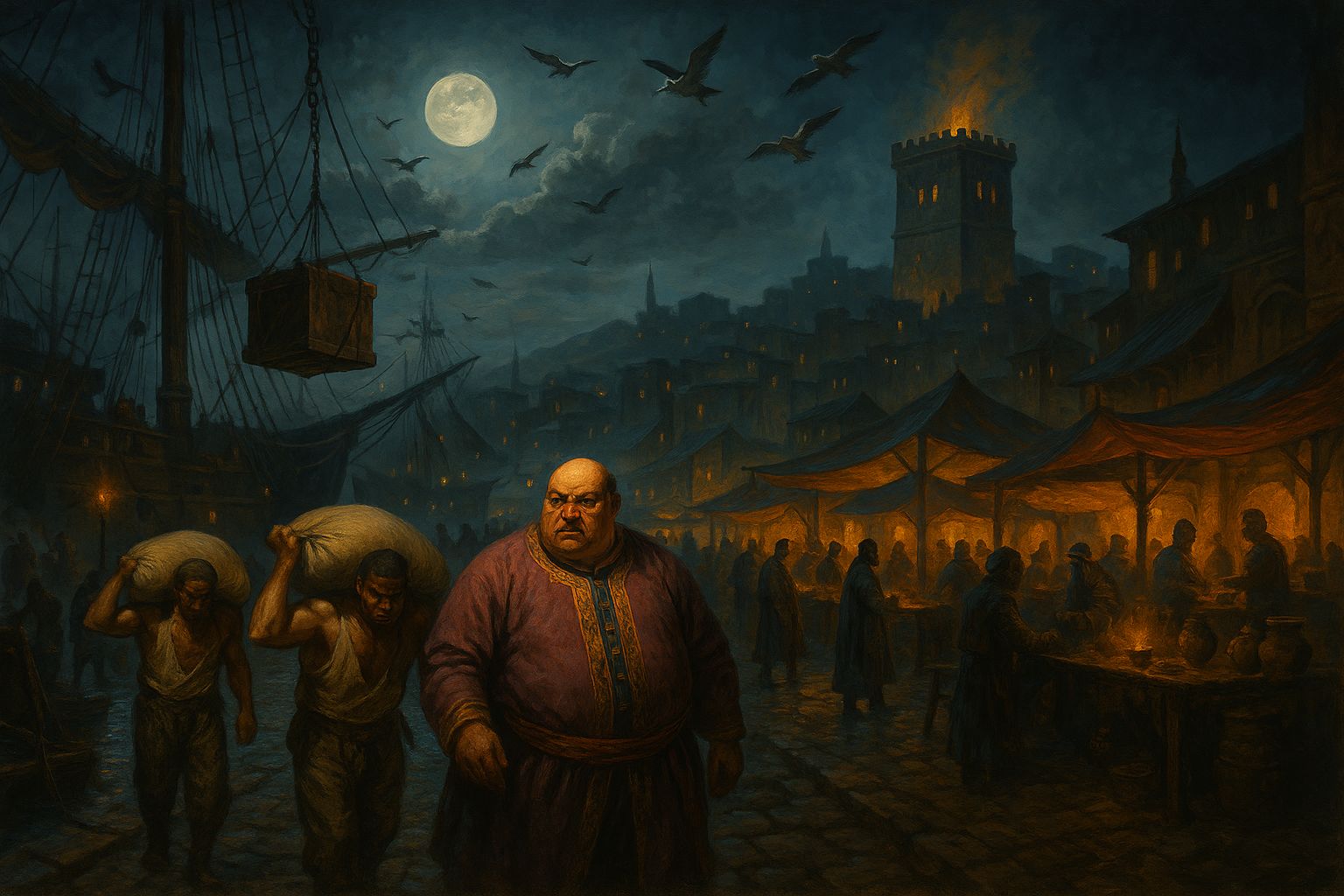
| The harbor was never silent. Even at night, when the moon cast a pale sheen over the waters, Estorio Ventura groaned like a beast that never slept. Chains clattered as crates swung from ship to dock, sailors cursed in half a dozen tongues, and gulls screamed overhead as though mocking the whole city. |
| Cassian Drovus waddled through the docks, his silks straining against his belly, flanked by two sweating slaves balancing sacks of grain. He barked orders at dockworkers who ignored him, for louder voices were already shouting. The smell of tar and fish clung to everything. |
| At the Golden Market, braziers lit the stalls where men from across the world haggled. A northern fur trader boasted of wolves slain with his bare hands. A desert merchant whispered of saffron more precious than gold. In a shadowed corner, an ivory idol passed from one hand to another, no questions asked. |
| Above the noise, the Governor’s tower loomed, its torches burning late into the night. In the tower’s high chamber, ambassadors dined in strained civility, their toasts as sharp as drawn blades. Smiles were wide, but eyes were knives, and every servant at their table belonged to someone else’s spy network. |
| Down below, in Lowshore’s alleys, a different kind of business thrived. “Whisper” Varos stood at the Black Wharf, voice soft as the lap of water against wood, as a boat unloaded crates bound for no market. Men leaned in close to hear his words, close enough to feel the edge of his hidden knife. |
| And beyond it all, in the dark steppe north of the city, the orc villages burned their lamps low. The Grashkaar harvested grain under the stars, patient and silent, their numbers swelling like the tide. |
| Estorio Ventura thrummed with noise and greed, a city where gold flowed like wine and daggers were always near at hand. In its shadow, the future of the east waited to be decided. |
| Story |
|---|
| The Exotic Market struck first with its smell. Spices from the desert rim, sharp as fire on the nose, tangled with the sweetness of honeyed fruit and the musk of caged beasts. Smoke from braziers curled in the air, carrying the scent of roasting meat over the din of shouting traders. |
| A man in lacquered armor displayed blades etched with runes, swearing each had drunk the blood of a sorcerer. A pale northerner sold wolf pelts as thick as carpets, claiming they came from beasts the size of horses. Beside him, a desert woman in gold bangles spooned saffron into tiny jars, each worth a fortune, while her bodyguards glared at anyone who came too close. |
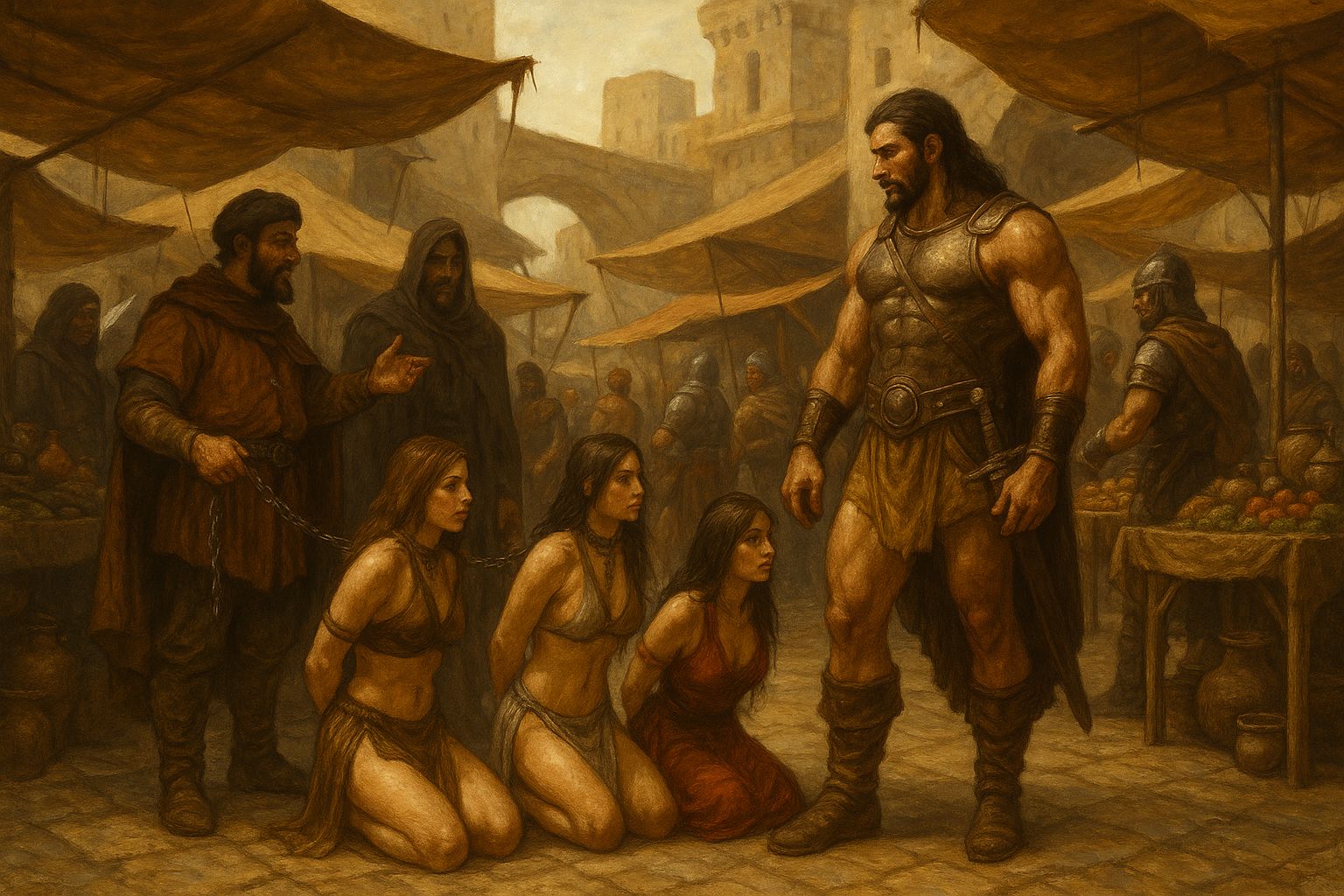
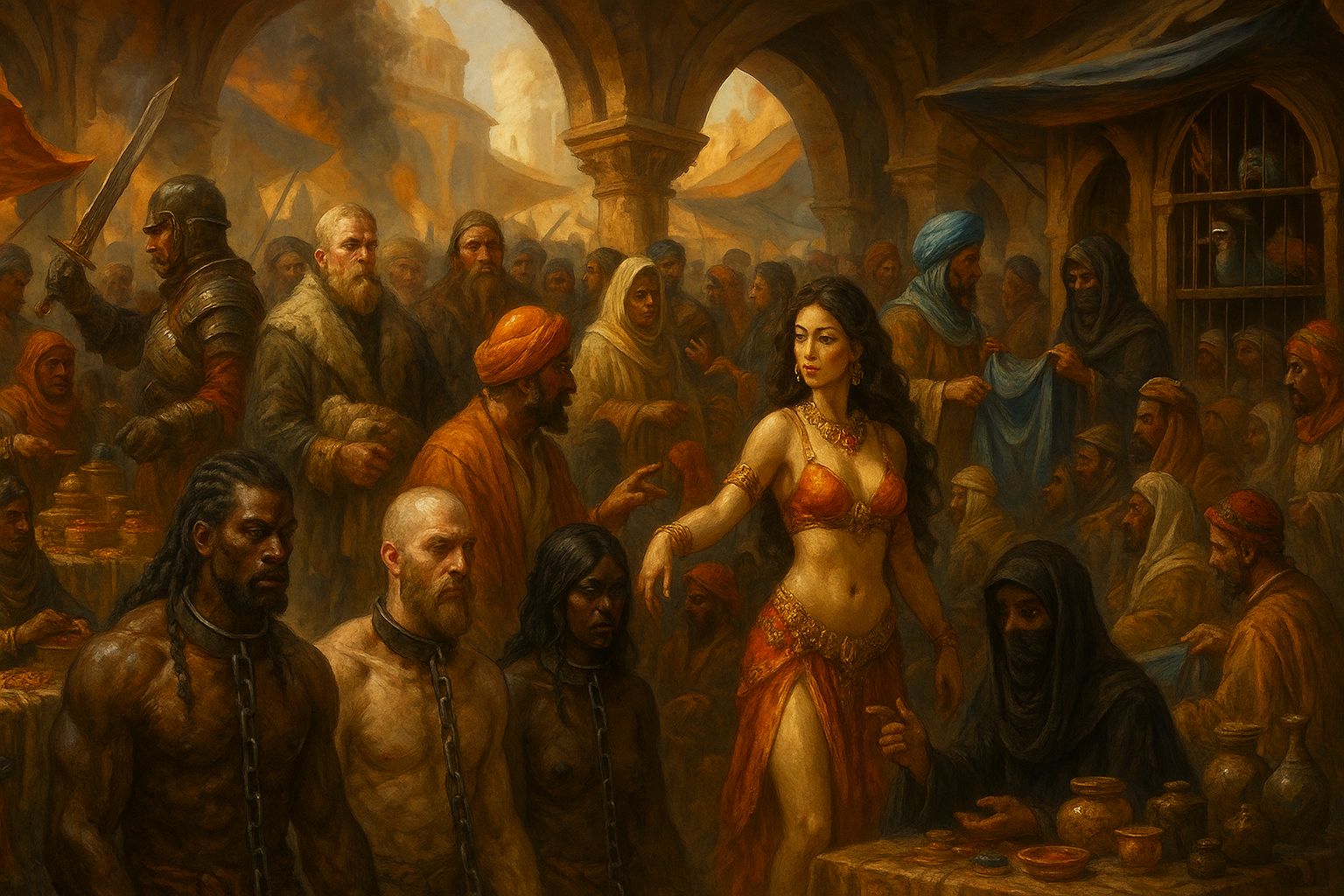
| Farther in, silk merchants unrolled fabrics so light they floated on the air. Courtesans wandered the crowd like living advertisements, perfumed and painted, their handlers haggling as though they were fine porcelain. In another lane, slavers displayed their stock: towering warriors from the steppes with iron collars, pale-skinned northerners taken in raids, desert girls with kohl-rimmed eyes, dancers from far jungles with painted skin, even a pair of children with unusual silver hair paraded like curiosities. Buyers circled them like vultures, prodding with sticks, testing teeth, haggling over price. |
| In a shaded alcove, a veiled trader displayed caged creatures: a monkey with feathers instead of fur, a serpent with three glittering eyes, a bird whose song shifted with the mood of the listener. |
| Amid it all, gold changed hands with the clink of metal, notes of credit were signed in hurried scrawls, and watchers lurked in every shadow. The Exotic Market was not only a place of wonders, but a place where secrets and souls were traded as easily as spices. Here, a careless glance could cost a man a purse, a fortune, or his life. |
| Story |
|---|
| Rain slicked the marble steps of Ambassadors’ Row, blurring the torchlight into smears of gold. Inside, the banquet hall smelled of spiced wine, wet cloaks, and distrust. |
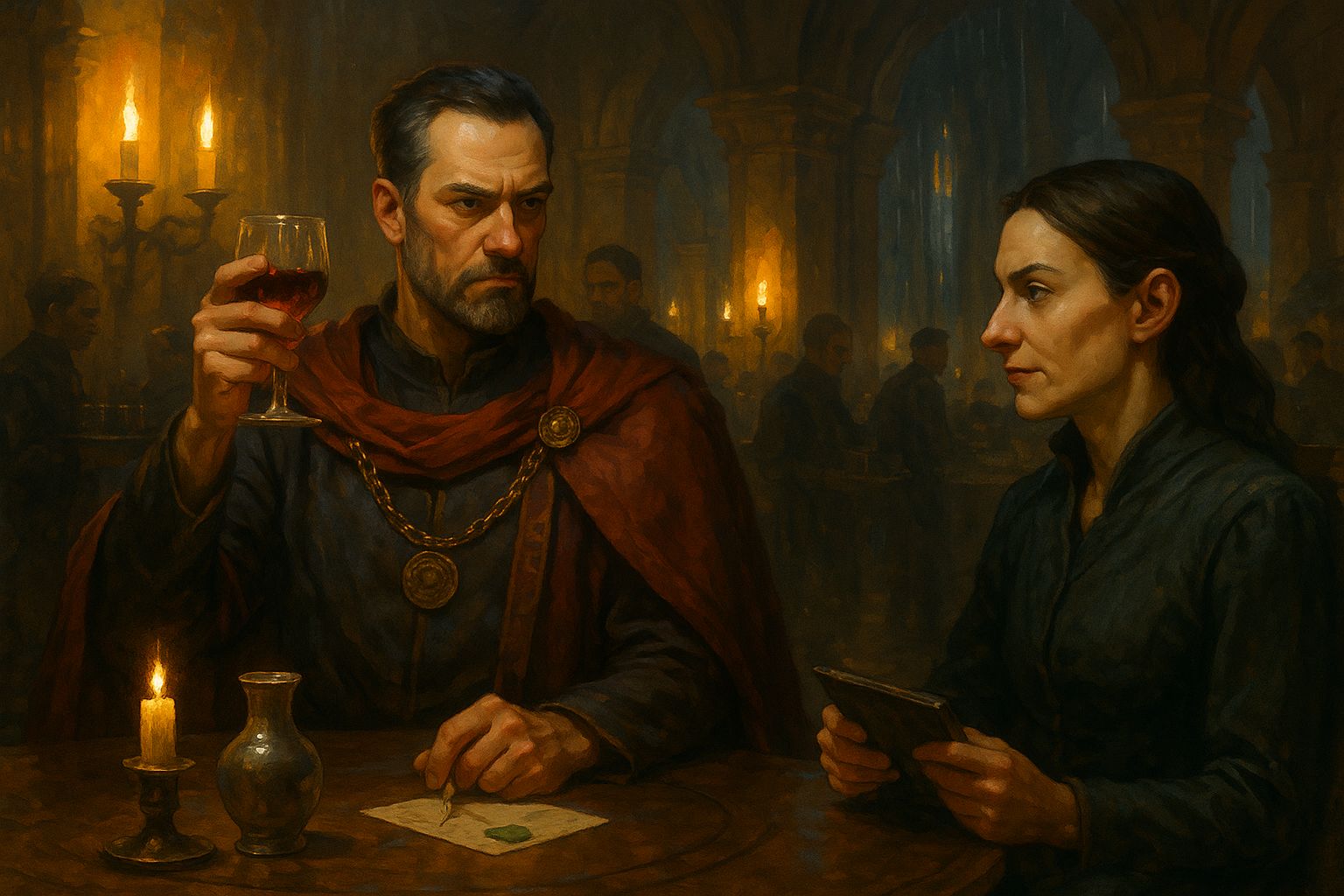
| Ambassador Calvus Merian of the Great Empire raised a glass with the grace of a man who knew daggers were aimed at his back. “To friendship,” he said, voice flat as a ledger. His eyes never left Yelvara Krenn of Shuthar, who sat opposite him with her ever-present notebook, her smile too thin to be polite, too sharp to be kind. |
| The music was soft, almost drowned by the rain tapping the high windows. Servants moved among the guests like shadows, their faces blank, their trays heavy. Each one was a pair of eyes, a listening ear. Some worked for the ambassadors, some for Nerra the Spider, and one, it was said, for the governor himself. |
| When a messenger slipped Calvus a folded letter, sealed in green wax, the hall seemed to stop breathing. He read it without blinking, his hand tightening imperceptibly on the stem of his glass. Yelvara closed her notebook, as though the letter had already been written in its pages hours before. |
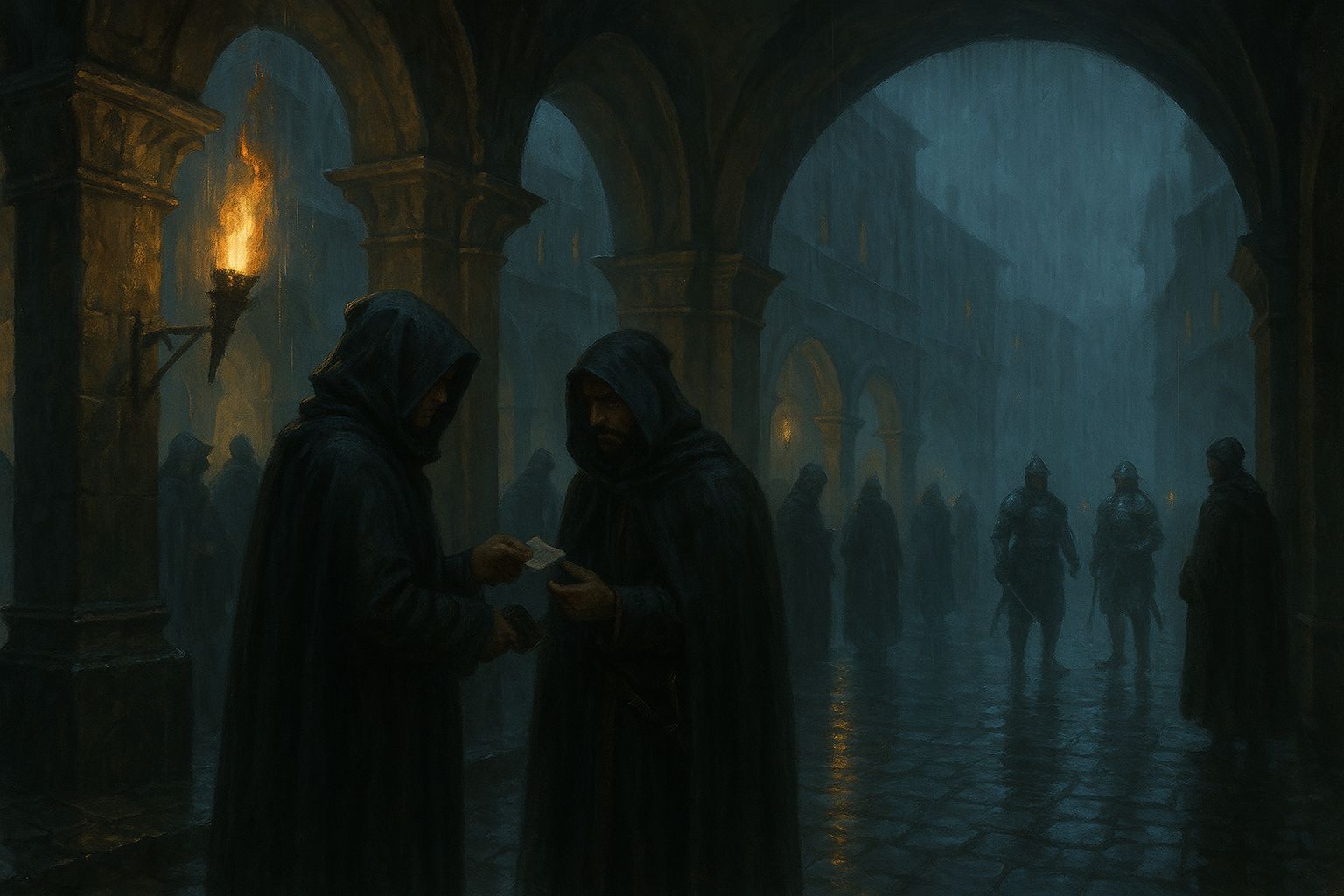
| The feast dragged on with the clatter of silverware and false laughter. Behind every toast was a threat, behind every smile a bargain. When the guests finally filtered into the courtyards, the night had grown heavy with fog. Cloaked figures lingered beneath the arches, trading slips of paper, pocketing rings, whispering names. |
| The governor’s guards paced the outer street, armor shining in the rain, but they were there for show. Everyone knew the real city lay in the shadows, in the hidden rooms, in the coded glances, in the silence between one word and the next. |
| In Estorio Ventura, diplomacy was just another mask. Behind it, the knives never slept. |
Description
Estoria, Jewel of the Outer Sea
Estoria was never founded for fertile fields or quiet lives. It is a frontier colony, carved into the southern steppe not for grain, but for ships and silver. For the Empire, it is the eastern keystone: a naval port to guard trade routes, a market for exotic wares, and a diplomatic stage where enemies and allies alike keep watchful eyes on one another.
Land and People
The land is harsh, flat steppe broken only by scrub and dry grass. Farming is a constant struggle, and the few settlements outside the capital survive more by imperial subsidies than by their crops. The colony imports almost everything, food, stone, timber, and of course, slaves, to feed the city and its fleets. The legion garrison numbers in the thousands, but even this is little more than a show of strength. Everyone knows it is too small to stop a real threat.
Eventually, trade reached a level where the harbor was too small, so a second naval base was built, Port Invicta, and some military activity was moved there.
Estorio Ventura
The capital, Estorio Ventura, is a roaring harbor city, its name meaning “Estoria the Bold.” Wooden piers stretch like fingers into the sea, always crowded with ships of every shape: imperial war galleys, fat-bellied traders, sleek corsairs with pardoned letters, even distant merchantmen from kingdoms most imperials barely know. The air is a storm of salt, tar, sweat, and spice.
The streets are a chaos of languages and colors. Slaves from across the world are bought and sold in shouting markets, fine silks change hands in shadowed alcoves, and gold pours into brothels and taverns that never sleep. Behind the noise and color, however, lies the pulse of power: every great nation has its ambassadors here, and every one of them is surrounded by spies who watch each other as much as they watch the colony itself.
Districts of Estorio Ventura
The Iron Docks
The beating heart of Estoria, always thunderous with sailors shouting, chains clanking, and crates smashing open. Imperial war galleys moor at the inner docks, while merchant vessels jostle for space farther out. Dockworkers are mostly slaves and convicts, overseen by whip-cracking taskmasters.
Ambassadors’ Row
A broad avenue of walled palaces, each flying the colors of a foreign power. Inside, it is all masks, whispers, and veiled threats. Every guard is a spy, every servant a listener. At night, cloaked figures slip through hidden doors to carry secrets across the city.
The Golden Market
A sprawling open-air bazaar where caravans and ships alike sell their cargo. Stalls of spices and cloth fill the air with color and scent. Deeper within, the Exotic Quarter gleams with rare gems, ivory carvings, exotic beasts, and slaves more expensive than palaces.
Soldier’s Ward
Rows of barracks, training yards, and smithies ringing with hammer blows. The legionnaires here are disciplined but weary, many dream of transfer back to the mainland. The ward is orderly by day but seedy at night, when soldiers drink, gamble, and brawl in the streets.
The Slums of Lowshore
Where sailors, smugglers, and thieves make their homes. Narrow alleys smell of fish, tar, and sewage. Fights are common, disappearances more so. The city guard rarely enters unless in force, and every shadow is for sale.
Taverns, Inns, and Houses of Vice
The Gilded Anchor
A cavernous tavern where captains strike deals and merchants flaunt their wealth. Bribes slip across tables as often as cups of wine. The walls are lined with ship-figureheads taken from pirate vessels.
The Broken Trident
A rowdy dockside tavern infamous for knife fights. Its floorboards are scarred by years of spilled ale and blood. Sailors claim no ship sails without first buying a round here, for luck or for courage.
The Sea Nymph’s Veil
A brothel with silken curtains, scented oils, and girls and boys from across the world. It doubles as an information market, for the courtesans whisper into the ears of ambassadors and admirals alike.
The Sailor's Wife
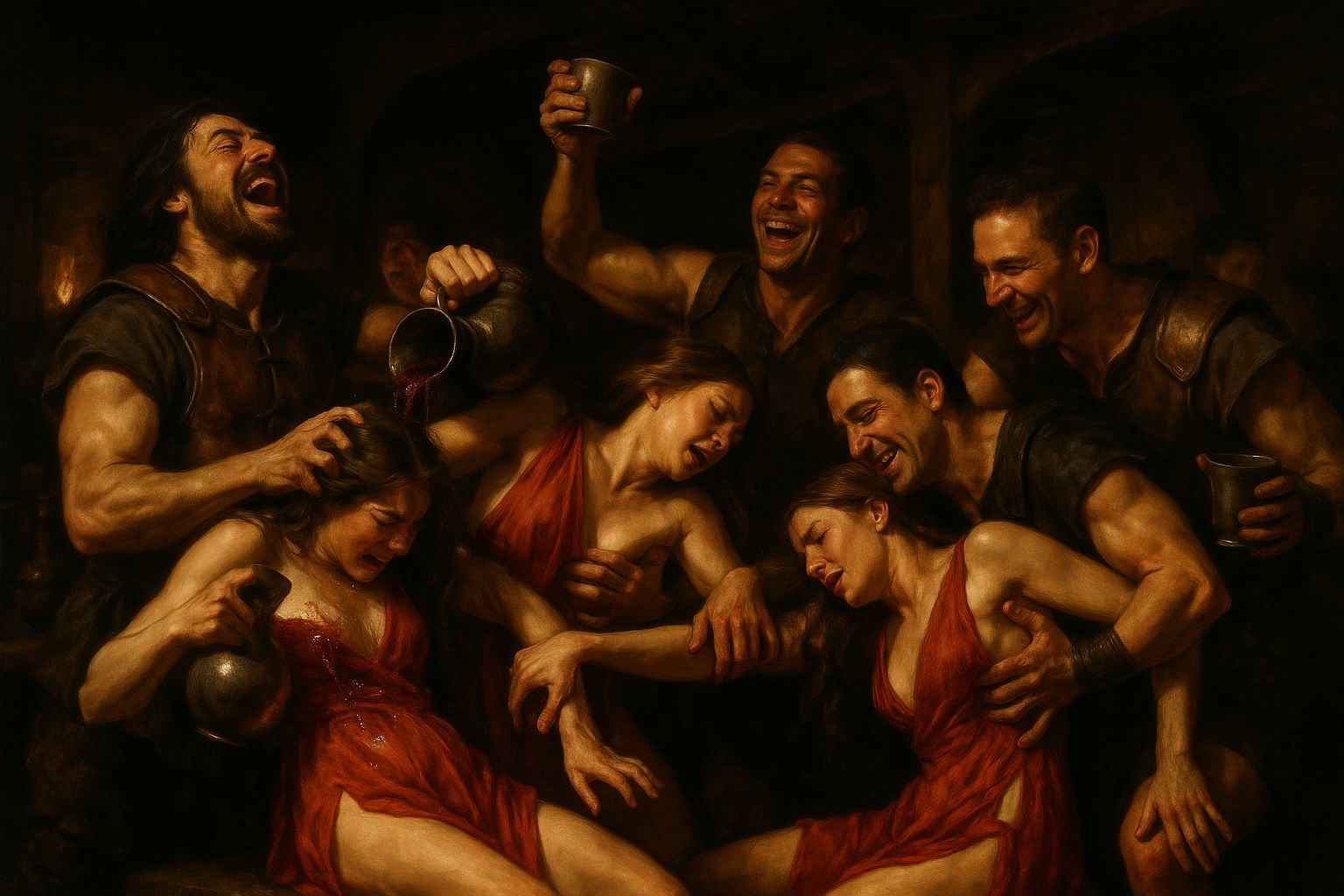
Where The Sea Nymph is about luxury and quality, The Sailor's Wife is all about cheap, fast, no frills. It's staffed by cheap slaves, and provide sexual service to anywone who has silver and can handle the dirty conditions.
The Ivory Cup
An inn known for serving the finest imported wines and food. A favorite haunt of spies, masked nobles, and traders seeking private arrangements. Beneath the main hall lies a secret gambling den.
Shady Corners
The Rat Pits
A bloodsport arena hidden beneath a warehouse, where desperate men fight caged beasts before crowds of gamblers. Losers die, winners are sometimes enslaved anyway. Rumor claims the pits are backed by one of the ambassadors.
The House of Painted Veils
A hidden cult shrine disguised as a spice warehouse. The cult worships a foreign sea-goddess and has begun to spread among sailors and merchants, worrying both the governor and the priesthood of the Empire.
The Black Wharf
An abandoned dock, burned years ago, now used by smugglers. At night, boats glide in with forbidden cargo, weapons, fugitives, stolen artifacts. The governor’s men know of it, but every raid ends with the wharf mysteriously empty.
The Black Market
In Estorio Ventura, the Black Market is not a metaphor, it's an actual underground market, selling illegal and stolen goods. It's a public secret, but Guvernor Varro is hesitant to strike at it, as it would rock the boat too much.
Diplomacy and Spies
What Alborum once was to senators, Estoria is to ambassadors. When kingdoms seek to meet far from their borders, when emissaries want a neutral stage, Estorio Ventura is the place. Palaces built along the Ambassadors’ Row are less homes than spider-nests, filled with secret tunnels, coded documents, and hidden rooms for meetings never meant to be seen. No one admits to running spies here, but everyone does, and the governor spends half his energy ensuring the city does not drown in intrigue.
The Governor
The colony is ruled by Governor Lucan Varro, a hard, pragmatic man sent from the capital. Varro runs Estoria like the deck of a warship: no tolerance for slack, no patience for weakness. Corruption thrives in the alleys and harbors, but never within his walls. He knows his garrison could not survive if the Grashkaar orc hosts ever marched, so he leans heavily on diplomacy, trade, and the strength of the fleet.
The Market
The heart of Estorio Ventura is its market district. Ships unload by the hour, goods flooding into vast warehouses before being sold on. Much of it is trade that never even enters the Empire: spices from the east sold to western merchants, gems from the south bought by northern princes, or slaves purchased by warlords with coin minted in distant lands.
While most goods are bought and sold by the shipload, there is a bustling market for smaller amounts as well. The Exotic Market is famed even within the Empire itself. Here, the finest goods the world can offer are on display: caged snow-leopards from northern peaks, ivory statues carved by jungle kingdoms, jeweled earrings stripped from queens, silks woven so fine they seem spun of mist, exotic slavegirls fit for any harem, the finest craftsmanship. Fortune-seekers come to Estoria less to see what they need than to see what they never imagined existed.
Relationship with the Grashkaar
Relations with the Grashkaar are outwardly calm, but always taut with unease. Orcs do not raid, nor do they trade. They keep to themselves, yet their numbers swell, their farms spread, and their villages creep steadily south. To the governor, they are a puzzle: too peaceful to treat as an enemy, too useless to treat as a partner, and too dangerous to ignore. Many in Estoria quietly wonder if the orcs’ patience will hold forever.