Demons
Serenya of the Black Star was brilliant even as a novice. She craved knowledge and power above all else, and when she reached the forbidden chambers of the academy, she dared what no other student would. By moonlight she spoke the name of a demon, a tall figure clad in shadow with teeth that gleamed like knives.
She asked for power: mastery over the hidden currents of magic, the strength to rise above all rivals. The demon listened, then named its price. “Your firstborn,” it whispered. Serenya laughed. She was young, proud, and certain she would never waste her life on family or love. Without hesitation she signed the contract in blood.
The years passed. Serenya grew mighty, her name feared and revered across the land. Kings bowed their heads when she entered their halls. Yet power alone did not fill her heart. Against her own nature, she found love, and from that love, a child she never expected.
On the night her daughter’s cries first filled the chamber, the air grew cold. The demon was there, standing in the shadows by the cradle, its smile as wide as it had been long ago.
“I have come to claim what was promised,” it said.
Serenya begged, she threatened, she raged. She offered kingdoms, souls, even her own life in place of the child. But the demon only shook its head. “The contract is clear. The firstborn.”
The stories say Serenya destroyed half the castle fighting it that night, but no magic could break the bond she herself had sealed. When the smoke cleared, the cradle was empty.
Serenya still lives, they say, though her hair is white and her eyes hollow. She has power beyond imagining, but every time she casts a spell, she hears her daughter’s voice echoing faintly in the dark, calling to her from somewhere far beyond the veil.
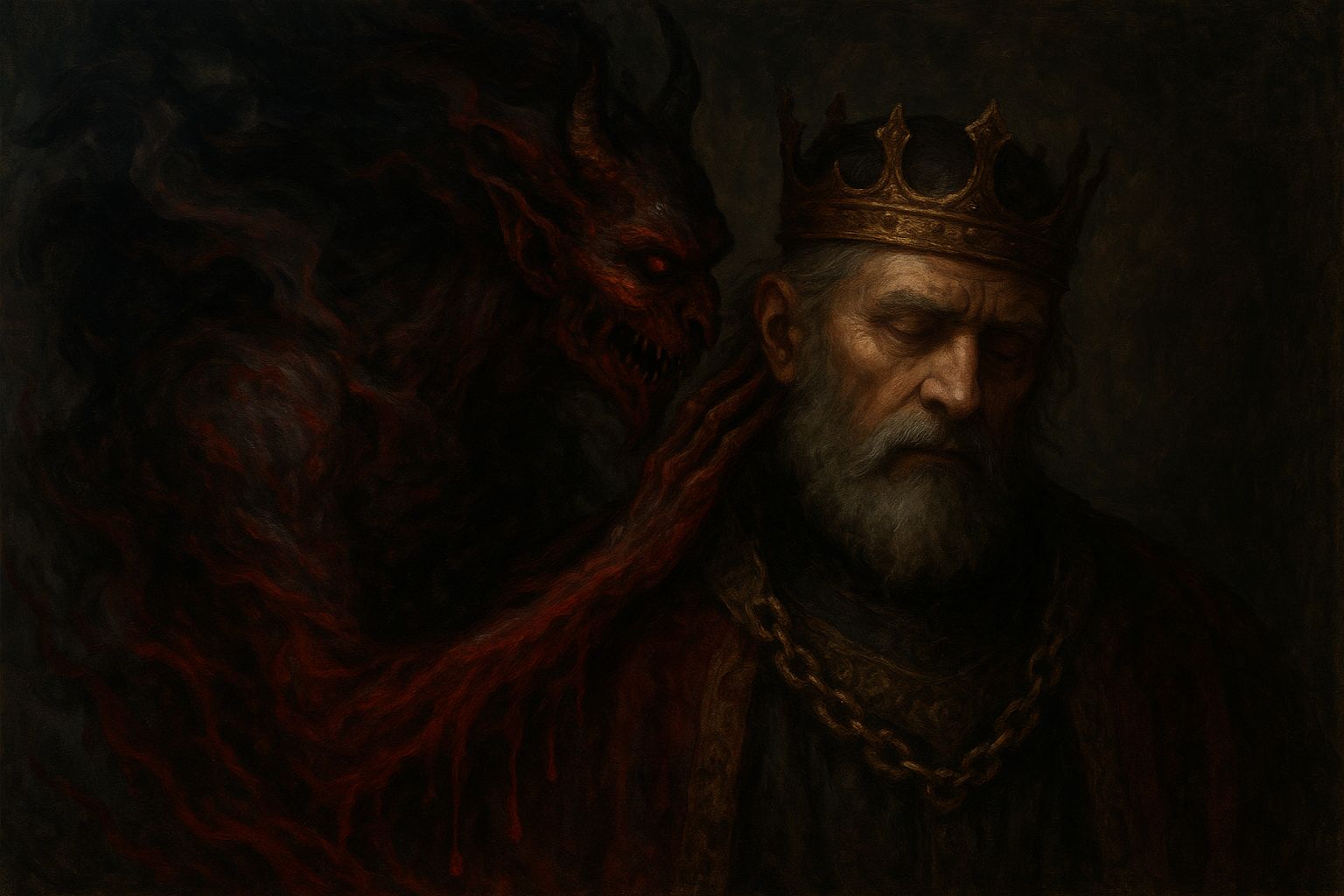
Demons are beings from another plane, intruders from realms beyond mortal comprehension. They can be drawn into the world through deliberate summoning, but also spill forth when great wounds open in reality, such as the Badlands where a vast catastrophe tore the veil thin.
They are not a single people or race. Each seems to be unique, shaped by laws alien to our own. Their bodies are as varied as their natures: some are vast and monstrous, clothed in flame and scale, others wraithlike and insubstantial, others almost human save for some subtle, unsettling detail. Whatever their form, they radiate presence, as though the world strains to contain them.
Their strength is twofold: a deep reservoir of raw magical power and the ability to slip between their realm and ours at will. Even lesser demons are dangerous, while the greater ones can unmake armies, topple cities and corrupt kingdoms from within.
Contracts
Some say that "summoning" is an incorrect description. Demons are invited, and choose to come, no one summons them.
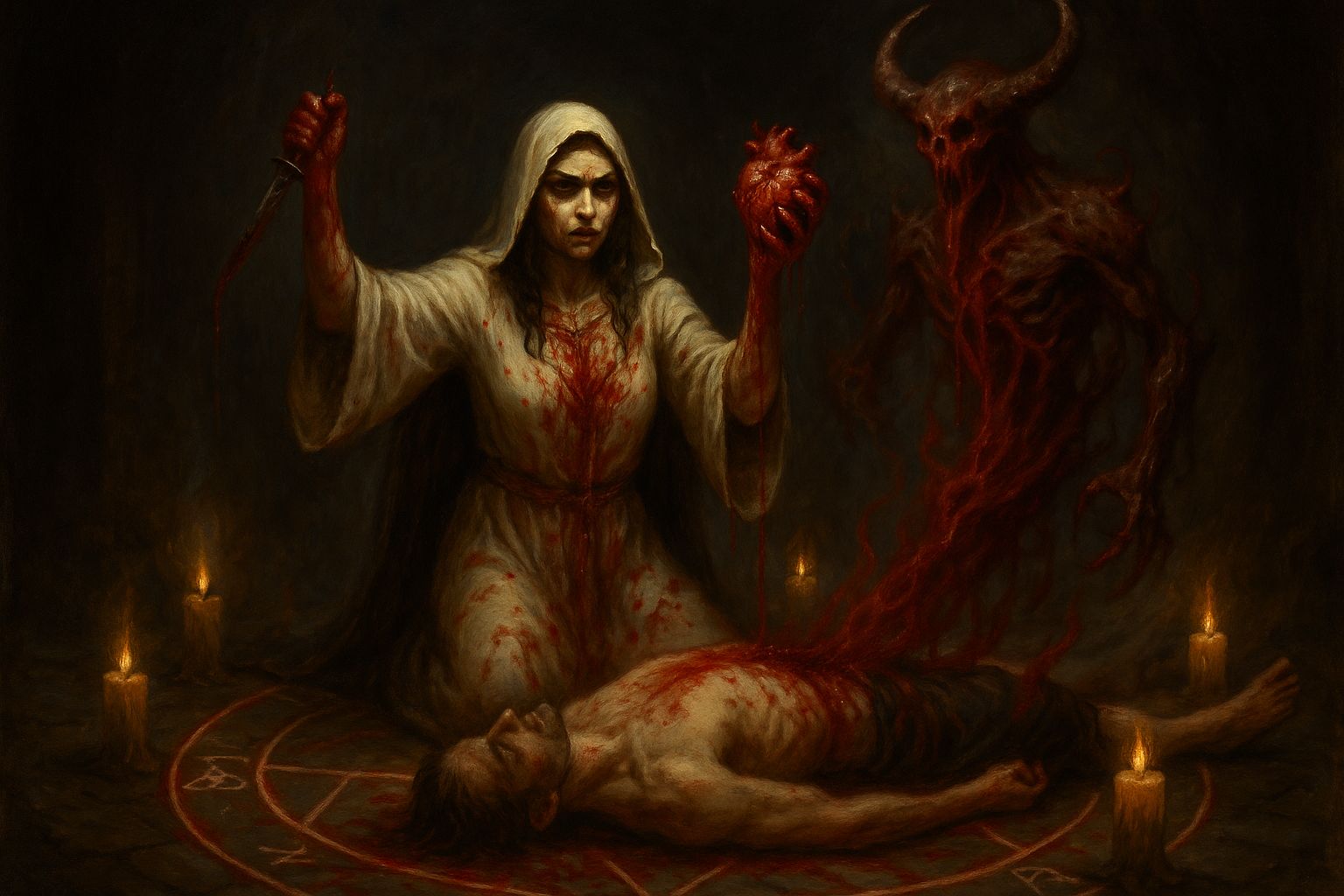
Summoning a demon is not command, but negotiation. The summoner draws a circle, calls a true name, and offers terms. Service is granted only in exchange for payment, and both sides seal the bargain in blood. These contracts are magically binding, and the penalties for betrayal, specified in the contract, are harsh on either party, though demons are notorious for twisting the spirit of an agreement while still obeying the letter.
Payment is almost always sacrifice. The scale of sacrifice is tied to the scale of the task: an animal sacrifice might buy a small favor, but greater deeds demand higher costs. A firstborn child, lifelong service, or some task demanded by the demon itself. Some sacrifices are slain outright, others vanish into the void, their fate unknown. The payment can also be tasks to be done, or servitude to whatever designs the demon might have.
Despite sayings and folklore, demons are not interested in souls. Their price is always more physical and more practical than souls.
Why demons hunger for such payments is not understood. Some scholars claim they consume the essence of the offerings, others that the sacrifices feed their own strange wars in the outer realms. Whatever the truth, they always demand something of weight and consequence, often of personal value to the summoner.
Names and Summoning
The true name of a demon is the key to control. Without it, the summoning is wild and dangerous, calling forth whatever demon answers, often one too powerful to banish without paying a ruinous price. For this reason, grimoires of demon names are prized beyond gold, and summoners guard them as closely as their own hearts.
A demon whose true name is known must answer when called, though it is never bound to serve without bargain. To know a name is to open the door, but what enters may not leave willingly.
Hierarchy of Power
Not all demons are mighty. Many lesser demons prowl the fringes of our world, feeding on scraps of suffering or drawn to weak magic. They are more manageable, and often used by reckless sorcerers for menial tasks or cruel amusements. Yet even the smallest is cunning, and none should be trusted.
The great demons, however, are rare and terrible. These are the ones remembered in myth, who walked battlefields as living storms or whispered bargains that doomed dynasties. To face such a being is to face a force of nature, wrapped in malice and desire.
Nature and Intent
Demons are evil, but not aimlessly so. Their cruelty and trickery are not random acts of spite but driven by needs mortals cannot grasp. To them, corruption, destruction, and suffering are currency or nourishment, though whether this sustains their essence, fuels their magic, or serves causes in their own realms is debated endlessly.
Whatever the case, demons are predators of the soul, and every dealing with them leaves scars.
Summoners in Society
Summoners are feared and despised wherever they are found. To common folk they are little better than cultists, for their art depends on trafficking with demons, creatures of pure malice. Their bargains demand sacrifices, children, blood, or worse, and even when the summoner is careful, the cost is paid by others. Towns whisper that a summoner in their midst means curses, vanishings, or worse calamities waiting to strike.
Priests call them heretics, kings call them traitors, and even other magicians shun them, for summoning is seen as reckless, unstable, and dangerous to all. A single mistake in the circle, a word spoken wrong, and a demon may slip free to wreak havoc on an entire city. Thus, summoners live in secrecy or in exile, practicing their craft in ruins, caves, and hidden towers. To speak of knowing demon names is to invite suspicion, and to be accused of summoning is often a death sentence.
Possible Secrets
The Broken Chains
Demons may once have been bound guardians of another world, chained to guard its thresholds. What mortals call their cruelty could be the madness of endless servitude, and each contract with them chips away at those ancient chains. If they are ever fully broken, the demons might pour into the world unbidden, no longer needing summoners at all.
The Harvest of Souls
The sacrifices demons demand do not die as mortals think. Instead, their essence is carried back into the demon’s plane and planted like seeds. From these souls new demons are grown, each unique, which explains why no two demons are alike.
The Poisoned Gift
Every contract with a demon leaves a stain upon the summoner’s soul. The stronger the bargain, the greater the mark. In the end, even if the summoner escapes the demon’s claws, their soul will bear that brand after death, drawing them into the demon’s realm instead of any mortal afterlife.
The True Names
What mortals call “true names” are not the demons’ real names, but fragments of them. The full names are too vast and layered to be spoken by human tongues. To utter a complete name would not summon a demon, but destroy it utterly. A few of these names may be hidden in fragments across different grimoires, jealously guarded by rival sorcerers.
The Veil Weakens
Every summoning leaves a scar between planes. Too many pacts in one place, too many sacrifices, and the veil thins until demons can slip through without invitation. The Badlands may be only the first such place, not the last.
Adventure Hooks
The Lost Grimoire
A caravan was ambushed in the wilderness, and among the stolen goods was a book of demon names. Bandits have no idea what they carry, but others do, and now several rival summoners and cults are hunting for the party that retrieves it.
The Disappearing Children
A village near the Badlands has lost three children in a month. The locals blame wolves, but strange sigils are found burned into the earth near the homes. Someone is summoning lesser demons under their noses.
The Demon Gladiator
A warlord has captured a lesser demon and forced it into the arena to fight for sport. The creature is bound in chains of silver and blood magic, but every match feeds its rage. Sooner or later, it will break free, and the party must decide whether to prevent or hasten the inevitable.
The Smiling Stranger
Travelers speak of a hooded figure on the road who offers help freely, with uncanny knowledge of each person’s troubles. Those who accept his kindness vanish weeks later. Those who refuse claim to hear laughter in their dreams.
The Demon Hunt
A mercenary order has discovered a way to trap demons inside crystal shards, turning them into weapons of war. They hire the party to hunt down a lesser demon for them, but what happens when the weapon is turned loose on the battlefield?