The Dragon Pantheon
The people of Draknir believe that some dragons, through immense power, ancient wisdom, and profound sacrifice, ascended to godhood. These Dragon Gods are not abstract ideas but living beings of cosmic strength, who sometimes walk the world, speak to mortals, and shape fate. They are worshipped not as flawless divinities, but as primeval forces, terrible, wise, and awe-inspiring. Each dragon god governs aspects of life, nature, or existence and has their own rituals, and symbols.
Even the darker gods are seen to have a place, and though most people don't offer sacrifices to them, they still believe in them, and would, if the need arose, call upon them.
Major gods
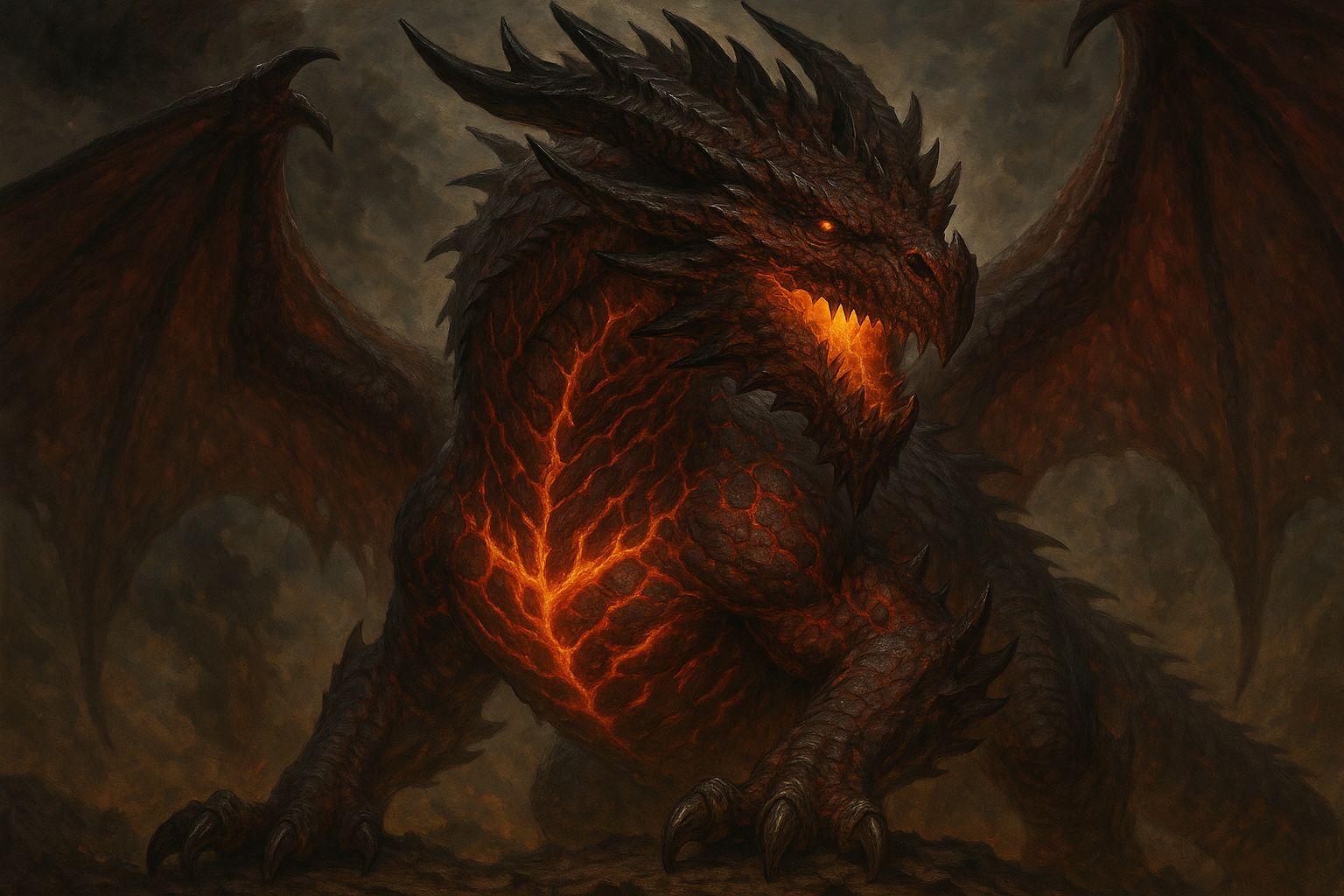
Skaridra, the Iron Flame
Domain: War, Strength, Honor Symbol: A burning sword entwined by a dragon Appearance: A red-scaled dragon with molten veins and iron talons Description: Warriors offer blood on blades before battle. Duels are often fought in Skaridra’s name, and a warrior who dies with honor is said to be taken to his fiery hall to fight in the Last Battle.
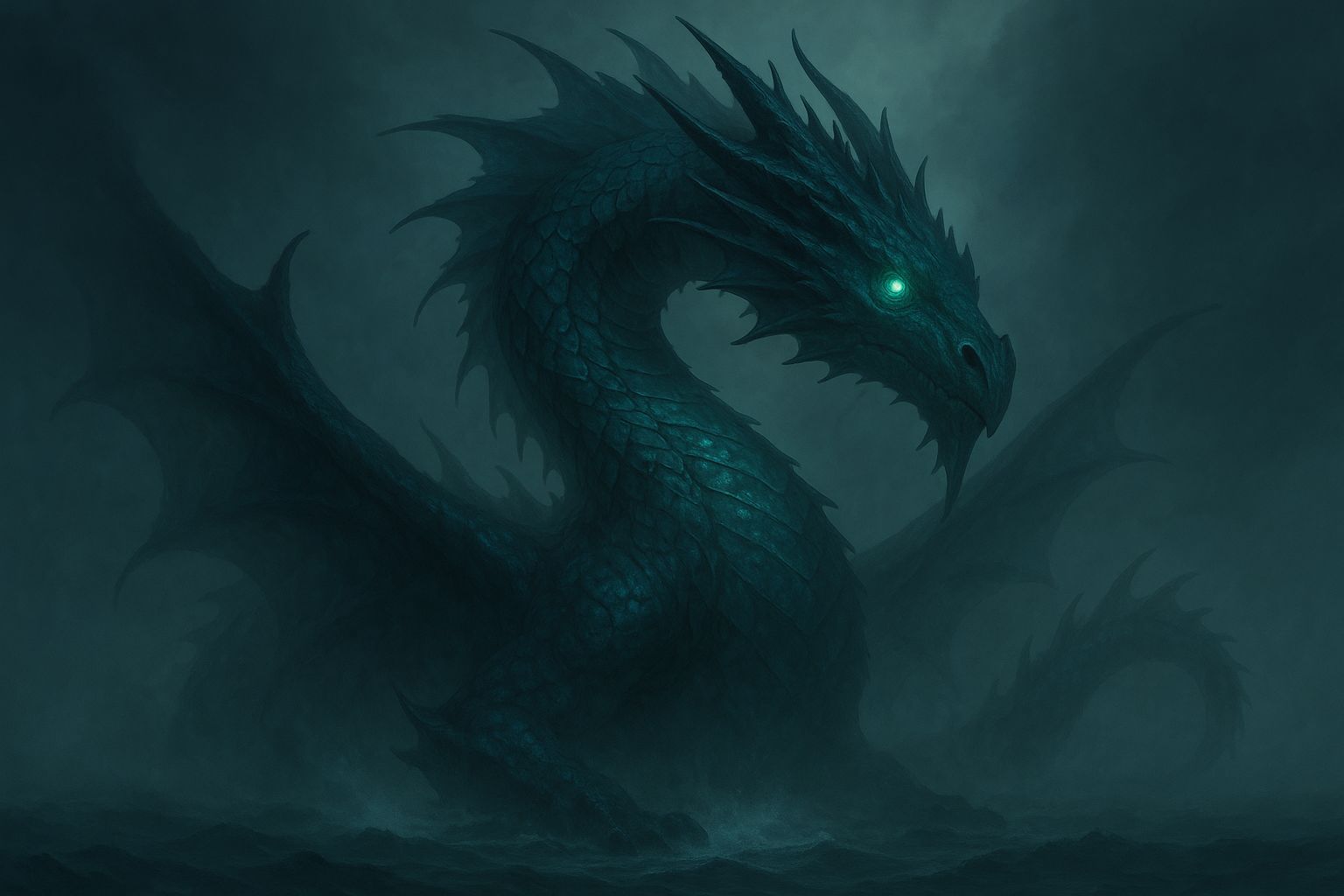
Vaeryss, the Deep Coil
Domain: Sea, Storms, Whales, Change Symbol: A coiled sea serpent around a crashing wave Appearance: A sleek, blue-green sea dragon with glowing eyes like lanterns in the fog Description: Sailors and whale hunters pray to her for calm seas or mighty catches. Her priests wear silver torcs and speak her name before launching any voyage.
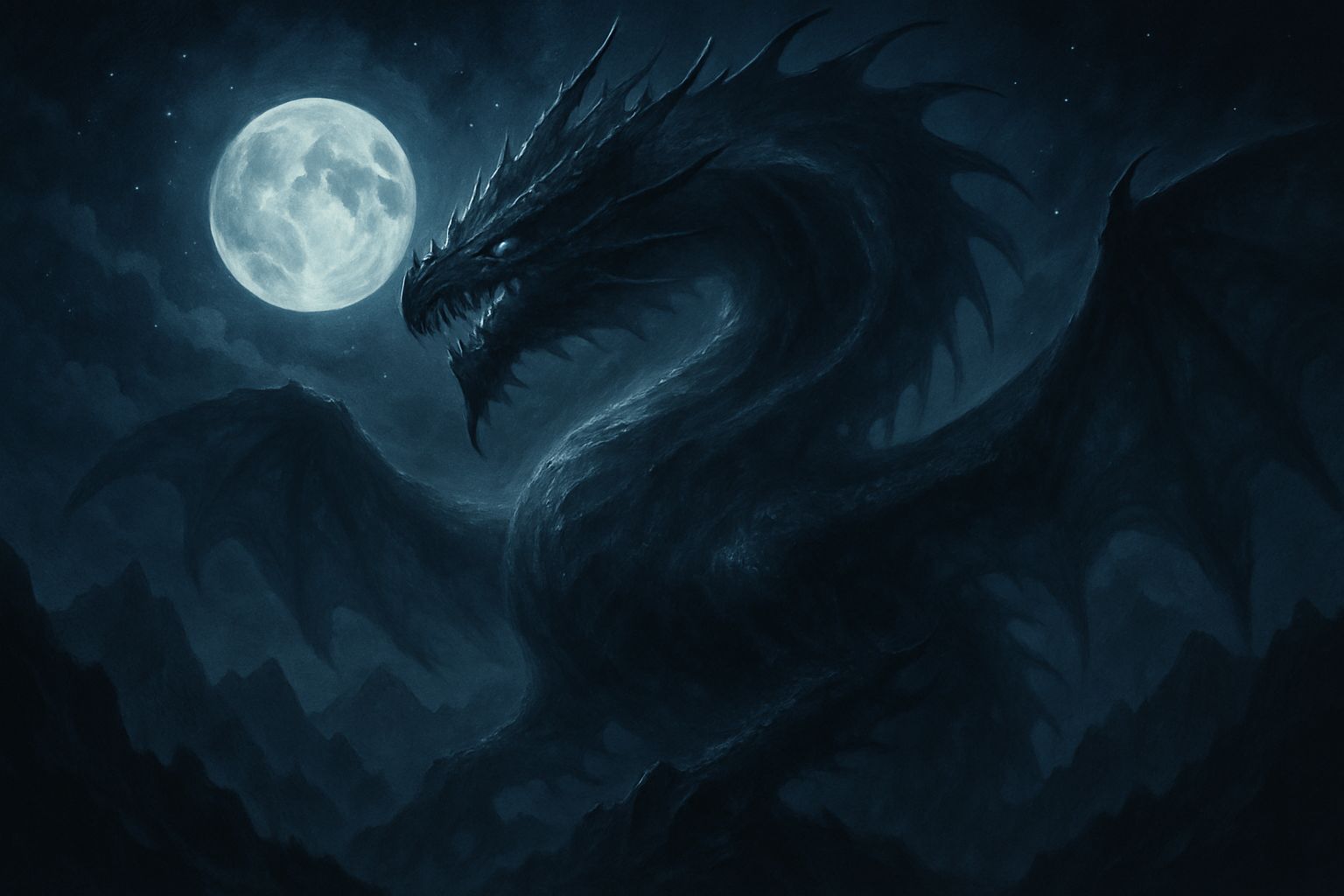
Myrrhall, the Black Eye
Domain: Secrets, Magic, Fate, Dreams Symbol: A dragon’s eye surrounded by swirling runes Appearance: A shadowy, almost transparent dragon that shimmers in moonlight Description: Runeseers and seers whisper her name in divination. Dreams are seen as messages from Myrrhall, and her shrines are hidden in caves or deep woods.
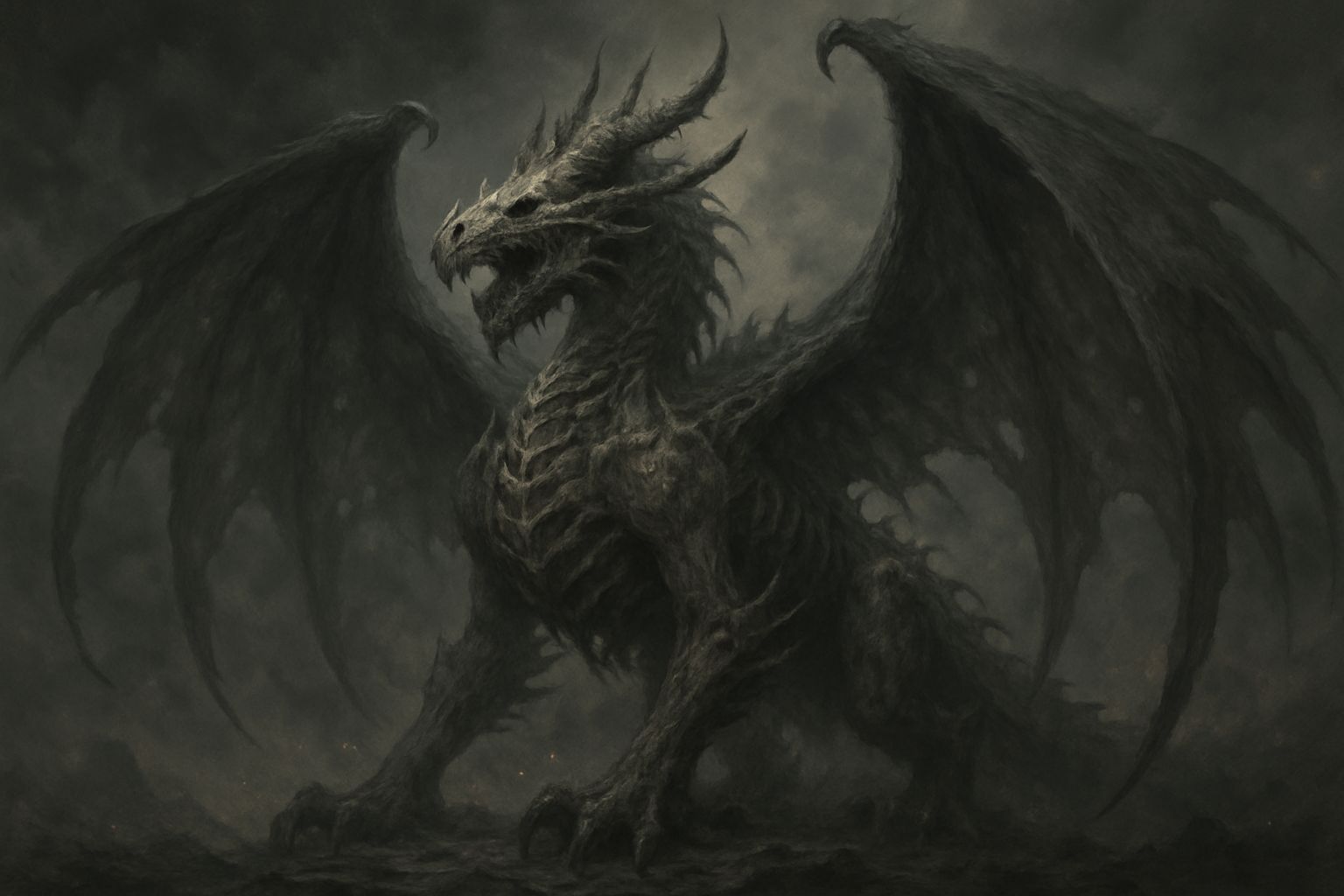
Thunrath, the Bone Wyrm
Domain: Death, Afterlife, Ancestors Symbol: A serpent curled around a skull Appearance: A vast, skeletal dragon with wings of ash and breath of silence Description: The dead are offered tokens and burnt sacrifices. The veil between worlds is thinnest in winter, when she presence is strongest. Her priests tend to burial mounds and speak with the dead during the Night of the Veil. It is said that she cares for the fallen warriors until they are called by Skaridra for the final battle.
Keldrakka, the Hearth-Mother
Domain: Home, Fire, Fertility, Kinship Symbol: A flame within a dragon’s claw Appearance: A bronze-scaled dragon with warm golden eyes and a long, coiling body Description: Families give thanks to her during childbirth, harvest, and adoption ceremonies. Her name is evoked in toasts, stories, and winter feasts. She is especially loved by clan matriarchs and healers.
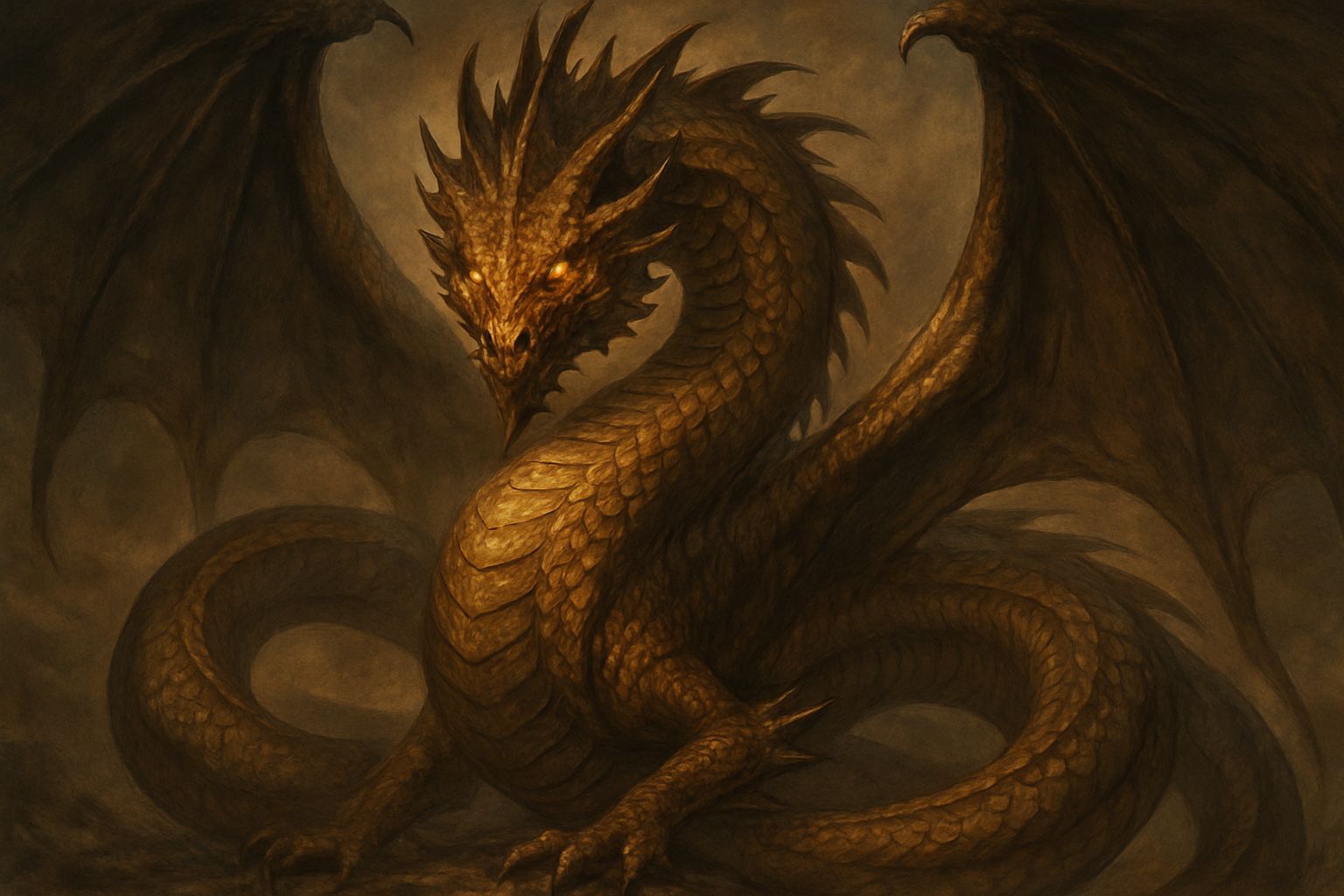
Zhurak the Bound Flame
Domain: Madness, Power, Forbidden Knowledge Symbol: A chained dragon skull Appearance: A half-blind, twisted dragon with scales that flicker like unstable fire Description: Rare and often hidden. Zhurak represents the dangerous side of knowledge and ambition. Some cults seek his favor for terrible power, and his worship is often considered mad or dangerous.
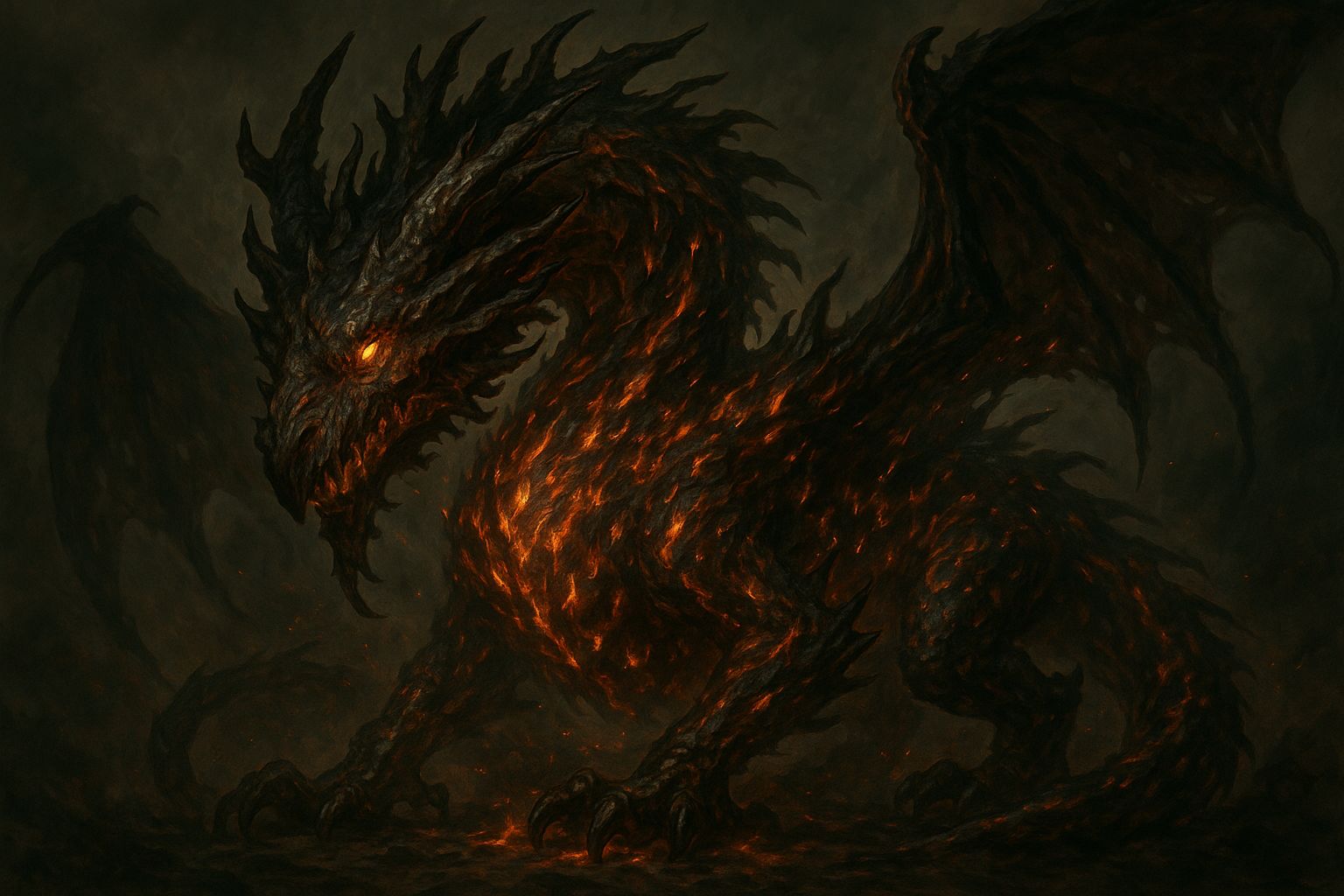
Velmoryx, the Shifting Tongue
Domain: Deceit, Trickery, Clever Tactics, Intrigue Symbol: A split tongue coiled around a dagger Appearance: A slender, silver-scaled dragon with ever-shifting features and a forked tongue that speaks in many voices Description: Rogues, spies, and clever war leaders honor Velmoryx. In war councils, offerings are made to invite cunning over brute force. Trickster stories often feature him disguised as a mortal, testing the wits of villagers or playing games with kings. He is a double edged god, who will sometimes help, sometimes stab you in the back, and you'll never know which until you feel the blade.
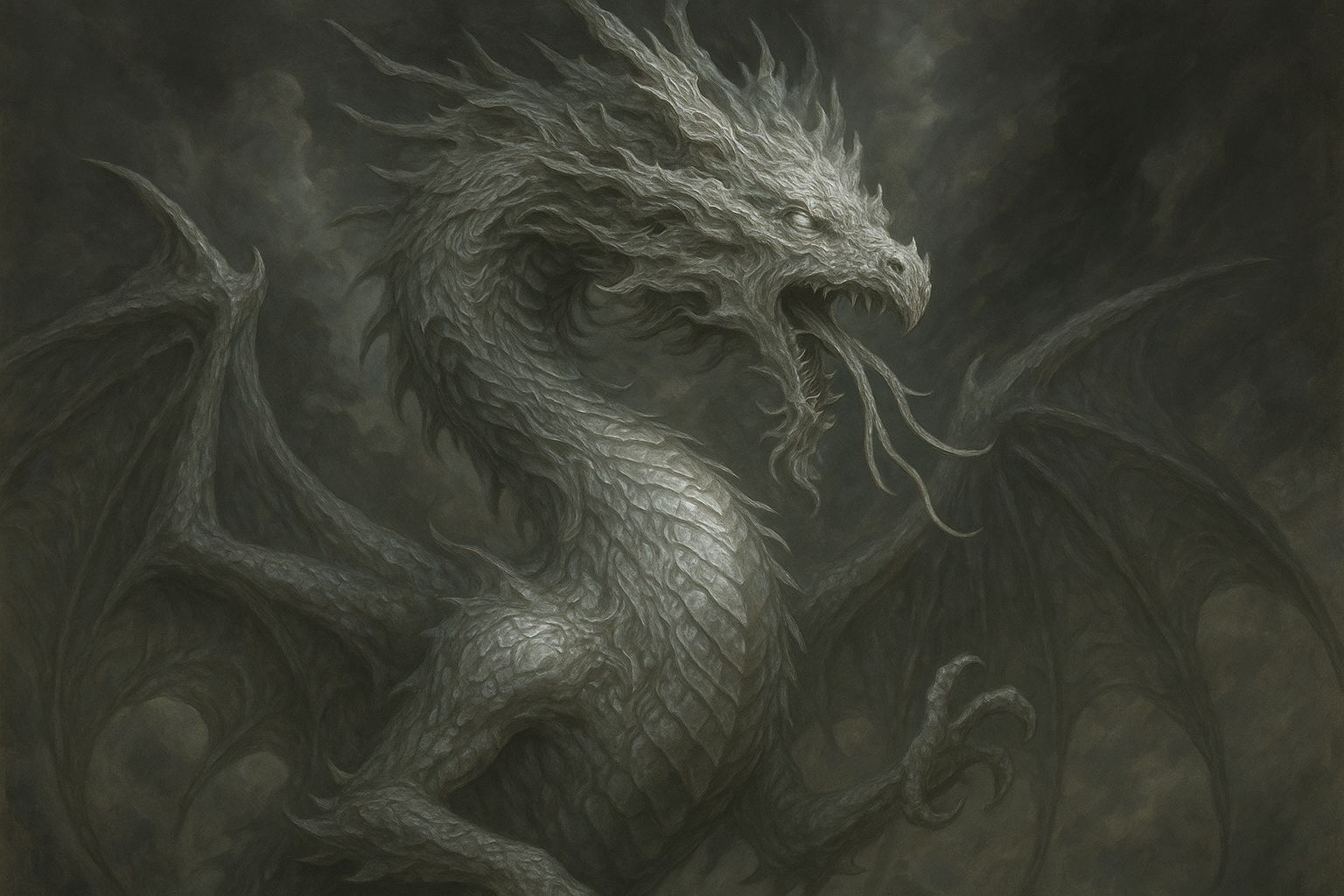
Drothkaar, the Hollow Flame
Domain: Corruption, Greed, Decay Symbol: A flame burning within a dragon skull Appearance: A blackened, crumbling dragon whose scales leak gold and poison in equal measure Description: Rare and feared. His influence creeps into the hearts of greedy lords, oathbreakers, and those who hoard power. Cults of Drothkaar promise wealth, but often end in ruin.
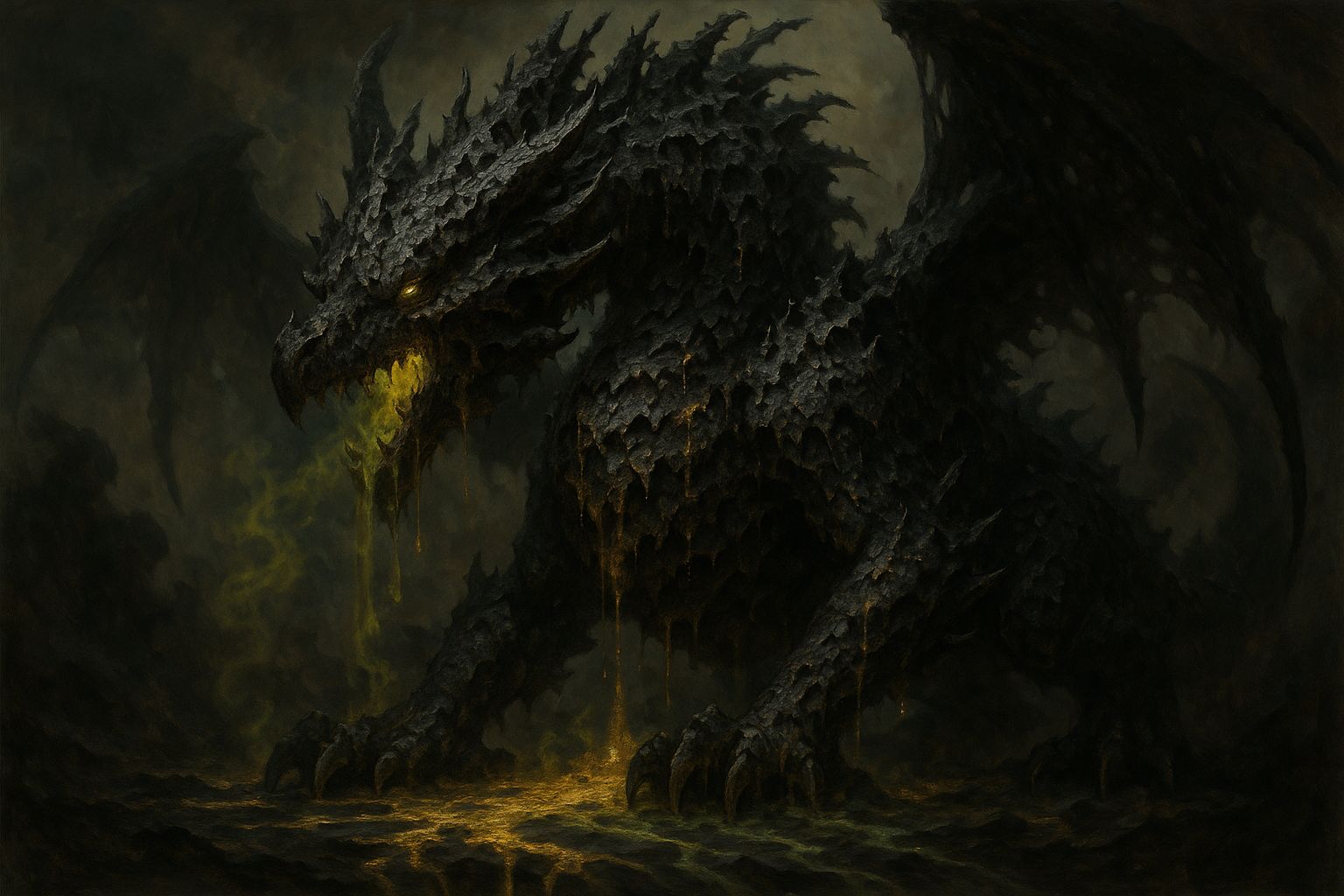
Neruvahl, the Pale Hunger
Domain: Endless Hunger, Winter, Starvation, Obsession Symbol: A ring of jagged teeth inside a crescent moon Appearance: A gaunt, white dragon with empty eyes and a whispering breath that freezes the soul Description: The husband of Keldrakka. Appealed to in desperation. Some remote villages offer sacrifices to Neruvahl during long winters to avoid famine. Obsessive desire, whether for food, power, or love, is seen as his touch. Where Keldrakka is the god of plenty, Nuruvahl is the god of enough. Keldrakka is the god you pray to for a good life, Neruvahl is the god you pray to for staying alive.
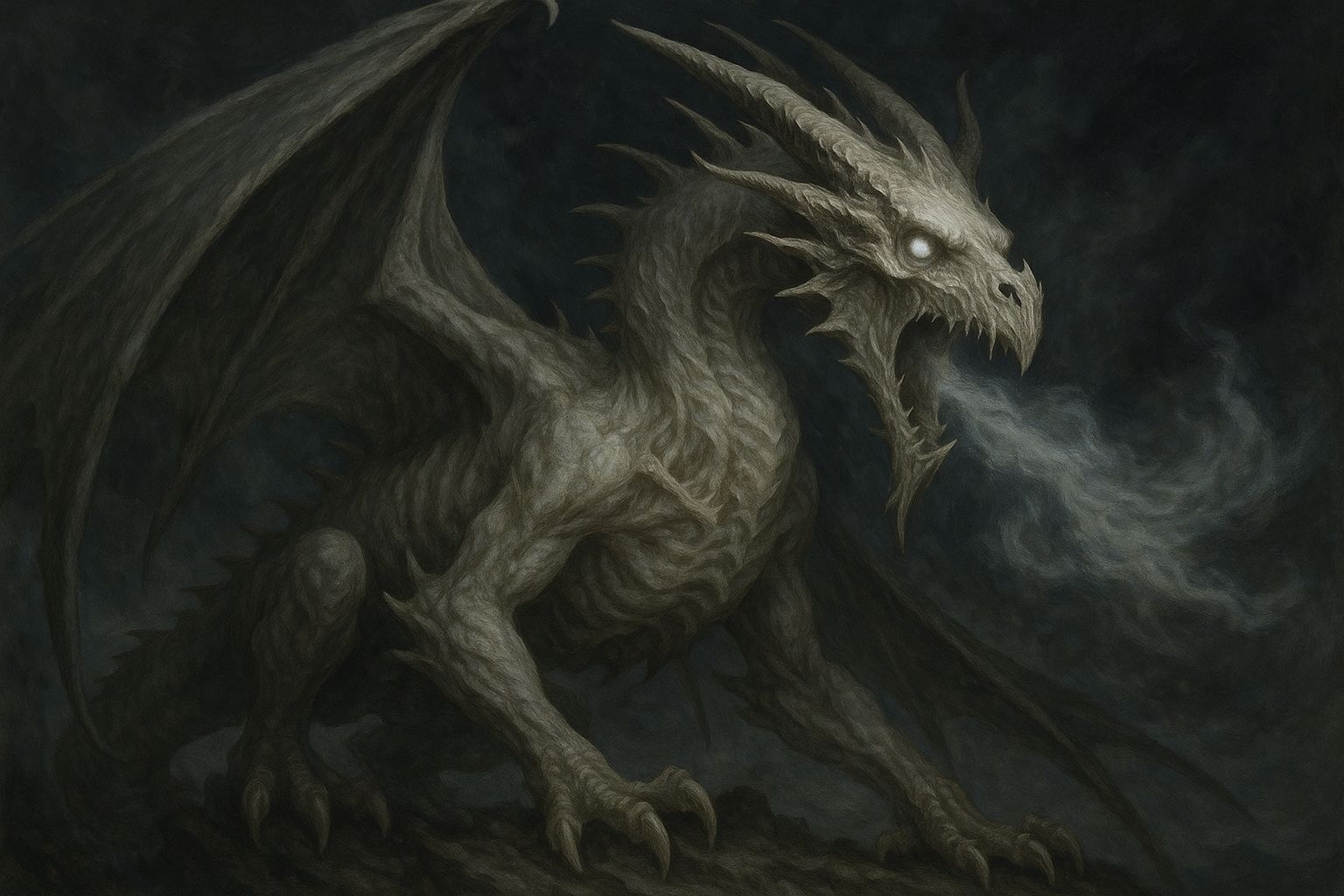
Selyx the Veiled Ash
Domain: Despair, Shadows, Lost Hope Symbol: A dragon wing wrapped over a dying flame Appearance: A vast, dark-scaled dragon whose presence causes silence and sorrow. Her wings trail cinders that never touch the ground. Description: Mourners, those who have lost everything, or who no longer wish to live, sometimes whisper her name. Some believe she guides souls who have no place in the afterlife. She is also the god who grants an honorable death in self-sacrifice.
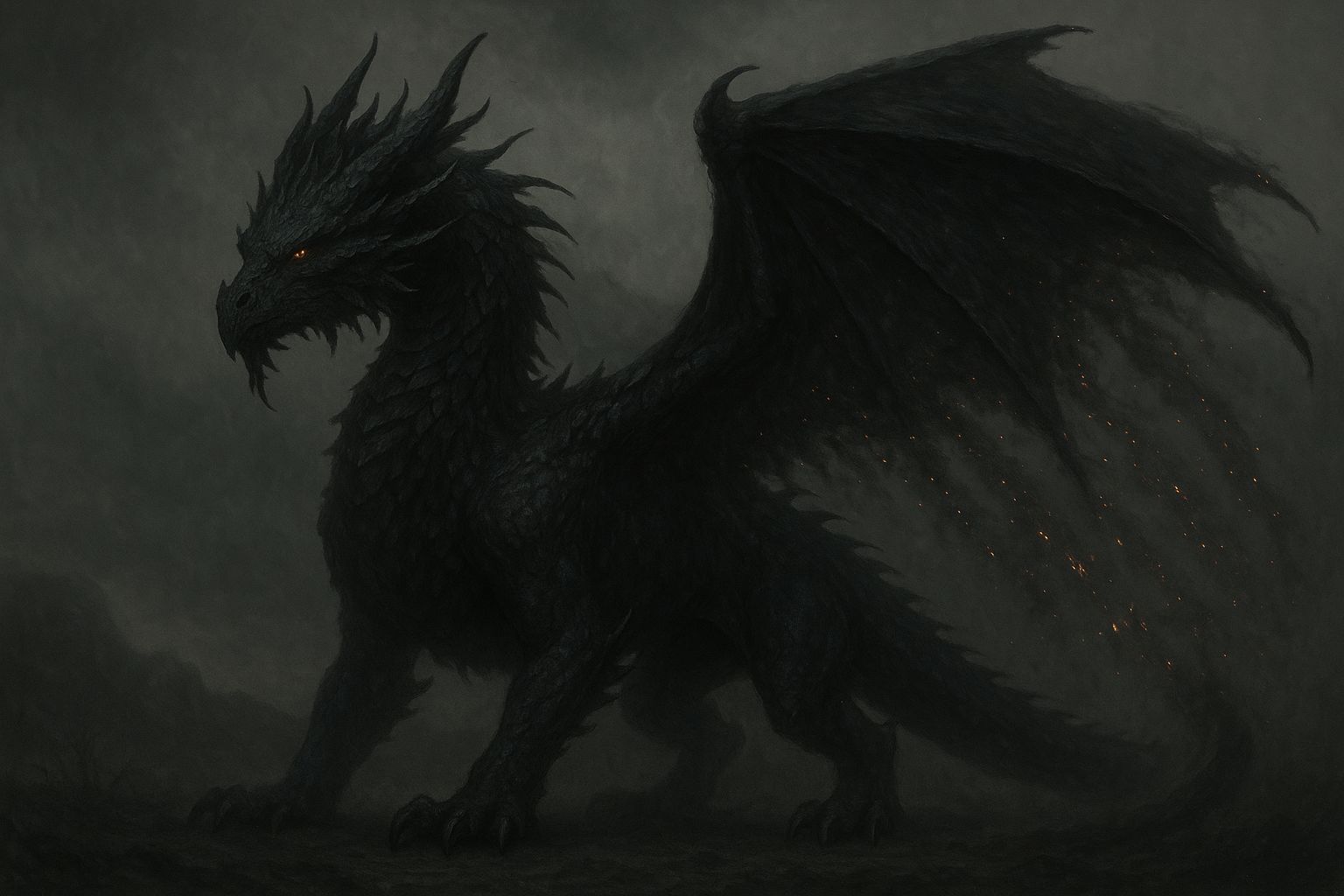
Grendhalyx, the Vengeful Coil
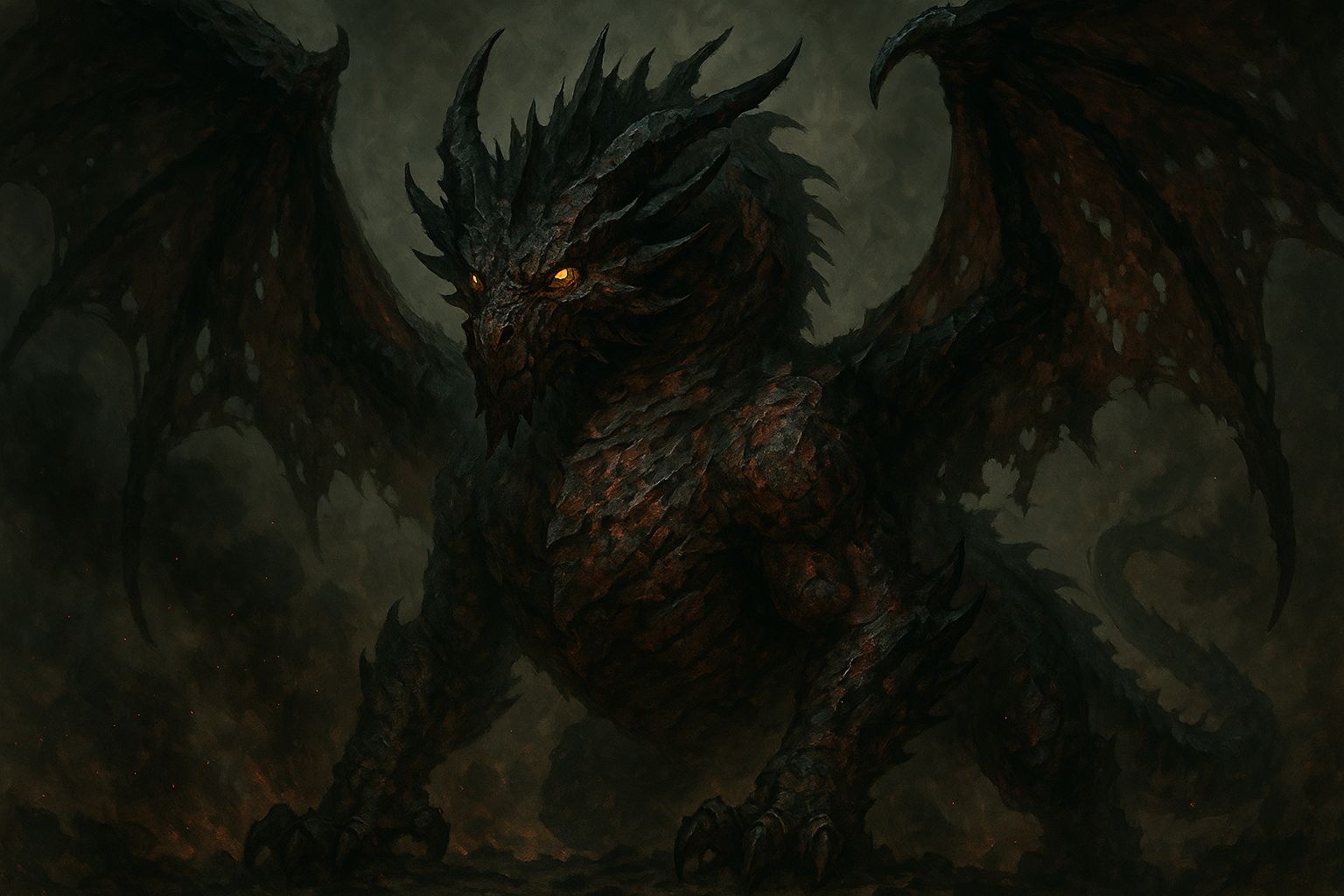
Domain: Vengeance, Justice Taken by Force, Blood Oaths Symbol: A serpent biting its own tail, dripping blood Appearance: A scarred, red-and-black dragon with half-burnt wings and glaring golden eyes Description: Those wronged beyond justice call upon him. His name is carved into weapons of revenge. His presence is often felt when ancient blood feuds reignite. Revenge quests are called in his name. Some warriors tattoo his sigil on their chests before going on revenge quests.
Rituals and Practices
Offerings
These vary by god. Blood, carved runes, burnt whale blubber, weapons, or crafted items. Sacrifices are made on altars carved into cliffs, ships, or tree-stumps. The size of the sacrifice is in proportion to the situation. Daily sacrifices are small, food items, simple carvings and so on. However, large sacrfices are needed in times of war, before revenge quests or in times of great need.
Spirits
Lesser spirits, often seen as messengers or servants of the Dragon Gods, are also honored. These include drakes, elemental creatures, or even ancestral souls.
Visions and Dreams
Prophets known as Whisperers are chosen by Myrrhall through visions. They are often touched by madness but are treated with deep respect.
Rites of Passage
Coming-of-age rituals always involve a symbolic offering to one of the dragons, depending on the child’s path (warrior, hunter, seer, etc). There is also a quest which must be undertaken, depending on path. A warrior needs his first kill, a hunter needs to kill a large beast, a seer must take a spirit journey and so on.
Temples and Shrines
The north does not build grand temples. Instead, sacred sites are carved from nature: dragon-shaped stones on cliffs, caves with wood carvings lit with whale-oil lamps, or mountain passes marked with talismans. Each shrine is unique and tied to the land or sea around it. Priests are usually wandering seers, shamans, or respected elders.
Dragongods' Influence in the World
While most gods are silent or distant, the dragons are known to act. A sudden storm might be Vaeryss’s anger. An erupting volcano may be Skaridra’s wrath. Prophecies from Myrrhall often shake whole clans. Occasionally, a dragon god might appear directly, taking mortal form or rising from the earth or sea. These moments are world-shaking and rarely peaceful.
Afterlife
To the Draknir, death is not an end, but a crossing, a passage marked by steel, blood, and memory. What waits beyond depends not on birth, nor wealth, nor station, but on how one meets their end.
The Halls of Thunrath
Those who die with courage, blade in hand, oath unbroken, honor intact, are taken by Thunrath, the Bone Wyrm, god of death and keeper of the honored dead. He is not cruel, nor kind, but eternal and unflinching. When a brave soul dies, it is said that his wings stretch out over their fallen body, and his voice, low and deep as the earth, speaks their true name, one known only to the soul and the gods.
These chosen are carried into the deep barrows beneath the world, where Thunrath keeps vast halls carved from bone and stone. There, the brave rest, not in silence, but in preparation.
In Thunrath’s halls, fallen warriors train without pain, feast without hunger, and speak with their ancestors. They are not idle. They are sharpened. For when the stars fall and Rauthmarr, the Final Battle, begins, Skaridra the Iron Flame will call upon them. The bones of the earth will crack open, and Thunrath will raise his hosts, his long-dead champions roaring back into life, armored in ash and fire.
To dwell in Thunrath’s halls is the greatest honor. It is not heaven. It is readiness. It is purpose beyond death.
The Sea of Fear and the Fate of Cowards
But not all are taken into the bone halls.
Those who flee battle, who betray kin, who break oath or take without honor, these are not mourned. When they die, their spirits wake not to Thunrath’s shadow, but to a gray and empty shore, cold winds howling through their bones. There waits a black sea, wide and endless, its waters icy and filled with whispering things that speak of every shame, every failure, every fear.
This is the Sea of Fear.
No god ferries them. They must cross it alone, drawn by the pull of their cowardice over the freezing water the far shore. Those who do are taken by Hel, the nameless cold beyond the world, where the forgotten dwell. There, they are encased in ice deeper than time. They do not dream. They are not remembered. They are buried in silence, erased from the songs of their people.
Some Draknir legends say you can hear them on winter nights, crying from beneath frozen lakes, begging to be remembered. But no one speaks their names. To do so is to risk drawing Hel’s gaze.
Funerary Practice
When a warrior dies with honor, their clan burns their body on a high pyre, so their smoke may reach the sky and their spirit find the way to Thunrath’s gate. If the body cannot be recovered, a blade or token may be burned in their place. The clan sings their deeds aloud, so the gods may know their worth.
When one dies in disgrace, their name is struck from stone and song. Their body is left to the wilds. No fire. No words. No memory.
To the Draknir, this belief is not merely religion. It is law. It is the root of their courage, their unity, their pride. Death is inevitable. But fear is a choice.
And only the fearless are ever truly immortal.
The Dragon Pantheon outside Draknir
It is a religion which has spread with the raids of the Draknir, and with the slaves sold by the Draknir. It's not common, but it has followers all over the world, mostly warriors or mystics.
The Final Battle - The Breaking of the World
The Draknir do not speak of the end as a tragedy, but as a certainty. A promise etched into the bones of the world, whispered by fire, sea, and stone. All things end. Even gods.
They call it Rauthmarr, the Red Unmaking. The Final Battle.
It is said that one day, when the sky breaks and the stars fall like burning hail, the Dragon Gods will descend once more, not as shadows, not in visions, but in their full, terrible forms. Skaridra will roar across the sky like a flaming spear. Vaeryss will rise from the sea, coiled in storm. Thunrath will tear open the gates of the dead and let the forgotten walk again. Myrrhall will whisper the final secrets to those willing to listen, and willing to go mad.
But not all gods will come to preserve the world.
Drothkaar will rise from beneath mountains of gold, bloated with stolen power. Neruvahl will stretch across the frozen sky and drain the warmth from every hearth. Selyx will drape the land in despair, her wings smothering every cry of hope. Zhurak will shatter the sky itself in a scream of hunger and fire. Even Velmoryx will slither among the warriors, wearing a thousand faces, turning brother against sister in the smoke and chaos.
The battle will be fought not for victory, but for balance, a last clash between the gods who shaped the world and those who seek to consume it.
And the Draknir believe they will be there.
Not as pawns. Not as helpless witnesses. But as warriors at the side of the dragon gods, chosen by fate and fire. Those who have died in honor, whose names are still sung in the mead-halls, will rise again, reforged by Skaridra’s flame and guided by Keldrakka’s hand. They will wield weapons made of dragonbone and skyfire. They will ride leviathans across frozen oceans. They will stand on the edge of the world and hold the line when the stars fall.
No one knows if the gods will win. That is not the point.
The point is to fight. To be worthy. To be remembered when the ashes cool and the sea swallows the mountains.
Even the children of the Draknir are taught: “You were not born to last forever. You were born to stand when the sky breaks.”
And when Rauthmarr comes, every Draknir hopes to be there, blade in hand, shield to the storm, singing until the end.