Freshwater Merfolk
The river had been silent for hours, too silent. My dugout slid along the current, the paddle dipping with barely a sound. The jungle pressed close on both sides, thick with vines and the cries of unseen birds. I was beginning to think the tales were lies, that no people lived here at all, when the water rippled.
A head rose not ten paces away, hair clinging like moss to pale skin, eyes as dark as the depths. Another surfaced beside my boat, then another, their tails flicking beneath the water with quick, darting strokes. They said nothing, only watched me.
I fumbled for the pouch at my belt and lifted it high, spilling out the gifts I had brought: copper spearheads, a roll of bright cloth, a knife with a bone handle. One swam forward, seized the knife, and turned it over in long fingers. She hissed, and another laughed, a sound sharp as cracking wood.
In an instant they were gone, vanishing beneath the current. My heart hammered as I searched the water. Then my boat lurched. Something pulled me sideways and I nearly toppled. A spear haft thudded against the wood, a warning. I gripped the paddle and let the current take me, not daring to turn back.
When I finally reached the open bend, the mers were gone, but I still felt their eyes in every swirl of the river.
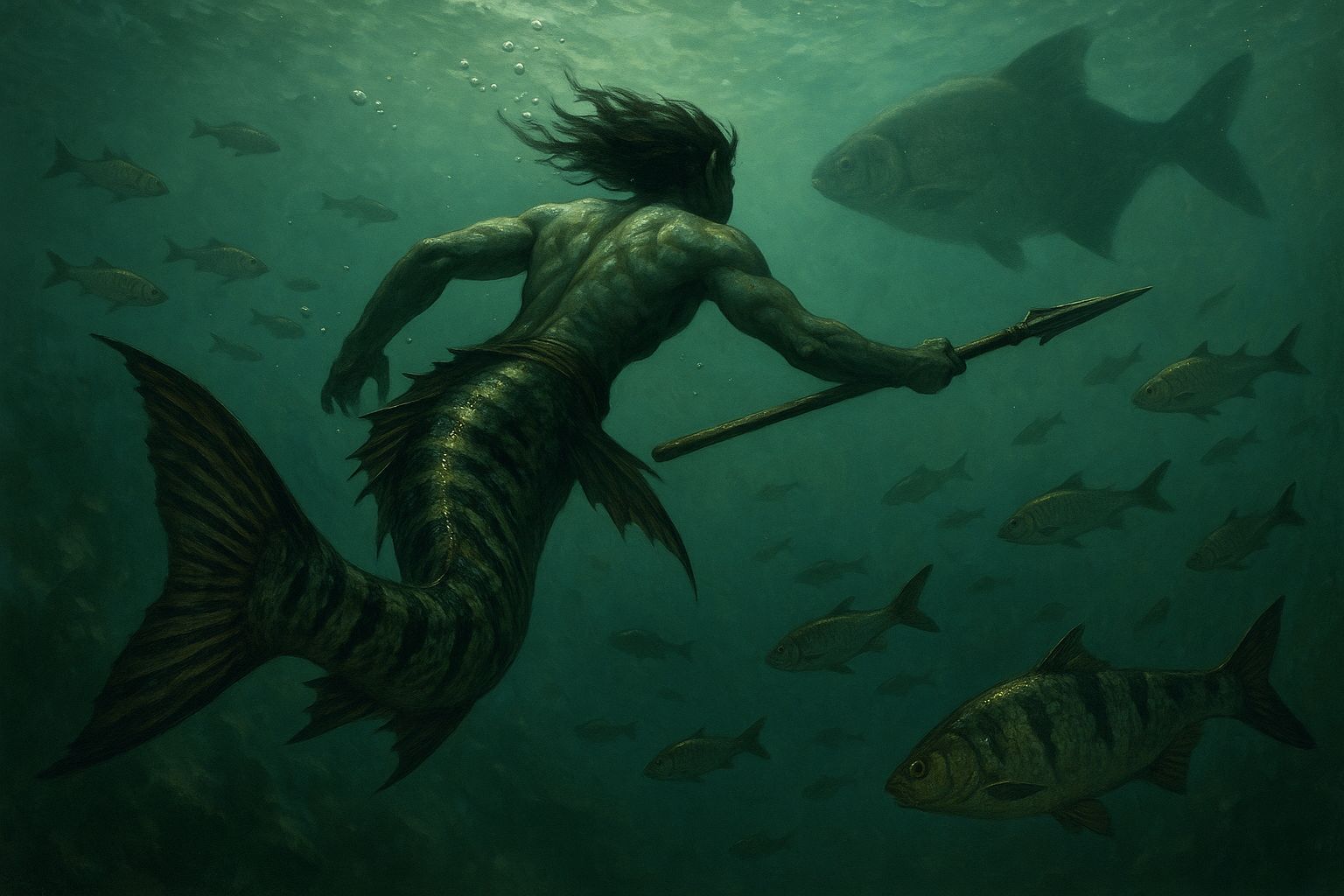
The freshwater mers are a people of shifting moods and shallow roots, neither as kindly regarded as their sea-born kin nor as feared as the dreaded sirens. They resemble the sea mers in form, with scales that glimmer like wet stone and long tails patterned in greens and browns that blend with the river weeds. Yet their eyes are watchful and less inviting, and their voices rarely carry the same enchanting song. Their minds are closer to that of humankind: varied, unpredictable, and colored by individual will rather than a shared temperament.
They dwell in the Tarnixian and Caruvalas rivers as they coil through the jungle, and especially in the Mire of Vines. Their homes are drifting things: reed shelters that can be abandoned in a day, or caves beneath the waterline, forgotten as quickly as they were found. They live by the spear, short hafted weapons of riverwood tipped with bone or stone, or with iron heads traded from strangers who dare venture into their waters. The spear serves them for both fishing and the hunt, thrown from the bank or driven like a harpoon. They eat what the river offers: fish, turtles, river deer, even the unwary that drink at the shore.
Religion
Their faith is simple yet deeply rooted in their world. The river itself is a god of life, flowing through every breath and every heartbeat. Its spring is the deity of birth, pure and untainted. The river’s endless course leads to the sea, which they believe to be the god of death, an all-consuming hunger where every soul must someday flow. The land beyond the banks is the unknowable, where reality thins and what lies beyond sight cannot be trusted to exist at all.
Society
Freshwater mers live in groups seldom larger than a dozen, bound by the moment rather than blood or law. They have no leaders, no lasting partners. Bonds form and dissolve like ripples on the water. One season they may dwell together in harmony, and the next they scatter, drawn apart by quarrel or whim. Their tools are few: simple spears, woven sashes, and the occasional knife or point bartered from outsiders.
Because of their mercurial ways and their hidden domain, they remain little known. Traders who seek them out often find frustration, for one day’s welcome may turn to hostility the next. For this reason, few make the journey, and fewer still return with tales that do not carry a warning.
Trade
Trade is uncertain. They may offer bundles of rare shells, feathers, and herbs in exchange for metal and cloth, or they may vanish without a word. Trespass, however, is never forgiven. To swim too far into their lakes or to build too close upon their rivers is to invite a sudden rush of spears from the shadows.