Player Info - Waverider Story - Campaign - Author's Notes
The Great Empire
The Roman empire, decadent, violent and crashing.
I clapped.
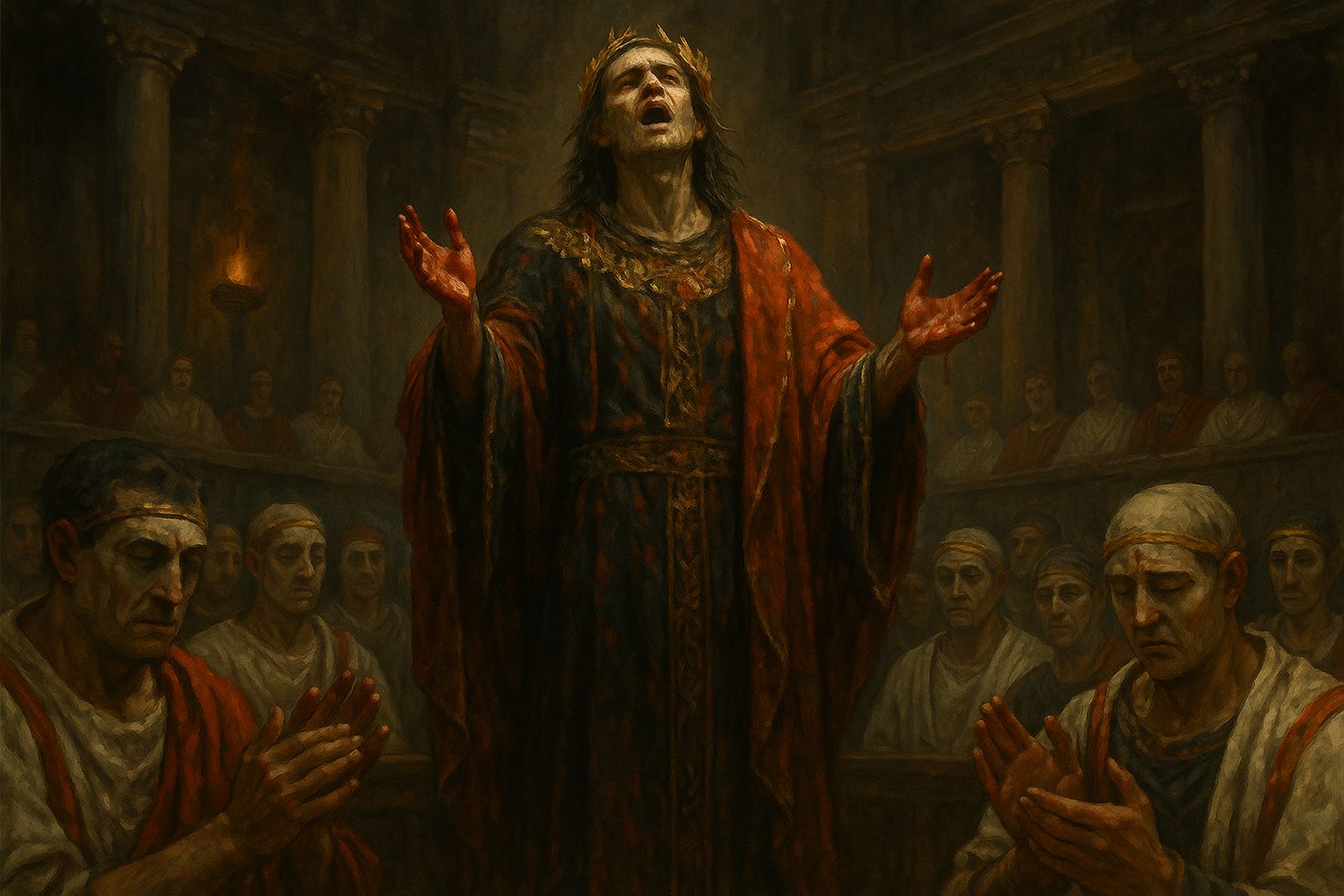
When he stood on the Senate floor in painted robes, blood on his hands, I clapped.
When he ordered the flaying of Cassian, who only asked where the grain had gone, I clapped louder, so my silence would not be noticed.
When he declared the moon jealous of his beauty, I smiled and nodded, though bile rose in my throat.
I remember when this hall echoed with law, not madness. When we debated coin and roads, not omens and fire. Now we sit in fear, dressed like puppets, painted with lies.
I no longer know if I fear him or myself more.
Because today, when he sang to the gods in a voice cracking with wine and fever, when he swore to turn the river red with the blood of a thousand slaves, I felt nothing.
Not horror. Not anger.
Just relief that it was not me.
So I clapped.
And hated every finger for doing it.
Description
Current state
Once the beacon of civilization, The Great Empire spanned continents and seas, a marvel of engineering, law, and military might. Its golden age saw the rise of monumental architecture, sprawling cities, and a bureaucracy that functioned with precision. Now, however, those glories are faded, buried beneath the rot of decadence, fear, and cruelty.
The current ruler, Emperor Valerian IV the Radiant, is known more for his obsessions and hallucinations than any governance. He claims to speak with gods and ghosts, holds court with invisible advisors, and issues proclamations soaked in madness. His paranoia has purged most of the competent statesmen, leaving the Senate a hollowed-out shell. Once the voice of reason and rule, senators now attend sessions only to nod and applaud whatever lunacy the Emperor demands. Many wear masks or veils to hide the shame and fear on their faces.
The real backbone of the empire lies in a handful of powerful generals who have carved the imperial territories into military zones of control. These generals maintain the roads, collect taxes, and put down rebellions, often brutally. Though their loyalty to the throne is questionable, none have yet dared to seize it outright, each calculating their own time.
The Aristocracy
The aristocracy of the Great Empire lives as if tomorrow will never come. While the provinces bleed and the legions march, the noble houses of the capital fill their nights with endless banquets. The great villas along the colonnaded avenues glow with torchlight until dawn, the air thick with the perfume of crushed blossoms and spiced wine. Tables stretch like altars beneath vaulted ceilings painted with scenes of conquest. Platters of exotic meats and rare fruits, shipped from the farthest provinces, are piled high until the weight bows the wood.
No pleasure is left unexplored. Each house competes with the next for excess, commissioning ever more elaborate spectacles to impress guests and curry favor. Musicians, poets, and dancers perform between courses. Slaves serve not only as attendants but as living decorations, painted in gold leaf or draped in silks, standing silent and unmoving for hours as nobles drink and laugh. The line between entertainment and cruelty blurs: a new dish is served, a new guest gasps, a new life is ruined for the sake of novelty.
By midnight the feasts dissolve into chaos. Cushioned lounges and perfumed chambers open from the main halls, where wine flows like water and inhibitions like dust. Senators, generals, and priests alike sprawl among courtesans and servants, trading secrets between kisses, forging alliances between gulps of imported spirits. The orgies are not merely carnal; they are political arenas, where influence is won with whispered promises, bribes passed under the table, and rivals humiliated before the crowd.
This is the heart of the Empire’s decadence. The aristocrats who preside over provinces and armies by day drown themselves at night in excess, numbing themselves with indulgence to the blood and chains that sustain their wealth. Their lives are a constant performance of power, measured not by wisdom or service, but by how extravagantly they can waste what others die to provide.
Society and Cruelty
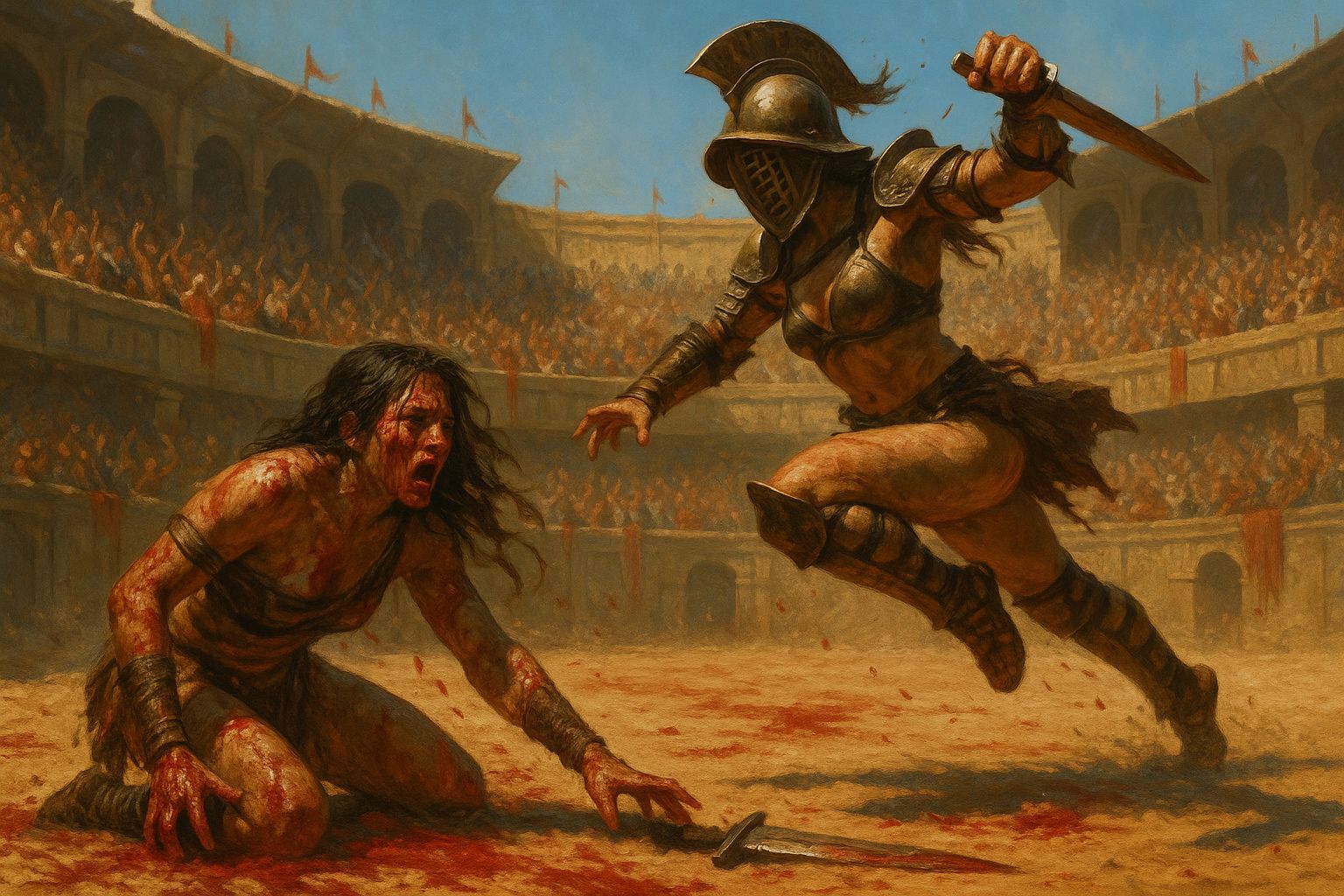
Cruelty is not a failing of the empire, it is its currency. To inflict suffering without consequence is a mark of power and breeding. Nobles compete to stage ever more elaborate games of death in the arenas. Some arenas specialize in gladiator duels, others in public executions by torture, each more exotic and drawn-out than the last. There are even private theaters for the aristocracy where rare slaves or non-humans are dismembered as a form of living sculpture.
Slavery fuels the empire. Every province, every conquest, every trade route exists to deliver more bodies to the capital. Entire villages are depopulated to satisfy the demand for new spectacle, new labor, or new pets for the jaded elite. Slaves are nothing, less than nothing. To kill one in the street is no more remarkable than stepping on an insect. Indeed, nobles often do so to show off their status. "See how little this one matters," they say with a gesture, as the screaming begins.
Citizenship
Citizenship is sacred, a divine gift granted only to those born in the heartlands or those who buy it at ruinous cost. In the courts, a citizen's word will always outweigh that of a foreigner or slave, no matter how obvious the truth. Even when a citizen commits murder, the victim's status determines the judgment. If the victim is not a citizen, no crime has occurred. If the murderer is not a citizen and the victim is, the punishment is death by dismemberment, in the arena for public delight.
Citizens wear their status proudly: gold-threaded togas, lacquered identification plaques, tattoos woven with imperial insignia. Those without these symbols are treated as potential property. The line between slave and foreigner is blurred, and often one becomes the other.
Non-Humans
Non-humans are considered beasts by imperial law. They are hunted, captured, and trained, or broken, for the arenas. Some are dressed up and forced to perform mock parodies of imperial ceremonies before being slaughtered for laughs. Others are kept as exotic pets, playthings for the children of nobles. Any suggestion that non-humans possess culture or value is seen as nonsense.
Religion
The Great Empire worships a traditional pantheon of gods, similar to the old Roman model. Each god has a domain of influence, is honored with temples and festivals, and is deeply woven into daily life. Religion is public, civic, and practical. Worship is about maintaining pax deorum, the peace with the gods, through offerings, sacrifices, and strict observance of rites.
There is no holy book or central doctrine, just traditions, auguries, and rituals passed down by priestly colleges.
The Major Gods
Aurex: King of the Gods, god of the sky, authority and empire. His eagle standard leads every legion. Worship of Aurex is tied directly to the emperor, who is seen as his earthly representative. The emperor's decrees are often described as guided by Aurex’s will.
Velana: Goddess of home, law and family. Every household shrine includes a figure of Velana. Magistrates and judges pray to her before issuing verdicts. She is associated with the sanctity of citizenship and the social order.
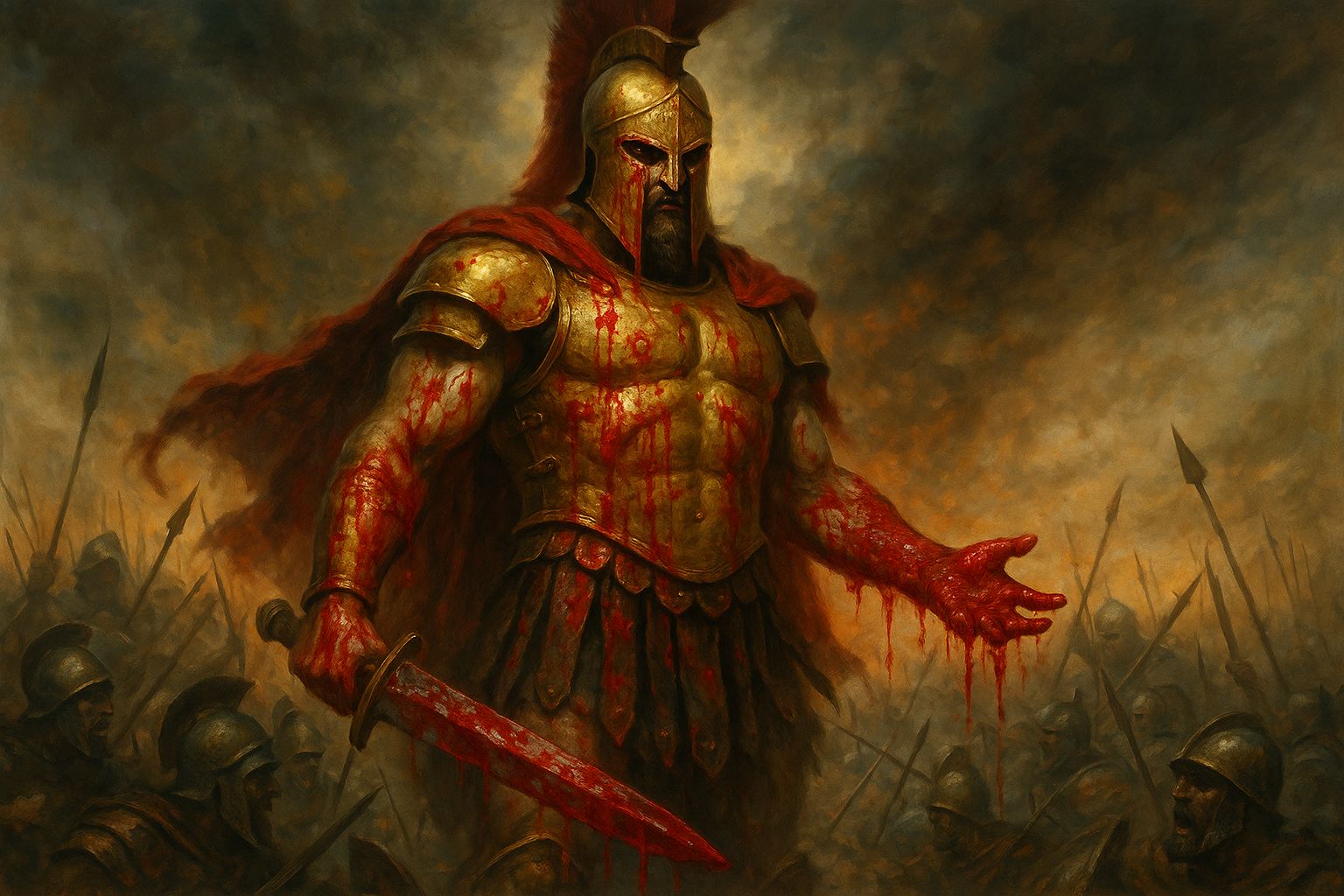
Malion: God of war, discipline and conquest. He is not a god of chaos, but of formation and order. Soldiers pour wine on the ground for him before battle. His priests bless new weapons and oversee military oaths.
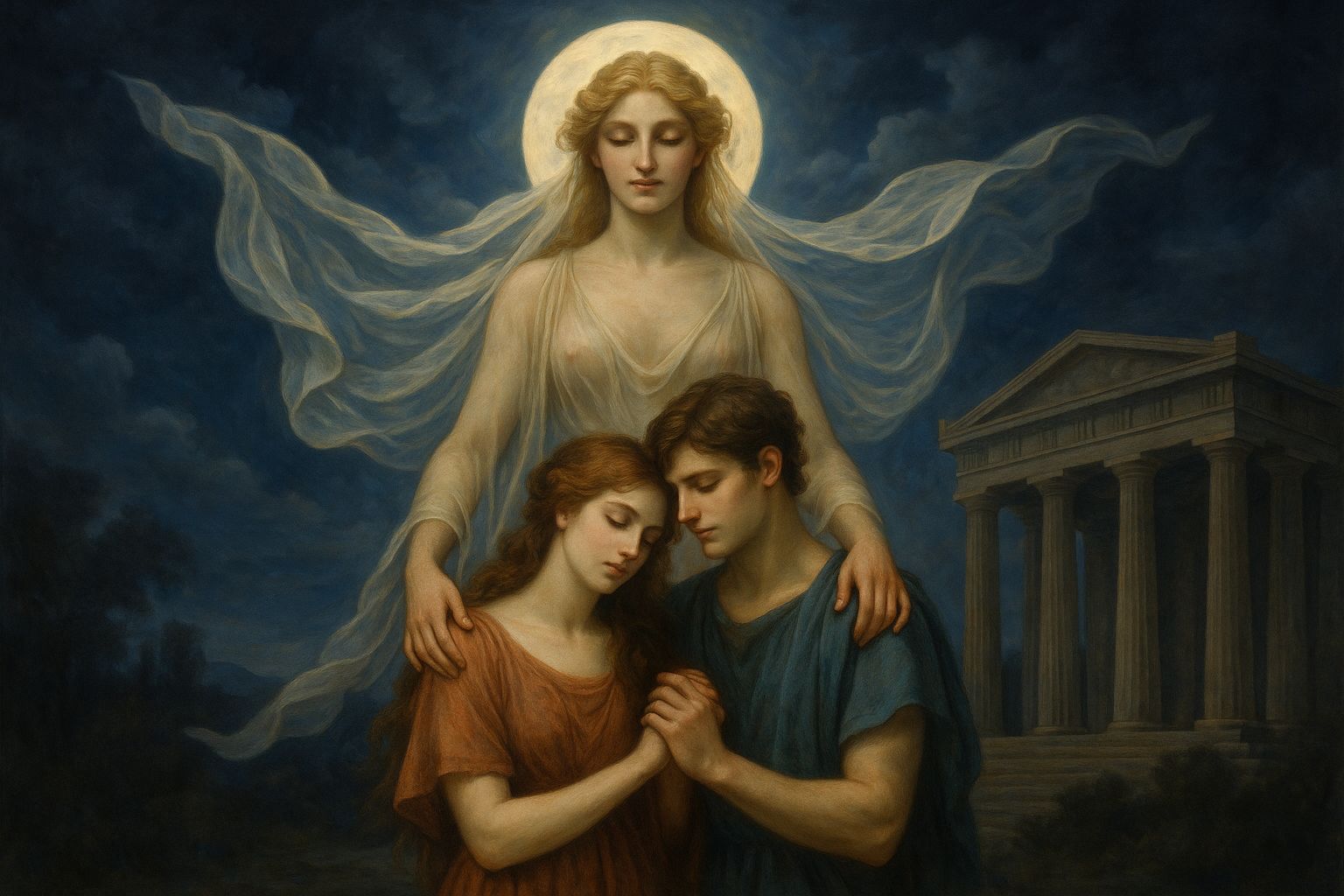
- Lustra: Goddess of beauty, revelry, passion and love. She is honored at public festivals with dancing and feasting. While her worship is joyful, her temples are also known for excess and decadence, especially among the nobility.
- Karn: God of death, justice and the underworld. Not evil, but cold and inevitable. His rites are solemn. Executions are dedicated to Karn to ensure proper spiritual balance. His temples serve as courts of final appeal for capital crimes.
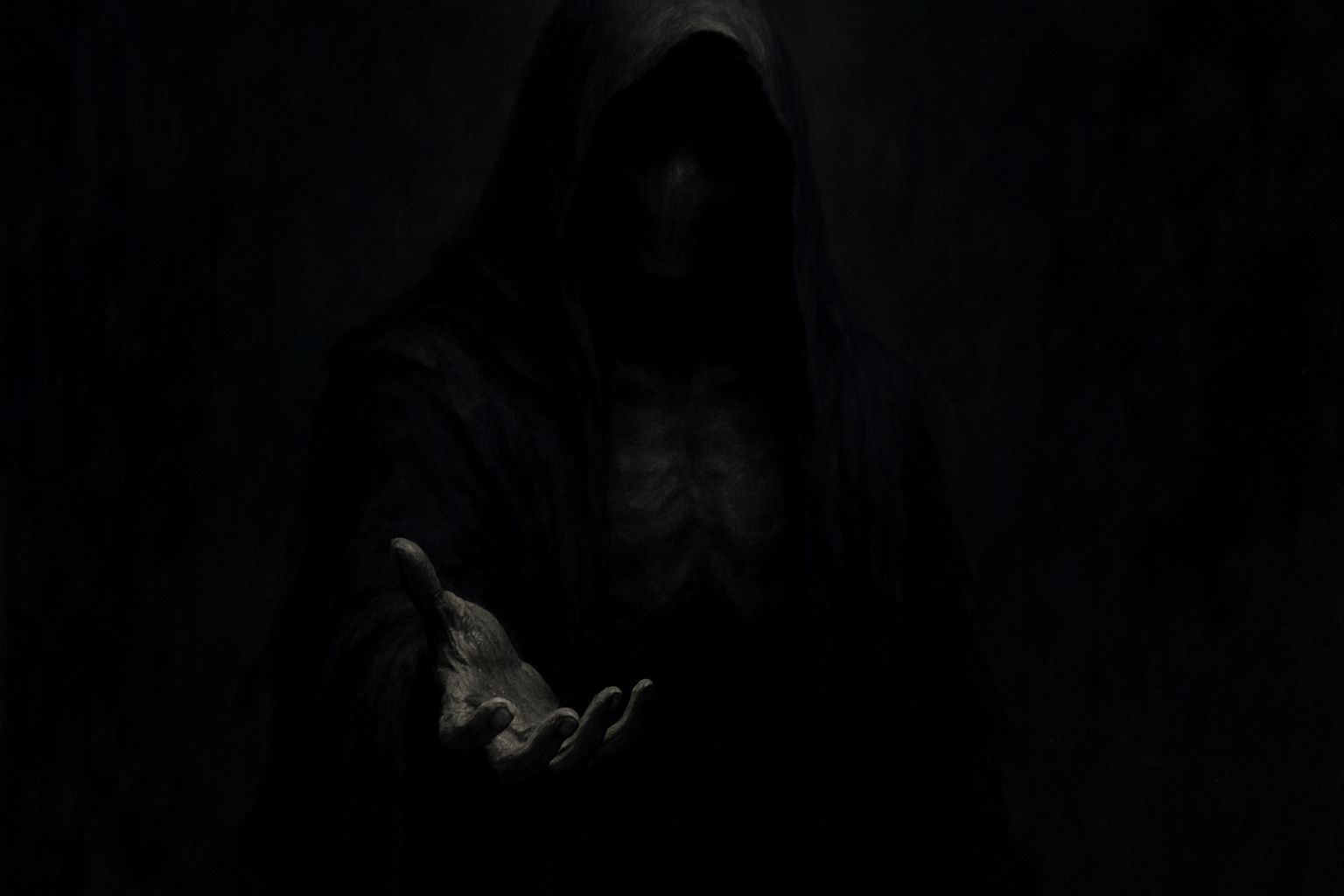
- Savael: Goddess of fortune, trade and ambition. Merchants, politicians, and generals pray to her for success. Her favor is seen as fickle and dangerous: too much luck may mean her attention is about to shift elsewhere.
Worship of Viribus & Elystra is also common.
It's worth noting, though, that though very intolerant in other matters, The Great Empire doesn't have any strictly mandated religion. Almost any religion can be worshipped openly here. The Empire has found religious tolerance practical when conquering other countries.
Imperial Cult
Since the time of the first emperor, dead emperors have been deified by vote of the Senate. Temples to The Divine Emperors are found across the empire. The current emperor is not yet divine, but is considered Favored of Aurex. Statues of the emperor are placed in temples, and sacrifices are offered to him at public festivals. Loyalty to the emperor is both civic duty and religious obligation.
Priests and Worship
Each god has a college of priests, usually drawn from the elite. Priesthood is a public role, often combined with politics. Ritual purity is vital. Mistakes in rituals can doom whole campaigns or seasons.
Sacrifices are common: animals, grain, wine, and incense. Gladiator games are sometimes held in honor of gods like Malion or Karn, especially during state holidays or to mark military victories.
Temples
Temples are centers of civic life. They host markets, courts, and assemblies. Inside, sacred fires are tended, statues clothed and washed, and sacrifices burned. Each city has its own local patrons, but the major gods are worshipped everywhere.
Superstition and Omens
The empire is steeped in augury. No major decision is made without consulting the gods. Birds, lightning, birthmarks, or entrails can all be signs. Seers and augurs hold great influence, especially among generals and senators.
Economy
The Great Empire thrives on conquest, and its economy is built on what conquest brings: plunder, tribute, and trade. From the moment a province is taken, its wealth is drained to enrich the capital and reward loyal generals and senators.
Plunder
Plunder is the first reward of war. After a victorious campaign, soldiers sack cities, strip temples, and enslave entire populations. Gold, silver, spices, artworks, and sacred relics are carted back to the capital. Officers take the finest villas and vineyards for themselves, while generals parade through the streets with chained captives and stolen banners.
Part of all loot is claimed by the state. This wealth is used to fund festivals, construction, temples, and the personal pleasures of the elite. Major temples often house treasures taken from foreign gods, displayed openly as proof of the Empire’s divine favor and supremacy.
Tribute and Taxes
Once pacified, conquered provinces are reorganized for steady extraction. Governors are appointed to oversee tax collection. Local rulers, if allowed to remain, must pay tribute: food, livestock, coin, and slaves. Refusal means military reprisal.
Tribute from outer provinces includes exotic goods, amber from the north, silks from distant lands, rare spices, perfumes, and even trained beasts. Tribute is not optional, it is seen as proof of submission.
Slavery as Currency
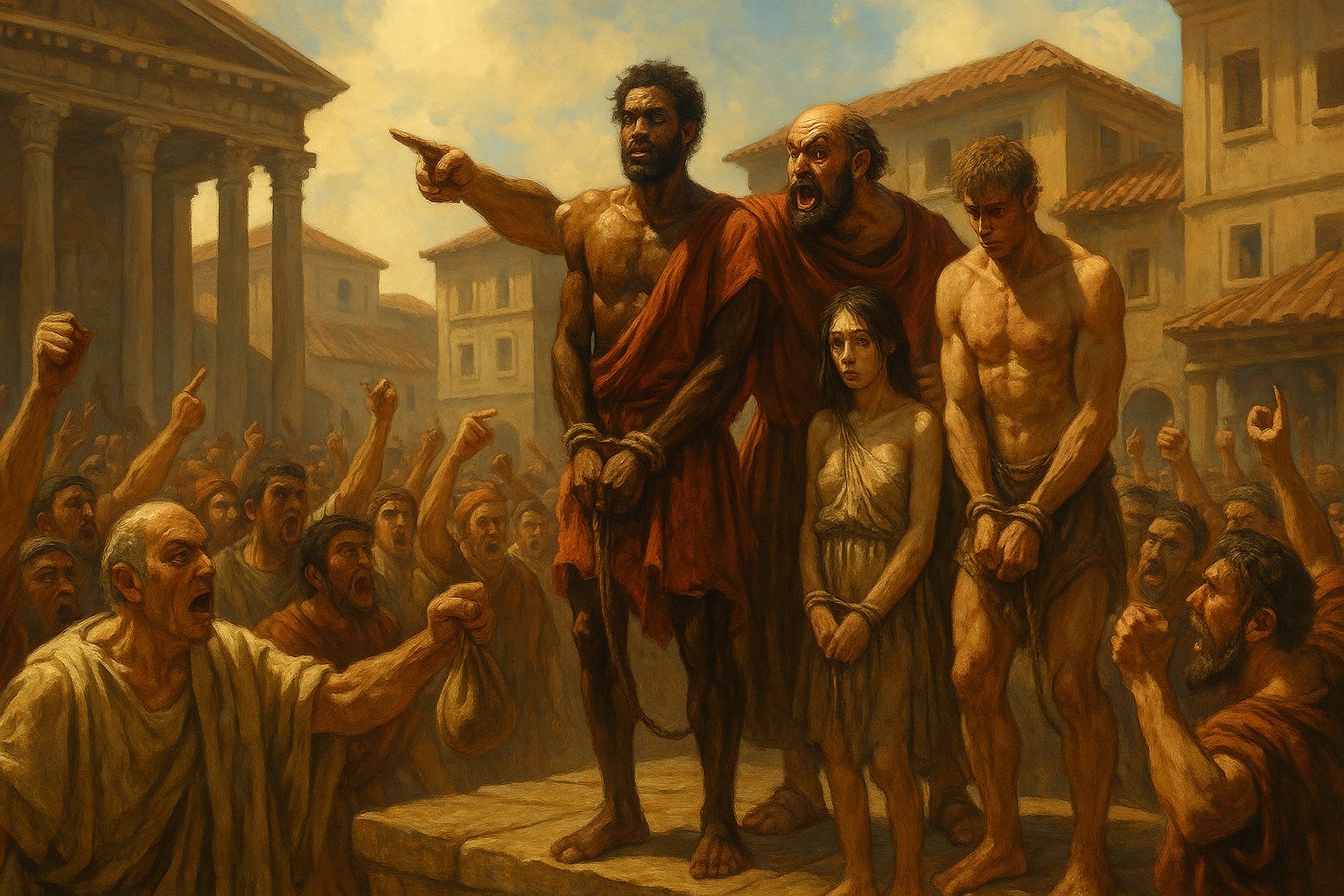
Enslaved people are the empire’s most common and most valuable plunder. They are sold, gifted, or traded like coin. Large slave markets operate in every major city. Some are sold into domestic service, others into mines, farms, or arenas. Rare or unusual slaves, such as foreign nobles or non-humans, fetch enormous sums.
Some merchants specialize entirely in slave caravans, operating under imperial licenses. These traders are treated as state agents, protected by law and escorted by soldiers when needed.
Trade Networks
Though built on conquest, the empire also maintains vast trade routes. Imperial roads connect cities across the known world, protected by garrisons and patrols. Rivers are heavily trafficked with grain ships and merchant barges.
The empire exports:
- Fine metalwork and weapons
- Pottery and glassware
- Textiles and dyes
- Wine and olive oil
- Prestige goods crafted by imperial artisans
It imports:
- Slaves (especially from border raids)
- Grain from outer provinces
- Spices, incense, and exotic goods
- Beasts, and rare minerals
Merchant guilds, though tightly regulated, have grown powerful. The wealthiest can bribe senators or purchase citizenship. However, they remain vulnerable to sudden seizure if accused of offending a noble or god.
War and Wealth
Wars are as much economic ventures as political ones. Generals campaign not only for glory, but for riches. Soldiers enlist for loot and land. The Senate approves invasions partly to stabilize the economy, conquest is cheaper than reform.
Plundering an already conquered land is uncommon, but it happens, and is becoming more common as the empire crumbles. Sometimes, it's done by a local commander lining his own pockets.
The Legion
A legion was originally a specific size military unit, but has since been changed to mean the military as a whole. The Legion is now the entire army.
The Legion is also called "The army of orphans" or "The army of brothers". There is a cruel reason for this.
The Legion gets first pick of female slaves when conquering, and these slaves serves in the Legion camps as barrack girls, with tasks like cleaning, washing, cooking and so on, but also as "bed warmers". When they get pregnant, which usually won't take long, they are taken away to a special facility, where they are kept until the baby is weaned. At that time, they are sent back to another Legion unit, never the same, to repeat the process. Female babies are sold on the civilian slave market, males are taken to another facility, where they are trained as soldiers as soon as they are old enough to speak.
Despite the Empire's love for bureaucracy, no record is ever kept of the heritage of the babies. This is done on purpose. No soldier in the Legion knows who their parents are. They are trained as cruel, ruthless warriors, and nothing else. Their only parent is the Empire, their only siblings is their fellow soldiers.
This makes them a feared fighting force. They fight without fear, without compassion, without mercy, without questioning orders. The lack of heritage also means that each soldier's history is his only, and only his own. There is no nepotism, no one who is general because they are from an aristocrat family. Each soldier advance in ranks based on his on merits, and nothing else, and this is a strong factor in their effectiveness as a fighting force.
One might ask what happens if a soldier develops feelings for a slave, but the soldier would not understand the question. To them especially, and the Empire mindset in general, the slave is a tool, and having feelings for a slave would be like having feelings for the spoon they eat with or the spade they dig with.
Tensions
While not serious, there are some rivalry between the east and west side of the empire, with the split being roughly along the Cataris. The west feel that the east are foppish stuck-up, while the east see the west as a less noble outback.
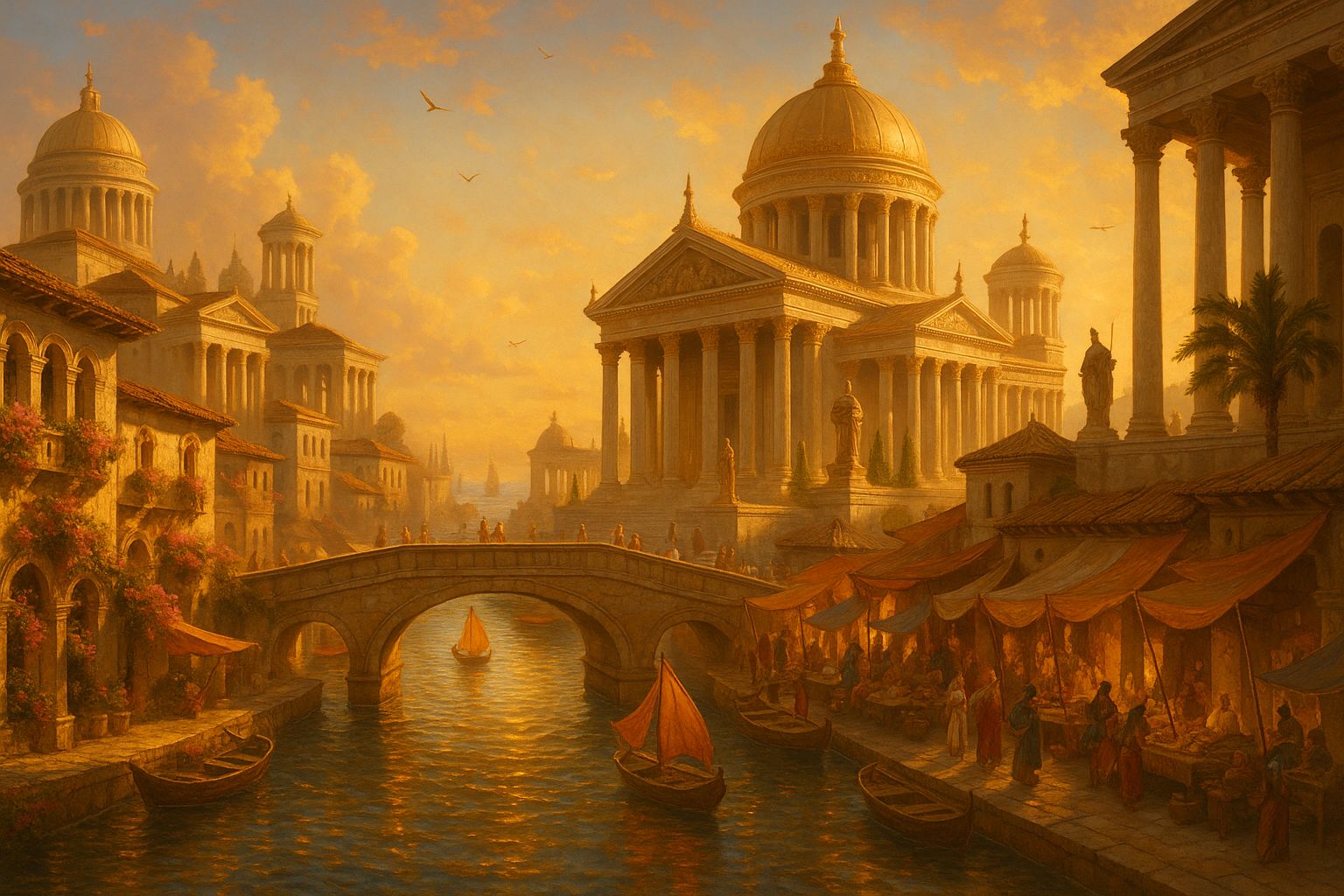
The main city of the west is Luminara, the Empire’s jewel on the water, a city of sun, marble and tides. Built across a web of natural lagoons and canals, its foundations rise from the sea itself. White-stone bridges arch over narrow waterways where merchant boats glide silently beneath hanging silks and flowering balconies.
Temples sit on every corner, their columns rising above the waters like ancient reeds, each dedicated to a different god of the Imperial pantheon. The largest, the Temple of Velana, shines with gold trim and mirrored pools, drawing both pilgrims and poets. On holy days, perfumed oil is poured into the canals, and the water catches the light like fire.
The air in Luminara is always warm and sweet, thick with the scent of spice, salt and crushed fruit. Market stalls crowd the stone walkways, selling glass beads, dried fish, inked scrolls and amulets. Dancers and street prophets compete for coin and attention, while priests chant blessings from open balconies above.
Nobles from across the Empire come to Luminara to rest, scheme and be seen. The Colonnade of Winds, a wide promenade lined with statues of forgotten gods, serves as a favorite place for deals to be whispered in the shade of palm-leaf fans.
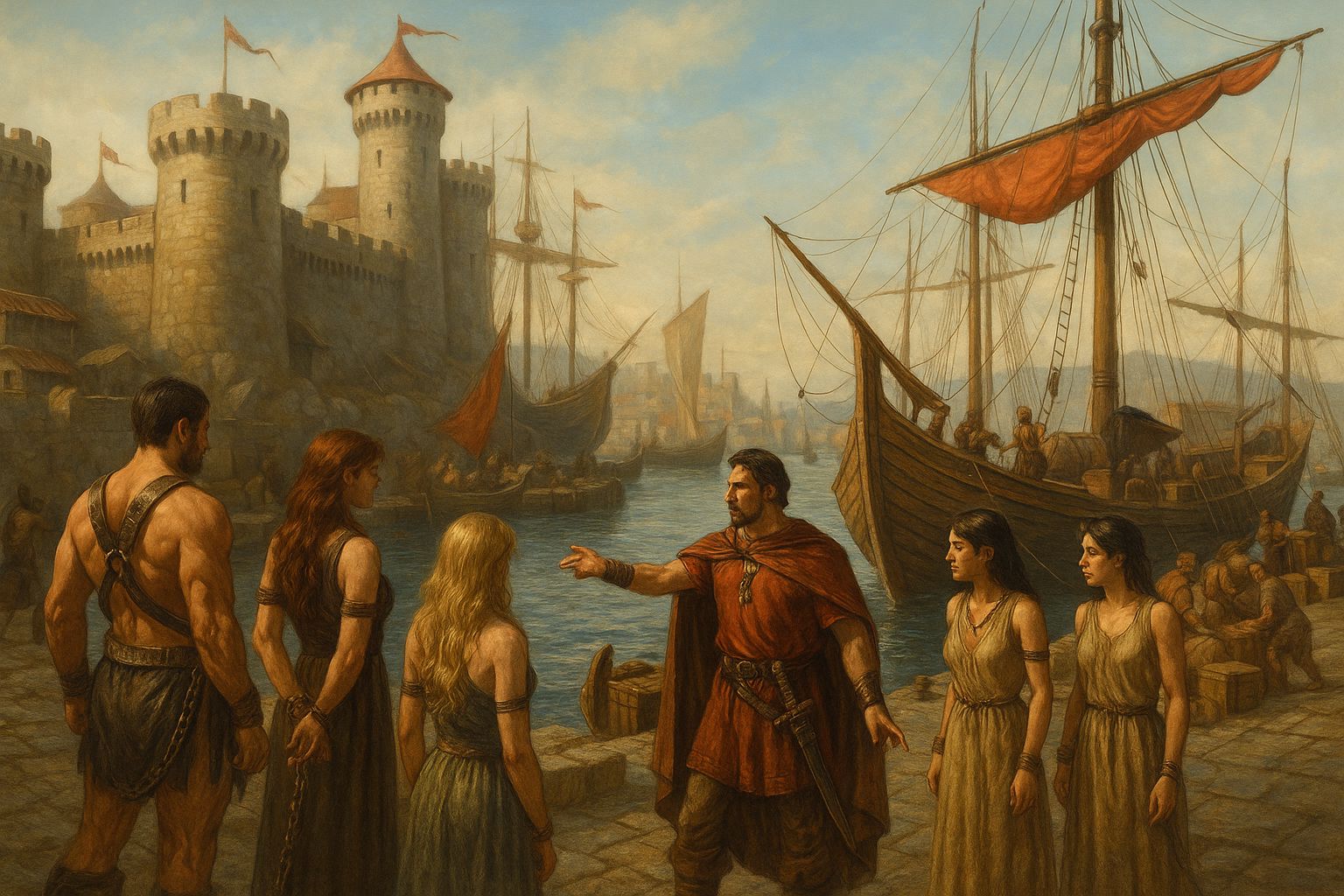
The harbour is always busy, with ships bringing in goods, slaves and exotic animals from all over the costs of the Opal Sea.
And always, beyond it all, the sea gleams like polished blue marble. The horizon is studded with sails, and the city watches, content and unafraid, as the Empire's power flows in and out with every tide.
Possible Secrets
The First Emperor Was a Usurper
The founding myth tells of a noble unifier chosen by the gods. In truth, the first emperor murdered the true heir of a forgotten kingdom, stole sacred regalia, and rewrote history. The imperial line is based on a lie, and ancient records buried in a desert vault could prove it.
The Capital Was Built on a Mass Grave
Beneath the shining marble of the imperial capital lies an ancient city, razed and buried. Its people were slaughtered to the last child in a forgotten war. Their bones form the foundation, and some claim their spirits still stir, whispering vengeance through the cracks.
A Plague Is Being Hidden
A wasting sickness is spreading through the lower districts. Victims bleed from the eyes and vanish before the third day. The Senate has silenced the healers and walled off entire quarters. Officially, there is no plague, only “unrest.”
The Empire Is Running Out of Slaves
Raiding parties are going farther, and fewer return. The supply lines are failing. Entire provinces are nearly depopulated. The economy, military, and daily life depend on constant labor from the enslaved, and collapse is quietly approaching.
The Empire Once Lost a War, and Erased It
There was a battle, far to the east, where an imperial legion was wiped out and a whole province lost. Rather than admit defeat, the Senate destroyed every record, killed survivors, and renamed the region. The enemy may still be out there, preparing to return.
A General Is Gathering Loyalty for a Coup
One of the border generals has been quietly purging disloyal officers and securing the support of key legions. He makes no move yet. But his letters are laced with prophecy, and his banners bear symbols not seen since the founding of the empire.
The Imperial Line Is Not Human
There are old rumors among the outer priesthoods that the blood of the imperial family carries something not quite mortal. The emperors do not die like other men. They speak to things that do not walk in sunlight. The divine madness may be more literal than most believe.
Adventure Hooks
The Arena Draft
A provincial town is selected for an imperial “arena levy.” One of the player characters (or someone close to them) is chosen by name to be shipped to the capital for public execution or gladiatorial use. The group must decide: flee, fight the draft, or take the journey and find another way out.
The Runaway Slave
A high-value slave has escaped from a noble house, and the players are hired to retrieve them. But the slave is more than they seem, charismatic, brilliant, and gaining followers. The job becomes a choice between bounty and revolution.
Games of Poison
A noble invites the players to a lavish feast as “entertainment.” During the meal, one of the guests dies, and the hosts declare it a test, find the poisoner before dawn, or all will be executed for the gods' amusement.
Lost Legion Gold
Rumors spread of a ruined legion convoy buried in the highlands, lost in a snowstorm a decade ago. Now the ice is melting. The players must race against imperial scavengers, bandits, and rival adventurers to claim the forgotten pay-chests.
The Statue Bleeds
In a coastal town, a statue of Velana begins to weep blood. Locals call it a miracle. The priesthood declares it heresy. The players are sent to investigate, and discover the source is very real, and very human.
Beast of the Colonnade
Something is stalking the colonnades of an upper-class district. Dogs vanish. Drunken nobles disappear. Witnesses describe a twisted figure with chains for limbs. The guard refuses to speak of it. The players are hired to stop it, quietly.
The Missing Heir’s Corpse
A noble heir dies in the provinces under suspicious conditions. The body is en route to the capital by ship, but when it arrives, the casket is empty. The players are hired to track the trail backward, and uncover who took the body, and why.
The Flame-Wheel Festival
The players arrive in a city just before the Festival of Flame-Wheels, where criminals are strapped to burning iron wheels and rolled down the city’s great stairs. One of the condemned is someone from a player’s past, and claims to be innocent.
A Temple’s Favor
A local temple offers divine “blessings” in return for a task: recover a stolen relic from a rival temple across the river. It seems like a petty priesthood squabble, until the players realize both temples are using the same god’s name, but not the same god.
The Imperial Census
A census team goes missing in a mountain province. The Empire sends the players to find them. What they find instead is a village that refuses to acknowledge the Empire even exists, and they will not be counted.