Mataraaj
Everchanging civil war in India.
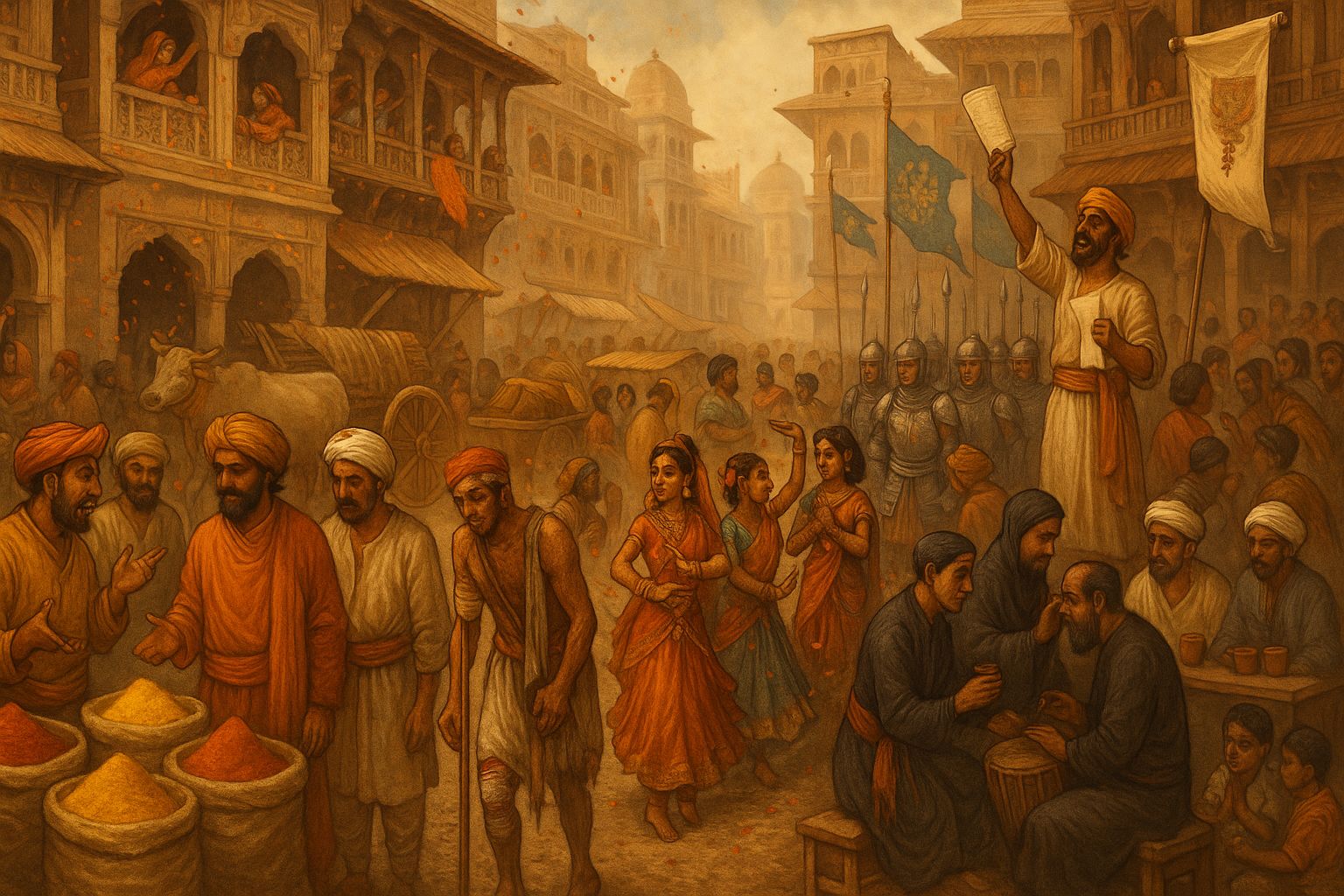
The bazaar of Vardhana roared like a river at flood. Spice merchants shouted over one another, thrusting open sacks of saffron and turmeric beneath the noses of passing nobles. A jeweler held up a necklace of pearls to the sunlight, swearing it was fit for the neck of a goddess. Drums beat in rhythm as a troupe of dancers twirled through the dust, their anklets ringing.
Children darted between the legs of oxen pulling carts heavy with sugarcane. The air was thick with the scent of roasting lamb, fried chickpeas, incense, and sweat. Rickety balconies leaned over the street, women tossing flower petals into the crowd in hopes of catching a lover’s eye.
Yet beneath the colors and noise, the war whispered. On one corner a soldier limped past, his leg bandaged in a strip of blood-stained cloth, begging for coins to pay for herbs. A group of men in plain white cotton whispered over cups of spiced tea, speaking of which raja had betrayed which side this week.
By the temple gate, a priest of Kalini painted black ash across the foreheads of mourners, his chant a soft dirge that cut strangely against the laughter of the street.
At the far end of the bazaar, a crier stood on a crate, waving a scroll high. “Hear this! Maharaja Samyra has promised grain from the royal granaries, no matter what the traitor Durjan may seize! The gods themselves guard the Peacock Throne!” His voice was swallowed by the crowd, some cheering, some jeering.
A hush fell only when a column of soldiers marched through, bronze armor clinking, spears gleaming. Their banners bore the peacock crest of the Maharaja, but in the crowd more than one pair of eyes looked away, fearful, calculating.
When the soldiers passed, the noise returned, louder than before, as though to bury the silence. Yet under the clamor, every trader, dancer, and beggar knew the truth: war lived even here, in the heart of the marketplace, just waiting for its moment to strike.
Description
For five centuries the jeweled throne of Mataraaj has been held by the illustrious Rajputra dynasty, its banners flying over temple-spires and palace domes. Now, however, the land is torn apart, for the old order has broken.
The Rulers
The late Maharaja Ranjit Dev Rajputra left behind no son, only many daughters. His eldest daughter, Maharaja Samyra Devi, against all precedent, was crowned in the Peacock Palace of Vardhana, capital of Mataraaj. Samyra is strong-willed, clever, and well-loved by the common folk. She has built canals, repaired temples, and kept the armies supplied even in the worst years of war. Her marriage-bed, however, has been a matter of gossip, as she has no heir. The critics say that the harem of male consorts will not produce as many heirs as a male maharadja with a female harem. Only now do rumors fly that she is with child, and the land holds its breath.
Her rival is Raja Durjan of Kalithar, a man of ruthless ambition. Where Samyra speaks of virtue and duty, Durjan speaks of destiny and strength. He is feared rather than loved, but many rajas back him out of fear of his armies, hatred of their neighbors, or simply because they want to be on the side they think will win.
The War of the Peacock Throne
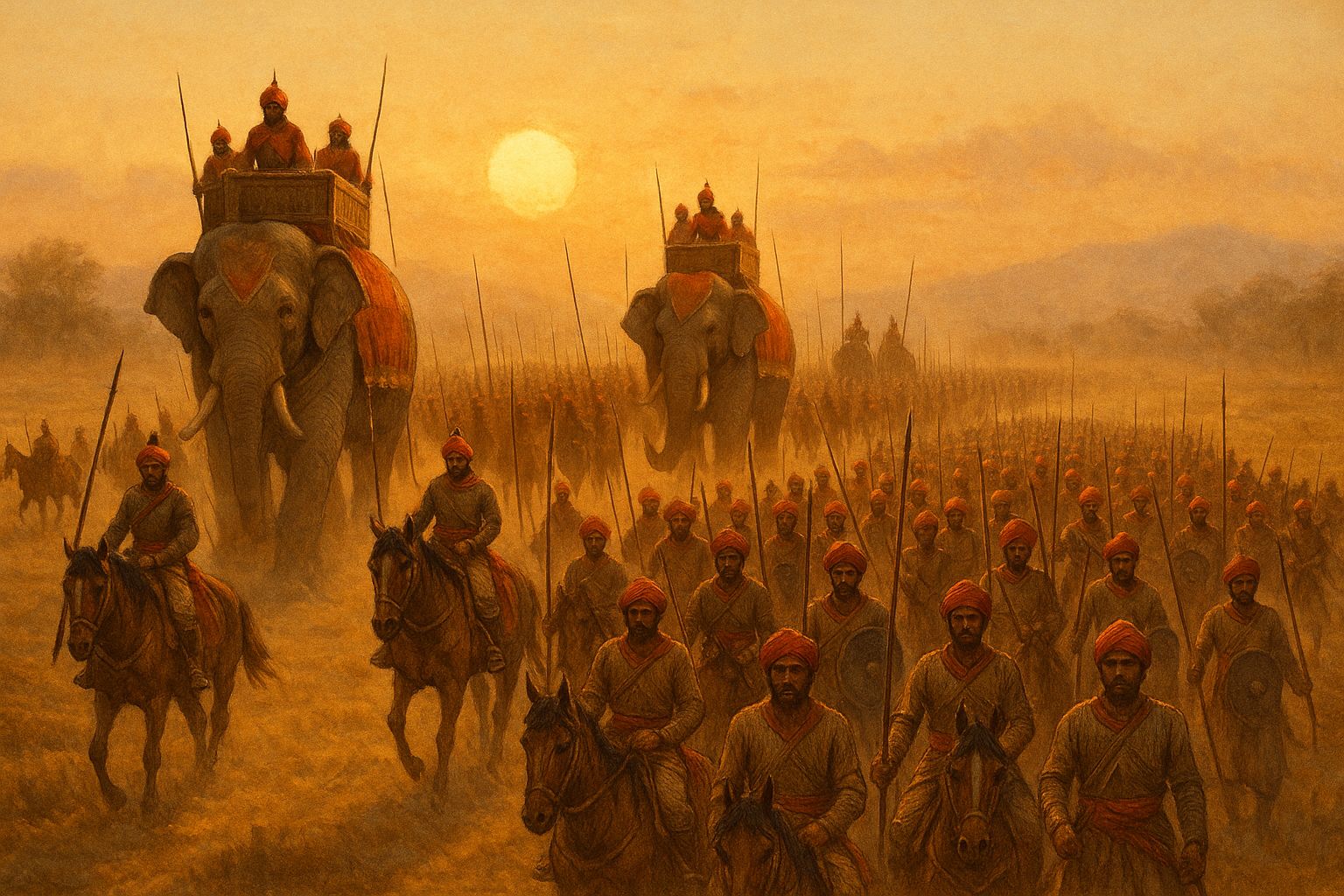
This civil war, known as the War of the Peacock Throne, has lasted seven long years. Loyalties shift like the monsoon winds. The Raja of Bhimora was once Samyra’s most loyal ally, until Durjan promised him the fertile province of Kandral, only to switch back again as Durjan retreated out of the province. The Raja of Suravara, an old man, shocked all by breaking his sworn oath to Durjan and placing his armies behind Samyra after Durjan’s men desecrated his family’s shrine.
Villages burn, trade caravans are plundered, and temples levy their own militias. Mercenaries fight for anyone who can pay, and there are entire mercenary armies for hire. The countryside has become a chessboard of intrigue, where betrayal is as common as the rains.
Religion
The people of Mataraaj worship countless gods, from mighty deities to personal household protectors. They believe the gods dwell together in Svarnagiri, the Golden Palace on the Clouds, its gardens rich with sweet fruit, peacocks, lotus ponds, and divine musicians.
Some of the major gods are:
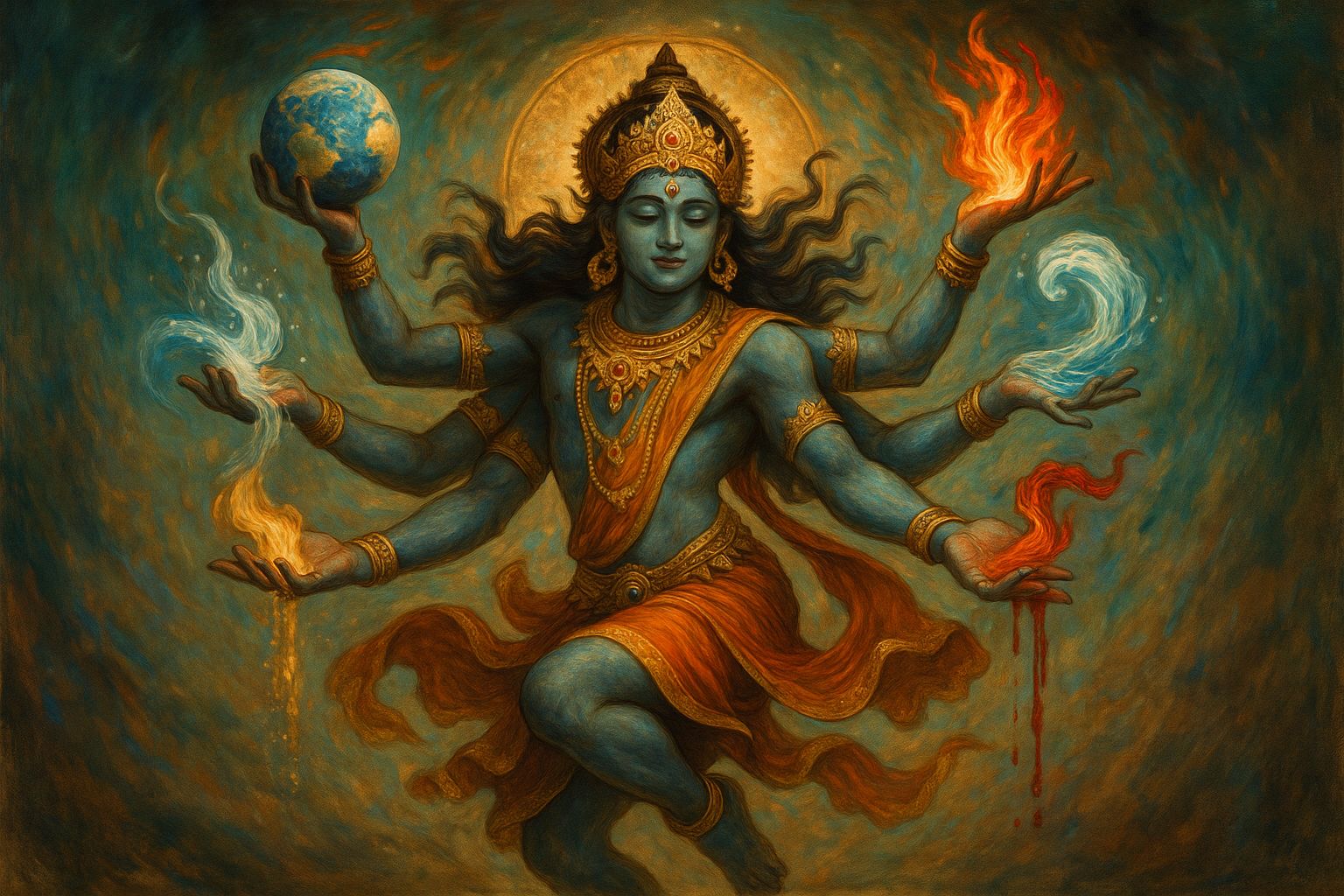
Rishary, The Dreamer
Created the world and all life in a dream. One day, he will wake up, and the world will end. God of dreamers, peace, and the cycle of life.
Vayandra, Lord of Thunder and War
A fearsom god, often invoked before battle.
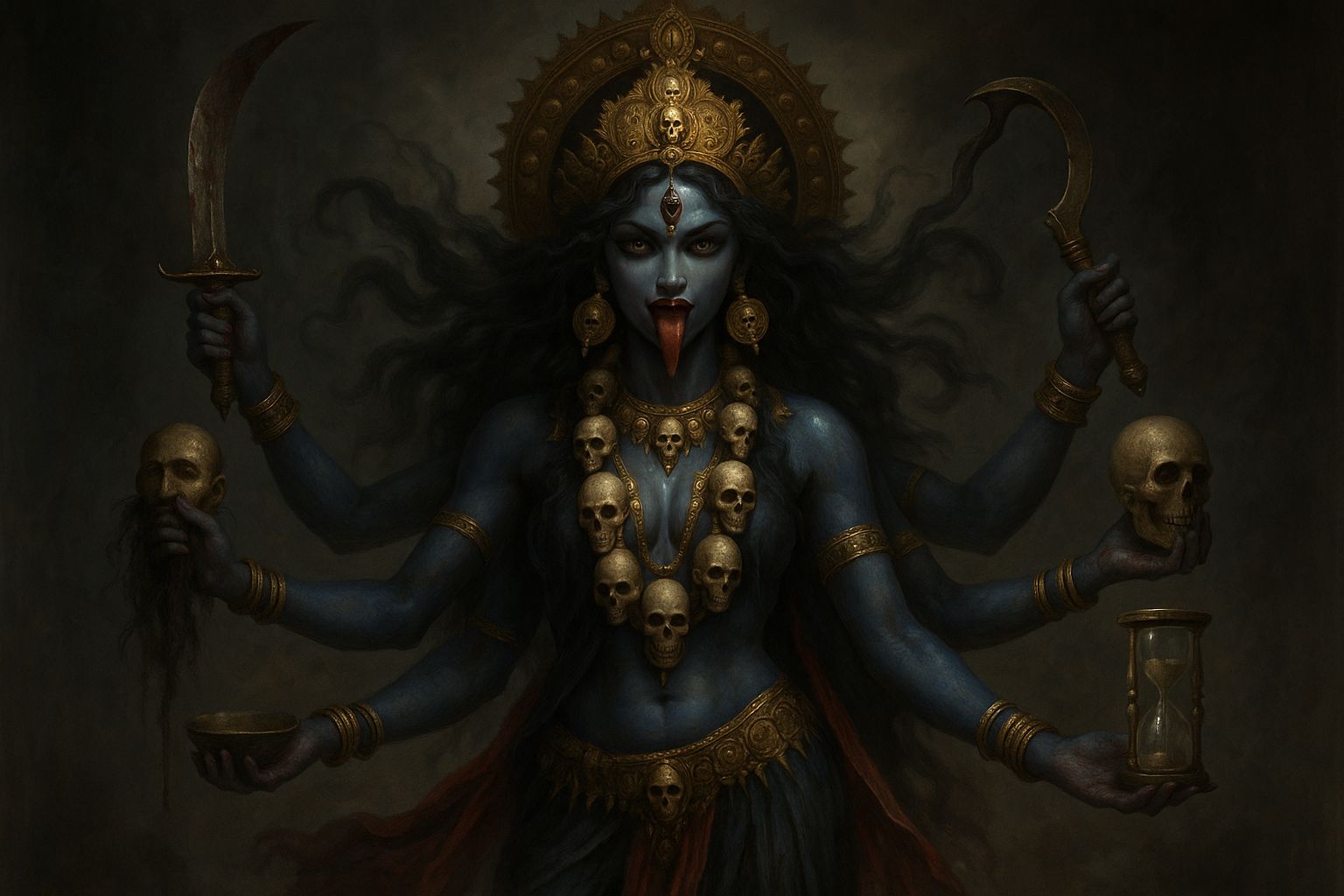
Kalini, Mistress of Fate and Death
She is both feared and seen as a liberator from pain and old age, and her black-clad priestesses are given offerings at every funeral pyre.
Amaran, Giver of Harvests
She is beloved in villages, where his shrines stand beside the fields.
Suranyan, Lord of the Sun and Justice
Radiant and stern, even unchanging, he rides a golden chariot across the skies. Judges and rulers invoke his name, for he sees all things done under the sun. His temples are open-roofed, bathed in light.
Narayela, Lady of Rivers and Mercy
Her hair is said to flow like the Sarashti river itself. Fisherfolk, washerwomen, and travelers pray to her for safe passage. She has two sides, though, as she is also the god of river predators like crocodiles. Offerings of lotus and milk are cast into rivers in her honor.
Varukan, God of War and Storms
Brother to Vayandra, but far more savage. His priests whip themselves before battle, and his favor is sought by Durjan’s warriors. His image is carved with tusks and fangs, lightning in hand.
Padmira, Goddess of Love and Desire
She is depicted with eyes like lotus petals, draped in silk ribbons. Courtesans, poets, and lovers keep her shrines in their chambers. She is adored, but also feared, for desire often leads to ruin.
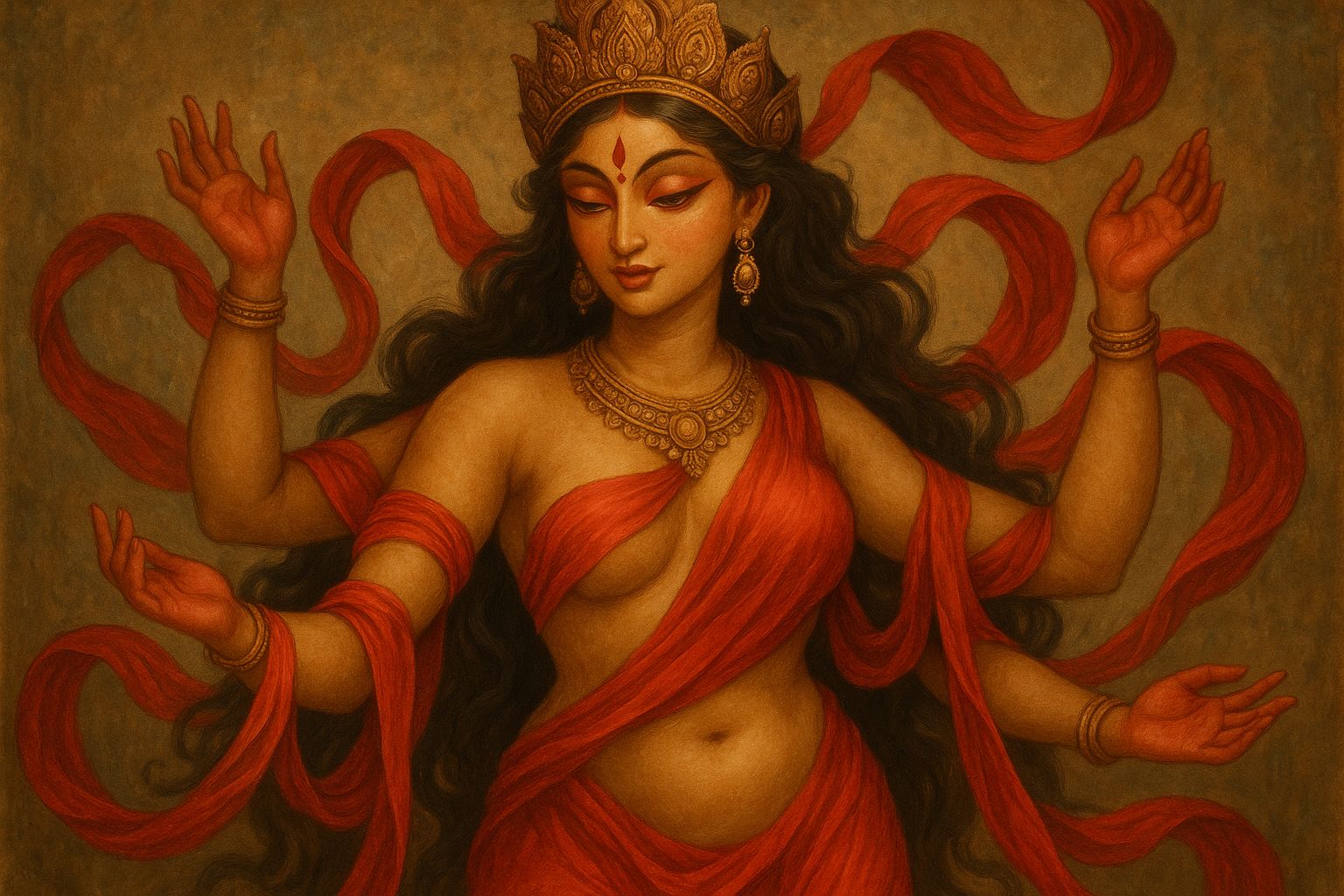
Kethara, Guardian of Thresholds and Oaths
Patron of gates, bridges, and contracts. Merchants and travelers pray to him when passing borders. Breaking an oath sworn before Kethara is said to bring lifelong misfortune.
Chandri, Goddess of the Moon and Secrets
Worshiped quietly, by women at night. Thieves and lovers alike make offerings in her pale shrines.
Thanis, the Oxen God of Roads
Sculpted in stone at crossroads and caravan stops, he blesses safe travel and heavy loads. Offerings of fruit are left in his horn-shaped altars.
Mokti, Child God of Laughter
Depicted as a mischievous boy with a flute. Families keep tiny statues of him to guard children, though he is said to play tricks if not fed sweet cakes.
Vyras, God of Shadows and Forgotten Names
Rarely invoked, feared by all. His priests wear veils and walk only at dusk. He is said to collect the names of the dead so that their souls can pass into the next life.
Jivara, Lady of Healing Herbs
Worshiped by midwives and apothecaries. Her shrines are simple, marked by bundles of dried plants.
Even the smallest homes have niches for Kutra Devs, little family gods who bless hearth and children.
Maharaja Samyra has strengthened her claim by presenting herself as Chosen by the Gods of Svarnagiri, while Raja Durjan insists the gods favor only the strong who seize their fate.
The Mataraaji believe in reincarnation, but the next life is not governed by how good a life you have live, but by how true to your path you have been, and which gods you have pleased.
Foreign Relations
Zanakwe: Once a strong trade partner, sending ivory, exotic beasts, and gems in exchange for fine silks and spices. But when both Samyra and Durjan sent envoys demanding allegiance, Zanakwe sealed its ports until one ruler remains.
Ozukari: Known for their prickly pride, they trade in small amounts, textiles for incense and precious woods, but nothing decisive.
Twin Cities: Care nothing for dynastic wars, happily exchanging their iron for Mataraaj’s gold and pearls. Yet the sea routes are treacherous, preyed upon by pirates based in the archipelago coast of Kalyanpur, where pirates can launch swift strikes and disappear as swiftly again.
Society and Architecture
Mataraaj is a land of layered splendor. White marble palaces rise above narrow bazaars teeming with spice-sellers and cloth merchants. Temple complexes tower with gilded spires, each dedicated to a host of gods. The roads are lined with peach trees, the rivers spanned by ornate stone bridges carved with elephants, tigers, and peacocks.
The people live by caste and guild, yet the turmoil of war has shaken the old order. The caste system remains, but anyone, regardless of caste, can become a soldier on at least somewhat equal terms.
Slavery exist, but is a privilege for the very rich. Owning slaves is as much a status symbol as a utility.