Draknir
Vikings fighting for dragon gods.
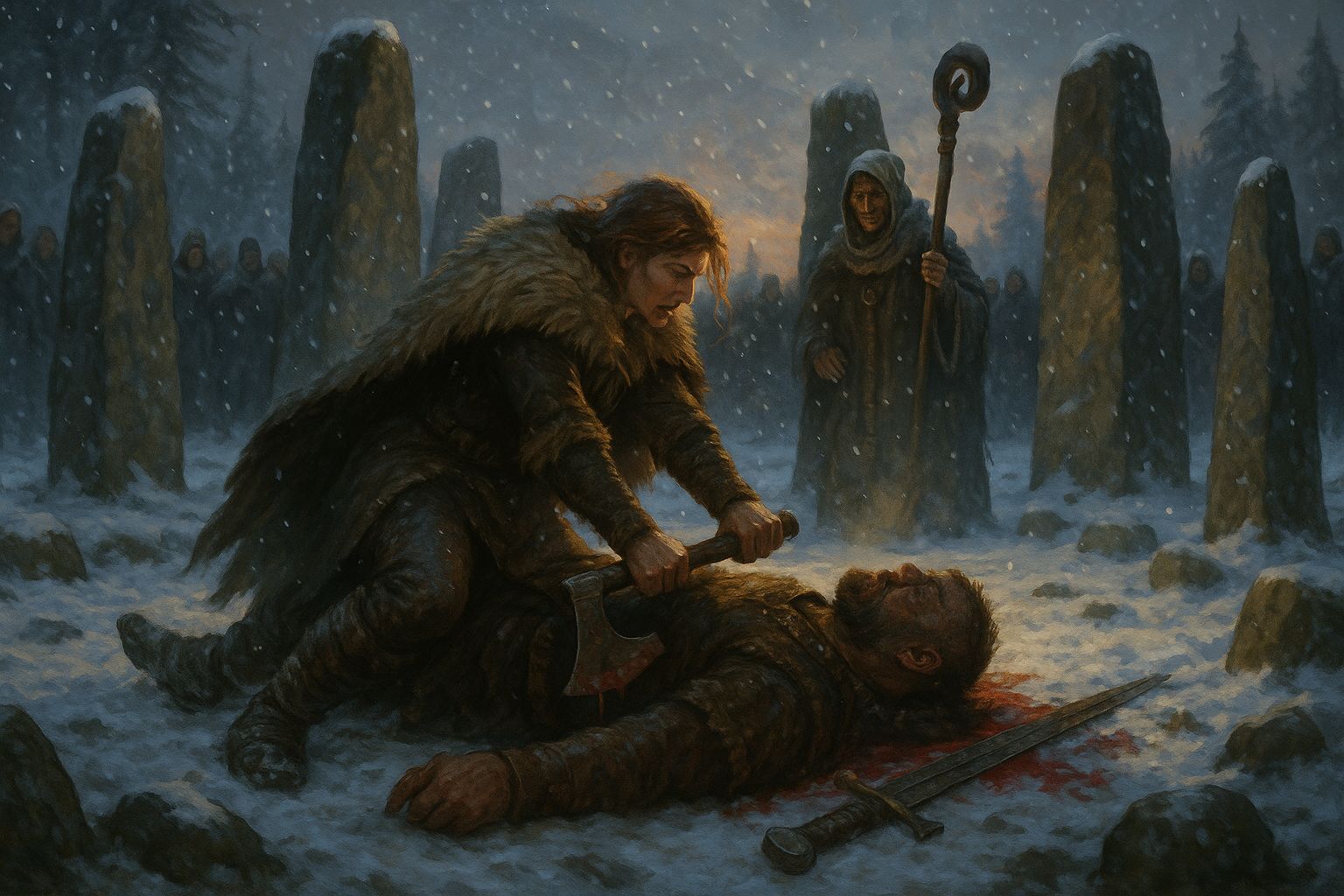
The clearing was ringed with stones and silence. Snow fell in slow, drifting flakes, muffling the world beyond the sacred circle. Two warriors stood facing each other, breath rising like smoke, eyes locked in a calm that came only before blood.
The holmgång had been called at dawn. A dispute over an insult too sharp to ignore, spoken in ale-thick fury at the last feast. Now, only steel could speak.
Skarri, daughter of Jorl, stood tall with her bear-pelt cloak draped over her shoulders, axe gripped loosely in one hand. Across from her, Kunn of the Broken Antler clan shifted on his feet, a wide man with a rusted sword and a lip still bruised from the tavern fight that started it all.
Old Haldra, the bonesayer, stepped between them, holding a twisted wooden staff wrapped in sealskin and charms. Her voice was steady despite the cold.
"By the law of the Draknir, this holmgång is called. These two come not in war, but in honor. Let the gods see their truth. Let Myrrhall watch for deceit, and Grendhalyx weigh the blood that falls."
The crowd was quiet. Dozens of clanfolk stood just beyond the ring. No jeers. No cheers. Only watching.
Haldra stepped back.
A single beat passed.
Then Skarri moved.
Her axe came low, fast, but Kunn caught it on his blade with a ring of metal. They circled, boots crunching ice. A slash. A feint. A grunt of pain. Blood splattered red against snow.
It wasn’t a graceful dance. Holmgångs rarely were. It was fast, raw, ugly. But beneath the violence was something sacred, two souls offering their fury to the gods, their blades as honest as any oath.
Kunn stumbled. Skarri roared and drove him to the ground, her knee pressing into his chest, axe held above his throat.
"Yield," she said.
He bared his teeth. "Not to you."
She did not hesitate. The axe fell.
Silence again.
Haldra stepped forward and dipped her staff in Kunn’s blood, drawing a spiral on the stone.
"It is done. Skarri holds the truth."
The people turned away, respectful. There was no celebration. Holmgång was not sport. It was justice.
Skarri knelt beside her fallen opponent and closed his eyes. She whispered something no one else could hear, then stood and walked back to her clan, her axe red, her honor intact.
In the north, this was the way. Words could wound. But only blades could heal.
Description
Geography and Climate
The land is harsh and rugged, with jagged coastlines, rivers, islands, stormy seas, and thick coniferous forests. Snow covers much of the land for half the year, and the brief summer brings sudden blooms of life and frantic activity. The north is dotted with icy peaks and frozen tundra, while the southern reaches have more arable land and deeper woods.
Society and Culture
The people are raised with the values of courage, loyalty, and independence. From childhood, they are taught to fight, to sail, to hunt, and to make their own way in the world. Though they prize strength and daring, they also value cunning and wit, especially in trade or negotiation. Hospitality is a sacred duty; to share fire and food is to share a temporary peace, even with a rival.
Each person’s worth is determined solely by their skill, loyalty, and bravery. This has led to a remarkably diverse society where non-humans such as ogres, elves, and others can rise to prominence if they prove themselves. Warriors are respected, but so too are master shipwrights, storytellers, and traders.
As much as fearlessness is revered, cowardice is universally despised. Calling someone a coward would be a challenge they would be honorbound to answer with a duel.
Ambition is valued, as long as it is ambition for the clan. Personal ambition is seen as a dangerous flaw, and such people will not be trusted.
Political Structure
The country has no king or queen. It is divided into numerous independent clans, each ruled by a Jarl. These clans range from simple family units to powerful warrior societies with longships, thralls, and dozens of villages under their protection.
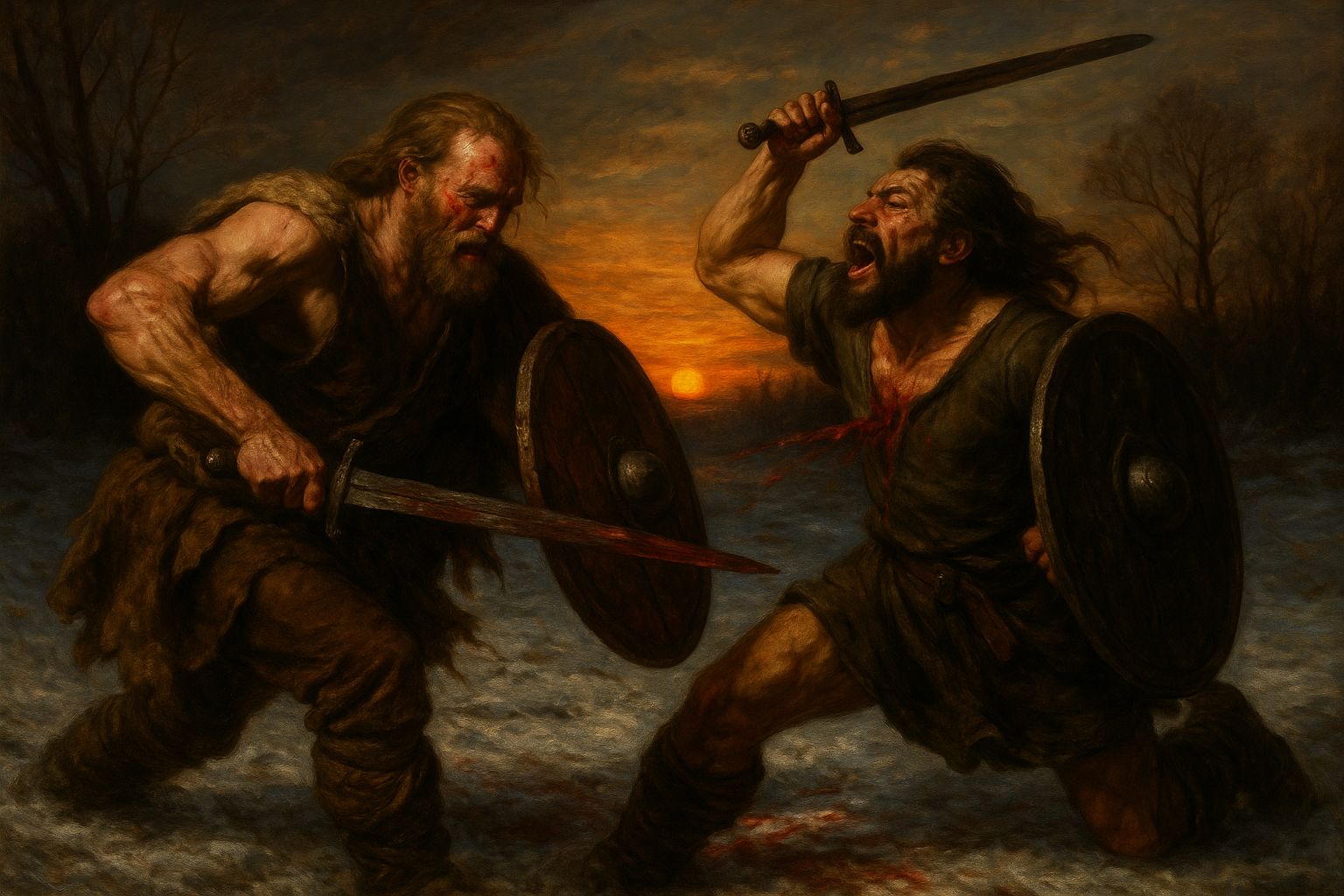
Every three years, the clans gather at the Althing, a massive assembly held on sacred ground. Here, disputes are settled, alliances are forged, and major decisions are made, though rarely without argument. Ceremonial duels, known as Holmgångs, are common and legally binding. The Althing is also a time of feasting, games, marriages, and trade.
The Althing is held at a different location each time, a different village hosting it. To host the Althing is a great honor, and the host is expected to provide a great feast.
Religion
The people worship the Dragon Pantheon. The Draknir people are very pragmatic about religion, though. If it works, it works, and they'll accept any god they find convenient, and their reaction to other religions tend to be curiosity, rather than fear or enmity.
Raiding and Trade
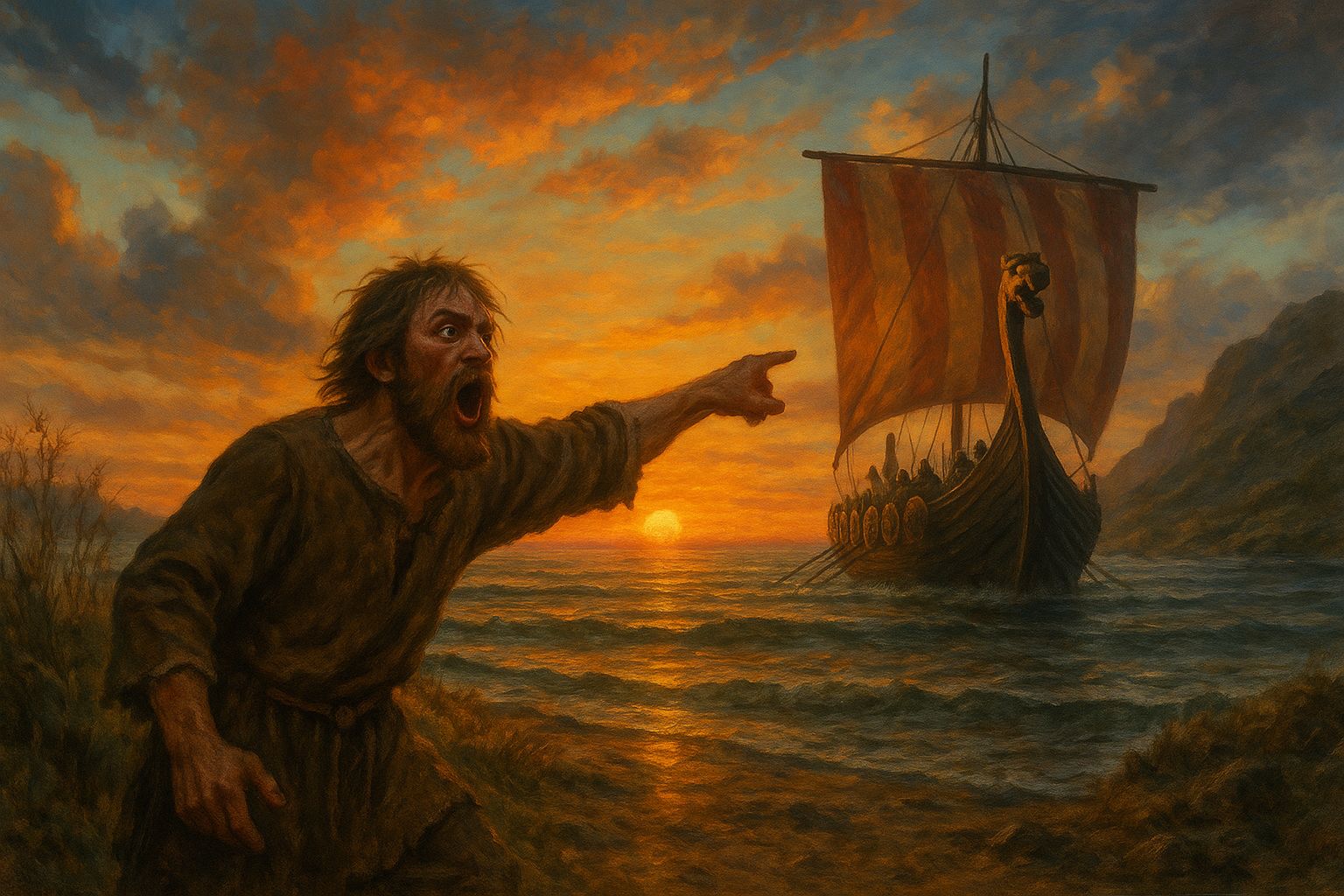
Raiding is a way of life and a path to glory. Longships with carved dragon heads sweep across the seas, raiding coastal towns and returning with slaves, gold, and treasure. However, they are not mere pirates. Trade is just as important. Northern goods, whale oil, furs, ivory, smoked fish, rare herbs, and skilled craftsmanship, are valued in many markets, including the Great Empire.
Slavery is common, though its nature varies. Most are traded southward, especially to imperial buyers. However, many remain in Draknir, and are typically given more leeway than slaves in other countries. In contrast with other slave countries, slavery is not seen as irreversible, a slave might, through service, competence and friendship be freed, and even become a blood bonded friend.
Whaling and Hunting
In the far north, massive whaling expeditions are both dangerous and revered. Great sea beasts are hunted with enchanted harpoons and sacred rites, and their bones, oil, and meat are essential resources. The hunt is seen as a spiritual journey and a rite of passage, and carries great religious importance.
Magic and Lore
While not known for formal magic schools, the north is home to Runeseers and Spirit-callers, shamans and wise folk who speak with spirits, carve rune-magic, and bargain with the remnants of the old gods and nature spirits. Blood-magic and bone-chants are whispered traditions. Some clans carry ancient heirlooms said to be gifts from the dragon gods themselves.
Military and Warfare
Warbands are loosely organized but deadly, close friends with shared experience. A warrior’s armor is often adorned with personal symbols, clan marks, and trophies from foes. Shields are painted with fierce beasts, and axes, spears, and swords are treasured possessions passed down through generations.
Berserkers, warriors who eat a certain mushroom to fight in a trance-like fury without fear, are both feared and honored. But, there is a downside. The mushroom will kill them within a few days, unless given an antidote which is only given to them if the battle is won.
Don't be fooled. While the Draknir value fearlessness and berserks, they also value clever ruses and sneaky tactics. An heroic victory is seen as great, but so is an elegant victory.
Festivals and Celebrations
The Dragonwake, held at the summer solstice, honors the gods with great fires, contests of strength, and the telling of heroic sagas.
During the Night of the Veil, when winter begins, offerings are made to Thunrath to protect the dead and keep the spirits quiet through the long dark.