The Colony of Albirica
Plundering invaders or spreaders of civilization
The ship creaked as it nosed into the Loarnach’s wide mouth, sails slackening in the afternoon wind. Marcus Quintilius Varro, a young envoy of the Senate, gripped the rail and stared. Ahead, the city of Corvessia gleamed like a jewel set in the river, its white walls and arched bridges catching the sun. Towers rose against the blue sky, and the red banners of the Empire snapped in the breeze.
The smell came first, spiced wine, fish smoke, dung, and the sharp tang of salt. Then the sound: a thousand voices shouting, bargaining, calling across the quays. Dockworkers pushed past legionaries on patrol, slaves bent under crates of grain, merchants waved scrolls and contracts in the air.
Marcus stepped onto the quay, boots striking stone slick with river spray. Immediately he was swept by the press of the crowd. A vendor thrust a basket of olives under his nose. A scribe offered his services in quick, clipped tones. A woman with red hair and shackles on her wrists was dragged past by a slaver, her eyes full of fury.
He recoiled, but the slaver only laughed. “Fresh from the Brannoc raids. The governor himself approves each shipment.”
A horn sounded, and all eyes turned upriver. Barges floated toward the harbor, their holds stacked with wheat. Soldiers lined their decks, sun glinting on helmets. At the same moment, another procession entered the city from the northern gate: gaunt men in chains, pushed along by legionaries with whips. The crowd cheered for the grain, jeered at the prisoners.
Marcus felt both awe and unease. This was no mere colony. It was a living artery, pumping blood and bread to the Empire. Here, wealth and cruelty mingled so closely that one could not be told from the other.
As he looked across the water to the northern bank, where the misty hills of Caerduin loomed, Marcus shivered. The governor’s reports had spoken of “stability” and “secure borders.” But standing here, with the cries of captives in his ears and the shadows of the Brannoc beyond, he wondered how much truth lived in those words.
Description
Albirica is the Empire’s iron foothold in Tir Albireth, a wedge driven between Caerduin to the north and the fertile lands of Ardenvale to the west. Established sixty years ago, it has grown from a beachhead fortress into a sprawling colony of farms, villas, and military outposts, all feeding grain and slaves back to the Empire.
The land is fertile, rolling river valleys that yield wheat, barley, and olives in staggering quantities. Ardenvale, though independent, is bound by treaties to the Empire, and its fields supply Albirica’s garrisons as readily as imperial citizens. Together, Ardenvale and Albirica are the breadbasket of the Great Empire, a lifeline that must never be cut.
Ships crowd the Loarnach estuary, loading grain, wool and slaves, and unloading soldiers, weapons, and luxuries for the governor’s halls. The trade routes to the imperial heartland are constant, but also perilous, pirates from Cliffside lie in wait, preying on the heavy cargo ships. Some whisper that even certain Caerduin clans work with these raiders, selling information on ship departures for gold.
After a pirate raid on Tavarra harbour, the Empire established a town and a naval base on Ossaria island, to keep the inlet to Loarnach safe, and the sea routes clear of pirates. They have managed to keep the inlet safe, but the Empire is a land power, not a sea power, so the pirates still have pretty much free roam of the sea, their agile ships easily outrunning the slow imperial galleys.
Corvessia, Capital of Albirica
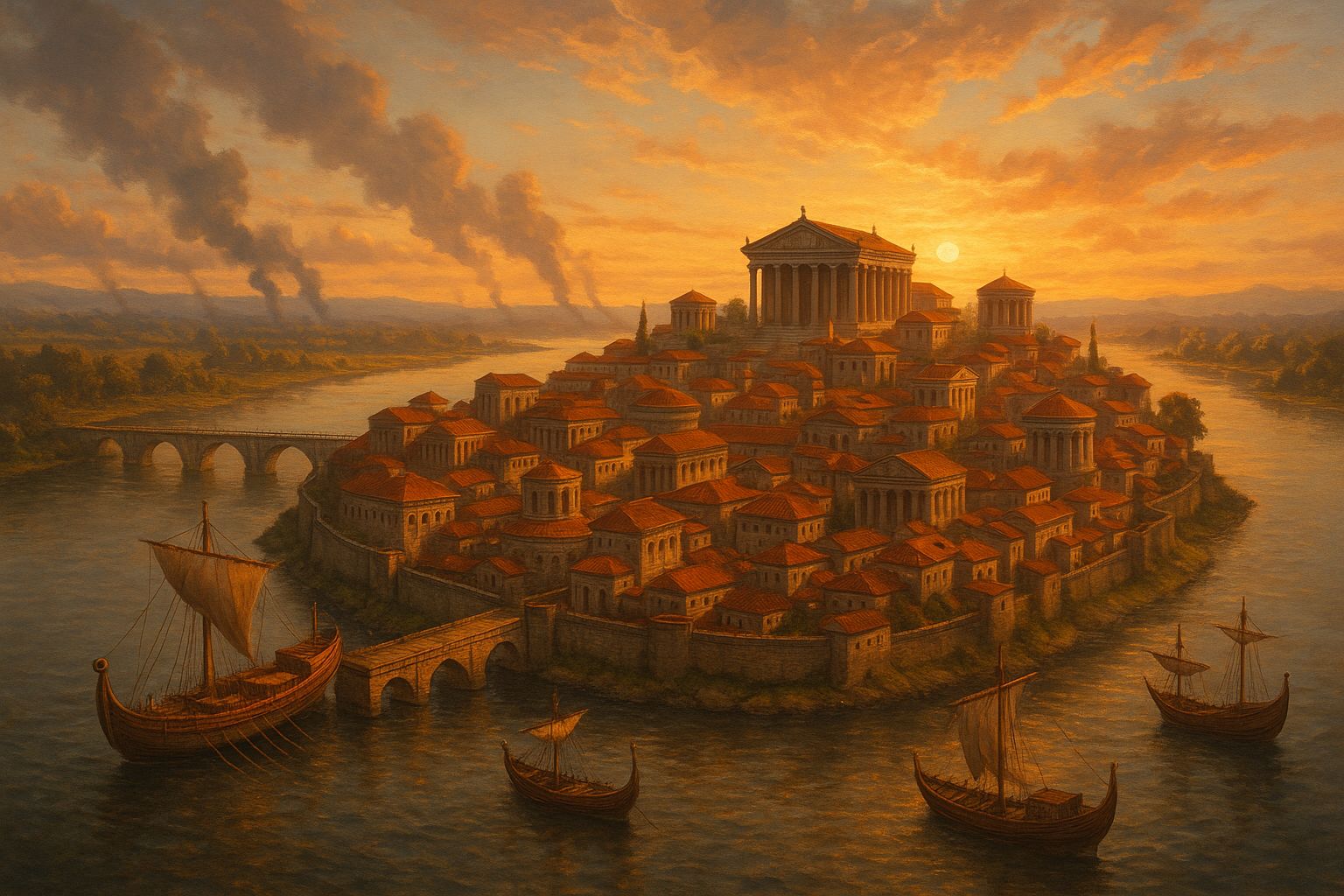
Corvessia rises on an island in the Loarnach river, its white walls gleaming like a jewel in the water. Bridges of stone link it to the banks, heavily guarded by towers. The city itself is a mixture of old and new: at its heart lies the Governor’s Palace, an austere fortress of marble and bronze; around it stretch paved streets, shops and amphitheaters where slaves fight for amusement.
Corvessia thrives on wealth wrung from war. Its markets are filled with Caerduin captives, its taverns loud with legion songs, its wharfs heavy with ships carrying grain. The slave markets are infamous, and Caerduin women, prized for their beauty and fiery spirit, fetch the highest prices. Caerduin men are often bought in bulk and sent either to gladiatorial arenas in the Empire or broken into labor gangs in the fields.
The Governor
Governor Lucius Aurelian Marcellus is an old man now, gray-haired and cunning, but his eyes are still sharp. He came to Albirica as a younger man, leading the first legions across the Brannoc, and has remained ever since. He knows the clans of Caerduin better than most of their own chiefs, having bribed, divided, and crushed them for decades.
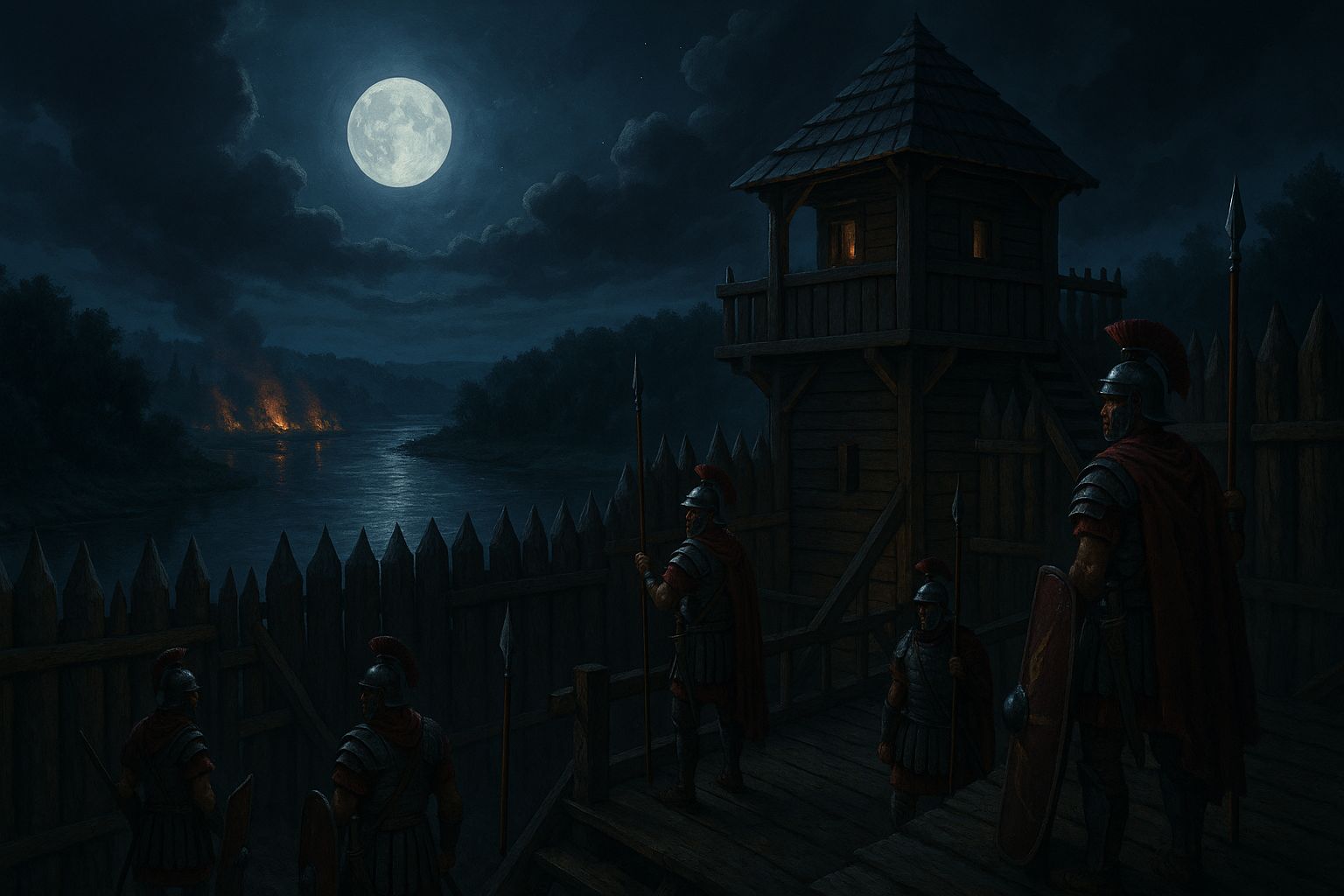
It was Marcellus who, fourty years ago, abandoned the dream of conquering all Caerduin. He realized the land was too fractured, too wild, too costly to tame. Instead, he fortified the Brannoc river line, turning it into an unbreakable wall of forts and watchtowers. Since then, the border has become a grinding war of attrition, a meat grinder where clan raids are smashed again and again against imperial steel. There is a cost in blood for both sides, but the price is higher for the clans, and the empire has more blood to pour into the fray.
Marcellus rules as both politician and general. He plays the clans against each other, rewarding those who bow to imperial authority, punishing those who defy him, and sows dissent between them, fueling infighting. To the Senate in the Empire, he sends grain, slaves, and victory reports, making Albirica appear stable and profitable. To the legionaries, he is respected as a commander who never wastes lives without cause.
The Legions of Albirica
A large legion force guard the colony, spread across the Brannoc line, the Loarnach valley, and the coastal forts. Their discipline has turned the frontier into a stalemate. Raids into Caerduin bring a steady stream of captives, both to weaken the clans and to supply Corvessia’s markets.
The soldiers view the colony as both hardship and reward. Many die in the endless border war, but those who live enrich themselves with plunder, slaves, and the pleasures of Corvessia. The legion is notorious for holding Caerduin women as barrack girls.
The Traitor Clans
Several Caerduin clans, broken by defeat, swore fealty to the Empire and now serve as auxiliaries. They hold lands within the colony but must answer to the governor. Among them are:
- Clan Crevach, infamous oath-breakers, who guide imperial patrols through the hills.
- Clan Calluach, who lost their river holdings and now serve as shipwrights and scouts for imperial fleets.
- Clan Branwynn, who had large agricultural areas and chose to switch sides rather than retreating north.
- Clan Corvech, who built the original town, which is now Corvessia. They are now completely integrated in imperial culture.
These clans enjoy wealth and safety, but they walk a knife’s edge. The Empire distrusts them as opportunists, while Caerduin curses them as traitors. Their warriors are often used as expendable scouts in dangerous raids, blood used to spare imperial lives.
Life in the Colony
For colonists, Albirica is a land of opportunity. Farms flourish on conquered soil, villas rise on hillsides, and markets overflow with goods from Ardenvale and beyond. Merchants grow fat on trade, soldiers earn land as reward for service, and Roman-style culture spreads through Corvessia.
But beneath the surface lies constant fear. At night, fires sometimes blaze on the horizon where raiders slip through. Pirates stalk the coast. And always the Brannoc looms, its northern bank a land of shadows, where a single shout can bring hundreds of painted warriors down upon the fields.