Magic and How it Works
| Story |
|---|
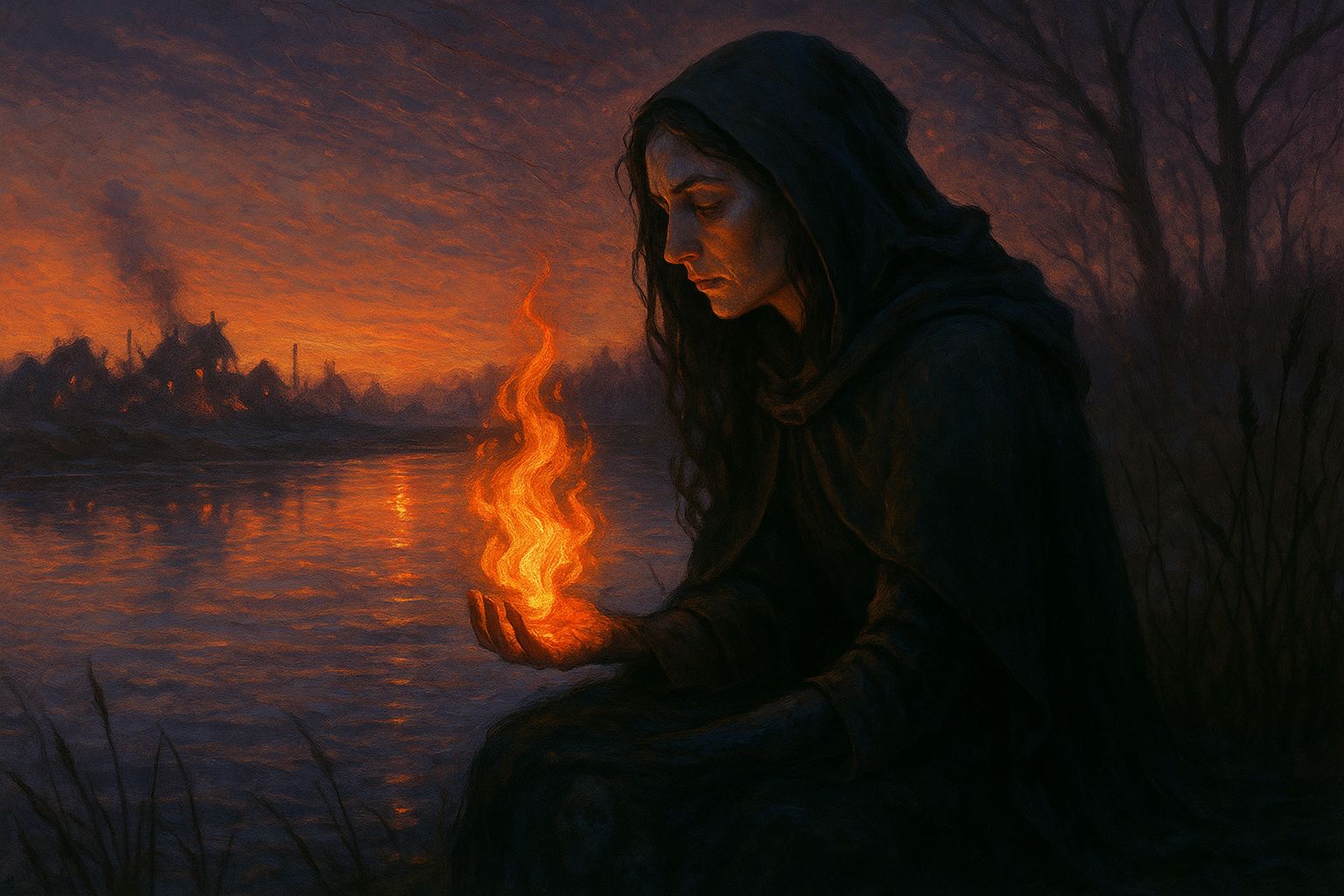
| The mage sat by the river at dusk, watching the light bleed across the water. The air shimmered faintly - not from heat, but from the residue of what she had done. |
| Around her, the world was quiet. The village behind her no longer burned; it had run out of things to burn. The spell had worked. The plague was gone. Every corpse she had seen coughing that morning now lay still, serene, untouched by pain. |
| Her hands shook. The river glowed faintly where her blood had touched it. She knew the signs: the slow blackening of the veins, the whispers just at the edge of hearing. Magic always leaves something behind. |
| She looked down at her reflection, but it wasn't hers. A dozen faces flickered in the surface, the farmer's wife she'd healed last year, the child she'd buried, the soldier whose wound she'd sealed too late. All of them were her now, pieces of what she had taken and traded and broken to make things right. |
| Behind her, the wind moved through the reeds. It carried a thousand voices, shamans and seers, healers and necromancers, all those who had once reached too far and left their mark upon the world. |
| "You did well," they whispered. "You did what must be done." |
| She smiled, bitterly. "We always do." |
| She reached for the flame once more, letting it bloom in her palm. It did not burn her now. It was part of her, as natural as breath. She could feel the life around her, roots beneath the soil, the hearts of sleeping beasts, the pulse of the river. All of it waiting, all of it alive. |
| Power hummed beneath her skin, endless and patient. She could heal what was broken. She could raise the dead. She could remake the world. |
| She could, but she didn't. |
| Instead, she let the fire die, and the night grew quiet again. |
| When dawn came, there was nothing left but the river, and the faint smell of ash, proof that magic had passed through this place, and that the world, once again, had balanced its debt. |
Magic in the World
Magic is not a gift, nor a blessing, nor a science. It is a wound in the world, a place where the boundaries between thought and reality grow thin. To use it is to step through that wound, to reach into something that does not wish to be touched.
Every act of magic takes something, life, time, sanity, memory, and gives something in return. It is not random, but it is never safe. The most ancient texts speak of a balance, an unseen principle that demands equivalence. To call forth power is to pay for it. The cost may be flesh, or love, or the slow decay of the soul, but it is always paid.
Some scholars describe magic as a current that flows through all living things, older than gods and beyond good or evil. Others say it is the language of creation itself, and that to speak it is to trespass upon the tongue of divinity. The truth, as always, lies somewhere in the space between belief and blasphemy.
What all agree upon is this: magic is alive. It listens. It remembers. And it never forgets those who try to master it.
The Principles of Magic
Magic follows no single set of laws, yet certain principles are known to those who study or survive it:
1. Equivalence
Nothing is created from nothing. To heal is to weaken. To summon is to sacrifice. To preserve life is to draw from death. Every act must balance, though few mages ever see the scale until it tips against them.
2. Resonance
Magic clings to what it touches. Blood remembers rituals. Places steeped in power hum long after the spell is gone. Those who work magic often bear its mark, in their eyes, their voices, or the weight of their dreams.
3. Intention
The world answers not to words, but to will. A spell is less a command than a declaration of intent, and even the smallest doubt can warp the result. The stronger the emotion, love, fear, rage, the stronger the outcome, and the greater the danger.
4. Contagion
Magic spreads. A single act can ripple outward for years, altering minds, land, even bloodlines. There are families born from a single spell cast long ago, their lives forever bent around the echo of that moment.
5. Silence
Magic grows stronger in secrecy. The world does not tolerate open wounds. Those who use it too loudly, too often, draw the attention of things that hunger for it, spirits, gods, or worse, the raw will of magic itself.
| Story |
|---|
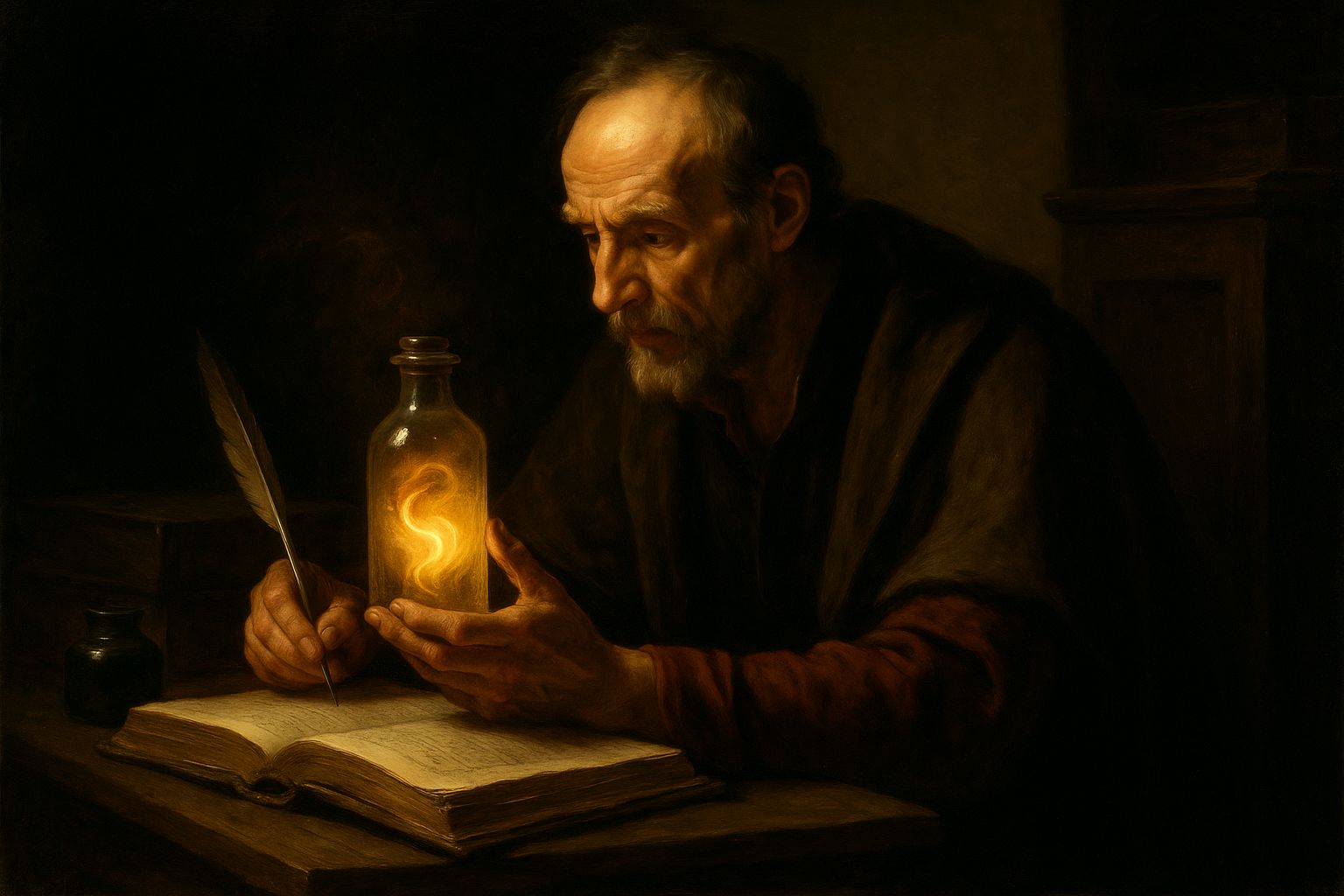
| They brought me a vial of light once. |
| Not fire, not liquid, light. It moved like smoke inside the glass, alive and thinking. The mage who trapped it had died soon after, of course. They always do. |
| I keep it in my study. I tell myself it's for research, but some nights I catch myself speaking to it. It hums faintly when I write. Sometimes I think it listens. |
| In my years with the Academy, I have studied every theory of magic ever written. I have read that it is will, that it is hunger, that it is the voice of the world made flesh. None of the definitions hold. Magic refuses to stay still long enough to be named. |
| We call it the Art to make it sound civilized, as though painting with blood and pulling life from air were any nobler than digging graves with one's hands. But I have seen what it does to those who practice it. I have seen witches who rot from within, summoners who forget their own names, seers who claw out their eyes to stop the visions. And yet, they all speak the same final words before the end: It was worth it. |
| Once, I asked a dying sorcerer why he kept pushing when he knew the cost. He smiled through broken teeth and said, "Because I could." |
| That is the essence of it, I think. Magic is not good, nor evil. It is the reflection of what we are when no one is watching - curiosity without restraint, mercy without limit, hunger without end. |
| When I die, they will burn my notes, as they always do. The Academy calls it "containment," but it is fear. They fear that the words will remember. |
| Sometimes, when I cannot sleep, I open the drawer and look at the vial again. The light still moves, soft and slow, like the last breath of a dying god. |
| It hums a little louder now. |
| I think it has learned my name. |
The Paths of Magic
Over the ages, magic has shaped those who wield it as much as they have shaped it. Each form is both an art and a philosophy, a reflection of how mortals grasp at the unseen.
Witches are corruption.
The very act of attaining power is for them tainted by corruption, from the very first step. They twist what already exists, flesh, soil, heart, to suit their desire. Their power seeps, infects, transforms. Theirs is the slow rot of will made manifest, where every charm or potion stains the soul that brews it.
Summoners are hubris.
They call forth what should remain beyond reach, demons, spirits, entities born from other planes. They believe they can bind the infinite with words. The boldest rise as kings for a day; the rest are devoured by what they dared to command.
Sorcerers are intellect.
They approach magic as knowledge, a discipline of precision and control. Yet the mind is a fragile vessel for infinity. In time, their reason cracks, and their mastery becomes obsession, the pursuit of understanding for its own sake, even at the cost of everything human.
Shamans are communion.
They do not command, but listen. Their magic is relationship, with spirits of ancestors, storms, and beasts. They are bridges between worlds, but bridges wear down with every crossing. The danger is not corruption, but losing the self to the voices beyond.
Seers are revelation.
They see truths mortals were not meant to bear, futures that cannot be changed, deaths that cannot be undone. Their gift is sight, their curse is knowing. Every prophecy brings clarity and madness in equal measure.
Necromancers are defiance.
They reject the finality of death, tearing open the veil to steal from the silence beyond. Their art is a denial of nature itself, and nature answers with decay. The longer they command the dead, the less they belong among the living.
Mentalists are violation.
They walk through the doors of others' minds, bending memory, thought, and perception. Every intrusion leaves a mark. Their craft is not domination alone, but contamination, for when two minds touch, both are changed.
Healers are burden.
The kindest hands are always the most scarred. Their gift is mercy, but mercy wears heavy. Each life they save leaves another scar. The kindest healers die young, and the survivors forget how to weep.
Folk magic is faith.
The oldest and simplest form of power, a whisper to the fields, a coin to the sea, a knock on wood. It endures because belief gives it shape. The wise know better than to mock it, for the world has always listened more closely to faith than to reason.
Druids are inevitability.
They serve the cycle, birth, decay, and renewal, with neither mercy nor malice. To them, life and death are the same breath drawn in different directions. They do not fight the turning of the world; they are its turning.
The Cost of Power
No magic is free. Some pay with blood, others with sanity, and some with time itself. The greatest mages do not die, they erode, their memories scattering like dust into the air they once commanded.
But power, once known, cannot be forgotten. It lingers in the world like a scar, glowing faintly beneath the surface of things. In the cracks of cities and the roots of mountains, magic still hums, patient, watchful, waiting for the next fool to touch it.
| Story |
|---|
| The first time the mage came, she made the rain fall. |
| The fields had cracked open that summer, and the wheat had died standing, stiff as kindling. We prayed to every god we could name, buried coins at the crossroads, sang the old songs to the soil, but the earth stayed dead. Then she came walking out of the storm, barefoot, eyes like a winter sky. |
| She said nothing. She just pressed her hand to the ground and whispered. When she stood, the smell of rain was everywhere. By nightfall, the river had broken its banks. We called her blessed. |
| That year, the harvest was gold again. We gave her bread, a roof, a name to call her by. She smiled once, but never twice. When she left, the air felt lighter, like something had been holding its breath. |
| The second time she came, it was because the fever had returned. Children burning from the inside, tongues black, eyes gone glassy. We begged her for help. She looked at the bodies, then at us, and said, "There will be a price." |
| We told her to take it. |
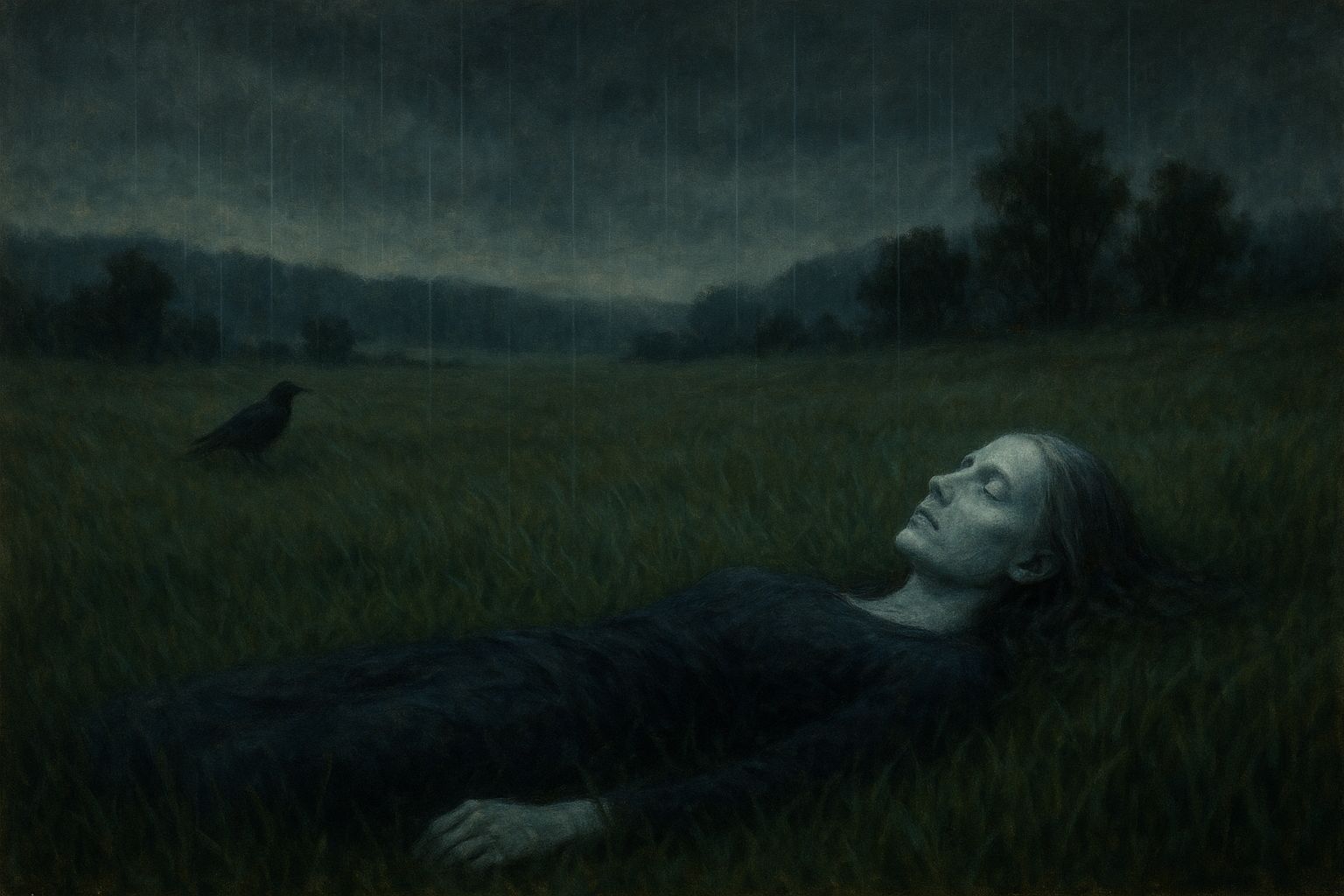
| That night, the fever broke. By morning, everyone was whole again - everyone but her. She lay in the field where the wheat had been, eyes open, skin the color of frost. The crows didn't touch her. The grass grew thick and green around her body, and when we buried her, it stayed that way, even through winter. |
| The next year, we harvested twice what we'd ever grown before. The soil was darker, richer. The children ran laughing through the fields again. We thanked the gods, but we left a small loaf on her grave all the same. |
| Every spring since, when the first rain falls, the earth smells of ash. We take it as a sign that she still watches - not kindly, not cruelly, just keeping the balance. |
| Some say that's all magic really is. |
| It fixes what's broken, the world always balances its debt. |
To the wise, magic is not evil, but indifferent. It does not punish or reward. It merely answers. The cruelty lies not in the power itself, but in those who think they can use it without consequence.
The world remembers every spell ever cast. The ashes of burned villages, the forests grown overnight, the children born with eyes that shine like stars, all are echoes of the same truth:
Magic is life reaching beyond its limits. And life, when stretched too far, always snaps back.