Folk Magic
| Story |
|---|
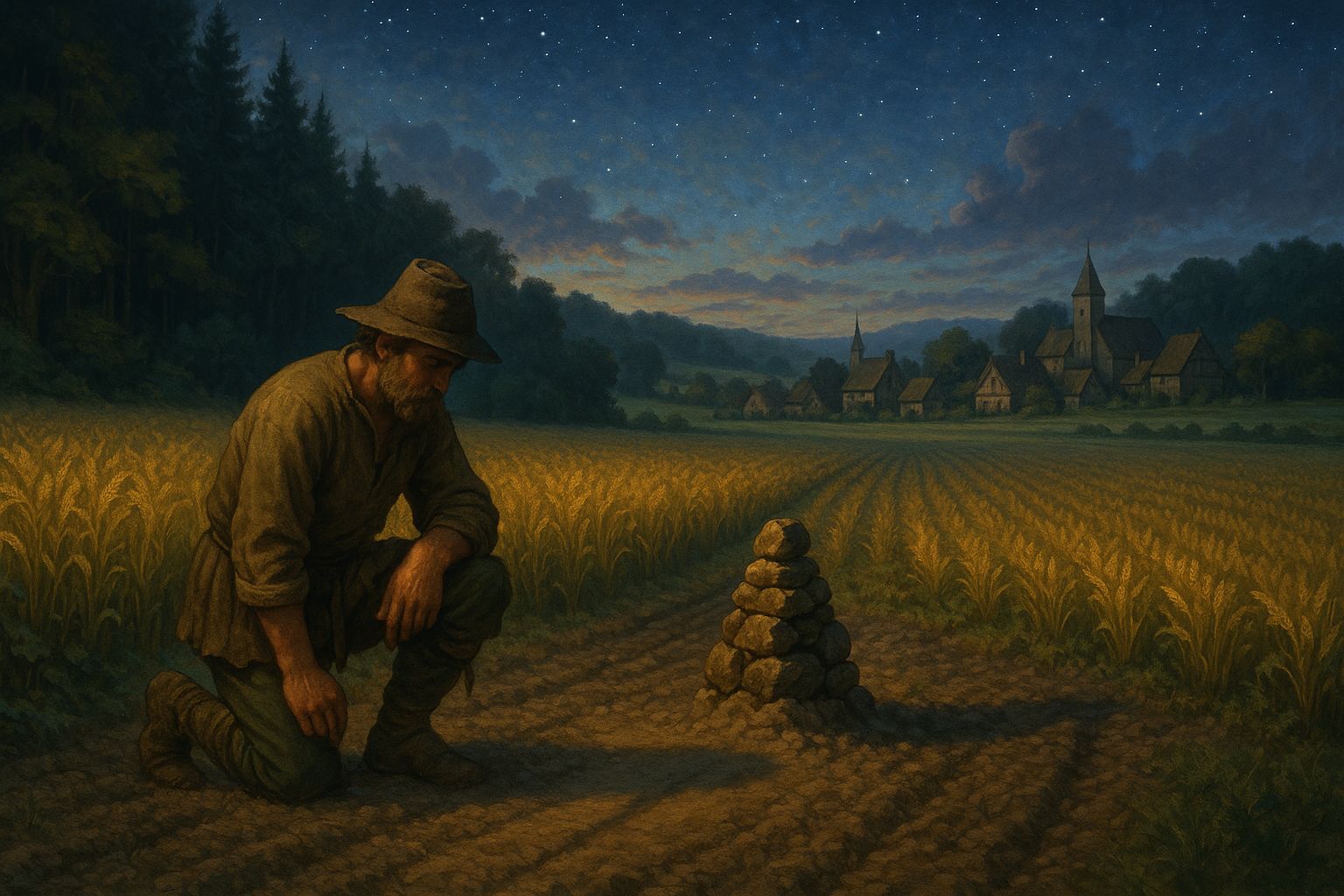
| The night before planting, the farmer walked the length of his field beneath a sky thick with stars. The soil was cool beneath his bare feet, soft from spring's first rain. In one hand, he carried a small stone, worn smooth by years of worry and prayer. |
| At the edge of the field stood a cairn, barely a man's height, built stone by stone each season by his father, and his father before him. He placed the new stone on top and whispered the words he barely remembered, old syllables that meant nothing and everything. Then he spat once on the ground and turned to go. |
| Behind him, the wind shifted. The night seemed to listen. |
| In the morning, his daughter found the cairn collapsed. The top stone had rolled into the furrows, half-buried among the seeds. She called for her father, but he was already in the field, kneeling, his hands deep in the earth. He said he was only checking the soil, but when he looked up, his eyes were wet. |
| That summer, his crops grew higher than anyone's. The villagers asked what charm he'd used, what prayer he'd spoken. He only shook his head and said, "I think the field remembered me this year." |
| No one noticed how, at dusk, the cairn still cast a shadow, though nothing remained of it but dust. |
| Story |
|---|
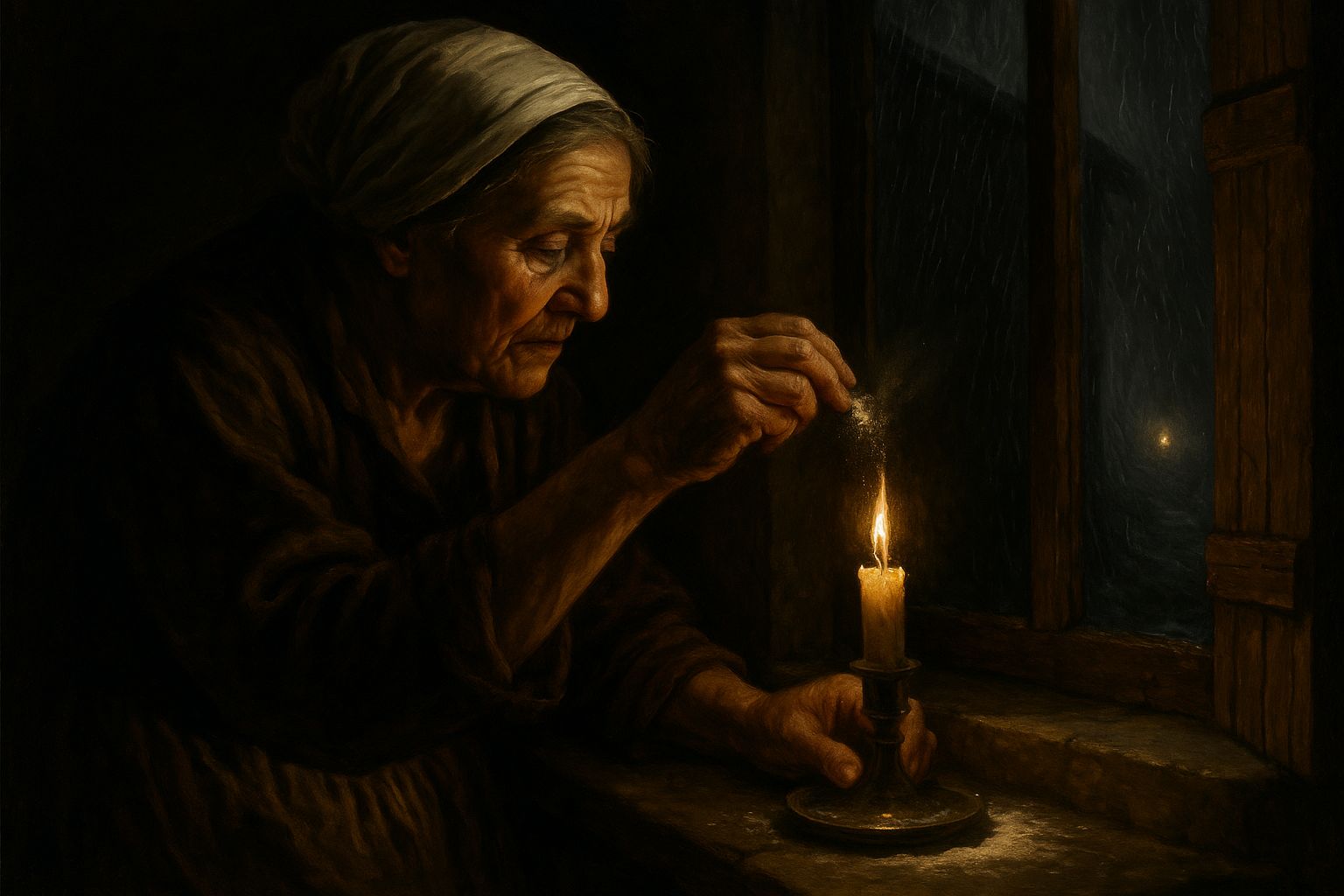
| The old woman lit a single candle and set it by the window. Outside, the wind clawed at the shutters, carrying the scent of rain and salt. She muttered to herself as she sprinkled a pinch of flour onto the flame, an old trick her mother had taught her, to keep travelers safe on stormy nights. |
| At the edge of the village, a young man trudged through the rain, his cart wheel cracked, his lantern drowned. He thought he saw a flicker ahead, a small light through the downpour. He followed it, though there should have been no houses that far from the road. |
| By morning, the storm had passed. The woman woke to find the candle burned to the wick, the flour hardened into a white crust on the sill. She sighed, scraped it away, and went about her chores. |
| Later that day, word spread that a merchant's son had stumbled into town at dawn, soaked and shivering but alive. He swore he'd seen a candle burning in the storm, guiding him home. |
| The old woman only smiled. "Then someone else remembered the words," she said. But that night, when she lit her candle again, she added another pinch of flour, just in case the road had more lost souls than before. |
Folk Magic
Folk magic is the quiet current that runs through ordinary life, practiced not by scholars or priests, but by those who till the soil, mend nets, and carry water. It is the oldest kind of magic, born not from study but from need, shaped by generations who learned that a whispered word or a small ritual might tip the world a little in their favor. It asks for no grand sacrifices, only habit and belief.
The Everyday Rituals
Every task has its charm. The farmer piles stones at the edge of his field before the first planting, one for each family member, to bring health to the crops. The shepherd ties bits of colored wool in the fences so wolves will be confused and lose their hunger. A fisher spits on his bait for luck and never counts his catch aloud until the boat touches shore.
Women place iron nails under cradles to keep away nightmares. Travelers drop a pebble at every crossroads to mark their return path. The weaver hums while threading her loom so the thread will not tangle. When the hunter sights his prey, he blows softly on the arrow, a wind which will make it fly true. Lovers exchange lockets of hair to keep each other close.
The Powers of Small Things
No one calls these acts "magic," yet no one doubts their importance. They are small negotiations with the unseen, not orders, not commands, but quiet gestures of respect. Folk magic depends on the principle of balance: if you take, you give; if you ask, you thank.
The people believe that spirits live in everything, in stones, in rivers, in doorways, even in the air between words. A blessing before a meal honors the grain and the soil. A coin tossed into a fountain is not waste, but a gift to the spirit of the water. When bread falls to the ground, it is kissed before being thrown away, so the spirit of hunger will not take offense.
Sometimes, though, a charm forgotten or a word misremembered can twist its meaning. A blessing may sour, a song might call the wrong listener.
To the common folk, these gestures are not superstition, they are simply the way the world works. They keep the balance steady.
Seasons and Omens
Folk magic follows the rhythm of the year. In spring, garlands are hung on doors to welcome renewal. In summer, ashes from the hearth are scattered on fields to ward off blight. In autumn, candles burn in windows so wandering souls can find their way home. In winter, a bowl of milk is left outside for the spirits that walk in the frost.
Omens fill daily life: a bird flying into the house means news from afar; spilling salt demands an offering of a pinch thrown over the shoulder; sneezing before dawn foretells rain. To break a broom, tear a fishing net, or sing during a storm invites misfortune. And always, there are the rules that no one remembers the reason for, never whistle at night, never sew after sunset, never name a child before its first full moon.
The Faith of the People
For the common folk, magic is not separate from faith. The gods are distant, their temples tall and cold, but the spirits of field, hearth, and river are close and listening. Folk magic is how people speak to them, not with prayers of grandeur, but with acts of familiarity.
A farmer will pray to the god of harvest at the temple, but he will also bury a crust of bread in his field so the earth itself will eat beside him. A sailor may make offerings at the shrine of storms, yet he will still pour a little wine in the ocean for a safe passage.
In some lands, temples quietly tolerate these customs, calling them "harmless habits." In others, such as Para Omros, they are outlawed as heresy. But even there, behind closed doors, mothers still hang charms over cradles and burn small offerings in secret.
The Skeptics and the Believers
Scholars scoff at folk magic, calling it coincidence and self-deception. "The harvest comes because of the sun and rain," they say, "not because of a pile of stones." And yet, when a drought lasts too long, even the learned are seen placing coins on old shrines.
What none can deny is that folk magic endures. Empires rise and fall, faiths shift, tongues change, but the fisherman still spits on his bait, the traveler still greets the crossroads, and the baker still draws a cross in flour before kneading the dough.
Maybe it works. Maybe it doesn't. But it gives comfort, and in a world ruled by powers beyond understanding, comfort is its own kind of miracle.
Examples of Folk Magic
- Miners carry a pine cone from the surface in their pocket so they will not forget the way back.
- Shepherds whisper the names of their flocks before the first frost, believing it helps them survive winter.
- Fishermen tie knots in their nets to trap luck, and untie one each time they set sail.
- Blacksmiths spit into the forge before striking, to share their breath with the fire.
- Children draw symbols on doorframes in ash to keep away sickness.
- Travelers keep sprigs of yarrow in their boots to prevent blisters and ward off spirits.
- Midwives always wash their hands in milk before delivering a child, "so the first touch will be sweet."
- Soldiers carry small bones carved with their mothers' initials, believing the dead will watch over them if they fall.
- Newlyweds walk around their house three times before entering, to confuse any jealous spirits that might follow.
The Small Magic of Survival
Unlike grand sorcery, folk magic asks for no price. It does not twist the soul or scar the body. Perhaps it works, perhaps it doesn't, but it gives shape to hope, and hope is a kind of power.
When the wind howls through the trees and the world feels wide and cold, a whispered charm, a knock on wood, or a pinch of salt over the shoulder feels like enough to keep the darkness at bay. That is the secret of folk magic: it is not about changing the world, but about reminding people they are still part of it.
Possible Secrets
The Small Gods
Scholars dismiss folk magic as meaningless superstition, yet ancient texts speak of countless "small gods" that once walked among mortals. These spirits never left, they merely learned to live within gestures and words. Every charm, song, and ritual feeds them with faith, keeping them alive in secret. The pile of stones, the salted threshold, the whispered blessing - each is a quiet act of worship to something older than the temples remember.
The Pattern Beneath
A few philosophers believe that folk magic works because it follows an unseen pattern that underlies all magic. The gestures and sayings may look random, but together they form a vast language, a code written by instinct and time. Those who can read this pattern could, in theory, control magic itself without casting a single spell. But none who claim to have glimpsed it remain entirely sane.
The Silent Bargain
In some regions, it is whispered that every act of folk magic is a bargain made long ago. The ancestors promised obedience, harvests, or good weather in exchange for certain rites, and the common folk still pay, though they have forgotten what they owe. If the rituals ever stop, the debt will come due, and no one knows who will come to collect.
The Sleeping Ones
Old midwives tell of spirits buried beneath crossroads and hearthstones, "sleeping ones" who dream the world safe. Each charm, each song, is a lullaby keeping them at rest. If people ever cease to practice these small magics, the sleepers will stir, and their dreams will end, and with them, perhaps, all peace.
The Hidden Lineage
Some healers and seers whisper that folk magic is not merely instinct but inheritance. The ability to make the small rituals work runs in certain bloodlines, diluted remnants of divine or ancient magic. In those families, even a muttered charm can spark real power, though most never realize it. Such bloodlines are quietly hunted by those who wish to study or exploit them.
The Mirror of Faith
There are rare accounts of folk charms that do not just influence the world, but reflect the believer. The more faith one places in them, the more power they gain. A child who truly believes a rhyme will ward off fever may do so; a skeptic who performs it without conviction gains nothing. If belief is the fuel, then perhaps the greatest magic is not in the charm at all, but in the mind of the believer.
The Vanishing Blessing
In regions where folk customs have been outlawed or forgotten, misfortune begins to spread, small at first, then growing. Wells sour, crops wilt, ships founder. The priests insist it is coincidence, but old farmers whisper that the world itself is grieving the loss of its oldest prayers.
Adventure Hooks
The Harvest Stone
While investigating a dispute between farmers, the adventurers notice one field thriving while the rest wilt. A small pile of stones stands at its edge, the old blessing stones the others abandoned years ago. The clue may reveal who still honors forgotten ways, and who has been quietly ensuring their own good fortune.
The Lost Button
A noblewoman's child falls ill after she throws away an old charm - a button sewn with her grandmother's hair. The adventurers are hired to find a "cure," but the illness fades only when the lost button is found and returned.
The Whispering Net
A fisherman's corpse is found tangled in his own net. The net have knots tied in it. Locals claim these markings were for luck, but someone has been tying them wrong on purpose.
The Cold Hearth
An abandoned house seems colder than it should be. In the ashes of the hearth, someone finds a single unburned seed. It was meant to be burned every year to bring warmth to the home, a ritual forgotten just before the family vanished.
The Crossroads Pebble
At a lonely crossroads, travelers leave small piles of pebbles for luck. One evening, a merchant disappears after kicking one such pile. The adventurers find his footprints circling endlessly in the dust, a subtle hint that the old charm might have held more truth than anyone thought.
The Well Token
While drawing water from a village well, someone finds a tarnished coin engraved with strange markings. The locals insist it was tossed in as an offering centuries ago, and that removing it might have broken something delicate.
The Candle Line
Inside a cottage struck by lightning, the only untouched spot is a neat row of candle stubs on the windowsill. Each candle bears a faint mark, like a sigil drawn in wax. Finding who placed them may reveal why the storm chose that house.
The Hunter's Knot
A slain deer is found hanging in the woods, marked with small woven charms of grass and bone. Hunters say these knots keep arrows true, but one knot has been tied backward. The adventurers notice the detail just in time to realize they're being watched.
The Empty Cradle
A grieving mother insists her baby was taken by "the cradle spirit." Beneath the cradle, carved faintly into the wood, is a small symbol, one the adventurers have seen before, in a different home, linked to a charm meant to invite the spirits to protect infants. This one, however, was carved upside down.