The Divine Court of Flame, The Faith of Zarhalem
The religion of the Zarhalem is centered on a grand polytheistic pantheon known as the Divine Court of Flame. It is a sprawling, ancient belief system rooted in fire, stars, and fate, with gods and goddesses representing celestial forces, elements, human desires, and the harsh truths of the desert. Every temple, every ritual, and every law in Zarhalem flows from this faith.
At the heart of the Divine Court is the belief that the gods speak through their chosen: the Khalif. He is not divine himself, but he is the Nehakar, the Voice of Flame, the only mortal empowered to interpret divine will and enact it upon the world.
The Pantheon
The Divine Court is said to dwell in the sky's hidden layer, where stars are not lights but the burning halls of the gods.
The major deities
Ikaran, the Burning King
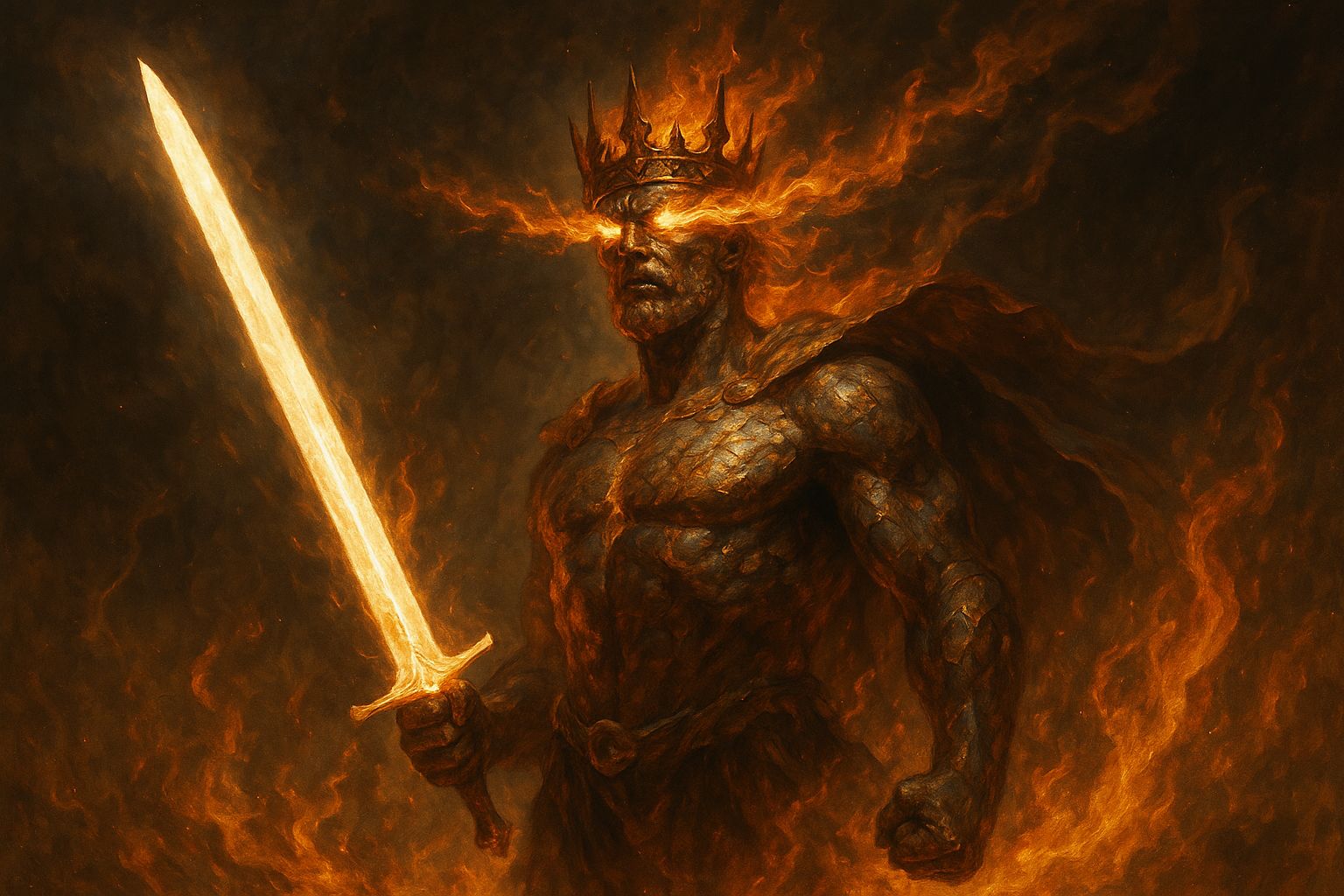
God of strength, conquest, sun, and legacy. Patron of rulers and warriors. Ikaran is shown as a crowned man made of bronze and fire, with a sword of white heat. He blesses victory and divine rule. The Khalif claims descent from his sacred bloodline, and Ikaran's favor justifies his absolute authority.
Ashama, the Lady of Flame
Goddess of purity, judgment, and divine order. She is the queen of the pantheon and consort of Ikaran. Often depicted as a woman veiled in golden fire, holding a scepter of molten glass. Her temples serve as courts of law and centers of governance. Priests of Ashama are stern and feared.

Neshet, the Whispering Flame
Goddess of secrets, dreams, prophecy, and forbidden knowledge. She is the patron of viziers, sorcerers, and schemers. Her shrines are small, always shadowed, filled with smoke and mirrors. Her followers interpret dreams, cast omens, and walk the line between wisdom and madness.

Zirhal, the Flame Below
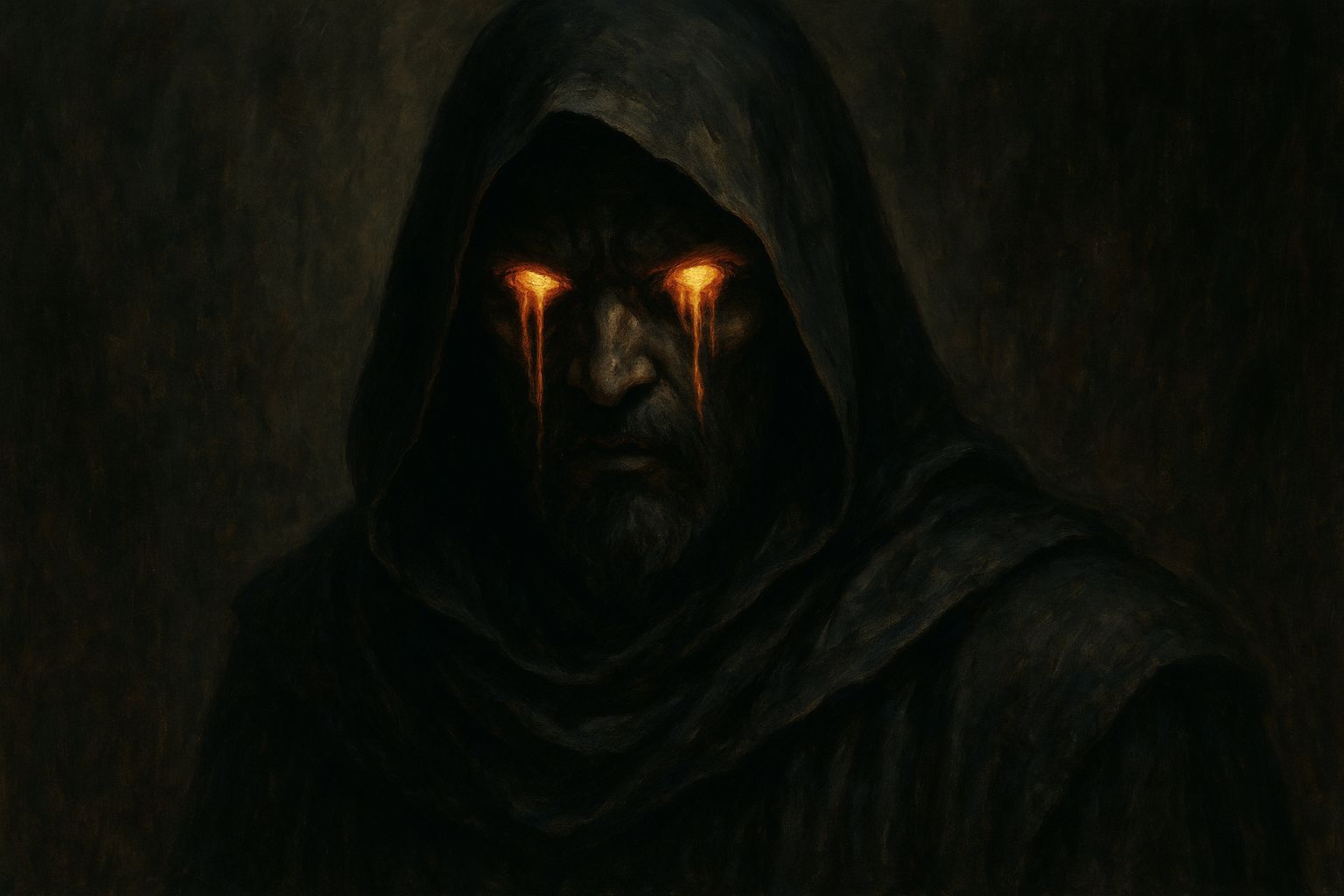
God of death, the underworld, and endurance. He rules the Ashen Deep, the final resting place of all souls. His followers tend to the dead, embalm the honored, and maintain catacombs. He is not evil, but stern and relentless. His symbol is a cracked torch that never goes out.
Qilara, the Ember-Dancer
Goddess of love, music, beauty, pleasure, and the arts. Said to move like flame on silk. Dancers, musicians, and lovers worship her. Her festivals are filled with song, color, and wine. She is often invoked in marriage and childbirth.
Tahrun, Lord of the Sands
God of storms, desert, salt, and suffering. A cruel and wild god, patron of survival and hardship. He is worshipped most in the salt camps and mines, where offerings are made to keep him from striking. His priests are few but respected.
Malqath, Binder of Chains
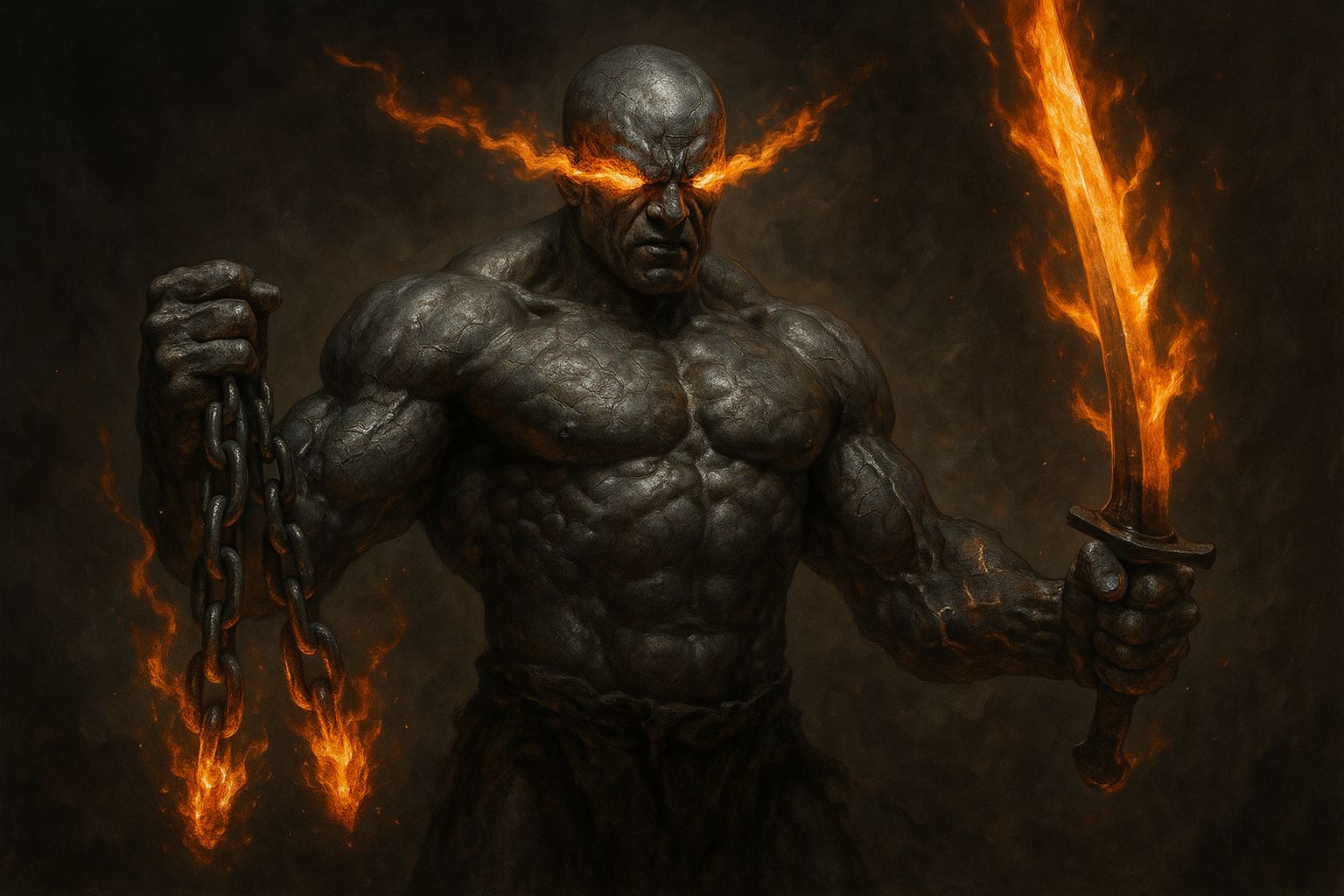
God of oaths, slavery, and law. A cold, iron-willed deity. Malqath enforces contracts, punishes betrayal, and sanctifies hierarchy. His temples keep slave registers and act as centers for legal disputes. He is unpopular but deeply feared.
Djinn as Fallen Gods
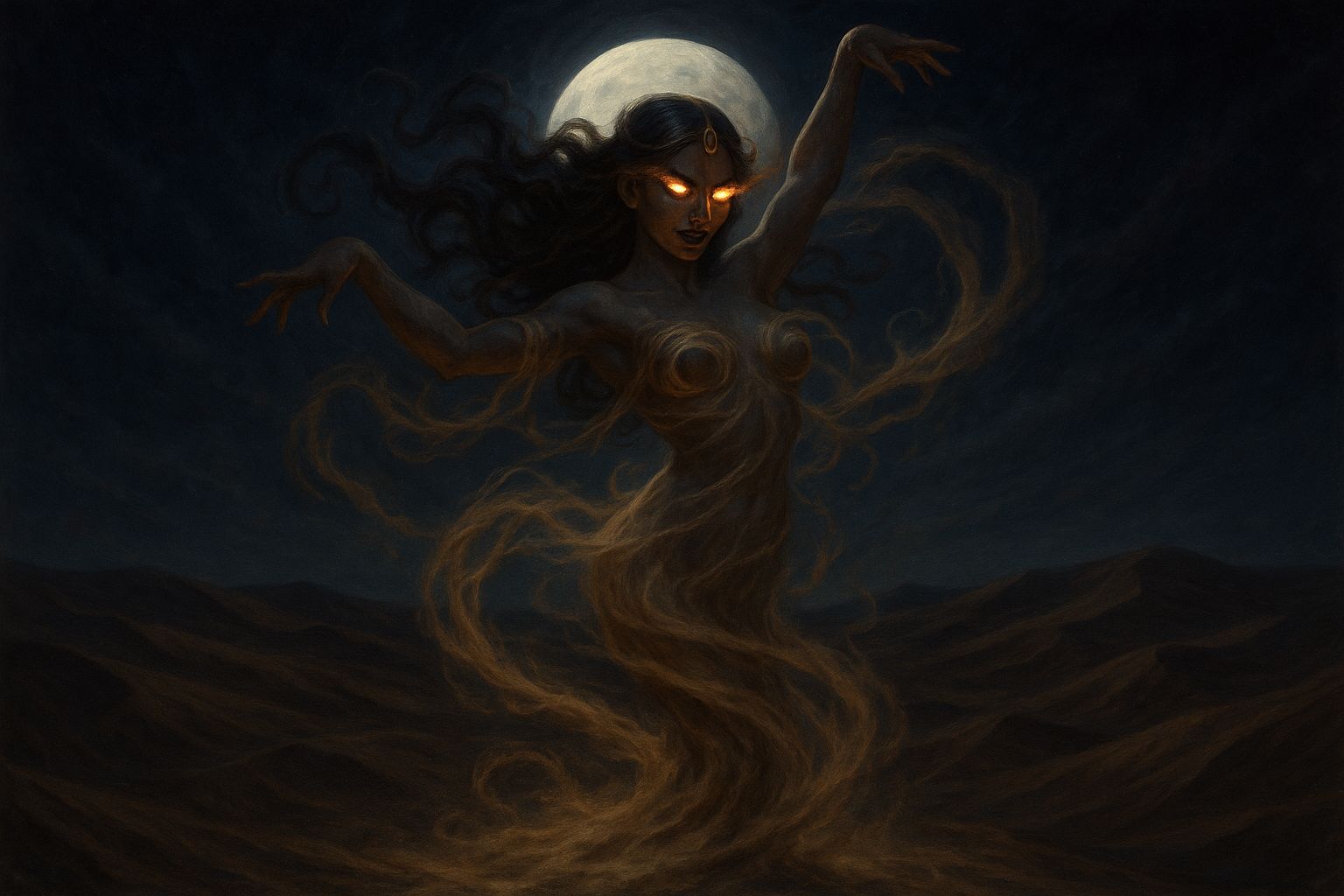
Djinn are seen not as demons born apart, but as Fallen Flames-gods or lesser divine spirits who broke oaths, defied Ashama's law, or were seduced by Neshet's forbidden wisdom. Now they dwell outside the pantheon, in exile in the desert, and seek to return to power by tricking mortals into worship. They are shapeshifters, deceivers, and masters of illusion, and can sometimes be seen dancing in the desert wind.
The Khalif's Divine Role
As the Nehakar, the Khalif is considered the only living person who can hear the unified will of the gods. While priests lead temples and perform rituals, only the Khalif can interpret divine signs and declare edicts on behalf of the pantheon. His coronation involves entering the Flame Chamber, and receiving a vision said to come from Ashama herself.
This divine authority makes the Khalif untouchable. No priest may question him. No temple may defy him. His words are recorded by scribes and stored as sacred writ.
When he speaks from the Tower of Light, it is said even the winds fall silent.
Temples and Worship
Each god has their own temple or shrine, but the Grand Temple of the Divine Court holds sacred fire altars for all major deities. Worshippers offer spices, gold, and crafted works. Fire is always present in some form: a brazier, a candle, a lantern-flame is the bridge to the gods.
Priests wear robes in colors tied to their deity. For example, Ashama's priests wear white and gold, Qilara's wear red and violet, and Malqath's wear grey and black. Rituals often involve song, chanted prayer, flame dances, and sacrifice-of animals, wealth, or symbolic items.
Festivals and Holy Days
Every season is marked by a divine festival:
The Burning Crown honors Ikaran with martial games and parades of armored warriors.
The Veil of Dreams is a week of dream interpretation, shadow plays, and midnight rites for Neshet.
The Festival of the Ember-Dancer is a city-wide celebration of Qilara, filled with revelry, beauty contests, and candle-lit feasts.
Symbolism
The flame is as much a symbol of power and destructive force as it is a symbol of wealth. Firewood and oil must both be imported to Zarhalem, and as such, is not available to the poor.
Faith and Power
The religion justifies the brutal social structure of Zarhalem. The gods, especially Malqath and Ashama, are said to have placed every person in their role-ruler, priest, merchant, slave-as part of divine balance. To rebel is to defy the gods. But quietly, small sects of heretics believe the gods once walked among mortals and gave all people equal fire. These ideas are crushed whenever found.
In Summary
The Faith of the Divine Court of Flame is as dazzling and harsh as the city it shapes. It binds power to religion, wealth to worth, and flame to truth. The gods are many, but their voices are one, and they speak only through the Khalif. To doubt him is to doubt the heavens themselves.