Campaign: Ardenvale
Act Synopsis
Arrival in Millford
The Blue Marlin makes landfall at Millford, a busy river town where Ardenvale’s prosperity is on full display. Mills grind day and night, barges crowd the docks, and grain moves with calm efficiency. This is Ardenvale at its most honest, not pastoral fantasy, but well managed abundance. The town establishes the tone of warmth, practicality, and quiet confidence that defines the region.
As the crew asks after the Waverider, they receive rumors rather than answers. Dockhands, brewers, merchants, and river sailors offer conflicting stories. A massive blue sailed ship docked years ago. Confusing stories about their crew. Disagreements about where she sailed next. These tales are not meant to provide direction, but to familiarize the players with the Waverider’s reputation and crew. This is also an opportunity to introduce recurring NPCs in a low pressure, social environment.
Imperial Oversight
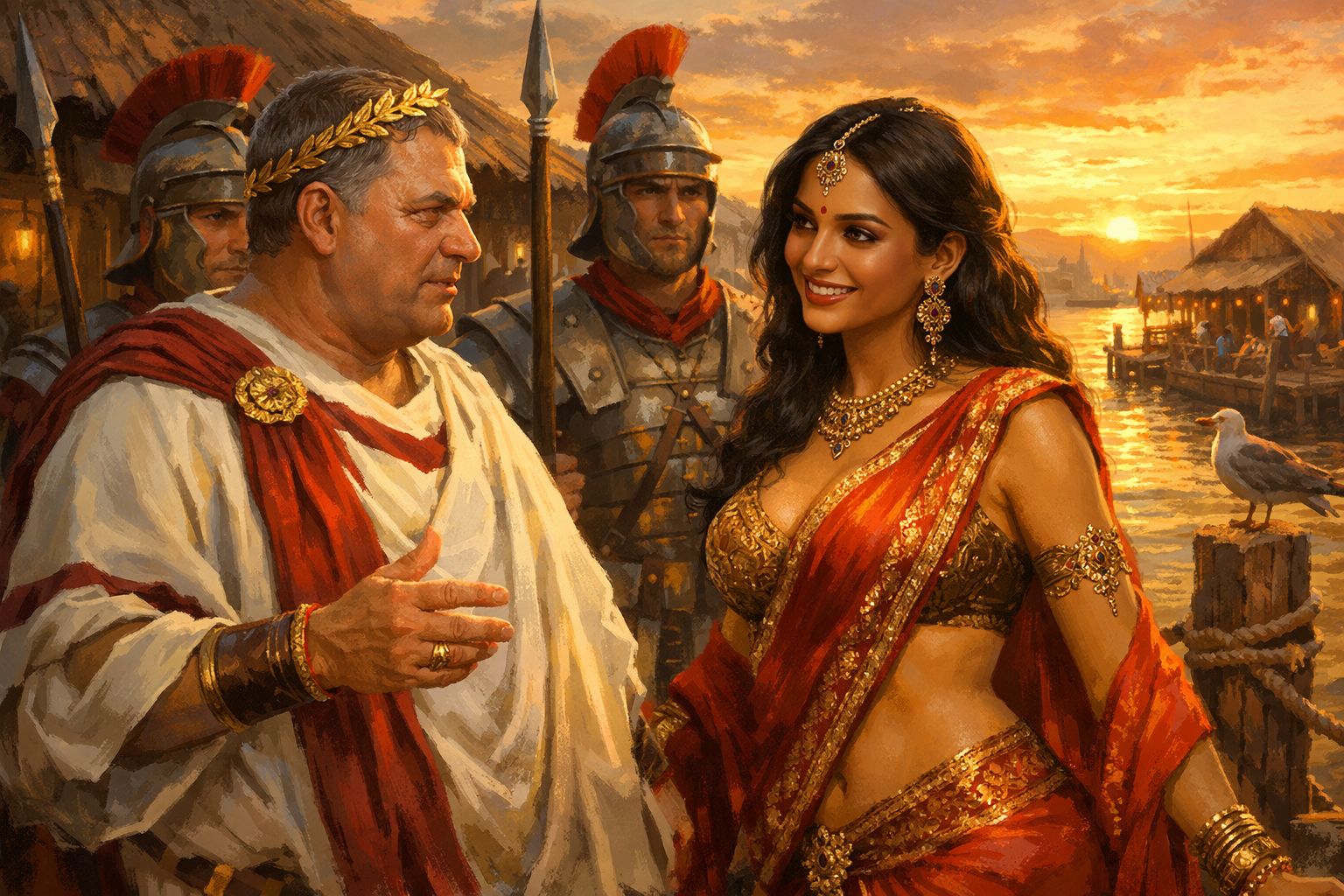
The players encounter an imperial diplomat from Albirica, Gaius Terennius Volso. Intelligent, entitled, and physically indulgent, he travels in a palanquin, guarded by professional soldiers. His presence in Millford is routine. He oversees grain contracts, shipping volumes, and compliance with imperial agreements. He does not posture as a villain. He is an administrator performing his duty, confident in the system that protects him.
The Burned Ship
Volso uncovers evidence that Ardenvale has been quietly shipping food north to Caerduin to ease the growing famine. From the Empire’s perspective, this is not charity but active interference. Acting within his authority, Volso orders the supply ship burned and prepares to return to Albirica with proof of Ardenvale’s disloyalty. The aid, as far as the Empire is concerned, is a casus belli. If Volso reaches Albirica, the Empire gains justification for invasion or occupation under the pretext of Ardenvale supporting their enemy.
The Council of Twelve does not react publicly. Instead, they summon the players privately and explain the situation with calm honesty. Ardenvale cannot move fast enough to stop Volso and cannot be seen acting against imperial authority. They ask the crew to intervene as outsiders. Volso must not reach Albirica, and his disappearance must look like banditry or misfortune rather than political violence. Maintaining the illusion of compliance is essential.
The Chase
Volso departs eastward, carried in his palanquin, slow but well protected. The players pursue along roads and rivers. This is a practical chase focused on timing, interception, and misdirection rather than spectacle. When Volso is dealt with, the emphasis is on the narrative left behind. Stolen goods, scattered guards, and no clear political fingerprints pointing back to Ardenvale.
Aid to Caerduin
Upon the crew’s return, the Council offers quiet thanks and immediately follows with a second request. The supplies meant for Caerduin still need to be delivered. The famine is real, and delay costs lives. The Blue Marlin is fast enough to evade imperial patrols and skilled enough to avoid pursuit. The job is framed as necessity rather than heroism, pulling the players toward Caerduin without forcing them.
Purpose of the Act
This act introduces Ardenvale as friendly, reasonable, and quietly pragmatic. It presents Albirica as a system that treats starvation as policy and conquest as administration. It foreshadows the ongoing conflict with Caerduin. Most importantly, it positions the players as active participants in a fragile balance of power, setting the moral and political stakes for the arc to come.
Arrival
| Story |
|---|
| The river widened as the Blue Marlin rounded the last bend, its dark hull sliding out of the morning mist like a patient predator. Millford revealed itself slowly, not with walls or towers, but with sound. The steady groan of mill wheels turning against the current. The creak of ropes. Laughter carrying across the water long before the docks came fully into view. |
| The air smelled of wet grain, smoke, and bread baked too early in the day. Waterfowl scattered as the ship drew closer, flapping away from the shadow of unfamiliar sails. Along the banks, low wooden piers jutted into the river at odd angles, patched and rebuilt so often that no two planks quite matched. Barges were already tied three deep, their decks piled high with sacks of wheat stamped with mill marks and chalk tallies. |
| Millford was awake and busy, but unhurried. Dockhands worked hard despite the early morning chill, calling to one another with easy insults. A pair of halfling boys argued loudly over a dropped crate while a giant woman waited patiently behind them, arms folded, the rope of a grain barge looped casually over one shoulder. Somewhere inland a bell rang, not to warn or summon, but to mark the turning of an hour no one was truly counting. |
| As the Blue Marlin eased in, heads turned. Not in alarm, just curiosity. A few sailors paused in their work, squinting at the unfamiliar lines of the ship. Someone whistled low. A man with a ledger tucked under his arm muttered to himself and began recalculating space on the docks. Within moments, ropes were thrown and caught, knots tied with practiced hands. No ceremony. No questions yet. |
| Beyond the docks, the town rose in gentle layers. Low stone and timber houses leaned into one another as if sharing gossip. Every street seemed to slope toward either a mill or a tavern, often both. Signs creaked in the breeze. The Copper Cauldron’s painted emblem glinted in the sun, already flanked by barrels and benches dragged outside for the day’s trade. |
| A woman named Lessa Millward stood at the edge of the quay, hands on her hips, watching the ship with open interest. She owned three barges, two warehouses, and half the patience in town. Beside her, Old Fenric the rope maker spat into the river and nodded once, as if approving the Marlin’s lines. News traveled fast in Millford, but judgment traveled slow. |
| By the time the gangplank was lowered, the town had already accepted them. Not as heroes. Not as strangers. Just another ship, another story waiting to happen. Somewhere nearby, a cook shouted about fresh pies. Somewhere else, a cask was tapped too early. Millford breathed, worked, and laughed on, ready to remember whatever foolish or remarkable thing the newcomers chose to do next. |
Asking Around in Millford
General Tone and Approach
When the players start asking about the Waverider, make it clear very quickly that they are not dealing with witnesses. They are dealing with a legend that has fermented in beer, retold by people who were drunk at the time and sober only in hindsight. Most who talk about the Waverider were not present. Those who were remember fragments. No one agrees on details. Everyone is confident they are right.
Millford does not remember dates, destinations, or reasons. It remembers a dwarf, a tavern, shouting, slapping, hammering, and laughter. Treat every rumor as delivered with enthusiasm and absolute certainty, even when it contradicts the last one spoken.
Otto the Dwarf, Local Folk Hero
Otto the Dwarf has become a minor dockside legend. He is remembered as a heroic craftsman, a drunken madman, a pirate slayer, and a brewer of impossible beers. Most people assume he was the captain. Those who know he was not insist that captains do not matter if a dwarf is loud enough.
If asked what Otto the Dwarf looked like, answers vary wildly. Some say he was short and wide. Others insist he was as tall as a halfling giant. One dockhand swears Otto the Dwarf had a beard braided with bones. Another insists it was full of feathers. No one can agree on its color.
The name Otto the Dwarf is universally remembered. Everything else is negotiable.
Common Rumors and Tall Tales
Use the following freely and feel free to stack them back to back. Let NPCs interrupt each other to correct details that are even worse than the last version.
- Otto the Dwarf once nailed a broken mast back in place using a seagull as a hammer. The seagull survived and joined the crew.
- Otto the Dwarf is the captain of the ship Seagull, which is either another name for the Waverider or a different ship entirely that no one can describe.
- Otto the Dwarf sank a pirate ship by throwing a seagull at it. Some versions claim the seagull was on fire.
- Otto the Dwarf is married to the First Officer, Pillowtits. This is stated as an established fact.
- Pillowtits is the most beautiful woman ever seen on the river. One halfling swears when Otto the Dwarf playfully slapped her chest it took two minutes before it stopped bouncing. A giant insists it was longer.
- Pillowtits wears a ceremonial gown made entirely of seagull feathers. It may be armor. It may be her wedding dress.
- Otto the Dwarf brews beer out of seagulls. Several patrons claim to have tasted it. None can agree on the flavor, but all insist it was excellent. Some claim it wasn't just any seagulls, it was dock gulls only, and that is the key to the flavor.
- Otto the Dwarf fixed the ship while asleep. Someone insists he never woke up the entire night.
- Otto the Dwarf stole all their seagulls, drank their taverns dry, then fixed their mill as an apology.
Rumors About the Ship
The Waverider itself is remembered vaguely. It was big. Or fast. Or old. Or new. Some say it had blue sails with seagull emblems. Others say the sails were white but stained blue by Otto’s beer. Most agree it creaked loudly and looked like it had been in trouble recently.
How long it stayed is unclear. Some say one night. Others insist three days. A mill worker swears it was there a full week because the hammering never stopped.
Where it went next is unknowable. The most common answers are south, west, north, or downriver. One old fisherman insists it sailed straight into the sunrise and vanished.
Using the Rumors
Do not let the players extract clean information here. That is not the purpose. This section exists to humanize the Waverider crew, establish Otto the Dwarf as unforgettable, and teach the players that memory in Ardenvale is shaped by beer and repetition more than fact.
If the players press hard, allow one or two consistent points to emerge. The ship needed repairs. Otto the Dwarf did them. The First Officer was terrifying. After that, everything dissolves into laughter.
End the scene when the players realize they are learning more about Otto the Dwarf than about the Waverider’s destination. That is the correct outcome.
Imperial Presense
| Story |
|---|
| Gaius Terennius Volso arrived without fanfare, which in Millford meant he arrived loudly. |
| The palanquin creaked as it was set down near the docks, lacquered wood polished to a mirror sheen that looked obscene beside damp planks and grain dust. Eight carriers straightened their backs with visible relief. Two legionaries stepped forward at once, shields angled just enough to make a point. Volso himself remained seated for a moment longer, adjusting the folds of his robe, as if the world might be kept waiting until he was comfortable. |
| Scarnax watched from the edge of the quay, expression unreadable. He had learned long ago that men who traveled like this expected the world to bend, and were often offended when it did not. |
| Volso finally rose. He was broader than his portraits suggested, soft around the jaw and middle, his fingers heavy with rings. His eyes, however, were sharp and restless, flicking over the Blue Marlin with practiced assessment. |
| “So,” Volso said, smiling as if greeting an equal. “This is the ship that does not get caught.” |
| Ayesha inclined her head just enough to be polite. “We try not to inconvenience anyone.” |
| Volso chuckled at that, a dry, satisfied sound. “An admirable goal. I am Gaius Terennius Volso, envoy of Albirica. You will forgive me if I do not step aboard. I prefer solid ground.” |
| Amaxia said nothing. She stood slightly behind Scarnax, arms crossed, gaze fixed on the legionaries. One of them shifted his weight under her stare. |
| Volso gestured vaguely at the river, the mills, the stacked grain. “Ardenvale is a marvel. So productive. So cooperative. I am here to ensure that everything continues as agreed.” |
| “And you wished to speak to us because?” Scarnax asked. |
| Volso smiled wider. “Because ships like yours have a habit of being where they should not be. And because I like to know who is capable before capability becomes inconvenient.” |
| Ayesha returned the smile. “Then you know us now.” |
| “Enough,” Volso said. His eyes lingered on Amaxia for half a breath too long, calculating rather than leering. “I trust we will not meet again under less pleasant circumstances.” |
| He turned, already done with them, and climbed back into the palanquin. The carriers lifted. The legionaries fell in. The whole procession moved away as if it had never considered stopping. |
| Only then did Amaxia exhale. |
| Later, aboard the Blue Marlin, the three stood in the quiet of the deck as Millford’s noise drifted across the water. |
| “He thinks he owns the river,” Amaxia said flatly. |
| “He thinks he owns outcomes,” Ayesha replied. “Which is worse.” |
| Scarnax rested his hands on the rail. “He did not threaten us.” |
| “No,” Ayesha said. “He measured us.” |
| Amaxia snorted. “Men like that never fight. They just point.” |
| Scarnax nodded once. “And everything bleeds where they point.” |
| They stood in silence after that, watching the current slide past the hull, each of them thinking the same thing without saying it. |
| That man would be trouble. |
| And he would never understand why. |
The Burned Ship
Time to Breathe in Millford
After arrival and the first round of rumors, give the players time to exist in Millford. Let them wander the docks, visit taverns, watch the mills, or negotiate minor supplies. This is a good place to reinforce Ardenvale’s character. People are friendly, practical, and unafraid of strangers. Nothing feels tense yet.
This is also an ideal moment to introduce or reintroduce a recurring NPC. Amir the bard, Samir the prophet or The Painted Caravan is suitable. Keep it light. This is the calm before the problem arrives.
The Alarm at the Harbor
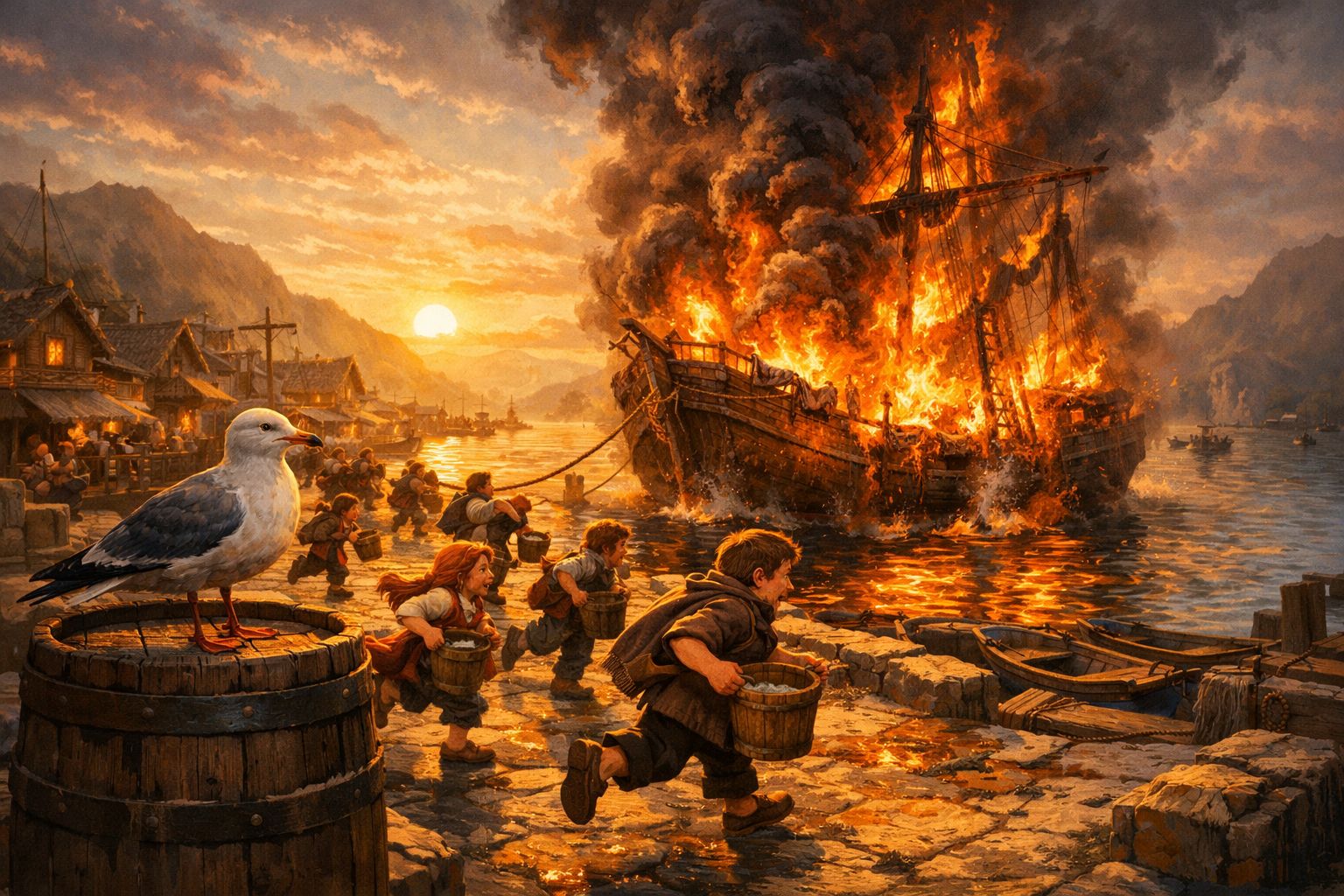
At some point, cut through the atmosphere with urgency. Bells ring from the docks. Someone shouts about fire. Smoke begins to rise from the harbor, thick and black.
When the players arrive, one of the docked cargo ships is burning. Flames lick up the rigging and sparks drift dangerously close to nearby vessels. The Blue Marlin has already cast off and is holding position in the river to avoid being caught by the fire or spreading embers.
Chaos is controlled but real. Dockhands form bucket lines. Giants wade into the water to push burning debris clear. Halflings shout instructions and argue over them at the same time. The fire is serious but not apocalyptic.
Allow the players to help. Cutting lines, hauling water, moving cargo, keeping the fire from spreading. This reinforces their connection to Millford and gives them physical investment before the political one.
Eventually the fire is contained. The ship is ruined. Cargo is lost. No one is killed. The mood shifts from panic to grim understanding.
The Council Approaches
Once the situation settles, the players are approached quietly, away from the crowd. Two representatives speak for the Council of Twelve.
One is a halfling named Perrin Underbough, soft spoken, precise, with ink stained fingers and tired eyes. The other is a giant named Dunmar of Greenmead, broad shouldered, calm, and unarmed despite his size. Neither looks afraid. Both look worried.
They explain the situation plainly.
Volso discovered that Ardenvale has been covertly shipping food north to Caerduin to ease the famine. From Albirica’s perspective, this is support for an enemy they are actively blockading. Volso’s men burned the supply ship deliberately. He has already departed for Albirica.
If Volso reaches Albirica, the Empire will treat this as justification for invasion and subjugation. Not punishment. Enforcement. Ardenvale will be declared unstable and reined in.
The Council cannot act openly. They cannot move fast enough. They cannot be seen interfering. Halflings and giants are not built for pursuit, and the appearance of compliance must be preserved.
They ask the players to intervene.
Volso must not reach Albirica.
Whatever happens must look like a robbery, an accident, or misfortune on the road. It must not look like political violence. Ardenvale cannot be connected to it.
Making It the Crew’s Choice
Do not frame this as a desperate plea. Frame it as a quiet offer.
The Council understands they are asking for risk. They offer incentives in an order that reflects Ardenvale’s values.
- First, information. They will share everything they know about the Waverider’s time in Ardenvale, including who she spoke to, what supplies she took on, and the direction she likely traveled next.
- Second, friendship. The Council will remember this. Ardenvale will be a safe harbor for the Blue Marlin. Repairs, supplies, and discretion will be offered freely in the future.
- Third, opportunity. This is a clean chance to strike at the Empire without open war. The players are not asked to save Ardenvale, only to prevent the Empire from finding an excuse to crush it.
- Fourth, compensation. Not riches, but fair payment. Coin, supplies, or trade goods. Enough to respect their time, not enough to cheapen the choice.
Let the players discuss. Let them refuse if they wish, but make it clear that the Council will then look elsewhere, likely with worse odds.
The Likely Route
If the players agree, Perrin produces a map. It is practical, not ornate.
Volso is traveling east toward Albirica. There are roads and rivers, but only one reliable mountain pass that leads into imperial territory. Trade, patrols, and messengers all funnel through it. If Volso is stopped, it will be there or before.
Dunmar taps the pass with one thick finger. “If he reaches this,” he says, “we lose the season. And more.”
This closes the scene.
From here, the act moves from observation to action, and the players step fully into the machinery of the wider conflict.
The Chase
Framing the Pursuit
Once the players commit, the chase should feel inevitable rather than frantic. Volso is not running. He is proceeding, confident in schedules, authority, and the assumption that nothing of consequence can touch him between Ardenvale and Albirica.
The distance to the mountain pass is roughly three days of travel at a normal pace. Volso will reach it in just over three days. The Blue Marlin crew should be able to intercept him in about two if they move with intent. Make this clear early. This is not a race against minutes, but against certainty.
The Road East
The road east from Millford is well used and well maintained. Grain wagons, merchants, messengers, and the occasional patrol pass through regularly. Small villages dot the route every half day or so, each with an inn, a well, and enough supplies to travel light. There is no need for wilderness survival here. This is civilized land doing business as usual.
Use these villages to reinforce contrast. Ardenvale remains calm and productive even as imperial pressure grows. People gossip, trade, and complain about weather rather than war. This normalcy should make Volso’s actions feel colder by comparison.
Volso’s palanquin is conspicuous. It draws looks, bows, and quiet resentment. Everyone knows what it represents. No one challenges it.
Volso’s Escort
Volso travels with four legionnaires on foot. They are veterans, disciplined, and dangerous. Their armor is metal, their shields large, their weapons well maintained. They move efficiently and keep formation even on the road. They are not bullies, but they do not hesitate to assert authority.
These soldiers are not random guards. They are a credible threat to an unprepared group. They fight to protect Volso, not to die for him, but they will not break easily.
Volso himself does not fight. He carries no weapon and has no intention of using one. His first instinct when confronted is authority.
He will announce himself loudly as an emissary of the Empire. He will invoke law, treaties, and consequences. He will promise that interference will be remembered and punished.
If pushed physically or if his escort is clearly being overcome, Volso will surrender. He is not brave. He is practical. Survival matters more than pride.
Interception Options
Do not force a single solution. The terrain allows for several approaches.
The players can intercept Volso on the open road, using speed and surprise.
They can wait until he stops at a village and arrange an ambush that looks like banditry.
They can manipulate events so that Volso believes he is being robbed rather than targeted, encouraging surrender without prolonged fighting.
They can attempt deception, posing as criminals, mercenaries, or even rival imperial agents.
Whatever approach they choose, reinforce the key constraint. It must not look political. Witnesses should believe this was misfortune, not reprisal.
Tone of the Confrontation
Keep the encounter grounded. This is not a dramatic duel or a heroic showdown. It is the interruption of a process.
Volso should be indignant first, frightened second, and calculating throughout. His escort should fight hard but professionally. They are not sadists, and they are not fools.
If Volso is captured or relieved of his documents and wealth, emphasize what matters. Papers burn. Seals vanish. Stories change.
Once Volso is neutralized, the urgency drains from the scene. The road continues. Villagers resume their routines. Ardenvale breathes again, unaware of how close it came to becoming a battlefield.
The Choice at the Roadside
For the crew, one question remains.
| Story |
|---|
| The road was quiet again. |
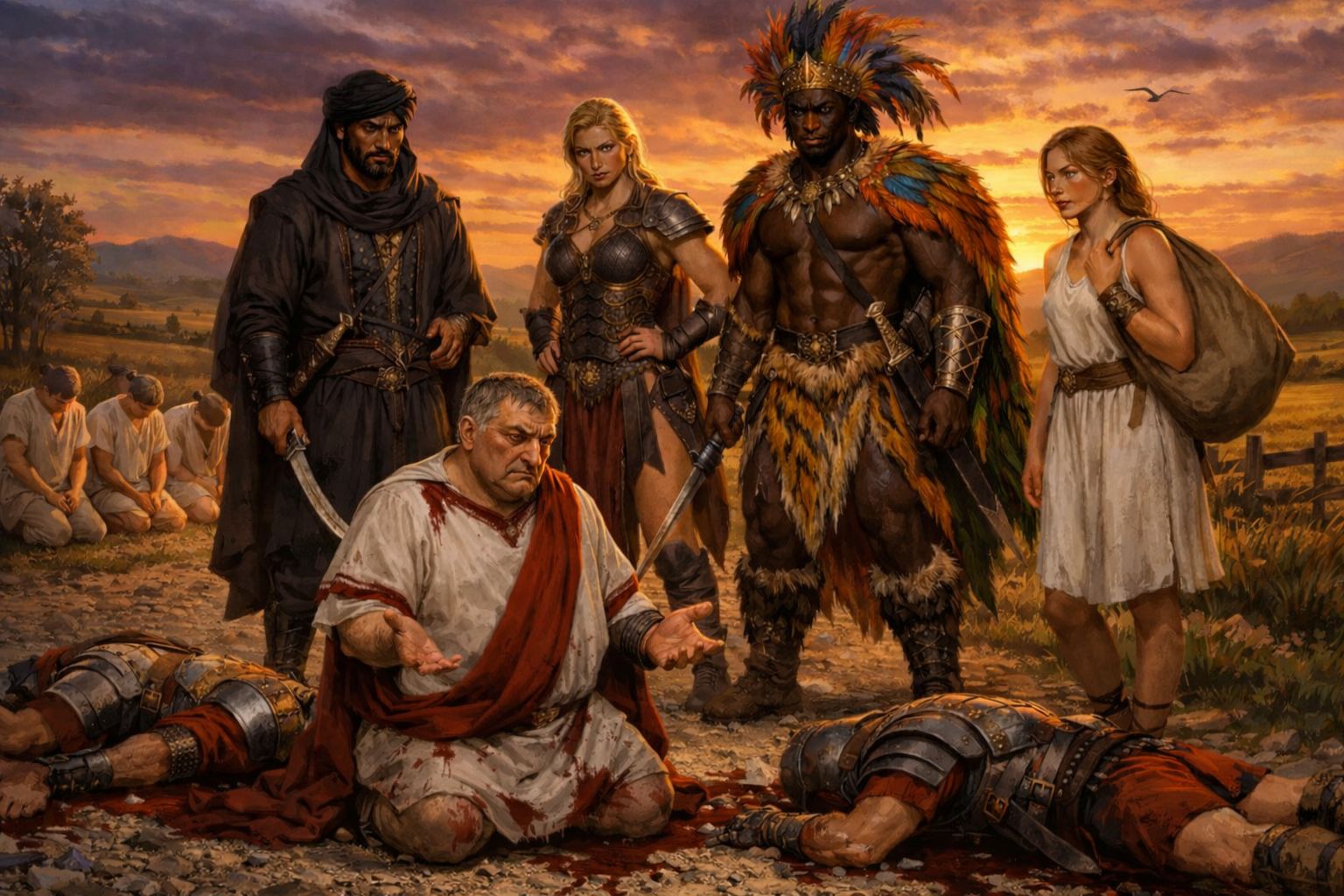
| Bodies lay where they had fallen, armor dulled with dust and blood. The palanquin rested on its side, one pole snapped, silk curtains torn and trailing in the dirt like shed skin. Flies had already begun to gather. |
| Volso sat on a stone by the roadside, hands bound, breathing hard. His fine robes were smeared with earth. The authority he had worn so comfortably only an hour ago now hung loose on him, like clothing borrowed from a dead man. He did not speak. He did not need to. |
| Eight carriers knelt a short distance away, heads bowed, wrists bound with rope. Slaves, thin and scarred, eyes darting between the armed figures around them and the bodies on the road. They had dropped the palanquin the moment steel came out. They had not run. They had watched everything. |
| Nasheem wiped his blade clean on a fallen legionnaire’s cloak and sheathed it slowly. |
| “He surrendered,” he said at last. His voice was calm, but tight. “He yielded authority, station, life. By every law I know, he is no longer an enemy.” |
| Amaxia snorted softly. “By every law he follows, we are already dead.” |
| Junia stood apart from the others, hands clenched in her sleeves. She had tended wounds before. She had stitched men who begged and men who cursed. She looked at Volso now and saw not a diplomat, but a hinge. Everything turned on whether he breathed tomorrow. |
| “If he lives,” she said quietly, “this happens again. Somewhere else. To someone else. He does not need to accuse us. He only needs to arrive.” |
| Mbaru leaned on his club, shoulders rising and falling with steady breath. He looked at the dead guards without expression. |
| “In Zanakwe,” he said, “we would call this a bad ending no matter which way it breaks. But some endings are worse than others.” |
| Skarnulf crouched near the slaves, watching them with a fighter’s eye. They would not fight. That was clear. But fear made people unpredictable. |
| “They saw us,” he said. “They know it was not bandits. If they walk away, the story walks with them.” |
| Shaedra said nothing at first. She stood looking down the road toward the distant hills, toward Albirica, toward Caerduin beyond that. Hunger lived in those directions. So did fire. |
| “They are slaves,” she said finally, turning back. “They will be believed when it is useful, and ignored when it is not. But they will remember.” |
| Junia looked at the carriers then. At the way one of them shook, trying not to cry. At the way another stared at Volso with naked hatred and something like hope. |
| Nasheem closed his eyes for a moment. “If we kill him,” he said, “we become something. If we let him live, we become something else.” |
| Amaxia crossed her arms. “We already crossed the line when we stopped him.” |
| Volso finally spoke. His voice was hoarse, but steady. |
| “You do not have to do this,” he said. “You can still walk away. I will tell them it was brigands. I will forget your faces.” |
| No one answered him. |
Setting the Mood
Play this moment quietly. Lower your voice. Slow the pacing. Let there be pauses where no one speaks. Describe physical details rather than emotions. Dust on armor. Rope biting into wrists. Flies gathering. Avoid speeches and moral framing from NPCs unless the players actively draw it out.
Do not rush them. The weight of this choice comes from time spent sitting with it. Silence is a tool here. Use it.
The Core Problem
Volso is alive and surrendered. By most moral codes that matters. Letting him live risks invasion, war, and famine. Killing him prevents that but crosses a line the crew cannot uncross.
The eight palanquin bearers complicate everything. They are slaves. They surrendered immediately, and did not participate by their own choice. They are witnesses who know this was not banditry. Whatever happens to Volso, the truth can still escape through them.
There is no clean solution. Make that clear without stating it outright.
Possible Approaches and Consequences
If the crew kills Volso, the immediate threat ends. Ardenvale is spared for now. The Empire does not get its pretext. However, this becomes a defining act for the crew. Some characters may carry guilt. Others may harden. This choice may shape how allies and enemies perceive them later, even if no one ever learns the specifics.
If the crew spares Volso and releases him, the likely outcome is invasion or occupation. Ardenvale suffers. The famine in Caerduin worsens. The crew keeps its moral high ground but lives with the consequences of restraint. This is not failure. It is a different kind of cost.
If the crew attempts deception, disappearance, or exile, decide how fragile that solution is. Volso is clever. The Empire is patient. Lies have a habit of surfacing years later. This option trades certainty now for uncertainty later.
If the crew frees or relocates the slaves, consider their futures. Freedom may be a gift. It may also be a burden. Some may vanish. Some may talk. Some may return to the Empire out of fear or necessity. Bringing them back to Millford, which may offer them a new home, could reduce the risk.
If the crew kills witnesses, be clear about what that means. This is a darker step than killing Volso. Do not soften it. Let the table feel it.
Your Role as Game Master
Do not argue for a choice. Do not protect the players from the outcome. Let the world respond naturally and unevenly.
Whatever they choose, treat it as valid within the logic of the setting. This campaign is about systems and consequences, not moral scorekeeping. There is no right answer here. Only paths that close and paths that open.
End the scene when a decision is made. Or when the players realize that not deciding is itself a decision.
Outcome and Transition
When the interception is complete, give the players a moment to reflect on what they have actually done. They did not defeat an enemy army. They delayed a machine.
This sets the tone for what follows. The Empire will not rage. It will adjust. And the consequences will unfold slowly, elsewhere.
From here, the act flows naturally into the delivery of aid to Caerduin and the next stage of the campaign.
Aid to Caerduin
| Story |
|---|
| The Blue Marlin returned to Millford at dusk, sails low, hull streaked with road dust and river spray. No bells rang this time. No one ran to the docks. The town accepted their arrival the way it accepted most things, with a glance, a nod, and space made without questions. |
| Perrin Underbough waited near the quay, hands folded in his sleeves. Dunmar of Greenmead stood a few steps behind him, a sack of grain slung over one shoulder like an afterthought. Neither asked what had happened on the road. Neither looked east. |
| “The mills are ready,” Perrin said. “The wagons too. What was lost can be replaced.” |
| He hesitated, then added, “There is also something you should know.” |
| They spoke aboard the ship, away from the docks and the listening river. Perrin unrolled a small, well used map and weighted its corners with stones. |
| “The Waverider was here,” he said. “Longer than most remember. She took on repairs. Supplies. Asked careful questions.” |
| Dunmar nodded. “And then she went north. Into Caerduin.” |
| No drama. No emphasis. Just a fact placed on the table. |
| Perrin met their eyes, one by one. “We do not know why. Only that she did. And that she carried food as well. Not much. Enough to make a difference for a little while.” |
| He folded the map again. “We were going to ask you to carry aid north regardless. The famine worsens. Time matters. But now the question is different.” |
| He gestured toward the river, toward the narrowing land beyond Ardenvale’s green. |
| “You can follow her trail. Or you can turn away once the cargo is delivered. We will not bind you to this. We will not pretend this is not dangerous.” |
| Dunmar shifted his weight. “If you go, you carry more than grain. You carry eyes. Ears. Stories. That has a cost, but also immense value.” |
| The loading began that night. |
| Sacks of grain passed from giant hands to halfling hands to the deck of the Blue Marlin. Barrels of dried beans and salted roots followed. Kegs of thick ale meant to keep bodies warm through lean weeks were rolled aboard with care. No banners marked the cargo. No seals were stamped. Everything was plain, practical, and deliberately forgettable. |
| Junia watched as a halfling woman pressed a small bundle into Perrin’s hands. He nodded once and added it to the manifest without comment. Medicine, perhaps. Or seed. Or both. |
| By morning, the ship sat lower in the water. |
| They slipped away before sunrise, pushing off on quiet oars until the current took them. Millford faded behind them, mills turning, smoke rising, life continuing as if nothing had nearly broken it. |
| The river narrowed as they went north. Ardenvale’s fields thinned, green giving way to scrub and stone. Villages became rarer. When they did appear, people watched the ship pass in silence, reading its weight, its direction, its purpose without being told. |
| By the time the land grew hard and gray, the first signs of hunger appeared. |
| Smoke rose from fires that burned too low. Nets were mended again and again because there was nothing left to trade for new ones. Shaedra stood at the bow, scanning the hills with a hunter’s eye, recognizing the signs of a people stretched too thin. |
| They made landfall where no harbor waited. Just a narrow shore and figures already gathering, cautious at first, then closer when they saw what the ship carried. |
| Word spread quickly. Faster than fear. |
| These were Caerduin folk, lean and hard eyed, wrapped in furs patched too many times. Clan marks showed on shields and cloaks, some familiar, some long faded. |
| When the first sack was opened, no one cheered. |
| They simply began to work. |
| Grain was counted. Barrels rolled ashore. Hands shook, not from cold but from the effort of holding themselves together. An old woman pressed her forehead to the wood of the Blue Marlin before being gently pulled away by a younger man who looked too tired to be kind. |
| Nasheem watched it all in silence. |
| This was not victory. This was delay. A few more weeks bought with risk and blood and choices made far to the south. |
| As the sun dipped behind the hills, a horn sounded somewhere inland. Not a war call. A signal. The kind used to tell others that something had arrived worth gathering for. |
| The Blue Marlin sat at anchor, lighter now. |
| Ahead lay Caerduin. And somewhere beyond these hills, the trail of the Waverider continued north. |
Purpose of the Scene
This section closes the first part and transitions the arc from observation to commitment. It confirms the Waverider’s path, reinforces Ardenvale’s quiet resistance, and gives the players a meaningful choice without forcing them. The focus is not on logistics or danger yet, but on intent.
The Council’s Information
When the crew returns to Millford, the Council representatives share one key piece of information. The Waverider continued north into Caerduin and carried aid with her. They do not know why, only that she did. Present this plainly, without drama. It should feel like a fact that has been sitting in a ledger rather than a revelation.
Frame this as trust being extended. The Council is sharing what it knows because the crew has already proven itself discreet and capable.
The Question, Not the Order
The Council asks rather than instructs. They would have sent aid north regardless. The difference now is whether the Blue Marlin also chooses to follow the Waverider’s trail. The Council raises the question only because the ship can do what theirs cannot, move fast enough to avoid attention and leave no trail behind. Make it clear that either choice is valid. Staying neutral or disengaging does not end the campaign, but following the trail deepens it.
Emphasize that this is not framed as heroism. It is framed as attention. Going north means seeing more, knowing more, and carrying stories that others would rather stay buried.
Loading the Cargo
The loading should be quiet and deliberate. No speeches. No crowds. Everything is unmarked and practical. This reinforces that Ardenvale’s resistance is careful and habitual rather than defiant.
Allow small, human moments. A bundle added quietly. A nod instead of thanks. These details matter more than numbers or inventory.
Departure
The departure happens early and without ceremony. The ship leaves before sunrise, pushing off gently until the current carries her north. Millford does not watch them go. Life continues.
End this section as the ship departs, with the knowledge that the Waverider went the same way. From here, the campaign shifts into Caerduin, famine, and war under the surface.
The players should feel that they are no longer passing through. They are following a trail that leads somewhere difficult.
Act Summary

What This Part Establishes
This part establishes Ardenvale as a land of warmth, abundance, and careful self control. It is friendly, practical, and welcoming, but its peace is maintained through restraint rather than innocence. Violence exists here, but it is hidden, redirected, or made deniable. The people do not see themselves as heroes or rebels. They see themselves as caretakers of something fragile.
Millford in particular should feel alive and forgiving, but not naive. Stories grow faster than facts, excess is tolerated if it ends in usefulness, and kindness is offered freely so long as it does not invite attention. Ardenvale walks a narrow line, supplying the Empire because it must, quietly aiding Caerduin because it cannot accept their starvation, and hoping neither side looks too closely at its hands.
What the Players Learn
The players learn that the Waverider passed through Millford, stayed long enough to repair, resupply, and leave an impression, and then continued north into Caerduin. They also learn that the ship carried aid, not just curiosity. Whatever the Waverider’s mission was, it involved choosing sides in small, deniable ways.
Through rumor, exaggeration, and beer soaked memory, the players gain impressions of the Waverider’s crew as people rather than legends. These impressions are unreliable and often absurd, but they are personal. The Waverider stops being an abstract objective and becomes a set of personalities and stories that feel lived in, even when they are wrong.
They also have space to meet or reencounter recurring NPCs in a low pressure setting, grounding the campaign socially before the world becomes harsher and less forgiving.
What the Players Learn About the World
The players learn that Albirica’s war with Caerduin is not defined by battles alone. It is fought through famine, blockades, treaties, and enforcement disguised as order. Starvation is not an accident. It is a tool.
They also learn that Ardenvale understands this and survives by balance rather than defiance. It placates the Empire because refusal would bring conquest. It aids Caerduin because allowing them to starve would be a moral surrender. Every choice Ardenvale makes risks exposure from one side or the other.
Power in this world acts indirectly, and survival often depends on appearing harmless while making choices that matter.
What the Players Do
The crew interferes with imperial policy without declaring war. They stop an imperial envoy not through open opposition, but through misdirection and violence concealed behind acceptable stories. This should feel less like defeating an enemy and more like jamming part of a machine.
They face a moral choice with no clean resolution, one that trades certainty for restraint or restraint for blood. Whatever choice is made begins to shape how the crew understands responsibility, even if the wider world never learns the details.
They choose whether to carry aid north and whether to follow the Waverider’s trail, knowing that both acts are temporary, risky, and will not solve the larger problem.
The Mood Going Forward
The mood at the end of this part should be quiet and weighted. There is no victory, only postponement. Only people who eat tonight because someone else accepted risk elsewhere.
The world does not erupt or acknowledge what nearly happened. Ardenvale continues its careful balancing. Millford keeps grinding grain. The Empire adjusts its records. Caerduin remains hungry.
The players are no longer passing through events. They are choosing where to apply pressure, even when that pressure must remain unseen.
The trail of the Waverider leads north.
Now, so does theirs.